Tag: RV park owner

  • 5 Critical Reasons RV Park Operations Are Not Just a Due Diligence Checklist Item

    5 Critical Reasons RV Park Operations Are Not Just a Due Diligence Checklist Item

    If you have spent any time reading buyer guides on how to purchase an RV park, you have probably noticed a pattern. RV park operations gets one section, usually near the bottom, tucked in after cap rates, financing structures, and infrastructure diligence. It reads like a warning label. Watch out for deferred maintenance. Watch out for utility capacity. Watch out for seasonal cash flow. Then the guide moves on to the next deal.

    I get why that happens. Most of the content out there is written by people whose job ends at closing. Brokers, acquisition consultants, and deal sourcing shops are paid to get you to the closing table, not to run the business afterward. So RV park operations shows up as a risk to price around, not as the actual work you are about to take on for the next five, ten, or twenty years. I have written before about the financial side of this gap in my Acquiring an RV Park posts, but the operating side deserves just as much attention.

    Here is the problem with that framing. RV park operations is not a line item you check off during due diligence. It is the entire business. The checklist mentality tells new owners that once they have confirmed the septic system is adequate and the occupancy trend looks stable, the hard part is behind them. In reality, that is the moment the real work starts.

    Why the Checklist Framing Sets Owners Up to Struggle

    When RV park operations only shows up as a diligence category, new owners walk into closing thinking they have already done the operational thinking. They have not. They have confirmed the property is not obviously broken. That is a very different thing from knowing how to run RV park operations well day to day.

    I have talked to owners who did everything right on paper. They hired a good closing attorney, they got a clean environmental report, they verified the T-12 income statement, and the deal looked solid from every angle a checklist could measure.

    Then six months in, they were blindsided by things no checklist ever mentions. Guests testing every rule because nobody enforced them consistently, which I dug into in detail in my post on RV park rule enforcement. A manager who could observe problems but had no real authority to fix them. A seasonal cash flow crunch that the pro forma technically accounted for but that nobody prepared them to actually live through, something I cover more in my Cash Flow Management posts. RV park operations problems do not show up in a due diligence binder. They show up in the day to day.

    Some of the bigger names writing acquisition content lean even further in the wrong direction, treating RV park operations as a pure cost cutting exercise once you own the property, squeeze margins, cut amenities, and call it efficiency. That approach might move a spreadsheet in the short term, but it is a fast way to tank your reviews, your occupancy, and your guest retention. Real RV park operations is not about cutting until something breaks. It is about running a business that guests want to return to while still hitting your numbers, which is a big part of why I built my Fractional CFO Services around ongoing operating support, not just a one-time acquisition review.

    What RV Park Operations Actually Looks Like Once You Own the Park

    It is a daily rhythm, not a one-time review. Due diligence happens once. RV park operations happens every day you own the property, through every season, every staff turnover, every guest complaint, and every slow month that tests your cash reserves.

    It requires real decisions, not just verified numbers. Diligence confirms the T-12 is accurate. RV park operations is deciding what to do when a slow shoulder season shows up exactly as the numbers predicted and you still have payroll and debt service due. Knowing the number ahead of time does not make living through it easy.

    It means enforcing your own standards, not just setting them. A rules page in your welcome packet is a diligence item. Actually enforcing quiet hours, leash rules, and site upkeep standards every single week is RV park operations. This is the piece most acquisition guides skip entirely, because it cannot be reduced to a checkbox.

    It means managing people, not just verifying a staffing plan. Diligence asks whether the current manager will stay on. RV park operations asks whether that manager has the training, authority, and support to actually run the property the way you need it run, and what you do if the answer is no.

    It means protecting the guest experience while still hitting your financial targets. This is where the cost cutting playbook falls short. RV park operations done well means finding efficiencies that do not erode the experience your guests are paying for, not stripping amenities until the reviews turn. If pricing decisions are part of what feels shaky right now, my posts under Revenue and Pricing walk through how to adjust rates without damaging the guest experience.

    How to Actually Prepare for RV Park Operations, Not Just Diligence

    Build your operating plan before you close, not after. Your rules, your staffing structure, your maintenance schedule, and your guest communication standards should exist in writing before you take over the property, not get figured out reactively in your first month.

    Separate your diligence team from your operating mindset. It is easy to let the excitement of a clean diligence report convince you the hard part is over. Treat closing as the starting line for RV park operations, not the finish line for the deal.

    Plan for enforcement, not just for policy. Writing a rule and enforcing a rule are two different skill sets. Decide before you close how you or your manager will actually handle the first rule violation, not just what the rule says.

    Budget for the season you are worst prepared for, not the season you are picturing. Most new owners plan around their best month. RV park operations means planning your cash reserves and staffing around your worst month, because that is the month that actually tests your business. The SBA’s guide on managing your finances is a solid outside resource if you want a general framework before layering in the RV park specific numbers.

    Get help with the parts of RV park operations that are not your strength. Some owners are great with guests but struggle with the financial side. Others can run a spreadsheet in their sleep but freeze up during a difficult guest conversation. Know which one you are, and build a team around the gap. If bookkeeping and financial systems are the weak link in your RV park operations, that is exactly what I cover in my Bookkeeping and Financial Systems posts.

    RV park operations is where the actual business lives. Due diligence tells you whether the property is worth buying. Operations tells you whether you can run it well once you own it, and that second question matters just as much as the first one, even though almost nobody writing acquisition content spends real time on it. If you are further along in the buying process, treat your diligence checklist as the beginning of your RV park operations plan, not a substitute for one.

    If you are working through an acquisition right now and want help building an operating plan alongside your diligence process, not after it, that is exactly the kind of work I do. Reach out at PVIFinancial.com.

    For more on running a profitable, well managed park, check out my Resource Library, and grab a copy of my book From Offer to Operation: The Complete RV Park Investor’s Guide, also available on Amazon.

    ~Wendi | Fractional CFO | PVIFinancial.com

  • 7 RV Park Rule Enforcement Mistakes That Let Guests Take Over Your Property

    7 RV Park Rule Enforcement Mistakes That Let Guests Take Over Your Property

    I keep seeing the same post pop up in RV park owner groups. Someone lays out a laundry list of guest behavior problems, people jumping into the pool instead of walking in, quiet hours getting ignored, dogs off leash, campfires left burning, extra vehicles parked wherever, and they ask the group for advice. RV park rule enforcement is the actual topic buried inside every one of those posts, even when nobody says it directly.

    Here is the truth nobody wants to hear. If you are asking a Facebook group how to handle a guest who will not follow a posted rule, you already have a bigger problem than that one guest. You have an RV park rule enforcement gap, and gaps like that do not stay small. They grow, because guests talk to each other, and guests learn fast which parks actually mean what they post on a sign and which ones do not.

    I read through a long thread on exactly this last week. Owner after owner chimed in with their own version of the same story. A guest jumped in the pool even though the sign clearly says walk in only. A family let their dog run loose near the playground. Someone parked a second vehicle on a site that was only supposed to have one. Every single story was different, and every single one came down to the same root cause. Weak RV park rule enforcement let the first violation slide, so nobody expected the second one to be handled any differently.

    Why RV park rule enforcement falls apart in the first place

    Owning an RV park is not a part time job, even when it feels like one during the slow season. The parks where RV park rule enforcement breaks down are almost always parks where the owner has stepped back too far, whether that is because they hired a manager they do not check in on, they are running the property remotely, or they are just tired of being the bad guy.

    I get it. Nobody opens an RV park because they dreamed of confrontations over quiet hours. Most owners get into this business because they love the outdoors, they love the lifestyle, and they want to build something that supports their family. Rule enforcement is not the fun part. It is not what you pictured when you signed the closing documents. But RV park rule enforcement is not a side task you delegate and forget. It is one of the core jobs of ownership, right up there with knowing your numbers, watching your occupancy, and keeping your reviews strong.

    If you are not on top of RV park rule enforcement, someone else will be, and it will not be you. It will be the loudest guest, the one who tests every boundary because nobody has ever pushed back. And once that guest figures out the rules are optional, every guest around them figures it out too. That is how a well run park slides into a park where the office avoids confrontation, longtime guests start complaining about newer guests, and reviews start mentioning noise, safety, or a lack of oversight. None of that happens overnight. It happens one unenforced rule at a time.

    There is also a financial side to this that gets missed constantly. Weak RV park rule enforcement drives away your best guests, the quiet families and retirees who pay on time, treat the property well, and rebook every season. Those guests do not want drama. If they feel like the park is not managed, they will not complain, they will just leave and book somewhere else next time. You will not see it on a spreadsheet labeled “guest left because of noise complaints.” You will just see slowly softening occupancy and repeat bookings that used to be automatic and now are not, and it almost always traces back to poor RV park rule enforcement somewhere along the way.

    The small stuff that is actually the big stuff

    Every one of these sounds minor on its own. Together, they tell your guests exactly how seriously you take RV park rule enforcement.

    Jumping into the pool instead of walking in. This is not just a house rule, it is a liability issue and an insurance issue. If your posted rules say no jumping or diving and you let it slide because the kid seems harmless, you have now set a precedent for every guest who saw it happen. The next injury claim will ask exactly one question. Was RV park rule enforcement actually happening. If the answer is no, that is a problem for your insurance carrier and for you.

    Quiet hours that exist on paper only. If your rules say quiet hours start at 10pm and someone is still running a generator or blasting music at 11, and nothing happens, you have taught every guest within earshot that quiet hours are a suggestion. This is one of the fastest ways to lose your best long term guests, the ones who came specifically because they wanted a quiet, family friendly atmosphere, and it is a direct result of inconsistent RV park rule enforcement.

    Pets off leash. This one gets people hurt, and it gets parks sued. A leash rule that is not enforced is a rule you do not actually have. Dog bite and related injury claims are not slowing down anywhere. Insurers paid out 1.12 billion dollars in dog related injury claims nationally in 2023, and the number of claims has climbed 110 percent over the past decade (https://insuranceindustryblog.iii.org/dog-related-injury-claims-continue-to-increase-average-payout-declines/). By 2024, the average cost of a single dog bite claim had reached $69,272 dollars. Insurance carriers that specialize in campground and RV park coverage have also flagged animal related incidents as a growing issue specifically within RV parks, which is part of why so many general liability policies now carve out or exclude dog bite coverage unless you add it back separately. If a leash rule is not being enforced on your property, RV park rule enforcement is likely lagging behind your actual exposure, and you may be carrying more risk than your policy covers.

    Unauthorized vehicles and guests. Extra cars parked on sites not built for them, extra guests staying who were never registered, extra RVs squeezed onto one site. Every one of these affects your site capacity, your utilities, and your liability coverage. It also means you are providing services, water, sewer, electric, trash, to people who never paid for them, which is another quiet cost of lax RV park rule enforcement.

    Campfires left unattended or built where they should not be. In dry seasons this is not a rule violation, it is a fire risk to your entire property and every neighboring site. One unattended campfire can undo years of work in an afternoon, and it is exactly the kind of risk that solid RV park rule enforcement is meant to prevent.

    Speeding through the park. Golf carts, trucks, anything moving faster than your posted limit near kids and pets walking around is a serious injury waiting to happen. Speed limits are one of the easiest rules to enforce and one of the most commonly ignored, because it feels awkward to flag someone down over five miles an hour.

    Site upkeep and trash. Guests treating their site like a personal junkyard drags down the experience for every other guest paying to stay there. It also affects your curb appeal for prospective guests driving through, and it can violate local health and sanitation codes depending on your jurisdiction.

    None of these are complicated rules. They are simple, and that is exactly the point. If you cannot manage RV park rule enforcement on the simple ones consistently, your guests will notice, and they will assume the rest of your rules are just as soft. Once that assumption takes hold, it spreads fast, because guests talk to each other at the pool, at the dump station, and in every RV park Facebook group and app review out there.

    How to actually fix RV park rule enforcement

    Put it in writing, and mean every word. Your rules need to be posted at the pool, in the common areas, in your welcome packet, and referenced directly in your rental agreement. Vague rules invite vague compliance. “Please be considerate of others” is not enforceable. “Quiet hours are 10pm to 7am, no exceptions” is, and that clarity is the foundation of good RV park rule enforcement.

    Enforce the first violation, not the fifth. The moment you let something slide because it is easier than the conversation, you have set the new standard for that guest and anyone watching. RV park rule enforcement works because it is consistent, not because it is harsh. A short, polite, direct conversation the first time a rule is broken saves you five uncomfortable conversations later.

    Train your staff or manager to enforce, not just observe. If you have someone else running day to day operations, they need actual authority and actual backing from you to enforce rules on the spot. A manager who has to check with the owner before addressing a leash violation is not managing, they are reporting, and RV park rule enforcement suffers because of it. Give your team a simple script and the confidence to use it.

    Build consequences into your rental agreement. A verbal warning, then a written warning, then removal from the property. Guests respect a process that is clear and applied the same way every time. It also protects you legally if a removal ever gets contested, and it gives your RV park rule enforcement real teeth instead of empty threats.

    Walk your property regularly, even if you have a manager. Owners who show up, even briefly, send a message that someone is paying attention. Absent owners get parks where RV park rule enforcement quietly disappears, one small exception at a time, until the exceptions become the norm.

    Do not confuse being friendly with being permissive. You can be warm, welcoming, and still hold the line on rules that protect your property, your other guests, and your insurance coverage. Guests respect owners who are kind and consistent far more than owners who are only kind.

    Review your rules at least once a year. Rules that made sense five years ago may not fit your current guest mix, your current amenities, or current state and local safety codes. RV park rule enforcement only works if the rules themselves are current, realistic, and clearly communicated.

    RV park rule enforcement is not about being the strict owner nobody likes. It is about protecting the asset you built, the guests who follow the rules and deserve a good experience, and the business you are trying to run profitably. The parks that get RV park rule enforcement right are the parks that keep good guests coming back and keep problem guests from ever becoming the norm. The parks that get it wrong end up with an office staff that dreads confrontation, an owner who feels like they have lost control of their own property, and a guest base that slowly shifts toward the people who caused the problem in the first place.

    If your park is dealing with recurring guest issues and you are not sure whether it is a policy problem or an RV park rule enforcement problem, that is exactly the kind of operational review I help owners work through. If you want help tightening up your rules, your rental agreement language, or your overall operating systems, that is exactly the kind of work I do. Reach out at PVIFinancial.com.

    For more on running a profitable, well managed RV park, check out my Resource Library, and grab a copy of my book From Offer to Operation: The Complete RV Park Investor’s Guide, also available on Amazon.

    If money is quietly slipping out the back of your park through unenforced policies, that connects directly to your bottom line. Take a look at my posts on Cash Flow Management and Operating Your RV Park for more on tightening up daily operations. If you are earlier in the process and still evaluating a park, my Acquiring an RV Park posts cover the due diligence side of spotting these issues before you close. And if bookkeeping systems feel just as loose as your rule enforcement, my Bookkeeping and Financial Systems posts are a good next stop.

    For guidance on the safety side of pool rules and campfire restrictions, your state fire marshal’s office or local parks and recreation authority publishes current codes for organized campgrounds, and it is worth checking those against your posted rules at least once a year.

    ~Wendi | Fractional CFO | PVIFinancial.com

  • RV Park Financial Due Diligence: 11 Financial Red Flags That Reveal the Truth Behind the Numbers

    RV Park Financial Due Diligence: 11 Financial Red Flags That Reveal the Truth Behind the Numbers

    The seller told me she gave me everything I needed.

    She sent over the T-12, the P&Ls, and the software reports. Three years of consistent income, clean and organized, and for about 48 hours the deal looked solid on paper.

    Then I asked for the occupancy reports from her reservation software.

    She said she already gave me all the income.

    I explained that I did not need the income number. I needed to know how it was earned.

    It took some back and forth to get those reports. And when they finally came through, the occupancy on the largest part of the portfolio was sitting at 65%. This is actually a healthy destination park that grew 22% last year, which makes the occupancy picture even more interesting to dig into, because strong revenue growth and 65% occupancy on your biggest asset tells two different stories depending on how you read it. One of them is very encouraging. The other one is a question worth asking.

    That is what RV park financial due diligence actually looks like. Not a checklist you run through in a weekend. A process of rebuilding the financial picture from the ground up until the numbers tell you the truth. Every red flag I am about to walk through is something I have seen show up in real deals, and every one of them has a dollar consequence that changes the model when you find it.

    Here are the 11 financial red flags I look for on every deal I underwrite, and what each one is actually telling you.

    RV park financial due diligence red flag #1: the missing management fee

    When I open a seller’s expense report and there is no management fee, my first question is simple: who is running this park for free?

    The answer is almost always the seller. And that matters enormously in RV park financial due diligence, because the seller is leaving. Whatever they were doing to keep that park operating, whether it was managing reservations, handling maintenance calls at 9pm, running the front desk, or managing seasonal staff, that labor has a cost. It just does not show up in the financials because the seller never paid themselves a market rate for it.

    When I rebuild expenses as part of underwriting, I add a management fee based on what it would actually cost to hire someone to do that job. For most parks in the $1M to $3M revenue range, that number runs somewhere between 8% and 12% of gross revenue. On a $1.2M revenue park, that is $96,000 to $144,000 of expense that the seller’s P&L is not showing you. That does not mean the deal is dead. It means your NOI just changed, and so did your cap rate, your DSCR, and your offer price.

    The flip side of this red flag is equally important in RV park financial due diligence. Sometimes the management fee is suspiciously large, with multiple family members on payroll at rates that do not reflect market compensation. A seller paying a spouse $85,000 a year to handle social media and a son $72,000 a year for maintenance on a 60-site park is not the same as a legitimate management structure. Part of the underwriting process is normalizing compensation to what the market would actually pay for those roles.

    RV park financial due diligence red flag #2: maintenance costs that disappear

    I see this regularly. The seller’s expense report shows $2,000 in maintenance for the year. On a park with 80 sites, aging pedestals, gravel roads, and a bathhouse that runs year-round.

    Two thousand dollars.

    If a park has historically run $10,000 to $15,000 a year in maintenance, and the most recent year shows $2,000, one of two things happened. Either the seller deferred everything to make the financials look better before the sale, or the maintenance line got reclassified somewhere else. Either way, the cost does not disappear after closing. It comes back, usually in the first year, usually at the worst possible time.

    This is a foundational principle of RV park financial due diligence: whatever cost you can see that will likely continue after closing, include it in your model, whether the seller agrees or not. If the trailing three years average $12,000 in maintenance, I use $12,000. The seller may push back. That is fine. My job is not to validate their best year. My job is to find the number that will likely continue so my client knows what they are actually buying.

    RV park financial due diligence red flag #3: one-time revenue dressed as recurring

    This one is subtle but expensive if you miss it.

    A seller had a strong revenue year because they sold a parcel of land adjacent to the park. Or they received an insurance payout after a storm. Or they hosted a one-time regional event that brought in $25,000 in a single weekend and will not repeat. All of that shows up in gross revenue. None of it repeats after closing.

    The RV park financial due diligence question here is simple: is this revenue durable? I ask for a breakdown by category, not just a total. Site fees, cabin rentals, store sales, laundry, events, storage, and any other line item. If a category spikes dramatically in one year with no explanation, I ask. And I do not include one-time revenue in my stabilized NOI calculation. For more on how to rebuild NOI from the ground up, read The $312,000 Mistake.

    RV park financial due diligence red flag #4: occupancy that looks strong annually but collapses by month

    This connects directly to the deal I mentioned at the top of this post.

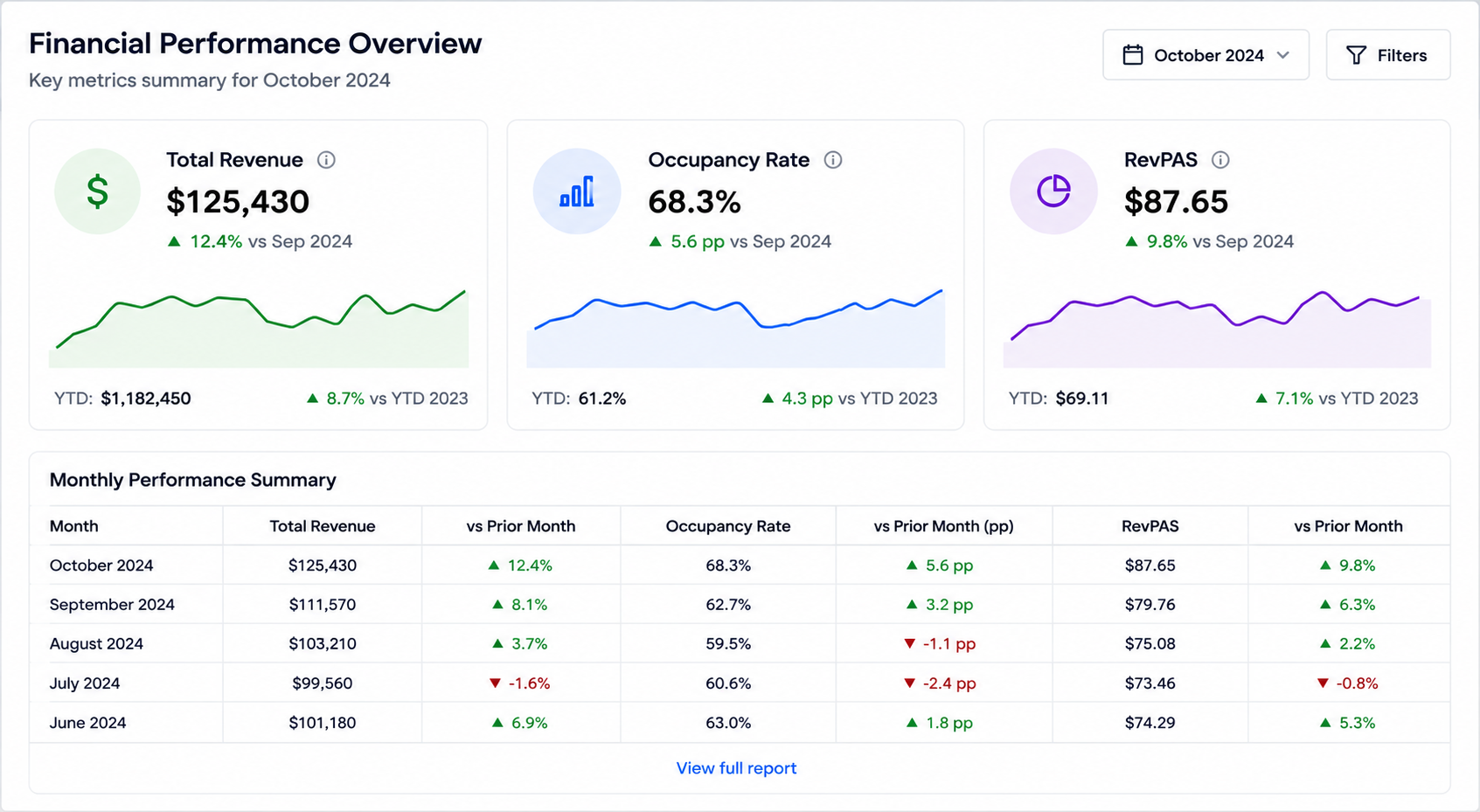
    Annual occupancy numbers can hide a lot. A park that runs 65% annual occupancy with 95% occupancy in June, July, and August and 30% occupancy in November through February looks very different on an annual basis than it does when you model the monthly cash flow. And three years of consistent income at that occupancy level tells you the park is stable, but it does not tell you how much breathing room exists in the slow months.

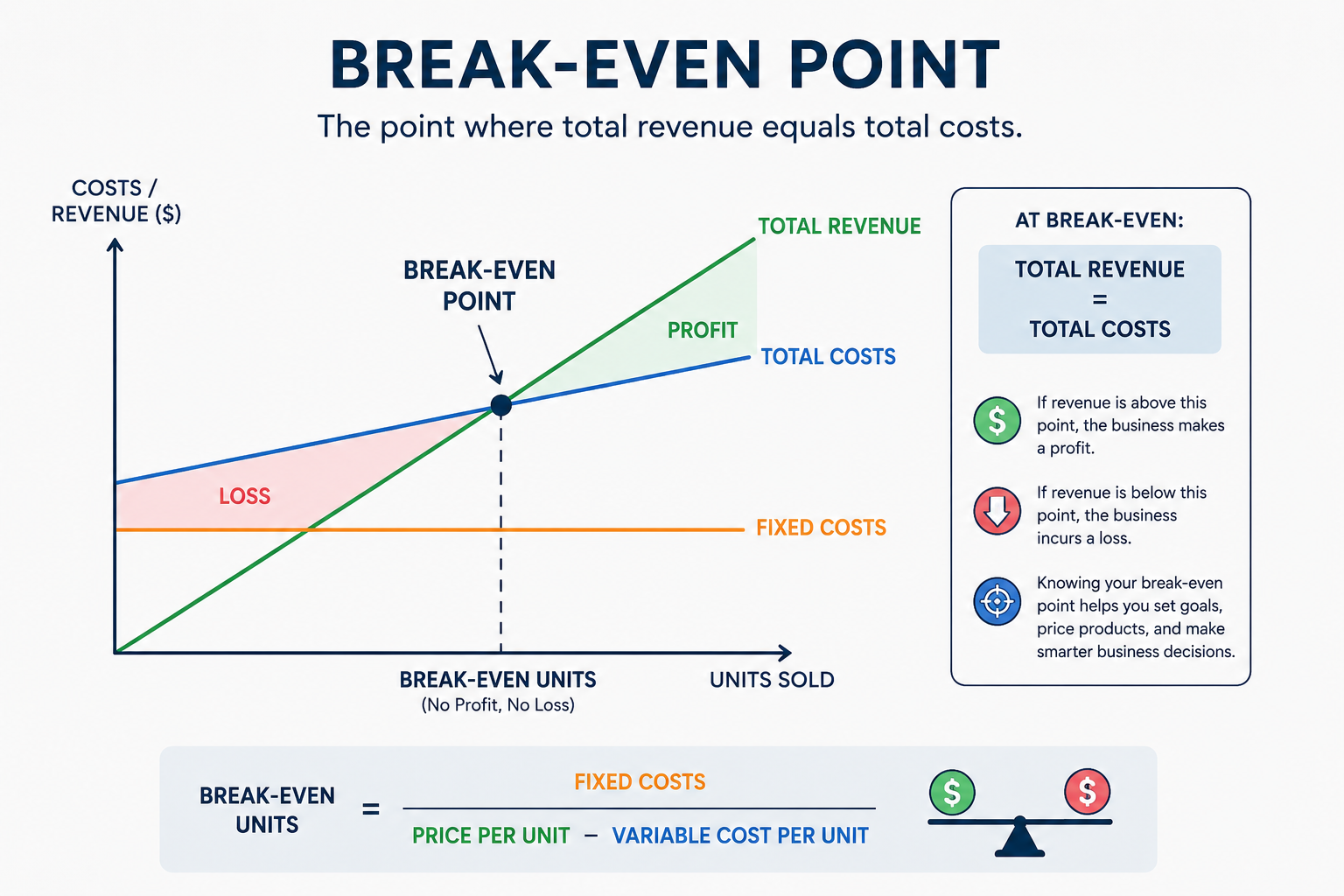
    Fixed costs, debt service, insurance, property taxes, utilities, and minimum staffing do not take the winter off. They run all twelve months. Good RV park financial due diligence means asking for monthly occupancy going back at least two years, broken down by site type. Transient nightly, long term monthly, and any cabin or glamping revenue tracked separately. That monthly picture tells me where the cash flow pressure points are, what the working capital requirement looks like through the slow season, and whether the park can actually service its debt in the months when revenue is thin. For more on running this stress test, read How to Calculate Break-Even for Your RV Park.

    RV park financial due diligence red flag #5: the expense ratio that is too clean

    Well-run RV parks typically run operating expenses between 35% and 50% of gross revenue depending on size, amenity level, and staffing model. A park showing 25% expenses is not necessarily a well-run park. It may be a park where the seller has stripped out costs, deferred maintenance, and stopped replacing things that need replacing.

    When I see an expense ratio below 30% the first question in RV park financial due diligence is what is missing. Is there a management fee? Is insurance current? Are property taxes current? Is maintenance being expensed or capitalized? Is payroll realistic for the size of the operation?

    The goal is not to assume the seller is being dishonest. The goal is to find the real number, because the expenses that are missing today show up on your P&L in year one.

    RV park financial due diligence red flag #6: permits that do not match the operation

    This one has financial consequences that most buyers never think about until it is too late.

    A park operating 85 sites with permits for 70 is not generating legal revenue on 15 of those sites. Those sites are a liability, not an asset. If a compliance review or a sale triggers an inspection, the unpermitted sites may need to be shut down, brought up to code, or removed entirely. The cost of that correction can range from tens of thousands to hundreds of thousands of dollars depending on the infrastructure involved.

    Permit verification is a non-negotiable part of RV park financial due diligence. I confirm that the number of operating sites matches the permitted site count, and that health department permits for the pool, bathhouse, and any food service are current and transferable to a new owner. Permits that are issued to an individual rather than the property can sometimes lapse at sale, which creates a gap in operations and a cost to reinstate.

    RV park financial due diligence red flag #7: OTA dependency hiding in the revenue mix

    If 60% or more of a park’s bookings come through a single online travel agency, that concentration is a financial risk that needs to be priced into the deal.

    OTA platforms charge commissions of 8% to 15% of the booking value. They can change their algorithms, their fee structures, and their terms at any time. A park that is heavily dependent on one platform for its occupancy is one policy change away from a revenue problem, and that risk belongs in your RV park financial due diligence analysis before you make an offer.

    A healthy park has diversified booking channels and a growing direct booking percentage. A park that cannot tell you where its bookings come from has a data problem on top of the concentration risk.

    RV park financial due diligence red flag #8: long term tenants at below market rates with no lease end date

    Long term tenants provide revenue stability, but they can also cap your upside in ways that significantly affect valuation.

    A park with 30% of its sites occupied by long term tenants paying $350 a month when market rate is $650 a month has a gap of $300 per site per month. On 25 sites, that is $7,500 a month or $90,000 a year in unrealized revenue. If those tenants have no lease end date and have been there for years, the practical reality is that rate increases will be slow, contested, and potentially damaging to occupancy if pushed too aggressively.

    The RV park financial due diligence question here is how long it realistically takes to close that gap, because the timeline matters enormously for the return model. A value-add thesis built on bringing long term rents to market is valid if the math works over a realistic hold period. For more on how revenue mix affects your returns, read RV Park Return on Investment: 5 Dangerous Mistakes That Destroy Your Returns Before You Close.

    RV park financial due diligence red flag #9: deferred capital expenditure hiding underneath clean financials

    A park can look financially healthy on paper while sitting on $300,000 to $500,000 of deferred capital needs that will land on the new owner’s balance sheet within 24 months of closing.

    Electrical pedestals at end of life cost $3,000 to $5,000 per site to replace. Roads and pads that look acceptable in photos may need resurfacing. A septic system running at or over capacity is a regulatory and operational risk. A bathhouse built in 1987 that has never been updated is not a charming vintage feature, it is a capital event waiting to happen.

    Building a deferred capex estimate is one of the most important outputs of RV park financial due diligence. I use it to adjust the purchase price, negotiate a seller credit, or set a post-close capital reserve. A lender who does these loans every day will often require a capital reserve anyway, but I want my client to have their own number before the lender gets involved. For more on what lenders are actually looking at, read What a Lender Actually Looks at Before Approving an RV Park Loan.

    RV park financial due diligence red flag #10: property tax exposure after sale

    In some states, a property sale triggers a full reassessment at the new purchase price. If the current owner bought the park 15 years ago for $800,000 and you are buying it today for $3,200,000, your property tax bill after closing may be dramatically higher than what the seller’s financials show.

    This is not a red flag in the sense that someone is hiding something. It is a financial consequence of the acquisition that belongs in your RV park financial due diligence model before you finalize your offer. I run a property tax estimate at the new purchase price for every deal, using the local mill rate and assessment ratio, and I use that number in my expense model rather than the seller’s current tax bill.

    On a $3,200,000 acquisition in a state where property is assessed at 80% of purchase price and the mill rate is 20 mills, the annual property tax is approximately $51,200. If the seller was paying $18,000 a year based on their original purchase price, that is a $33,200 expense difference that goes straight to your NOI and DSCR calculations. That is not a small number and it is one that surprises buyers who skip this step in RV park financial due diligence.

    RV park financial due diligence red flag #11: a cap rate and exit that have never been modeled

    The last red flag in RV park financial due diligence is not something hiding in the seller’s financials. It is something missing from the buyer’s analysis.

    I am always surprised by how many buyers evaluate a deal based on whether it cash flows in year one without ever modeling the exit. What is the cap rate you are buying at, and how does it compare to where comparable parks are trading? If you are buying at an 8% cap and the market compresses to 7% over your hold period, what does that do to your exit value? If you add amenities and grow NOI by 20%, what does the property sell for at year five at a stabilized cap rate?

    Every deal I underwrite includes a 10-year cash flow model, a Year 5 and Year 10 exit analysis, an IRR calculation, and a cash-on-cash return for every year of the hold. That is not advanced financial modeling. That is the minimum a serious buyer should know before they make an offer. The cap rate you buy at is the foundation of the entire return, and the exit is where most of the equity is made or lost. If you have not modeled both before you sign, you are not doing RV park financial due diligence. You are guessing.

    For a complete acquisition underwriting framework, my book From Offer to Operation: The Complete RV Park Investor’s Guide includes a 60-point due diligence guide and is available for immediate download on Gumroad or by searching the title on Amazon.

    The bottom line on RV park financial due diligence

    The seller’s job is to show you the best possible scenario. Your job is to dig to the worst, because you do not want to be 12 months in and out of cash.

    RV park financial due diligence is not about finding reasons to kill a deal. The Florida portfolio I mentioned at the top of this post is still on the table. We are still negotiating. The occupancy number changed the model, it did not end the conversation.

    That is what this process is for. Just truth, so you can make a real decision with real numbers.

    If you want help underwriting a deal you are looking at, deal screening starts at just $99 and a full acquisition underwrite is priced depending on complexity. Reach out at PVIFinancial.com.

    Related reading:

    For the full list of RV park acquisition resources, visit my RV Park Resource Library, updated daily.

    ~Wendi | Fractional CFO | PVIFinancial.com

  • RV Park Investing: 3 Deals on My Desk Proving This Is Not the Passive Income Play You Think It Is

    RV Park Investing: 3 Deals on My Desk Proving This Is Not the Passive Income Play You Think It Is

    Right now I have 5 RV park deals on my desk, and every single one is teaching me something about RV park investing.

    A three park portfolio in Florida, one motorcoach resort and two long term parks. A waterfront destination park in Oklahoma. And a river property in North Carolina with an equestrian vibe, acres of trails, and a guest experience that is genuinely hard to put a cap rate on.

    All three are in active underwriting at different stages. All three have shown me something different this month. And all three have reminded me why RV park investing is one of the best opportunities in commercial real estate right now, and also one of the most misunderstood asset classes I have worked in.

    Here is what I want to say before we go any further. RV park investing is not passive income. I know that is not what you read on most investing blogs, and I know the pitch sounds great: land, cash flow, outdoor recreation tailwinds, and a fragmented market full of mom and pop operators who have not raised rates in ten years. All of that is true. But so is this: RV parks are businesses, not mailbox money, and the investors who treat them like mailbox money are the ones who call me six months after closing wondering why the numbers do not look like the offering memorandum.

    I just talked to a seller who took over a park using creative financing with no payments due for twelve months. The plan was to come in, make updates, add amenities, and get the park running the way they envisioned it. Six months in, they have barely made a dent in the construction list, and they have not done a single thing on the marketing side. Their reasoning? They do not want guests to be disappointed by the noise and the unfinished state of the property.

    I understand the instinct, but here is the reality: they now have six months left before payments kick in, no revenue coming in to cover what is coming, and no pipeline of guests being built. That is not a renovation strategy. That is a countdown clock. RV park investing rewards owners who treat it like the business it is from day one, not from the day they feel ready.

    I built my last company working fourteen hour days. I am not scared of hard work and I love the entrepreneur life. But I want you to go into RV park investing with eyes wide open, because the upside is very real, and so is the work required to capture it.

    Now let me tell you what my desk looks like this week.

    RV park investing is not one asset class, it is actually several

    One of the biggest mistakes I see buyers make in RV park investing is assuming all parks underwrite the same way. They do not, and the three deals I am working right now make that point better than anything I could say in theory.

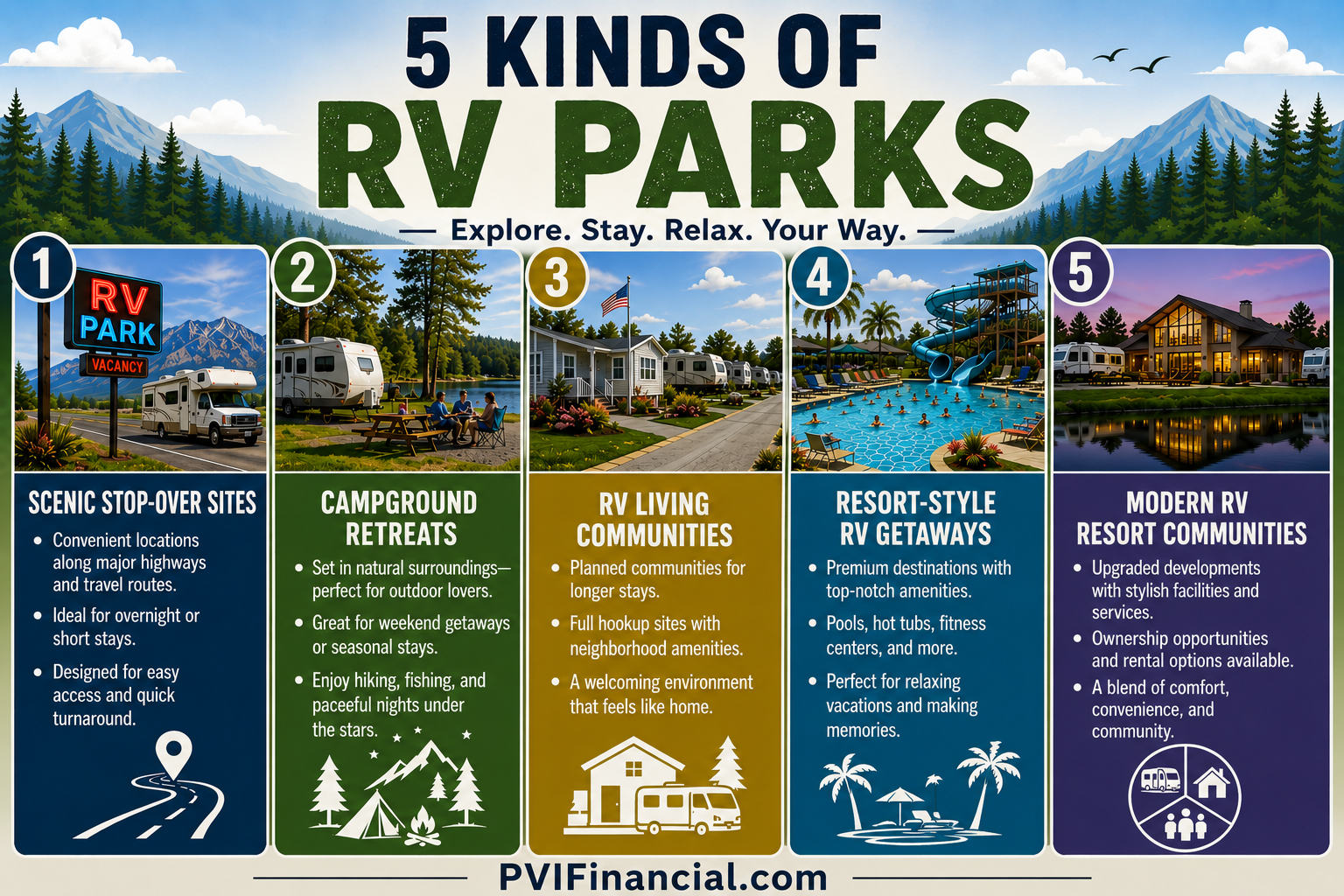
    The Florida portfolio is the clearest example. One motorcoach resort and two long term parks, all under the same ownership, all in the same general market, and all three are completely different animals financially. The motorcoach resort runs premium nightly rates, attracts a higher income traveler, and lives and dies by its amenity stack and online reputation. The two long term parks run on monthly site rent, have lower per site revenue, and operate more like a mobile home park than a traditional campground. Same seller. Same state. Completely different underwriting. This is one of the most important things to understand about RV park investing before you ever make an offer.

    The Oklahoma waterfront park is a destination play. Location is doing a lot of the heavy lifting there, and the questions I am asking are about durability, what holds this park together when the peak season ends and what the off season expense structure actually looks like. Every destination park in RV park investing has a version of this question hiding underneath the surface numbers.

    The North Carolina river property is something else entirely. Equestrian trail access, acreage, a lifestyle amenity that you genuinely cannot replicate. The question there is not whether guests love it, they do, it is whether the financial infrastructure exists to support what it is trying to be. That is a different kind of red flag in RV park investing, not fraud, not deception, just a gap between the experience the park delivers and the systems behind it.

    Each of these deals requires a completely different underwriting lens. If you want to go deeper on how to think through deal types before you make an offer, my RV Park Resource Library has a growing list of posts on acquisition analysis, due diligence, and financial modeling, and it grows daily.

    Gross income is not the whole story in RV park investing

    One of the Florida sellers sent me her financials early in the process. Software reports, a T-12, and P&Ls. Clean presentation. Organized. On the surface it looked like exactly what I needed.

    I asked for the occupancy reports from her reservation software.

    She said she already gave me all the income.

    I explained that I did not need the income number. I needed to know how it was earned.

    It took a full week to get those reports. A week of back and forth, explaining that gross income alone does not tell me whether revenue came from 80% occupancy at market rates, or 40% occupancy at premium rates, or a handful of long term tenants subsidizing a park that transient guests are not actually choosing. Those are three completely different businesses with three completely different risk profiles, and they can all produce the same gross income number on a P&L.

    This is not a knock on the seller. She was not hiding anything. She genuinely did not understand why the number was not enough. But that gap, between what income looks like on paper and how it was actually earned, is where deals get mispriced in RV park investing, and where buyers who skip this step get hurt.

    If you want to see what happens when a buyer accepts income at face value without rebuilding the revenue picture, I wrote about exactly that in The $312,000 Mistake. It happens more than you think.

    Revenue mix is the most underrated number in RV park investing

    Once you have the occupancy data, the next question in RV park investing is what is driving the revenue and whether that revenue is durable.

    A park with 70% long term tenants looks stable on paper. Monthly site rent, predictable cash flow, low turnover. But long term tenants also cap your upside, limit your ability to raise rates quickly, and in some cases represent a cultural dynamic that is genuinely hard to change after closing. Buyers who underwrite long term parks at transient rates are making a serious error in RV park investing, and I see it more often than I should.

    A park that is 80% transient looks exciting on paper. Nightly rates, strong average daily rate, flexible pricing. But transient revenue is seasonal, weather dependent, OTA dependent in some cases, and requires active management of reservations, marketing, and guest experience. That is not passive. That is hospitality.

    Understanding your revenue mix before you close is not optional in RV park investing. It is the difference between buying what you think you are buying and buying something that only looks like it on the surface. For more on how to pressure test the revenue picture before you make an offer, Buying a Mom and Pop RV Park: 7 Hidden Risks That Destroy First Year Cash Flow is worth reading next.

    Seasonality is a cash flow problem, not just a calendar problem

    Every buyer in RV park investing knows parks can be seasonal. What fewer buyers model correctly is what seasonality actually does to cash flow over a twelve month period, and that gap is where first year owners get into real trouble.

    Here is a simplified version of what I look at. Say a park generates $1,200,000 in annual revenue. Sounds solid. But if 70% of that revenue ($840,000) comes in five months and the other 30% ($360,000) comes in seven months, the cash flow picture looks completely different from the annual number. Fixed costs like debt service, insurance, property taxes, and minimum staffing do not take the winter off. They run all twelve months.

    A park with $1,200,000 in annual revenue and $780,000 in annual fixed costs including debt service looks fine on an annual DSCR. But if $65,000 of those fixed costs hit in January and revenue that month is only $28,000, you have a liquidity problem, not a profitability problem. Those are different issues with different solutions, and most buyers I work with in RV park investing never model the monthly cash flow picture before closing.

    The North Carolina equestrian property I am looking at right now has this exact dynamic. Beautiful park, loyal guests, strong reviews. The monthly cash flow model is where the real conversation starts. For more on how to run this kind of stress test, How to Calculate Break-Even for Your RV Park walks through the math step by step.

    RV park investing is a great opportunity if you treat it like a business

    I said it at the top and I will say it again. RV park investing is one of the best opportunities in the market right now. The fundamentals are genuinely strong: fragmented ownership, under-managed assets, a growing base of RV owners and outdoor recreation enthusiasts, and a financing environment where a lender who does these loans every day can structure an acquisition that works for your specific deal. The RVIA publishes current data on RV shipments and industry growth that is worth bookmarking if you want the macro picture.

    But the investors who win in RV park investing are the ones who go in understanding that they are buying a business, not a check. The parks that perform are the ones with owners who are engaged, financially literate, and willing to do the work of running a hospitality operation with real estate underneath it.

    I built a company working fourteen hour days. I am not telling you that to brag. I am telling you because I want you to know that when I say RV park investing requires real work, I am not trying to scare you off. I am trying to set you up for success. The upside is absolutely there. So is the work. And if you go in knowing both of those things, you are already ahead of most buyers I see in this market.

    If you want help understanding what a deal actually looks like financially before you make an offer, deal screening starts at just $99 and a full acquisition underwrite is priced depending on complexity. Reach out at PVIFinancial.com.

    Related reading:

    For the full acquisition framework in one place, my book From Offer to Operation: The Complete RV Park Investor’s Guide is available for immediate download Here at Gumroad or by searching the title on Amazon.

    Check out the RV Park Resource Library for the full list of posts, updated daily.

    ~Wendi | Fractional CFO | PVIFinancial.com

  • RV Park SBA Loan Default: 6  Harsh Truths Every Owner Needs to Know

    RV Park SBA Loan Default: 6 Harsh Truths Every Owner Needs to Know

    I’ve spent eight years lending my own money against real estate, and one pattern shows up every single time I hear of someone else’s deal going sideways. The people who get hurt worst are the ones who never modeled what failure actually looks like before they signed.

    RV park SBA loan default is a version of that same pattern, and it’s one I underwrite for the same way I underwrite lending risk. You sign the personal guarantee before you’ve collected a single site fee, and most buyers never sit down and map out what happens if the numbers stop working. That’s backwards, and it’s the single biggest gap I see when I review acquisition financials for RV park clients.

    Here’s the part that catches people off guard. The SBA guarantee on your loan protects your lender. It does nothing for you. Let me say that again because it is worth repeating. It does nothing for you. If the park underperforms and the loan can’t be serviced, an RV park SBA loan default can reach your personal cash, non exempt home equity, brokerage accounts, tax refunds, wages, and your future ability to borrow through SBA, FHA, VA, or USDA programs.

    None of that means an SBA 7(a) loan is a bad tool. For most buyers it’s still the best financing option on the table. It just means the downside needs to be underwritten with the same rigor as the upside, and that’s exactly the gap this post is meant to close.

    Why RV park SBA loan default is a long tail risk, not a rare one

    I compare every acquisition I review against my own lending book, where secured first position loans run around 11% annually. That benchmark forces a question most buyers skip: does this deal clear the bar after you account for what happens if it doesn’t perform?

    The SBA doesn’t publish a clean acquisition specific default number, since RV parks get lumped in with startups, expansions, and working capital loans in their reporting. But the cumulative default rate for the 7(a) program over a full 10 year loan term runs close to 8.73%, and most RV park acquisition loans are 10 year notes. Annual purchase rates (what SBA pays lenders on defaulted guarantees, as a share of the active portfolio) have sat in the 1.0% to 1.4% range over the last three fiscal years, with charge off rates well under 1%.

    Translate that into plain terms. Most RV park loans do not end in default. But across a full decade, the odds are high enough that ignoring the tail risk is a mistake, not a shortcut.

    The sequence behind RV park SBA loan default, and where it actually starts

    A missed payment is not the same thing as default, and default is not the same thing as an RV park SBA loan default that follows you home for years. Understanding where one ends and the other begins is the first real defense against RV park SBA loan default risk.

    Delinquency starts the day a payment is late. Default is a breach of the loan documents, which can include missing a payment, letting insurance lapse, moving pledged collateral without approval, or filing bankruptcy. Neither one automatically means the lender has stopped working with you.

    Acceleration is the real turning point. That’s when the lender calls the full loan balance due immediately instead of just the missed payments. Everything before acceleration is about fixing the loan. Everything after is about the lender recovering the debt, and that shift in posture is what actually defines an RV park SBA loan default in practice.

    Once acceleration happens, liquidation follows: collecting receivables, selling equipment and vehicles, and in some cases foreclosing on pledged real estate. This stage is where an RV park SBA loan default stops being a paperwork problem and starts being a recovery process. For loans approved after May 14, 2007, federal rule lets a lender ask SBA to honor the guarantee once a borrower is 60 days delinquent and uncured, but only after the business’s personal property, meaning equipment, inventory, vehicles, and receivables, has been liquidated first. That’s a narrower bar than most owners assume facing an RV park SBA loan default. It does not mean every personal asset gets swept before SBA steps in.

    The DSCR number that tells you how close you actually are to RV park SBA loan default

    Most buyers run a single base case debt service coverage ratio and call it done. I don’t think that’s rigorous enough for a business as seasonal as an RV park, where one bad summer or one new competitor down the road can move revenue more than people expect, and can turn a comfortable loan into an RV park SBA loan default candidate faster than owners think.

    Here’s the stress test I actually run: solve for the revenue level where DSCR falls to exactly 1.0x, using contribution margin instead of a flat expense ratio.

    Say a park runs $1,600,000 in annual revenue, with operating expenses at 42% of revenue and fixed costs of $665,000. Annual SBA debt service is $165,000, which puts EBITDA around $263,000 and DSCR at roughly 1.6x, a healthy looking number on paper.

    Now solve for the floor. Fixed costs plus debt service, divided by the 58% contribution margin, comes out to about $1,431,000. That means the park can only absorb about a 10.6% revenue decline before debt service coverage breaks. If a park depends on one or two long term tenants or a single seasonal event for a meaningful chunk of revenue, that 10.6% cushion disappears fast, and RV park SBA loan default risk moves from theoretical to real. I go deeper on running this exact math in How to Calculate Break-Even for Your RV Park.

    What SBA guaranty purchase actually means for RV park SBA loan default, and what it doesn’t

    This is where I see the most confusion, even among buyers who’ve done their homework everywhere else on RV park SBA loan default risk.

    Say a park’s loan balance sits at $2,200,000 when things fall apart. Liquidating business assets recovers $310,000, leaving a deficiency of $1,890,000. If SBA’s guaranteed share is 75%, SBA reimburses the lender $1,417,500.

    It’s tempting to read that as, “SBA covered most of it, so I only owe the rest.” That’s not how it works. SBA’s payment goes to the lender, not to reducing your debt. You still owe against the full $1,890,000 deficiency. What changes is who holds the claim, since SBA now has a 75% interest in that deficiency and the lender keeps the remaining 25%. If a later settlement collects $500,000 from you directly, that splits roughly $375,000 to SBA and $125,000 to the lender at that same ratio. The total owed doesn’t shrink just because SBA wrote a check to your lender.

    Once the deficiency is set, an Offer in Compromise becomes the path forward if the debt can’t be paid outright. That’s an ability to pay analysis, not a negotiation over what discount feels fair, built around personal financial statements, tax returns, bank and brokerage records, and a home equity review. If it’s not resolved at that stage, it can move to Treasury, where collection tools expand to wage garnishment, tax refund offsets, credit reporting, and in some cases DOJ referral, and the same debt gets considerably harder to unwind.

    What I check before a client signs an SBA note to keep RV park SBA loan default off the table

    I underwrite RV park deals the same way I underwrite my own lending positions, looking for the failure case first, because that’s where RV park SBA loan default risk actually hides.

    I diligence the lender before I diligence anything else in the financing stack. How many RV park or ETA acquisition loans has this lender actually closed? What does their deferment process look like when a borrower calls early? What’s their track record on purchase and recovery for comparable deals? For more on what a good lender is actually evaluating, see What a Lender Actually Looks at Before Approving an RV Park Loan.

    I price customer and revenue concentration explicitly instead of hoping it holds. If a handful of long term sites or one seasonal contract carry a large share of revenue, that gets reflected in the purchase price, an earnout, or seller financing terms, not just noted and ignored.

    I treat working capital as a form of debt protection. A park that needs $400,000 to run through its slow season and closes with $150,000 hasn’t been bought efficiently, it’s been bought with a liquidity gap baked in.

    I use seller financing as a shock absorber wherever the seller will agree to it. A note on standby or interest only terms creates real breathing room that a note amortizing on day one does not. I break down how to structure these terms in How to Analyze a Seller Carry Deal.

    I insist on a cash reserve that doesn’t get touched, whether that’s three to six months of debt service or a minimum balance held after every closing cost, even when the SBA loan itself doesn’t require one. I’ve watched what happens when owners skip this step in RV Park Reserve Fund Mistakes.

    And I verify the earnings the way a lender should, not the way a lender will settle for. Owner add backs, seasonal timing, deferred maintenance, and one good summer dressed up as a trend all need to be pressure tested before the purchase price gets locked in. I wrote about exactly what goes wrong when this step gets skipped in The $312,000 Mistake.

    So how much do you actually owe once RV park SBA loan default happens?

    These are the three questions I get asked most often about RV park SBA loan default once the deficiency stage arrives.

    Q: If my loan balance is $2,200,000 and the park defaults, do I owe the whole $2,200,000, even after SBA pays my lender?

    A: No. Liquidating business assets recovers a chunk of that first, in the earlier example, $310,000, which brings the number down to a $1,890,000 deficiency. That deficiency, not the original loan balance, is what you actually owe.

    Q: Once SBA pays the lender its guaranteed share, does that reduce what I owe?

    A: No, and this is the misconception I run into most. SBA’s payment reimburses the lender. It doesn’t forgive you or shrink the deficiency. It just changes who holds the claim to that $1,890,000 going forward, split between SBA and the lender according to their guaranteed percentage.

    Q: So what’s the one number that actually matters here?

    A: The deficiency after collateral liquidation. That’s the figure that follows you personally through the guarantee, not the original loan amount and not the SBA’s reimbursement to the lender.

    The bottom line on RV park SBA loan default

    RV park SBA loan default follows a predictable sequence: delinquency, a workout window if you engage early, acceleration if you don’t, liquidation, SBA guaranty purchase, a deficiency, and either a settlement or a slow slide toward Treasury collection. Not every owner goes through every stage of RV park SBA loan default. Plenty cure early, restructure, or sell the park as a going concern before it gets anywhere close to this.

    But the guarantee itself never disappears just because SBA steps in to reimburse the lender, and that’s the single fact every RV park SBA loan default case eventually comes back to. Understanding that now, while the park is performing and there’s no pressure on the clock, is worth far more than trying to learn it during a workout call.

    If you want a second set of eyes on a deal’s DSCR, working capital position, or lender terms before you sign, that’s exactly the kind of work I do at PVIFinancial.com.

    Related reading:

    For structuring a purchase the right way from the start, check out my RV Park Resource Library (https://pvifinancial.com/rv-park-resource-library/), and for the full walkthrough on underwriting an acquisition, my book From Offer to Operation: The Complete RV Park Investor’s Guide is available on Gumroad here: https://wendipvifinancial.gumroad.com/l/kqmyb or by searching the title on Amazon.

    For more on how SBA guaranty purchase and recovery actually works at the program level, Live Oak Bank (https://www.liveoakbank.com/) is a solid outside resource, since they’re one of the largest SBA lenders in the country.

    ~Wendi | Fractional CFO | PVIFinancial.com

  • Buying an RV Park: A Practical 2026 Roadmap From First Look to First 90 Days

    Buying an RV Park: A Practical 2026 Roadmap From First Look to First 90 Days

    Buying an RV park looks simple from the outside. Find a park, check the cap rate, get a loan, collect the site rent.

    The reality has more moving parts, and the buyers who get hurt are the ones who skip steps. I underwrite these deals for a living, and this roadmap walks through the major stages of buying an RV park, from the market itself to your first 90 days as an owner.

    Why RV Parks Are Attracting Investors in 2026

    The demand side keeps growing. The RV Industry Association reports over 11 million American households now own an RV.

    Remote work turned full-time RV living into a real option for working professionals. Boomers are retiring into the lifestyle, and Millennials are the fastest-growing buyer group.

    The supply side barely moves. Most counties make new park zoning very difficult, and some existing parks get converted to housing developments and disappear.

    Growing demand plus near-fixed supply is the backdrop for anyone buying an RV park right now.

    One caution: an RV park is not passive income. It is part commercial real estate, part hospitality business. The land appreciates like real estate, but the revenue behaves like a hotel, with seasonality, reviews, and guests who expect service. That is why parks can outperform passive real estate, and why they demand more of you.

    Site Mix: What Actually Drives the Money

    Two 100-site parks can have completely different earning power. Site mix is the biggest reason, and it is the first thing I study when buying an RV park.

    Full hookup sites (water, sewer, electric) are the premium product. Typical nightly rates run $50 to $80 in most markets, higher at destination resorts.

    Partial hookup sites rent meaningfully lower. Tent and primitive sites lower still.

    Converting a partial site to full hookup typically costs $5,000 to $15,000 per site, and it is one of the cleanest value-add plays in the asset class.

    Electrical service matters just as much. Modern rigs need 50-amp power. A park stuck on 30-amp pedestals is invisible to the highest-paying guests, and upgrades run a few thousand dollars per site. Count the 50-amp sites yourself when buying an RV park, and never take the listing’s word for it.

    Guest mix is the other half of the equation. Monthly long-term guests provide stable income at lower rates, usually a few hundred to $1,500 per month. Nightly transient guests pay far more but disappear in the off-season, and balancing the two is a core decision in buying an RV park.

    Neither is better in the abstract. What matters is knowing which business you are actually buying.

    Clearly break down your revenue mix. Site rent is usually 70 to 85 percent of total revenue. The rest comes from cabins, the camp store, laundry, and fees. Cabins deserve special attention, because they rent for double or triple a site and open the park to people who do not own an RV at all.

    Occupancy Is a Curve, Not a Number

    The occupancy pattern depends entirely on where the park sits, and reading it correctly is step one in buying an RV park.

    Snowbird markets (Florida, desert Southwest): full all winter, quiet all summer.

    Northern parks: most revenue lands between Memorial Day and Labor Day, some close completely for winter.

    Year-round markets: steadier occupancy, often in the 70s and 80s.

    Highway travel-route parks: lower overall, swinging with the seasons.

    None of these patterns is a problem by itself. But you need to see the pattern clearly before you commit.

    Plot the trailing 24 to 36 months of revenue by month before you even think of writing an offer. If the seller cannot produce monthly numbers, that tells you something too. Buying an RV park without seeing the revenue curve is buying blind.

    The Seller’s Books Will Be Messy. Plan on It.

    Here is what nobody tells you about buying an RV park: the financials you receive will almost never be usable as-is.

    Most parks run cash basis books in QuickBooks, or a shoebox. The P&L often includes the owner’s truck, health insurance, sometimes groceries.

    Revenue gets recorded when deposits hit the bank, not when the stays happened. That distorts seasonality and makes year-over-year comparisons meaningless, which is a real problem when buying an RV park.

    Before you can value anything, rebuild the revenue on an accrual basis and strip the personal spending out of the expenses. In my underwriting work, that reconstruction regularly moves NOI by 10 to 20 percent, in either direction.

    Every number that follows, the price, the loan, the returns, sits on top of that rebuilt NOI. Get it right first.

    Valuation: Cap Rates and What Parks Actually Trade For

    RV parks are valued on cap rates: NOI divided by purchase price. Rough 2026 ranges by park quality:

    Destination resorts with premium amenities: 5 to 7 percent

    Quality established parks: 7 to 9 percent

    Standard parks: 8 to 10 percent

    Value-add and heavily seasonal parks: 10 to 13 percent or higher

    Lower cap rate means higher price for the same income. The higher cap rates on rougher parks are compensation for risk and work, not free yield.

    Expense ratios are the other half of NOI. Well-run parks operate at 30 to 45 percent of revenue. When a broker package shows 25 percent on a full-amenity park, expenses are missing, usually a management fee, real maintenance, and reserves.

    A quick worked example. A 90-site park: 70 full hookups averaging $55 a night at 58 percent occupancy is about $820,000. Twenty partial sites add roughly $72,000. Cabins, store, laundry, and fees add about $61,000. Gross revenue lands near $953,000.

    At a realistic 42 percent expense ratio, NOI comes in around $553,000. At a 9 cap the park is worth about $6.1 million. At an 8 cap, $6.9 million. Small assumption changes move big money when buying an RV park.

    That $800,000 spread between two defensible cap rates is why you never anchor on the broker’s number when buying an RV park.

    The trap: a package showing a 9 cap on pro forma NOI might be a 6 cap on real trailing numbers. Underwrite off verified trailing twelve month actuals, adjusted for a market-rate management fee even if you plan to self-manage. Every lender and every future buyer will apply that fee whether you did or not.

    Due Diligence When Buying an RV Park: What to Inspect and Verify

    Infrastructure first. These are the systems that carry six-figure price tags when they fail.

    Water: well or municipal, capacity at peak weekends, pipe age, testing history, compliance.

    Sewer: municipal, septic, or hybrid, capacity at full occupancy, dump station condition. Septic surprises are expensive and slow to fix.

    Electric: amps per site, pedestal condition, code compliance.

    Roads and pads: drainage, pad length for modern rigs. Road repair commonly runs $1,000 to $3,000 per site when it comes due.

    Amenities: pool code compliance, bathhouse condition, Wi-Fi infrastructure. Guests now treat Wi-Fi as a utility, not a perk.

    Environmental: a Phase 1 assessment is cheap insurance. Pull the FEMA flood maps, get flood insurance quotes, and ask directly about flooding history. Parks sit near water on purpose, and flood exposure changes your insurance cost, which changes your NOI.

    Permits and zoning: confirm the use is legal, the permits transfer, and no moratorium blocks expansion.

    Budget honestly for what you find. Most parks carry $50,000 to $500,000 in deferred capital needs at acquisition. A first 24-month capex budget of 5 to 15 percent of purchase price is a reasonable planning range when buying an RV park.

    Then the financial diligence, which is what actually kills deals:

    Verify the occupancy claim. Pull the reservation system export and reconcile it against bank deposits and tax returns. When the sources disagree, the claim is unverified, and unverified occupancy gets underwritten down, not taken on faith.

    Question flat rate history. A park that has not raised rates in five years is not automatically upside. Sometimes the market will not bear more. Sometimes the monthly guests leave the moment you try.

    Check the customer base. Repeat guest percentage, geographic origin, and reviews across Google, Campendium, and Good Sam tell you whether the revenue is durable. A park living off one annual event or one aging group of monthlies has concentration risk the P&L never shows.

    Financing: What to Expect in 2026

    SBA 7(a) does the heavy lifting for owner-operator deals up to $5 million. Down payments start around 15 percent for a first-time buyer, repayment stretches as long as 25 years when real estate is involved, and rates adjust with the market rather than staying fixed. Details are at the SBA 7(a) loan page.

    Specialty lenders in outdoor hospitality understand seasonal revenue instead of panicking at it. A generalist lender who has never seen a seasonal curve will slow your deal down at best. If you want a referral to lenders who know this asset class, contact me at PVIFinancial.com.

    Conventional commercial lending takes over on larger deals, roughly $5 million and up, at 25 to 35 percent down.

    Seller financing deserves real attention when buying an RV park. It can cover up to 50 percent of the purchase price, and a seller note on standby can help complete an SBA capital stack. After eight years as a private money lender with over $4 million deployed in first trust deeds, I can tell you a seller willing to carry paper is signaling confidence in their own park, and the note terms are as negotiable as the price.

    Here is what you should internalize about financing: the lender underwrites the deal independently. If your numbers came from the broker’s pro forma, the appraisal will find the gap 60 days into escrow, after your diligence money is spent.

    Buyers who show up with clean, accrual-based, verified financials close faster and negotiate better.

    Where the Real Upside Lives

    Every listing promises upside. Here is where it actually exists, in rough order of reliability:

    Below-market rates. If comparable parks genuinely charge more, raising rates to market is real upside. It takes two or three seasons of gradual increases, not one jump, and only after you have verified the comps.

    Hookup conversions. Partial to full hookup raises per-site revenue substantially when the water and sewer systems can support it.

    Modern operations. Online booking and a real website capture occupancy a phone-and-paper operation loses.

    Amenity additions. Cabins, a proper camp store, expanded laundry. Each adds its own revenue and supports higher site rates across the board.

    Guest mix optimization. Shifting the monthly-versus-transient balance toward what the market rewards moves revenue without touching a single rate.

    The discipline is simple: model each play before you pay for it. Upside you pay the seller for is not upside, it is just price. Buying an RV park at a basis where the value-add belongs to you is the entire game.

    Run It Like an Underwriter, Not a Fan

    Before I finish underwriting any park, the model has to answer five questions:

    What is the verified NOI today? What does real debt service look like? What is the year-one cash-on-cash return? What capital does the park need in the first 24 months? And what has to be true for this deal to beat what the same money earns elsewhere?

    That last question matters most. Buying an RV park is not the goal. Buying the right park at the right basis is the goal, and the discipline to walk away is the most valuable skill in the process.

    Your First 90 Days as an Owner

    Weeks 1 and 2: move the reservation system and bank accounts, update insurance, honor every existing reservation, meet the staff one on one before changing anything.

    Weeks 3 and 4: walk the infrastructure yourself, compare the site mix to what you underwrote, read every review from the past two years.

    Month 2: build your capex priority list from what you now see up close. Review rates with real data. Hold rate changes until at least day 90.

    Month 3: start the strategy work. Marketing improvements, first capital projects, relationships with the county and local businesses.

    And from day one, set up real books. Clean accrual accounting from your first day means you never inherit the mess you just untangled from the seller, and your numbers become the rare set a future buyer’s underwriter does not have to rebuild.

    If buying an RV park is the offense, the financial systems behind it are the defense. Championships get won on defense.

    Common Questions About Buying an RV Park

    How much money do I need?

    Plan on roughly 15 to 20 percent down for an SBA deal as a first-time buyer, plus closing costs, off-season working capital, and a real capex reserve. On a $2 million park, total liquidity of $450,000 to $600,000 is a realistic target.

    What is a good cap rate?

    There is no single number. Destination resorts trade at 5 to 7 percent, established parks at 7 to 9, standard parks at 8 to 10, value-add parks at 10 or above. What matters is that the cap rate sits on verified NOI, not the broker’s pro forma.

    Can I do this with no experience?

    Yes, people do it every year. The ones who succeed try to keep the existing staff through the transition and get professional help on the numbers before they buy, not after something goes wrong. Experience helps, but discipline matters more in buying an RV park.”

    How long does buying an RV park take?

    My lender says they can close in 45-60 days, but it can be up to 90 to 150 days from signed letter of intent to close on an SBA deal if the financial information is not well organized. The search before that can take months, because most listed parks are priced for a buyer who does not check the math.

    Is an RV park passive income?

    No. It is an operating hospitality business. You can hire management, but a market-rate management fee belongs in your underwriting either way.

    What kills most deals?

    Financials that do not survive verification. Occupancy claims the records do not support, pro forma expenses missing a management fee and reserves, and rebuilt NOI coming in far enough below asking that the deal no longer pencils.

    Go Deeper

    I wrote From Offer to Operation: The Complete RV Park Investor’s Guide to walk through the entire acquisition process in detail, from the first broker call through your first season of ownership. It is also on Amazon if you search the title.

    The Resource Library has dozens of posts organized by topic, including deeper dives on valuation, operating expenses, and financing.

    And if you are looking at a specific park right now and want the numbers verified before you commit real money, that is exactly the kind of work I do. Reach out at PVIFinancial.com.

  • RV Park Financing: 5 Hard Truths About Zero Down Deals and Seasonality

    RV Park Financing: 5 Hard Truths About Zero Down Deals and Seasonality

    RV park financing gets pitched as easy money more often than any other part of this business. Zero down, seller carries the whole thing, cash flow from day one. It sounds great right up until you understand what kind of business an RV park actually is, and how a loan behaves when it is attached to income that moves with the calendar. Zero down is not a strategy in this asset class. It is a countdown. Let me walk you through why, and more importantly, how to prepare for the seasonality that makes these properties different from almost everything else you could buy. Getting RV park financing right starts long before you ever fill out a loan application.

    An RV park is not an apartment building with a signed twelve month lease. Income swings hard, season to season, site to site. A park can do 65 or 70 percent of its annual revenue between April and September. That is not a flaw, it is the business model. But a loan payment does not take the winter off, and that mismatch between lumpy income and fixed debt service is where undercapitalized buyers die. Here are five hard truths about how RV park financing really works.

    Truth 1: Lenders price RV park financing around seasonality, and you should too

    Ask any lender who actually does outdoor hospitality what worries them most about these properties and seasonality is at or near the top of the list. Occupancy in July tells them very little about your ability to make the February payment. That is why RV park financing gets underwritten on trailing twelve month revenue rather than a hot summer quarter, why lenders discount transient income more than long term site income, and why they want to see monthly financials, not just an annual P&L. If your lender is going to look at your income month by month, you need to look at it month by month first. Before you ever apply for a loan, build a twelve month cash flow model for the specific park you are buying, using its actual monthly history, not an annualized average. An average hides the exact months that will hurt you. Smart RV park financing starts with knowing your monthly numbers before the bank asks for them.

    Truth 2: DSCR is your survival margin, not a box to check

    Debt service coverage ratio is the number that decides whether you sleep at night, and it sits at the center of every RV park financing decision. DSCR is your net operating income divided by your annual loan payment. Most lenders want at least 1.25x on an RV park, meaning the park earns 25 percent more than the loan payment. That 25 percent is not profit padding, it is the cushion that carries you through the slow months that are coming whether you plan for them or not. Here is the part most buyers miss: annual DSCR can look fine while monthly DSCR is a disaster. A park with $90,000 of NOI and a $72,000 annual payment covers at 1.25x on paper. But if $60,000 of that NOI shows up between April and September, then October through March produces $30,000 of NOI against $36,000 of payments. You are negative for six straight months and you make it up in summer, if summer cooperates. One rainy season, one gas price spike, one road construction project on the highway that feeds your park, and the annual number stops mattering. When I underwrite a park, I calculate coverage month by month for exactly this reason, and I stress test occupancy down 10 and 20 percent to see where the deal breaks. This is why RV park financing has to be underwritten monthly, not annually.

    Truth 3: Zero down RV park financing destroys the math before you get the keys

    Run the RV park financing numbers on a real example. Say a park is priced at $1,000,000 with $90,000 of verified NOI, a 9 cap, a reasonable deal on its face. Finance it with 25 percent down at 7.5 percent on a typical 25 year amortization and your loan is $750,000, your payment is roughly $66,500 a year, and your DSCR is a healthy 1.35x. That is real cushion, room for a soft season, a repair, a vacancy stretch. Now finance the same park with zero down. The loan is $1,000,000, the payment jumps to roughly $88,700 a year, and the park earns $90,000. Your DSCR is 1.01x. You clear about $1,300 for the entire year, before a single vacancy, a single repair, or a single slow month. That is not cash flow, that is a rounding error standing between you and default. Every dollar of rent is spoken for before you touch it, in a business where the rent does not hold still. One soft summer and you are feeding the property out of pocket to keep something that was sold to you as passive income. The down payment was never the obstacle. It was the cushion. Zero down RV park financing removes that cushion and calls it a feature.

    Truth 4: The balloon payment is where zero down deals actually die

    Most seller carried RV park financing deals and many bank loans carry a balloon, commonly at year three or five. Here is what that looks like on the zero down version of our example. After three years of payments on that $1,000,000 note on a 25 year amortization, you still owe about $954,000, because early payments are almost entirely interest. Now the balloon comes due and you need to refinance. A new lender will typically lend 70 to 75 percent of appraised value on a park. If the park still appraises at $1,000,000, the most they will hand you is around $700,000 to $750,000. You owe $954,000. You need to show up with roughly $200,000 to $250,000 in cash to close the gap, on a property that has been eating your lunch money every winter. You do not have it, so the park goes back to the person who sold it to you. He keeps the payments you made. You keep the lesson. This is not a rare outcome, it is the designed outcome of a zero down balloon structure on a thin margin asset. If you take seller financing, and seller financing done right can be a genuinely good tool, negotiate a term long enough to season the property and build equity, and know your refinance math before you sign, not at month 30. The balloon is where RV park financing punishes hope and rewards preparation.

    Truth 5: Reserves and a monthly plan are the real down payment on survival

    Preparing financially for seasonality is not complicated, but almost nobody does it. Here is the framework I use. First, build the month by month cash flow model I mentioned above, using at least two years of the park’s actual monthly revenue if you can get it. Identify your worst stretch, usually a run of three to five consecutive negative months. Second, fund a reserve account before closing that covers that entire gap, plus a margin. At minimum I want to see three months of debt service plus fixed operating costs sitting in cash on day one, and for a heavily seasonal park, six months is not paranoid, it is professional. Third, hold a separate capital expenditure reserve, because septic systems, electrical pedestals, and well pumps do not check your occupancy calendar before they fail. Fourth, treat summer cash like it belongs to winter, because it does. A simple discipline of sweeping a fixed percentage of peak season revenue into the reserve account every month will do more for your survival than any occupancy hack. And on the loan side, shop RV park financing structures that respect seasonality. An SBA 7(a) loan can get you into a park with as little as 10 to 15 percent down on a fully amortizing term up to 25 years with no balloon, which removes the single deadliest feature of these deals. You can read how the program works directly at the SBA’s 7(a) loan page, and lenders like Live Oak Bank specialize in outdoor hospitality and understand seasonal income when they underwrite. The right RV park financing structure plus a funded reserve is what turns a seasonal business into a stable one.

    What smart RV park financing actually looks like

    Buy for stable income, verified from real monthly financials, not a broker’s pro forma. Buy with real equity, 20 to 30 percent down, so the loan payment fits inside the income with room to breathe and so you have something to refinance against when the term ends. Buy with coverage, 1.25x annually and positive or fundable monthly, stress tested before you commit. And walk into closing with reserves already funded, because the slow season is not a risk, it is a certainty with a date on the calendar.

    If you want to go deeper on any of this, my Resource Library at PVIFinancial.com/rv-park-resource-library has guides on acquisition, cash flow management, and financial systems for park owners.

    And if you are evaluating a purchase right now, my book, From Offer to Operation: The Complete RV Park Investor’s Guide, walks through the entire process from underwriting to your first year of operations. It is on Gumroad and you can also find it on Amazon by searching the title.

    If you are looking at a deal and you want the RV park financing numbers run before you sign, the DSCR, the seasonal cash flow model, the refinance math, that is exactly the kind of work I do. Reach out at PVIFinancial.com.

  • RV Park Mail Policy: The 1 Simple Rule That Protects Your Business From a Costly Legal Nightmare

    RV Park Mail Policy: The 1 Simple Rule That Protects Your Business From a Costly Legal Nightmare

    RV park mail policy is one of those operational details that feels minor until the moment it is not. Most owners set it up once and forget about it, or worse, never set it up at all. And then one day they have a guest who has been on site for six weeks who enrolled their kid in the local school using the park address, has their driver’s license updated to your address, and is receiving government benefits at your location. Now you have a problem that no park rule can fix quickly.

    Here is what you need to understand about why your mail policy matters more than almost any other operational decision you will make.

    RV park mail policy is a legal classification issue, not just a convenience issue

    The difference between a transient lodging facility and a residential property is not just about how long people stay. It is about what evidence exists that someone considers your park their home. Courts, school districts, government agencies, and landlord-tenant law all look at the same kinds of evidence when making that determination. Mail is at the top of that list.

    When a guest uses your park address to receive mail, especially mail tied to identity and residency like a driver’s license, school enrollment, government benefits, tax documents, or utility bills, they are building a paper trail that supports a claim that your park is their primary residence. That paper trail does not disappear when you ask them to leave. It becomes the foundation of a legal argument that you no longer have the right to remove them the way you would remove a hotel guest who overstays their welcome.

    This is why your RV park mail policy is a legal classification decision first and an operational rule second.

    When a guest becomes a tenant your options change dramatically

    This is the part that blindsides new park owners. In most states the legal distinction between a transient guest and a residential tenant determines what process you have to follow to remove someone from your property. A transient guest at an RV park can typically be removed under your park rules with relatively short notice. A residential tenant, even one living in an RV, is entitled to full eviction proceedings under landlord-tenant law.

    Full eviction proceedings mean written notices with legally required waiting periods, court filings, hearings, potential continuances, and in some cases months of delay while someone continues to occupy a site you need back. It means legal fees. It means your hands are tied while the situation gets worse. And it means other guests are watching how you handle it.

    The moment a guest can demonstrate residency at your park, whether through mail, school enrollment, a state ID, or any other official document, you have potentially lost the legal high ground that protects your ability to operate as a transient RV park rather than a residential landlord.

    Your RV park mail policy is the first line of defense against this exact scenario playing out in your park. This is exactly why your RV park mail policy needs to be airtight before your first guest ever checks in.

    A strict no mail policy is your first line of defense

    The good news is this is entirely preventable with a clear, consistently enforced policy established from day one. Your park rules should state explicitly that no mail, packages, or deliveries of any kind may be received at the park address. No exceptions. No special circumstances. No accommodating the guest who swears it is just one package.

    When guests push back, and some will, the answer is simple. There are alternatives that work just as well for them and protect your business at the same time. A P.O. box at the local post office costs very little. UPS Store and PostalAnnex locations offer mail receiving services. Amazon lockers are available in most areas for package delivery. These options exist precisely for people whose living situation does not include a permanent mailing address.

    Your no mail policy should be in your park rules, reviewed and signed by every guest at check-in, and enforced without exceptions. The moment you make an exception for one guest you have created a precedent in your RV park mail policy that every other guest can point to.

    What about long term monthly guests?

    This is where it gets more complicated and where a lot of park owners get into trouble. If you have monthly guests who are essentially living in your park full time, the mail policy conversation becomes part of a much larger question about how you are legally classifying those guests and what your state’s laws say about extended stay residents.

    In many states a guest who stays beyond a certain threshold, sometimes 30 days, sometimes longer, may already be entitled to tenant protections regardless of whether they receive mail at your address. If that is your situation you need to know it now, not when you try to remove someone.

    The safest approach for parks with long term monthly guests is to work with an attorney in your state to understand exactly where the legal line is between a transient guest and a residential tenant, structure your lease agreements accordingly, and build your mail policy as one piece of a larger legal framework designed to protect your classification and your rights as an operator. The National Association of RV Parks and Campgrounds is also a good resource for understanding industry standards around guest classification and park operations.”

    A strict no mail policy alone will not protect you if your overall operation looks residential. It has to be part of a consistent, documented approach to how you manage extended stay guests from check-in to check-out.

    A well structured RV park mail policy is one piece of that framework but it cannot do the job alone.

    Put it in writing before you need it

    The time to establish your RV park mail policy is not when you have a problem. It is before your first guest ever checks in. If you are acquiring a park that has been operating without a clear mail policy, or worse one that has been allowing mail delivery, address it immediately. Update your rules. Communicate the change clearly to all current guests with adequate notice. And document everything.

    If you already have guests who have been receiving mail at your park address, talk to an attorney who specializes in landlord-tenant law in your state before you take any action. The situation may be more complicated than a simple rule change can fix, and you want to handle it correctly rather than create additional legal exposure in the process of trying to solve the first problem.

    For more on the financial and legal risks that new owners inherit when they acquire a park with informal policies in place, read The Hidden Financial Risks of Buying a Mom-and-Pop Operation and Long-Term RV Guests Are Taking Over: 5 Ways It Breaks Your Books.

    Documenting and consistently enforcing your RV park mail policy from day one is what keeps you protected.

    The bottom line

    Your RV park mail policy is not a minor operational detail. It is a legal protection that preserves your ability to operate as a transient RV park, remove problem guests, and avoid the time, expense, and stress of residential eviction proceedings. One clear rule, enforced consistently from day one, protects your business, your team, and every guest who is there for the right reasons.

    A clear RV park mail policy enforced from day one is one of the simplest and most powerful protections available to any park operator.

    If you want help thinking through the operational policies and financial systems that protect your park from day one, that is exactly the kind of work I do. Reach out at PVIFinancial.com and let’s make sure your park is set up to operate the way you intend it to.

    If you are setting up your park for the first time or tightening up operations after an acquisition, my book From Offer to Operation: The Complete RV Park Investor’s Guide covers the operational and financial systems every new owner needs from day one, including a comprehensive 60-point due diligence checklist. It is available on Gumroad and on Amazon, just search the title.

    And if you want to browse all of my posts on RV park finance, operations, acquisitions, and bookkeeping organized by topic, visit the PVI Financial Resource Library.

    ~Wendi | Fractional CFO | PVIFinancial.com

  • RV Park Pricing Strategy: 7 Proven Ways to Stop Leaving Money on the Table Every Season

    RV Park Pricing Strategy: 7 Proven Ways to Stop Leaving Money on the Table Every Season

    RV park pricing strategy is one of the highest leverage financial decisions you make as a park owner, and most owners are getting it wrong in ways that cost them tens of thousands of dollars every season. They set rates based on what they charged last year, what the park down the road charges, or what feels comfortable, none of which is a pricing strategy. A real RV park pricing strategy is built on data, adjusted constantly, and designed to capture the maximum revenue the market will support at every point in the season.

    This post breaks down the seven most effective RV park pricing strategy approaches that consistently produce more revenue, better occupancy, and stronger NOI without adding a single new site or spending a dollar on capital improvements. Every strategy here can be implemented with the systems most parks already have in place.

    Here are seven proven ways your RV park pricing strategy can stop leaving money on the table every single season:

    1. Build your RV park pricing strategy around a rate audit first

    Before you change a single rate, you need to know where you stand relative to the market. A rate audit is the foundation of any effective RV park pricing strategy and it is the step most owners skip entirely.

    Here is how to do it. Pull the current rates for every comparable park within a 30 to 50 mile radius. Include parks of similar size, amenity level, and location type. Record their rates by site type, hookup level, and season. Then map your own rates against theirs.

    If your rates are consistently 15% to 25% below comparable parks you have an immediate RV park pricing strategy opportunity that requires no capital investment and no operational change. If your rates are already at or above market you need to look at value-added amenities and differentiation before you push rates higher.

    A rate audit should be done at minimum once per year, ideally before you set your rates for the upcoming season. Market conditions change, new parks open, and demand shifts. Your RV park pricing strategy needs to reflect the market as it is today, not as it was three years ago. For more on how rate decisions affect your cap rate and asset value, read RV Park Rate Increase Mistakes: 3 Costly Ways Operators Destroy Their Own Cap Rate.

    2. Implement seasonal rate tiers as the core of your pricing strategy

    A flat rate that does not change by season is one of the most common and most costly RV park pricing strategy mistakes. Demand for outdoor hospitality is not flat across the year. Peak summer weekends, holiday weekends, and shoulder season weekdays are completely different demand environments and your rates should reflect that.

    A solid RV park pricing strategy uses at minimum three rate tiers. A peak rate for your highest demand periods, typically summer weekends and major holidays. A standard rate for your solid but not peak periods, typically weekdays in summer and weekends in shoulder season. And an off peak rate for your slowest periods designed to attract price-sensitive guests and fill sites that would otherwise sit empty.

    The spread between your peak and off peak rates should be meaningful. A 30% to 50% spread between peak and off peak rates is common in well-run parks and it is what allows you to capture maximum revenue during high demand while staying competitive during slow periods. Your RV park pricing strategy should treat each rate tier as a distinct product with its own price point and its own target guest.

    3. Add dynamic pricing to your RV park pricing strategy

    Dynamic pricing is the evolution of seasonal rate tiers and the most powerful tool available in modern RV park pricing strategy. Where seasonal tiers set rates based on time of year, dynamic pricing adjusts rates in real time based on actual demand, booking pace, and remaining availability.

    When you are 90% booked for a holiday weekend six weeks out, your rates should be climbing automatically. When you have 40% availability two weeks before a slow midweek period, a targeted discount should be filling those sites before the window closes. Dynamic pricing does both automatically so you are always capturing the maximum revenue the current demand environment will support.

    Campspot is widely considered the industry standard for dynamic pricing in the outdoor hospitality space and Firefly Reservations offers strong AI-powered dynamic pricing as well. If your current reservation system does not support dynamic pricing, upgrading to one that does is one of the highest return investments available in your RV park pricing strategy. Parks using dynamic pricing consistently report revenue increases of 20% to 30% over flat rate models.

    4. Differentiate your rates by site type and attribute

    A one-size-fits-all rate is a missed RV park pricing strategy opportunity. Not all sites are equal and your pricing should reflect that. A pull-through site with full hookups and a waterfront view is worth more than a back-in site with electric only in the back corner of the park. Charging the same rate for both leaves money on the table and creates guest dissatisfaction when guests feel they paid the same for a less desirable site.

    Build your RV park pricing strategy around site attributes. Create rate categories for hookup level, with full hookups commanding a premium over electric only or dry camping. Add premiums for desirable attributes like waterfront, pull-through access, extra-large site size, or proximity to amenities. And consider a premium tier for your best sites that can command a meaningful price difference from your standard inventory.

    Attribute-based pricing is one of the most immediately impactful RV park pricing strategy changes you can make because it captures value that already exists in your inventory but is currently being given away at a flat rate.

    5. Use minimum stay requirements as a revenue tool

    Minimum stay requirements are an underutilized element of RV park pricing strategy that can significantly improve your revenue per available site during peak periods. Without a minimum stay requirement during high demand weekends, you risk filling Friday and Saturday nights with two-night guests while blocking out guests who want to stay the full holiday week at a higher total revenue per site.

    A smart RV park pricing strategy uses minimum stay requirements strategically. During peak holiday weekends, a three or four night minimum prevents short-stay guests from occupying sites that could generate significantly more revenue from guests who want a full week. During shoulder season when demand is softer, removing minimum stay requirements or reducing them to one night makes your inventory more accessible to price-sensitive guests who might not otherwise book.

    Most modern reservation platforms support minimum stay requirements by date range and site type, making this one of the easiest RV park pricing strategy tools to implement once you have the right system in place.

    6. Price your add-ons and amenities intentionally

    Add-on pricing is the part of RV park pricing strategy that most owners either ignore entirely or handle inconsistently. Firewood, ice, bike rentals, kayak launches, golf cart rentals, propane refills, premium Wi-Fi, and early check-in or late check-out are all revenue opportunities that should be priced intentionally as part of your overall RV park pricing strategy rather than set arbitrarily or given away for free.

    The goal is not to nickel and dime guests. It is to price your offerings in a way that reflects their value, covers your costs with a reasonable margin, and feels fair to guests. Guests who understand the value of what they are paying for are happy to pay for it. Guests who feel like they are being squeezed on every small thing are not.

    Review your add-on pricing annually alongside your site rates. If your add-on revenue as a percentage of gross revenue is below 10% to 15%, your RV park pricing strategy is leaving ancillary revenue on the table. For a deeper look at how to grow ancillary revenue, read How to Increase RV Park Revenue: 9 Proven Strategies That Stop Leaving Money on the Table.

    7. Track and review your RV park pricing strategy monthly

    The final and most important element of a strong RV park pricing strategy is the habit of reviewing it regularly. Pricing is not a set it and forget it decision. It is a living part of your business that should be adjusted based on what the data is telling you about demand, occupancy, and revenue per available site.

    Build a monthly pricing review into your financial routine. Look at your RevPAS, revenue per available site, for the prior month and compare it to the same month last year. Look at your booking pace for the next 60 to 90 days and identify any periods where you are significantly above or below historical occupancy. Look at your add-on revenue as a percentage of gross revenue and identify any categories where performance is declining.

    A monthly RV park pricing strategy review takes 20 to 30 minutes and gives you the visibility to make proactive adjustments before a revenue opportunity closes. The parks that consistently outperform their market on revenue per site are the ones where pricing is treated as an active management discipline, not a passive annual decision.

    The RV Industry Association publishes benchmarks on revenue per available site and seasonal occupancy patterns that can help you calibrate your pricing targets against what well-run parks in your market are achieving.

    If you want help building a pricing model for your park, identifying where your rates are out of line with the market, and setting up a monthly pricing review process, that is exactly the kind of work I do with owners. Reach out at PVIFinancial.com and let’s make sure your RV park pricing strategy is working as hard as your park does.

    ~Wendi | Fractional CFO | PVIFinancial.com

  • RV Park Operating Expenses: 7 Costs That Quietly Destroy Your Profit Margin Every Single Month

    RV Park Operating Expenses: 7 Costs That Quietly Destroy Your Profit Margin Every Single Month

    RV park operating expenses are the part of the business that every owner thinks they have under control until they sit down and actually look at the numbers. Revenue feels tangible. Guests check in, money comes in, and the park feels busy and profitable. Expenses are quieter. They accumulate in the background, show up as line items on a P&L that nobody reads carefully enough, and slowly compress margins until the park that felt profitable starts feeling tight.

    Understanding your RV park operating expenses in detail is one of the most important financial habits you can build as a park owner or investor. It is also one of the most neglected. This post walks you through the seven operating expense categories that most consistently destroy profit margins, why each one gets out of control, and exactly what to do to bring them back in line.

    Here are the seven RV park operating expenses that quietly destroy your profit margin every single month:

    1. Utility costs without a recovery system

    Utilities are one of the largest and most variable RV park operating expenses in the business, and most parks are absorbing costs they should be recovering from guests. Water, sewer, electric, and trash are all expenses that scale directly with occupancy and usage, meaning the more guests you have the more you spend, but many parks charge a flat site rate that does not account for utility consumption at all.

    The fix is a utility recovery system. Submetering electric at individual sites allows you to bill guests for their actual consumption rather than absorbing it as a park expense. Even a partial recovery system, billing for electric while absorbing water and sewer, can significantly reduce your net utility cost and improve your margins without raising your headline site rate.

    If submetering is not feasible for your infrastructure, at minimum build a utility cost model that shows you what you spend per occupied site per night and make sure your site rates reflect that cost. Utility costs that are not recovered from guests are a direct drag on your RV park operating expenses and your NOI. For more on utility infrastructure and what to look for, read What to Look for in RV Park Utility Infrastructure.

    2. Payroll without productivity metrics

    Payroll is typically the largest of all RV park operating expenses and the one that is hardest to optimize without the right data. Most park owners know what they spend on payroll. Very few know whether they are getting the productivity they are paying for.

    Common payroll problems in RV parks include overstaffing during shoulder season when occupancy does not justify the headcount, understaffing during peak season which leads to guest experience issues and negative reviews, paying full time wages for roles that only require part time hours, and not tracking labor hours against revenue to understand your labor cost as a percentage of revenue.

    A healthy labor cost for an RV park typically runs between 25% and 35% of gross revenue depending on the size of the park and the level of amenities offered. If your payroll is running above that range your RV park operating expenses are out of line and it is worth building a staffing model that matches headcount to occupancy levels by season.

    3. Maintenance without a scheduled system

    Reactive maintenance is one of the most expensive forms of RV park operating expenses and one of the easiest to reduce with a simple system. When maintenance is done reactively, meaning you fix things when they break rather than before they break, you pay emergency rates, you deal with guest complaints, and you face larger repair bills than you would have if you had caught the issue earlier.

    A scheduled preventive maintenance system does not need to be complicated. A simple calendar that tracks when each major system was last serviced, when it is next due, and what the estimated cost is gives you visibility into upcoming maintenance expenses before they become emergencies. Electrical pedestal inspections, septic pumping, HVAC servicing, roof inspections, and road grading all have predictable cycles that can be scheduled and budgeted in advance.

    Parks that run on a preventive maintenance schedule consistently show lower total maintenance costs as a percentage of revenue than parks that operate reactively. It is one of the highest return improvements you can make to your RV park operating expenses with almost no capital investment required. For more on what maintenance costs to budget for, read RV Park Maintenance Costs: 3 Expensive Surprises Nobody Warns You About at Closing.

    4. Insurance without an annual review

    Insurance is one of those RV park operating expenses that most owners set up once and never revisit. They get a policy at closing, pay the premium every year, and assume they are covered. That assumption is often wrong and almost always expensive.

    RV park insurance needs change as the park changes. If you have added structures, expanded amenities, increased occupancy, or added programming like events or glamping units, your original policy may no longer provide adequate coverage. Underinsurance is a risk most park owners do not think about until they have a claim.

    At the same time, insurance markets change and your current premium may not reflect what is available in the market today. An annual review with an independent insurance broker who specializes in outdoor hospitality can identify coverage gaps and in many cases find equivalent or better coverage at a lower premium. Treating insurance as a fixed and unchangeable RV park operating expense rather than a negotiable one is costing most park owners money every year.

    5. OTA commissions without a direct booking strategy

    Online travel agent commissions are one of the fastest growing RV park operating expenses in the industry and one of the least visible on a standard P&L. When you book a guest through Hipcamp, Campspot, or another OTA platform, you pay a commission that typically runs between 8% and 15% of the booking value. That commission comes off the top of your revenue before it ever hits your account.

    The problem is not using OTAs. They are a legitimate and valuable source of guests especially for parks that are still building their direct booking base. The problem is OTA dependency, where a large percentage of your bookings come through platforms that charge a commission and that you have no control over. A platform policy change, a commission increase, or a delisting can materially impact your revenue overnight.

    The fix is a direct booking strategy that reduces your OTA dependency over time. A direct booking website, an email list of past guests, and a loyalty or repeat guest incentive program all reduce your reliance on paid platforms and lower your effective RV park operating expenses per booking. For a deeper look at OTA dependency and what it costs you, read The Real Cost of Online Travel Agent OTA Dependency.

    6. Administrative costs without automation

    Administrative RV park operating expenses are easy to overlook because they tend to be small individually but add up significantly over time. Reservation management, guest communication, accounting, payroll processing, and reporting all take time and in many parks that time is being spent manually on tasks that could be automated or systemized at a fraction of the cost.

    Reservation software that handles online booking, automated confirmation emails, and payment processing eliminates hours of manual work every week. Accounting software that connects to your bank accounts and categorizes transactions automatically reduces bookkeeping time and cost. Payroll software that handles tax filings and direct deposit removes administrative burden from ownership or management.

    The investment in automation tools for these administrative RV park operating expenses typically pays for itself within the first year in reduced labor hours and fewer errors. If your park is still managing reservations by phone and email and tracking finances in a spreadsheet, you are spending more on administration than you need to be.

    7. Capital reserves that are not being funded

    The most overlooked of all RV park operating expenses is the one that is not showing up on most P&Ls at all. Capital reserves are the money you set aside every month to fund future replacement of major systems and infrastructure, electrical pedestals, roofs, vehicles, septic systems, and roads. Most park owners do not fund a capital reserve at all. They treat capital expenditures as surprises rather than as predictable costs of operating the asset.

    The result is that when a major system fails, and it will eventually, the owner is forced to either pull from cash flow, take on debt, or defer the repair and let the property deteriorate further. All three outcomes hurt your RV park operating expenses, your guest experience, and your asset value.

    A properly funded capital reserve should run between 3% and 5% of gross revenue annually. If your park generates $500,000 in gross revenue, you should be setting aside $15,000 to $25,000 per year into a dedicated reserve account that is not touched for anything other than capital replacements. This is not an optional expense. It is the cost of maintaining the asset you paid for. For more on how to set up a reserve fund correctly, read RV Park Reserve Fund Mistakes: 3 Costly Errors That Turn a Good Deal Into a Nightmare.

    How to get your RV park operating expenses under control

    Getting your RV park operating expenses under control starts with knowing what they actually are. Pull your last 12 months of P&Ls and calculate each major expense category as a percentage of gross revenue. Compare those percentages to industry benchmarks. Identify the categories where you are running above benchmark and prioritize those for immediate attention.

    Then build a monthly expense review into your financial routine. RV park operating expenses do not get out of control overnight. They drift upward gradually, one small increase at a time, until the cumulative impact shows up as compressed margins and tight cash flow. A monthly review catches the drift before it becomes a crisis.

    The RV Industry Association publishes industry benchmarks and operational data that can help you calibrate your expense targets against what well-run parks in your market are achieving.

    If you want help building an expense analysis and benchmark review for your park, that is exactly the kind of work I do with owners every month. Reach out at PVIFinancial.com and let’s find out where your margins are going and how to get them back.

    ~Wendi | Fractional CFO | PVIFinancial.com

  • How to Increase RV Park Revenue: 9 Proven Strategies That Stop Leaving Money on the Table

    How to Increase RV Park Revenue: 9 Proven Strategies That Stop Leaving Money on the Table

    Knowing how to increase RV park revenue is one of the highest leverage skills you can develop as a park owner, because every dollar of additional revenue in this business does not just improve your cash flow, it increases the value of your asset. In a business valued on a cap rate, more NOI means a higher park value, often by a multiple of 10 to 15 times the incremental income depending on your market cap rate.

    Most park owners think about how to increase RV park revenue in terms of raising site rates or filling more sites. Those are important levers but they are not the only ones, and in many cases they are not even the most impactful ones. The parks that consistently grow revenue year over year do it by finding and monetizing value that already exists in the business but is currently being left on the table.

    This post gives you nine proven strategies for how to increase RV park revenue without adding a single new site, starting with the ones that can be implemented immediately and moving to longer term initiatives that compound over time.

    Here are nine proven strategies for how to increase RV park revenue starting today:

    1. Audit your current rates against the market

    The fastest and most impactful strategy for how to increase RV park revenue is making sure your current rates reflect what the market will actually bear. Most parks, especially mom and pop operations, are running rates that have not been meaningfully adjusted in years. Meanwhile demand for outdoor hospitality has grown significantly and comparable parks in the same market are charging more.

    Start by pulling the rates of every comparable park within a 30 to 50 mile radius. Look at their pricing by site type, hookup level, and season. If your rates are consistently 15% to 25% below comparable parks you have an immediate revenue opportunity that requires no capital investment and no operational change.

    Rate increases need to be implemented thoughtfully, especially if you have long term tenants at below-market rates, but the revenue impact of bringing rates to market can be significant. A 20% rate increase on a park generating $400,000 in gross revenue adds $80,000 to your top line and a much larger number to your NOI. For more on how to approach rate increases without damaging your cap rate, read RV Park Rate Increase Mistakes: 3 Costly Ways Operators Destroy Their Own Cap Rate.

    Auditing your rates is the fastest single action you can take when learning how to increase RV park revenue and it requires zero capital investment.

    2. Add dynamic pricing

    Static pricing is one of the biggest revenue leaks in the outdoor hospitality industry. Charging the same rate on a Tuesday in October as you charge on a Saturday in July leaves significant money on the table during peak demand periods and fails to attract price-sensitive guests during slow periods.

    Dynamic pricing adjusts your rates based on demand, availability, and booking window. When you are 90% booked for a holiday weekend six weeks out, your rates should be significantly higher than your baseline. When you have 40% availability two weeks before a slow shoulder season weekend, a targeted discount can fill sites that would otherwise sit empty.

    The good news is that dynamic pricing tools are now built directly into the leading reservation platforms. Campspot, which is widely considered the industry standard for mid to large parks, has a dynamic pricing engine that automatically adjusts rates based on demand and season, and operators consistently report significant revenue increases after implementing it. Firefly Reservations is another strong option with AI-powered dynamic pricing built in, and Newbook offers automated dynamic pricing as well. If your current reservation system does not support dynamic pricing, switching to a platform that does is worth serious consideration. The revenue uplift in peak periods typically far exceeds the cost of implementation.

    3. Monetize amenities you are currently giving away

    Walk through your park and make a list of every amenity you currently provide at no additional charge. Kayak and paddleboard storage. Firewood. Ice. Bike rentals. Game room access. Fishing equipment. Propane refills. Wi-Fi upgrades. Each of these is a potential revenue stream that most parks are currently absorbing as an operating cost or simply not charging for at all.

    Knowing how to increase RV park revenue through amenity monetization does not mean nickel and diming guests. It means pricing your offerings in a way that reflects their value and that guests are genuinely happy to pay for. A guest who pays $5 for a bundle of firewood that you sourced for $2 is a happy guest. A guest who expects firewood to be free because it always has been is a guest you trained with your own pricing decisions.

    Start with the amenities that have a clear cost to you and work toward full cost recovery plus a reasonable margin. Then look at amenities that have little or no cost but high perceived value to guests, like premium Wi-Fi or early check-in, and consider what guests would willingly pay for them.

    Amenity monetization is one of the most overlooked ways to increase RV park revenue and one of the easiest to implement starting this week.

    4. Add glamping or alternative accommodations

    If your priority is learning how to increase RV park revenue and you have available land or underutilized sites, adding glamping or alternative accommodations is one of the highest return investments you can make. Glamping units, safari tents, cabins, tiny homes, and park model RVs all command nightly rates significantly higher than a standard RV site and attract a guest demographic that does not own an RV and would not otherwise visit your park.

    The capital investment varies widely depending on the type of unit and the level of finish, but even a modest glamping addition can meaningfully change your revenue per available site and your overall NOI. A single well-positioned glamping unit generating $150 per night at 60% annual occupancy adds over $30,000 in gross revenue per year with relatively low incremental operating cost.

    One of the most exciting options I have come across for park owners looking to add cabins without a large upfront capital outlay is modular cabins. As the Fractional CFO for a modular cabin company, I have seen firsthand how park owners can add high quality cabins to their existing footprint with no money down. Some are using a lease-to-own structure that lets the revenue from the cabins pay for the units over time. If you are interested in learning more about how that works and whether it could be a fit for your park, reach out to me directly at PVIFinancial.com and I will walk you through the numbers.

    Before adding any structures, confirm that your zoning and permits allow for the additional units and that your utility infrastructure can support the increased demand.

    5. Create an events and programming calendar

    Events and programming are one of the most underutilized strategies for how to increase RV park revenue and one of the most powerful for building a loyal repeat guest base at the same time. Themed weekends, holiday events, live music, food truck nights, ice cream socials, outdoor movie screenings, and family activity programming all give guests a reason to choose your park over a competitor and a reason to come back.

    Events generate revenue directly through ticket sales, food and beverage, and site bookings driven by event attendance. They also generate revenue indirectly by filling sites during shoulder season periods when organic demand is softer and by building the kind of guest loyalty that turns first-time visitors into annual regulars.

    Start with one or two events per season and build from there based on what resonates with your guest base. The incremental cost of a well-run event is often modest relative to the revenue and occupancy impact it drives.

    6. Build a direct booking engine and email list

    Every booking that comes through an OTA platform costs you a commission of 8% to 15% of the booking value. Every booking that comes through your own website costs you nothing beyond the minimal transaction fee of your payment processor. Knowing how to increase RV park revenue through direct bookings is therefore one of the highest margin improvements available to any park owner.

    A direct booking website does not need to be complicated. A clean, mobile-friendly site with clear rate information, an online booking system, and compelling photos of the park is enough to capture a significant percentage of guests who would otherwise book through a platform. Pair it with an email list of past guests and a simple re-engagement campaign before each season and you have a direct booking channel that compounds in value over time.

    For more on OTA dependency and what it is costing your bottom line, read The Real Cost of Online Travel Agent OTA Dependency.

    7. Introduce a loyalty or repeat guest program

    Repeat guests are the most profitable guests in any hospitality business. They cost less to acquire than new guests, they spend more per visit because they know and trust the property, and they refer friends and family at a higher rate than first-time visitors. A simple loyalty program that rewards repeat visits is one of the most cost-effective strategies for how to increase RV park revenue over the long term.

    A loyalty program does not need to be technologically complex. A punch card system that offers a free night after ten paid nights, a returning guest discount applied automatically at booking, or an annual pass product that guarantees a certain number of visits at a predictable price all create the kind of repeat visit incentive that builds a stable revenue base.

    The goal is to make your best guests feel recognized and rewarded for their loyalty so that choosing your park over a competitor is an easy decision every time they plan a trip.

    A repeat guest program is one of the most cost effective long term strategies for how to increase RV park revenue because your best customers are already sold on your park.

    8. Add storage as a revenue stream

    Storage is one of the most capital efficient answers to how to increase RV park revenue because it generates predictable year round income with minimal operating cost. RV and boat storage is one of the most overlooked strategies for how to increase RV park revenue and one of the most capital-efficient to implement if you have available land. Storage customers sign annual contracts, pay monthly, and generate revenue 12 months a year regardless of the season. That predictable, year-round income stream is extremely valuable for a business that otherwise relies heavily on seasonal occupancy.

    Even a small storage operation of 20 to 30 units at $100 to $200 per month generates $24,000 to $72,000 in additional annual revenue with minimal operating cost and no seasonal variability. If you have acreage that is currently sitting unused, storage is worth serious consideration as a revenue diversification strategy.

    Check your local zoning and permitting requirements before implementing a storage operation as some municipalities have specific rules about storage facilities.

    9. Review and optimize your ancillary revenue monthly

    The final strategy for how to increase RV park revenue is the one that ties all the others together. Build a monthly review of every ancillary revenue line item into your financial routine. Track what each revenue stream is generating, compare it to the prior month and prior year, and identify any category where revenue is flat or declining.

    Ancillary revenue, everything beyond your base site fees, is where the margin improvement opportunity is greatest in most parks because it is the category that gets the least management attention. A monthly review that takes 20 minutes gives you the visibility to catch a revenue leak before it compounds and the data to make smart decisions about where to invest in new revenue initiatives.

    The RV Industry Association publishes industry benchmarks on revenue per available site and ancillary revenue as a percentage of gross revenue that can help you calibrate your performance against well-run parks in your market.

    Events and programming are one of the most underutilized strategies for how to increase RV park revenue and one of the most powerful for building a loyal repeat guest base.

    If you want help building a revenue analysis and growth model for your park, including identifying where your biggest revenue opportunities are and how to sequence them for maximum impact, that is exactly the kind of work I do with owners every month. Reach out at PVIFinancial.com and let’s find your hidden revenue together.

    ~Wendi | Fractional CFO | PVIFinancial.com

  • RV Park Return on Investment: 5 Dangerous Mistakes That Destroy Your Returns Before You Close

    RV Park Return on Investment: 5 Dangerous Mistakes That Destroy Your Returns Before You Close

    RV park return on investment is the number every buyer is chasing but very few buyers actually calculate correctly before they commit to a deal. They look at occupancy, they glance at the asking price, and they form a gut feeling about whether the park will perform. That gut feeling is not a return on investment calculation. And the gap between what buyers feel a park will return and what it actually returns is where most of the pain in this industry lives.

    This post breaks down RV park return on investment from the ground up, walks you through the five most dangerous mistakes that destroy returns before you even close, and gives you a clear framework for calculating what any park will actually put in your pocket before you ever make an offer.

    Here are the five dangerous mistakes that destroy your RV park return on investment before you close:

    1. Using the seller’s NOI instead of rebuilding your own

    The single biggest destroyer of RV park return on investment is accepting the seller’s Net Operating Income without rebuilding it from scratch. Every return metric you calculate, cap rate, cash on cash, IRR, all of it flows from NOI. If your NOI is wrong your entire return analysis is wrong.

    Sellers and their brokers build NOI to support the asking price. That means expenses are often understated, management fees are excluded if the owner manages the park themselves, capital reserves are left out, and one-time revenue items are presented as recurring income. The result is an inflated NOI that makes the RV park return on investment look better than it actually is.

    The fix is straightforward but it takes discipline. Go line by line through every expense category and ask whether it reflects what you will actually spend as the new owner. Add management fees at 8% to 12% of gross revenue if the seller manages the park. Add a capital reserve of 3% to 5% of gross revenue. Remove any one-time revenue items from the income line. When you are done you will have a reconstructed NOI that is the foundation of an honest RV park return on investment analysis.

    For a step by step walkthrough of how to rebuild NOI correctly, read How to Evaluate an RV Park Deal: The 6-Step System That Exposes What the Numbers Are Really Saying.

    2. Ignoring the impact of financing on your actual returns

    RV park return on investment looks very different before and after you account for financing costs. Cap rate is a pre-financing metric. It tells you what the asset produces relative to its value assuming you paid all cash. Most buyers are not paying all cash. They are borrowing 70% to 90% of the purchase price and the cost of that debt has a direct and significant impact on what they actually take home.

    In a higher interest rate environment like the current one, debt service can consume a much larger percentage of NOI than buyers expect. A park with a 7% cap rate and a 7.5% interest rate on the mortgage produces very little cash flow after debt service. In some cases it produces negative cash flow, meaning the park costs you money every month rather than paying you.

    Always calculate your RV park return on investment on an after-financing basis. Take your reconstructed NOI, subtract your annual debt service including principal and interest, subtract property taxes and insurance if not already in your expense rebuild, and the result is your pre-tax cash flow. Divide that by your total cash invested to get your cash on cash return. That is your real RV park return on investment, not the cap rate on the broker package.

    For more on how to calculate cash on cash return correctly, read RV Park Cap Rate: The 1 Dangerous Mistake That Causes Buyers to Overpay by Hundreds of Thousands.

    3. Failing to budget for capital expenditures in year one

    One of the most common ways buyers destroy their RV park return on investment in the first year is by failing to budget for capital expenditures at closing. Mom and pop parks in particular often carry years of deferred maintenance that does not show up on the P&L because the previous owner simply chose not to spend the money.

    Aging electrical pedestals, deteriorating roads, failing septic systems, outdated bathhouses, and leaking roofs on common structures are all capital items that will demand your attention and your money in the first year of ownership whether you budgeted for them or not. If you did not factor these costs into your acquisition model, your RV park return on investment for year one will be significantly lower than projected and you may find yourself cash-strapped at exactly the wrong time.

    During due diligence walk every inch of the property with a licensed contractor and get written estimates for every deferred maintenance item you find. Add those costs to your total cash invested when you calculate your return. A $300,000 capital requirement in year one changes your cash on cash return dramatically and needs to be part of your RV park return on investment model from day one. For more on what to budget for, read RV Park Capital Expenditures: 3 Budgeting Mistakes That Wreck New Owners in Year One.

    4. Modeling best case occupancy instead of realistic occupancy

    Optimistic occupancy assumptions are one of the fastest ways to destroy a projected RV park return on investment before you even close. Buyers see a park running at 85% occupancy in July and assume that number represents the business. It does not. It represents one month of peak season performance in a business that may run at 30% occupancy for four months of the year.

    To model RV park return on investment accurately you need to build a month by month occupancy model using actual historical data, not the seller’s projections. Ask for reservation records or a booking history report for the past two to three years. Build a 12 month occupancy picture that reflects the real seasonal pattern of the business. Then stress test that model by reducing occupancy by 15% to 20% across the board and see what your returns look like in a downside scenario.

    If your investment returns only work at peak occupancy assumptions it is a fragile investment. The parks that produce reliable returns year after year are the ones that still make sense when occupancy is softer than expected. For more on how occupancy affects your numbers, read RV Park Occupancy Rate: 3 Dangerous Reasons It’s Lying to You.

    5. Not modeling the full exit

    RV park return on investment is not just about what the park pays you while you own it. It is also about what you get when you sell. Buyers who only model annual cash flow are leaving half the return picture on the table and sometimes making hold or sell decisions based on incomplete information.

    To model your full RV park return on investment you need to project what the park will be worth at your target exit date. That means projecting what NOI will look like in year five or year ten based on realistic revenue growth assumptions, applying a market cap rate to that future NOI to get an estimated exit value, subtracting your remaining loan balance and estimated selling costs, and calculating your total return including both cash flow received during ownership and equity captured at sale.

    This full picture is called an IRR analysis, or Internal Rate of Return, and it is the metric sophisticated investors use to compare RV park return on investment against other investment opportunities. A park that produces modest annual cash flow but significant equity appreciation over ten years may actually outperform a higher cash flowing park on a total return basis. You will not know which one is the better investment without modeling the full exit.

    The RV Industry Association tracks industry data and market trends that can help you calibrate realistic revenue growth assumptions when you are building your long term return model.

    How to calculate your RV park return on investment the right way

    Here is the framework in order:

    Start with verified gross revenue matched to bank statements. Rebuild expenses from scratch using realistic third party ownership assumptions. Calculate your reconstructed NOI. Subtract annual debt service to get pre-tax cash flow. Divide pre-tax cash flow by total cash invested including down payment, closing costs, and immediate capital requirements to get cash on cash return. Then build a five to ten year projection with a modeled exit to calculate your full IRR.

    That is how you calculate RV park return on investment the right way, every time, on every deal. It takes more time than glancing at a cap rate on a broker package but it is the only approach that tells you what you are actually buying and what it will actually return.

    If you want help building a complete return model on a specific deal, I offer acquisition underwriting often with a 24-hour turnaround. You send me the financials and I hand you back a complete RV park return on investment analysis including reconstructed NOI, cash on cash return, stress test scenarios, and a modeled exit. Reach out at PVIFinancial.com and let’s make sure your numbers are right before you commit.

    ~Wendi | Fractional CFO | PVIFinancial.com

  • SBA Loan for RV Park: 7 Critical Things Every Buyer Must Know Before Applying

    SBA Loan for RV Park: 7 Critical Things Every Buyer Must Know Before Applying

    An SBA loan for RV park acquisition is one of the most accessible and powerful financing tools available to outdoor hospitality investors, and one of the most misunderstood. Buyers hear that SBA loans require only 10% down and assume the path to closing is straightforward. It is not always. There are eligibility rules, lender-specific interpretations, deal structure requirements, and common mistakes that derail an SBA loan for RV park transactions at every stage of the process.

    Getting an SBA loan for RV park financing right means understanding the rules before you apply, choosing the right lender before you are under contract, and structuring your deal in a way that actually qualifies. This post walks you through the seven most critical things every buyer needs to know before they pursue SBA financing for an RV park acquisition.

    Here are the seven things every buyer must know before applying for an SBA loan for RV park financing:

    1. Not every RV park qualifies for SBA financing

    The first thing to understand about an SBA loan for RV park acquisition is that eligibility is not automatic. The SBA has specific rules about what types of properties and businesses qualify, and RV parks have a particular requirement that many buyers do not know about until it is too late.

    To qualify for an SBA loan for RV park financing, more than 50% of the park’s revenue must come from short term stays of 30 days or less. This sounds simple but it creates real problems for parks with a significant base of long term or monthly tenants. If your target park has 60% of its revenue coming from monthly or seasonal guests who stay longer than 30 days, it may not qualify for SBA financing regardless of how strong the financials look.

    The 50% short term stay requirement is also interpreted differently by different lenders. Some count monthly tenants as short term. Others do not. This is one of the reasons choosing the right SBA lender for RV park financing is so critical. For more on what lenders look at when evaluating a deal, read What a Lender Actually Looks at Before Approving an RV Park Loan.

    2. The SBA 7(a) and SBA 504 are very different products

    Many buyers pursuing an SBA loan for RV park acquisition do not realize there are two distinct SBA programs and that they work very differently from each other.

    The SBA 7(a) loan is the more flexible of the two. It can be used for business acquisitions including goodwill, working capital, equipment, and real estate. Loan amounts go up to $5 million with repayment terms up to 25 years for real estate. For first time buyers the 7(a) typically requires 10 to15% down, making it the most accessible SBA loan for RV park purchases. Interest rates are variable and capped at a spread over the prime rate.

    The SBA 504 loan is specifically designed for fixed asset purchases, primarily real estate and equipment. It cannot be used to finance goodwill or working capital. The 504 offers long term fixed rate financing which can be attractive when you want payment certainty, but it requires 15% to 20% down and is less flexible for business acquisitions that include intangible value. For most buyers the 7(a) is the better SBA loan for RV park acquisition but your specific deal structure will determine which program fits.

    3. Lender selection is everything when pursuing an SBA loan for RV park financing

    This is the single most important piece of advice for anyone pursuing an SBA loan for RV park financing. Not all SBA lenders are the same. The SBA sets the rules but individual lenders interpret and implement those rules differently, and the difference between a lender who specializes in outdoor hospitality and one who has never financed an RV park can mean the difference between closing your deal and losing it.

    A lender who specializes in SBA loan for RV park transactions understands how to underwrite seasonal revenue. They know that occupancy drops in January and that does not mean the business is struggling. They understand cap rates in the outdoor hospitality space. They have seen the asset class before and they know how to get deals done.

    A generalist lender who has never financed an RV park will apply residential or standard commercial underwriting logic to a seasonal hospitality business and often cannot make the deal work even when the fundamentals are strong.

    I have a direct contact at a lender who finances over 100 RV park loans every single year. If you want an introduction to someone who knows this asset class inside and out and can tell you quickly whether your SBA loan for RV park deal is financeable and at what terms, reach out to me at PVIFinancial.com and I will make the connection. Live Oak Bank is also one of the most well known specialized outdoor hospitality lenders in the country and a strong starting point for any buyer exploring SBA loan for RV park options.

    4. Your personal financials matter as much as the deal

    An SBA loan for RV park acquisition is not just an underwrite of the property. It is also an underwrite of you as the borrower. Your personal credit score, your liquidity after closing, your net worth, your prior business experience, and your personal financial statement all factor into the lender’s decision.

    Most SBA lenders want to see a personal credit score of 680 or higher, though some will go lower depending on the strength of the deal. They want to see that you have sufficient liquidity after closing, meaning your down payment plus closing costs should not wipe out every dollar you have. They want to see relevant business experience, and for an RV park acquisition that means hospitality, property management, or small business ownership experience is a positive signal.

    Get your personal financial statement in order before you apply. Make sure it is current, complete, and professionally presented. A messy or incomplete personal financial statement creates doubt in a lender’s mind at exactly the wrong moment. If you want help packaging your personal financials in a way that gives a lender confidence, that is one of the services I offer at PVIFinancial.com.

    5. The deal structure affects SBA eligibility

    How your deal is structured can make or break SBA loan for RV park eligibility. There are several structural elements that buyers need to understand before they get too far into a transaction.

    Seller financing can work alongside an SBA loan for RV park financing but there are rules. If the seller is carrying a note, the SBA typically requires that note to be on full standby for a period of time, meaning the seller cannot receive payments on their note until after a certain period following closing. Not every seller is willing to accept those terms, so this needs to be discussed early.

    Entity structure also matters. The SBA has rules about who can be a borrower and what ownership structures are eligible. Make sure you have your entity structure reviewed by a lender before you finalize it.

    Finally, the allocation of the purchase price between real estate, equipment, and goodwill affects which SBA program you can use and how the loan is structured. Work with your lender early in the process to structure the deal in a way that maximizes your SBA loan for RV park eligibility.

    6. The timeline is longer than most buyers expect

    One of the most common mistakes buyers make when pursuing an SBA loan for RV park acquisition is underestimating the timeline. SBA loans take longer to close than conventional financing, and in a competitive market where sellers want certainty and speed, a longer timeline can put you at a disadvantage.

    A typical SBA loan for RV park transaction takes 60 to 90 days from application to closing, sometimes longer if there are appraisal issues, environmental concerns, or title complications. Build that timeline into your LOI and purchase agreement. Make sure your due diligence period and your financing contingency window are long enough to accommodate the SBA process without putting you in a position where you are asking for extensions under pressure.

    The best way to compress the timeline is to have your personal financial statement ready, your tax returns organized, your business plan prepared, and your lender selected before you are under contract. The more prepared you are on day one of the application process, the faster your SBA loan for RV park transaction will move.

    7. Get the deal underwritten before you apply

    The final thing every buyer needs to know about an SBA loan for RV park financing is that the lender’s underwriting and your underwriting need to tell the same story. If you submit a deal to a lender based on the seller’s NOI and the lender’s underwriter rebuilds the numbers and gets a very different picture, your loan gets denied or significantly restructured and you may lose your earnest money in the process.

    Before you apply for an SBA loan for RV park acquisition, rebuild the NOI yourself using realistic expense assumptions, stress test the occupancy, and make sure the deal supports the loan amount you are requesting at the debt service coverage ratio the lender requires. Most SBA lenders want to see a DSCR of at least 1.25, meaning the park’s NOI needs to be at least 1.25 times the annual debt service.

    If your deal does not meet that threshold at your reconstructed NOI, you have three options. Negotiate the price down, increase your down payment to reduce the loan amount, or walk away. Knowing this before you apply saves you weeks of time and protects your earnest money.

    The Small Business Administration has detailed information on both the 7(a) and 504 programs including current rates, eligibility requirements, and how to find an approved lender in your area.

    If you want help making sure your deal is lender-ready before you apply, I offer acquisition underwriting often with a 24-hour turnaround. You send me the financials and I hand you back a complete analysis including reconstructed NOI, DSCR calculation, and a clear picture of whether your deal supports the loan amount you need. Reach out at PVIFinancial.com and let’s make sure your SBA loan for RV park application is built on the right numbers.

    ~Wendi | Fractional CFO | PVIFinancial.com๎–๎€ป๎ƒ๎ƒป๎ƒน๎„

    Read this next: How to Buy an RV Park in a Competitive Market: 7 Moves That Win Deals

  • Buying a Mom and Pop RV Park: 7 Hidden Risks That Destroy First Year Cash Flow

    Buying a Mom and Pop RV Park: 7 Hidden Risks That Destroy First Year Cash Flow

    Buying a mom and pop RV park is one of the most talked about strategies in outdoor hospitality investing right now, and for good reason. The majority of RV parks in the United States are still owned by small independent operators who have been running the same park for decades. Many of them are ready to retire, priced reasonably relative to their income potential, and wide open to value-add improvements that a new owner with fresh capital and modern systems can implement quickly.

    But buying a mom and pop RV park comes with a specific set of risks that are very different from buying a professionally managed, institutionally priced asset. These are not risks that show up obviously in the financials. They are embedded in the operations, the infrastructure, the customer relationships, and the systems, or more accurately the lack of systems, that the previous owner relied on for years. These are the risks that make buying a mom and pop RV park so different from any other real estate acquisition.

    Miss them in due diligence and they will find you in month two of ownership when the septic alarm goes off at 2am or your best long term tenant tells you they are leaving because the new rates do not work for them.

    This post walks you through the seven most common and most costly hidden risks in buying a mom and pop RV park, and exactly what to do about each one before you close.

    Here are the seven hidden risks that destroy first year cash flow

    1. The financials are in the owner’s head, not in a bookkeeping system

    The first thing most buyers discover when buying a mom and pop RV park is that the financial records are a mess. Not because the seller is dishonest, but because a small owner-operator who has been running the same park for 30 years often manages the money the way they always have, from habit and intuition rather than from a system.

    Revenue may be tracked in a notebook. Expenses may be paid from a personal account mixed with business transactions. Cash transactions may not be recorded anywhere. Tax returns may show a very different picture than what the seller tells you the park actually earns.

    This matters enormously when buying a mom and pop RV park because the financials are the foundation of your valuation. If you cannot verify the revenue, you cannot trust the NOI, and if you cannot trust the NOI, you cannot know what the park is worth.

    Here is what to do. Request three years of tax returns alongside the P&Ls and match them. Tax returns are harder to manipulate than internal financials and any significant discrepancy between what the seller reports to you and what they report to the IRS is a major red flag. Also request bank statements and match deposits to reported revenue month by month. For more on how to verify the numbers, read How to Evaluate an RV Park Deal: The 6-Step System That Exposes What the Numbers Are Really Saying.

    2. Deferred maintenance is everywhere and none of it is in the price

    Buying a mom and pop RV park almost always means buying years of deferred maintenance that the seller either could not afford to address or simply chose to live with. Aging electrical pedestals, cracked roads, failing septic systems, outdated bathhouses, leaking roofs on common structures, and deteriorating utility infrastructure are all common findings in parks that have been owner-operated for decades.

    None of this shows up as a line item in the financials. In fact, deferred maintenance artificially inflates NOI because money that should have been spent on upkeep was never spent. The park looks more profitable than it really is because the owner was effectively borrowing against the asset by not reinvesting in it.

    Before you close on any mom and pop acquisition, walk every inch of the property with a licensed contractor and get written estimates for every repair and improvement item you find. Add that total to your post-close capital requirement and factor it into your offer price. A $2 million park with $300,000 of deferred maintenance is a $1.7 million park. For more on budgeting for these costs, read RV Park Capital Expenditures: 3 Budgeting Mistakes That Wreck New Owners in Year One.

    3. Long term tenants at below-market rates

    This is one of the most common and most financially damaging surprises in buying a mom and pop RV park. Owner-operators frequently develop personal relationships with long term tenants over years or decades and charge them rates that have not been adjusted to reflect the market. In some cases these tenants are paying 40% to 60% below what the site could command at market rates.

    On the surface this looks fine. The sites are occupied and generating some revenue. But when you buy the park and raise rates to market levels, some of those long term tenants will leave. Your occupancy drops, your revenue takes a hit, and your NOI for the first year looks nothing like what you modeled going in.

    When buying a mom and pop RV park always request a complete rent roll showing every tenant, their current rate, their length of stay, and their lease terms if any exist. Compare those rates to market rates for similar sites in the area. Then model a conservative scenario where 20% to 30% of below-market long term tenants leave when rates are adjusted. That is your realistic first year picture. For more on how long term tenants affect your books, read Long-Term RV Guests Are Taking Over: 5 Ways It Breaks Your Books.

    4. The owner IS the management system

    When buying a mom and pop RV park you are often buying a business that runs entirely on one person’s institutional knowledge. The owner knows which pump has a slow leak. They know which guest always pays late. They know the county inspector by first name and when the annual inspection typically happens. They know the password to the reservation system that nobody else has ever logged into.

    None of that knowledge transfers automatically when you close. If the seller walks away on closing day without a structured transition plan, you are starting from zero in a business that depends on relationships, routines, and local knowledge you do not yet have.

    Always negotiate a transition period as part of the purchase agreement. A minimum of 30 to 60 days where the seller is available by phone and email to answer questions is ideal. If possible, arrange for the seller to be on-site for the first two to four weeks after closing to introduce you to key tenants, vendors, and local contacts. For more on what the first months of ownership look like, read The First 90 Days: What Nobody Tells You About Running a Park After You Close.

    5. Unpermitted structures and zoning issues

    Unpermitted structures are one of the most common legal landmines in buying a mom and pop RV park. Buying a mom and pop RV park often means buying a property that has been added to, modified, and expanded over decades without always following the proper permitting process. A storage shed built without a permit. A bathhouse addition that was never inspected. Additional sites added beyond what the original permit allowed. Seasonal structures that became permanent without approval.

    These issues are not always malicious. Small owner-operators often do not know or do not think about permits for minor improvements. But when you buy the property those unpermitted structures become your liability. A county inspector who has looked the other way for years may not extend the same courtesy to a new owner.

    During due diligence request copies of all permits and certificates of occupancy for every structure on the property. Then verify them with the county directly. Any structure that cannot be permitted should be factored into your offer as a potential cost to remediate or remove.

    6. Vendor and service relationships that do not transfer

    When buying a mom and pop RV park you will almost certainly inherit a set of vendor relationships that exist because of the previous owner’s personal network, not because of the business itself. The plumber who comes out same-day because he has known the owner for 20 years. The landscaper who gives a family discount. The propane supplier who extends net-60 terms as a favor.

    Many of these relationships will not transfer to you as the new owner, at least not automatically. You may pay more, wait longer, and lose access to services that the previous owner took for granted. Budget for this in your first year operating expenses. Assume vendor costs will be higher than what the seller reported until you have had time to build your own relationships and negotiate your own terms. Budgeting for higher vendor costs is a non-negotiable part of buying a mom and pop RV park successfully.

    7. The park’s reputation is tied to the previous owner personally

    This is the hidden risk in buying a mom and pop RV park that almost nobody talks about but that can have a real impact on your first year revenue. Long term guests and repeat visitors often come back to a park because of the people running it, not just the location. When the beloved owner-operator of 30 years retires and a new owner takes over, some of those guests will not return.

    This is not something you can fully prevent but you can manage it. Reach out to regular guests before closing if possible and introduce yourself. Keep any staff the previous owner relied on, at least through your first season. Maintain the personality and character of the park that guests loved while you make operational improvements behind the scenes. And monitor your online reviews closely in the first six months of ownership because guest sentiment after a transition is one of the earliest signals of whether you are retaining the customer base.

    The SCORE Small Business Association has excellent free resources on business acquisition transition strategies that are worth reviewing before you take over any owner-operated business.

    The bottom line on buying a mom and pop RV park

    Buying a mom and pop RV park can be an extraordinary investment when you go in with your eyes open. The value-add potential is real, the pricing is often reasonable, and the opportunity to professionalize operations and grow revenue is significant. But the risks above are also real and they are the ones that blindside buyers who did not know to look for them.

    The best protection is thorough due diligence, a complete financial rebuild, and a realistic first year operating budget that accounts for the transition period honestly. If you want help with any of those pieces, from underwriting the deal to stress testing your first year projections, reach out at PVIFinancial.com and let’s make sure you know exactly what you are buying before you sign.

    ~Wendi | Fractional CFO | PVIFinancial.com

  • RV Park Valuation: 3 Dangerous Shortcuts That Cause Buyers to Overpay Every Time

    RV Park Valuation: 3 Dangerous Shortcuts That Cause Buyers to Overpay Every Time

    RV park valuation is where deals are won or lost before a single offer is ever submitted. Get it right and you buy with confidence knowing exactly what you are paying for and why the price makes sense. Get it wrong and you overpay, your cash flow suffers, and you spend years trying to dig out of a hole that started the day you closed.

    Most buyers do not have a structured approach to RV park valuation. They look at the asking price, glance at the broker’s cap rate, and form an opinion based on whether the number feels reasonable. That is not RV park valuation. That is a guess. And in a market where parks are actively priced to maximize seller returns, guessing is expensive.

    This post breaks down the three methods every serious investor needs to understand to do RV park valuation correctly. Use all three on every deal and you will never overpay for a park again.

    Here are the three methods that reveal what any park is really worth:

    1. The income approach

    The income approach is the most important method in RV park valuation and the one you should always lead with. It values the property based on the income it produces, which is exactly what you are buying when you acquire an income producing asset.

    The formula is straightforward. Take your reconstructed Net Operating Income and divide it by the appropriate market cap rate for this type of park in this location. The result is the indicated value based on income.

    Reconstructed NOI is the key phrase here. RV park valuation using the income approach is only as accurate as the NOI you plug into the formula. If you use the seller’s NOI without rebuilding it yourself, you are valuing the park based on a number that was built to make the asking price look reasonable, not to reflect what the property will actually produce under your ownership.

    Rebuild expenses from scratch. Add management fees if the seller manages the park themselves. Include a capital reserve of 3% to 5% of gross revenue. Use realistic occupancy based on actual historical data, not projections. Then and only then apply your cap rate.

    For a step by step walkthrough of how to rebuild NOI correctly, read How to Evaluate an RV Park Deal: The 6-Step System That Exposes What the Numbers Are Really Saying.

    RV park valuation using the income approach gives you a defensible, lender-supported number that you can anchor your offer around with confidence.

    2. The sales comparison approach

    The second method of RV park valuation is the sales comparison approach, which values the property by comparing it to recent sales of similar parks. This is the same method a residential appraiser uses when they pull comps for a home sale, applied to commercial outdoor hospitality assets.

    The challenge with RV park valuation using the sales comparison approach is that comp data for RV parks is not as readily available as it is for residential properties. Parks trade less frequently, many transactions are off-market, and the data is not centralized in a public database the way residential sales are.

    That said, there are ways to find useful comp data. Brokers who specialize in outdoor hospitality often have access to recent transaction data and can tell you what similar parks have traded for in your target market. Industry publications and conferences can also surface transaction data. And if you work with a lender who specializes in RV parks, they will often have a strong sense of recent comparable sales in the markets they operate in.

    When you do find comps, look for parks that are similar in size, location, amenity level, and revenue mix. A 50-site seasonal park in a rural market is not a good comp for a 200-site year-round resort near a national park. The more similar the comp, the more useful it is for your RV park valuation.

    For more context on how location and park type affect value, read Not All RV Parks Are Created Equal: What Every Investor Needs to Know Before They Buy.

    3. The cost approach

    The cost approach values the property based on what it would cost to replace it, meaning the land value plus the cost to build all the improvements from scratch, minus any depreciation for age and condition of existing improvements. That is why the cost approach is rarely the primary method in RV park valuation but it plays an important supporting role.

    The cost approach is the least useful of the three methods for RV park valuation of an operating park because it tells you what it would cost to build the asset, not what the income stream is worth. A park that would cost $3 million to build from scratch might only support a $1.8 million valuation based on its current income, and that income-based number is what matters to you as a buyer.

    Where the cost approach does add value is as a sanity check. If the income approach and sales comparison approach both point to a value of $2 million and the cost approach suggests replacement cost of $4 million, that tells you the park is trading at a discount to replacement cost, which can be a meaningful data point about barriers to entry in that market. New supply is unlikely to come in and compete if building costs significantly exceed what operating parks sell for.

    The cost approach is also useful when you are evaluating a park with significant newer infrastructure, recent capital improvements, or unique structures that have not yet been reflected in the income stream. In those cases, the cost of the improvements can justify a premium over what the income approach alone would suggest.

    How to use all three methods together

    The most reliable RV park valuation is not based on any single method, it is the synthesis of all three. Here is how to use them together on every deal:

    Start with the income approach and calculate your indicated value based on reconstructed NOI and a market cap rate. This is your primary number and the one your offer should be anchored to.

    Then check the sales comparison approach. Are similar parks trading at prices consistent with your income-based valuation? If yes, you have confirmation that your number is market-supported. If comparable parks are trading significantly higher or lower, understand why before you proceed.

    Finally run the cost approach as a sanity check. Is the asking price significantly above or below replacement cost? If it is well above replacement cost, be cautious about the seller’s rationale for the premium. If it is well below, understand whether that reflects a distressed asset or a genuine market opportunity.

    When all three methods of RV park valuation point to roughly the same number, you have strong confidence in your offer. When they diverge significantly, you have questions to answer before you commit.

    RV park valuation done this way takes more time than glancing at a cap rate on a broker package, but it is the only approach that gives you genuine confidence in what you are paying and why. The Appraisal Institute has additional resources on income property valuation methodology that are worth reviewing if you want to go deeper on any of these approaches.

    If you want help running all three valuation methods on a specific deal, I offer acquisition underwriting often with a 24-hour turnaround. You send me the financials and I hand you back a complete valuation analysis so you know exactly what the park is worth before you make your offer. Reach out at PVIFinancial.com and let’s make sure you are buying at the right price.

    ~Wendi | Fractional CFO | PVIFinancial.com

  • How to Finance an RV Park: 5 Options Every Buyer Needs to Know Before They Lose Their Earnest Money

    How to Finance an RV Park: 5 Options Every Buyer Needs to Know Before They Lose Their Earnest Money

    Knowing how to finance an RV park before you start making offers is one of the biggest advantages you can have in a competitive market. Most buyers do it backwards. They find a park they love, get under contract, and then start scrambling to figure out the money. That approach costs time, costs deals, and sometimes costs buyers their earnest money when financing falls through at the last minute.

    Understanding how to finance an RV park gives you clarity on your budget, your down payment requirements, and your debt service before you ever submit an LOI. Knowing how to finance an RV park also tells a seller that you are a serious, prepared buyer who can actually close.

    Here are the five financing options every serious RV park buyer needs to understand:

    1. SBA 7(a) loans

    The SBA 7(a) loan is one of the most popular options for buyers figuring out how to finance an RV park, and for good reason. It offers loan amounts up to $5 million, repayment terms up to 25 years for real estate, and interest rates that are capped and generally competitive with conventional options.

    For first time RV park buyers, the SBA 7(a) typically requires 10% down, which makes it one of the most accessible entry points into the asset class. For buyers who already own at least one operating RV park, some lenders will finance up to 100% of the acquisition cost under the right circumstances.

    There are a few important things to know. The park must generate more than 50% of its revenue from short term stays of 30 days or less to qualify as SBA eligible. Monthly or seasonal tenants may or may not count toward that threshold depending on how your lender interprets the guidelines. And not all SBA lenders are created equal. Some have deep experience in outdoor hospitality and understand how to underwrite a seasonal business. Others do not, and working with the wrong lender can derail a deal that should have closed easily.

    For more on what lenders look at when evaluating a deal, read What a Lender Actually Looks at Before Approving an RV Park Loan.

    Knowing how to finance an RV park through the SBA 7a program is one of the most accessible paths into outdoor hospitality ownership.

    2. SBA 504 loans

    The SBA 504 loan is specifically designed for fixed asset purchases including real property. It is structured differently from the 7(a) and works best for buyers purchasing land or an existing campground facility rather than a business acquisition with significant goodwill.

    The 504 program typically requires 15% to 20% down depending on whether it is an expansion of an existing business or a new acquisition. It offers long term fixed rate financing on the real estate portion of the deal, which can be attractive in a higher interest rate environment where locking in a fixed rate provides payment certainty.

    The 504 is less flexible than the 7(a) for business acquisitions but can be a strong option for the right deal structure. Your lender can help you determine which program fits your specific transaction. The 504 is less commonly discussed when buyers research how to finance an RV park but for the right deal structure it can be the most cost effective option.

    3. Conventional commercial loans

    Conventional commercial financing from banks and credit unions is another option for how to finance an RV park, particularly for buyers with strong financials, significant equity, or an existing relationship with a lender. Conventional loans typically require 20% to 30% down and have shorter amortization periods than SBA loans, which means higher monthly payments but sometimes lower overall cost depending on the rate and terms.

    The advantage of conventional financing is speed and flexibility. There is less paperwork than SBA, fewer restrictions on how the loan proceeds can be used, and in some cases faster closing timelines. The disadvantage is the larger down payment requirement and the fact that most conventional lenders do not specialize in outdoor hospitality, which means they may not understand the seasonal nature of the business or how to properly underwrite it. This is why many investors look to the SBA when trying to figure out how to finance an RV park.

    4. Seller financing

    Seller financing is one of the most powerful and underutilized tools in how to finance an RV park, especially in the current market. When a seller agrees to carry a portion of the purchase price as a note, it reduces the amount you need to borrow from a traditional lender, lowers your down payment requirement, and can often be structured with more flexible terms than a bank will offer.

    Seller financing works particularly well for mom and pop operators who own their parks free and clear or with minimal debt, want to spread the tax liability of the sale over several years, and are motivated by income rather than a lump sum. Not every seller is open to it but it is always worth asking, especially if the park has been on the market for a while or if the seller is motivated by something other than maximizing the sale price. This can be one of the best answers to how to finance an RV park, as it may allow you to purchase the property with a significantly lower down payment.

    For a detailed walkthrough of how to analyze a seller carry deal, read How to Analyze a Seller Carry Deal and Whether the Terms Actually Work for You.

    Seller financing is one of the most powerful and underutilized tools in how to finance an RV park especially in the current market.

    5. Specialized outdoor hospitality lenders

    This is the option most buyers do not know about when they start researching how to finance an RV park, and it is often the best one. There are lenders who specialize exclusively or primarily in outdoor hospitality financing, meaning they understand the asset class, know how to underwrite seasonal revenue, and have loan products designed specifically for RV parks and campgrounds.

    Working with a specialized lender rather than a generalist bank can make a significant difference in how smoothly your transaction goes. They understand that revenue drops in January and does not mean the business is struggling. They know what cap rates look like in the outdoor hospitality space. They are not going to ask you to explain why occupancy is low in February.

    Live Oak Bank is one of the most well known specialized outdoor hospitality lenders in the country and a good starting point for any buyer exploring how to finance an RV park.

    I also have a direct contact at a lender who finances over 100 RV park loans every single year. If you want an introduction to someone who knows this asset class inside and out and can tell you quickly whether your deal is financeable and at what terms, reach out to me at PVIFinancial.com and I will make the connection.

    Getting your financing organized before you need it

    The single most important thing to understand about how to finance an RV park is that the time to figure this out is before you find a deal, not after. Know your down payment. Know your target loan amount. Have a lender conversation before you are under contract so you know your parameters going in.

    Buyers who show up to a deal already knowing how they are going to finance it close faster, negotiate stronger, and win more deals. Sellers with multiple offers on the table will almost always favor the buyer who has already done the work to get their financing organized.

    If you need help with the financial side of your acquisition, from underwriting the deal to understanding your financing options to connecting with the right lender, that is exactly what I do. Reach out at PVIFinancial.com and let’s get your next deal financed the right way.

    The Small Business Administration also has detailed information on both the 7(a) and 504 loan programs including current rates, eligibility requirements, and how to find an approved lender in your area.

    ~Wendi | Fractional CFO | PVIFinancial.com

  • RV Park Cap Rate Explained: The 1 Dangerous Mistake That Causes Buyers to Overpay by Hundreds of Thousands

    RV Park Cap Rate Explained: The 1 Dangerous Mistake That Causes Buyers to Overpay by Hundreds of Thousands

    Understanding RV park cap rate is the single most important valuation skill you can develop as an outdoor hospitality investor. The formula is simple. The way most buyers apply it is not. Misreading or blindly trusting a cap rate number is one of the leading reasons buyers overpay for parks by hundreds of thousands of dollars and then wonder why the numbers do not work after they close.

    This post breaks down RV park cap rate from the ground up, shows you how to calculate it correctly, and tells you exactly how to use it as a decision-making tool rather than just a number on a broker package. If you have ever looked at a listing and wondered whether the cap rate being advertised is real, this post is for you.

    Here is everything you need to know before you use this number on your next deal:

    What is RV park cap rate and how do you calculate it

    Cap rate stands for capitalization rate. The formula is:

    Cap Rate = NOI divided by Purchase Price

    Or flipped to solve for value:

    Value = NOI divided by Cap Rate

    NOI is Net Operating Income, which is your gross revenue minus all operating expenses, not including debt service. If a park generates $200,000 in NOI and you pay $2,500,000 for it, the RV park cap rate is $200,000 divided by $2,500,000, which equals 8%.

    That 8% tells you that if you paid all cash for the property, you would earn an 8% annual return on your investment from operations alone, before financing costs. Nothing more and nothing less.

    RV park cap rate is a tool for comparing assets on an apples to apples basis, regardless of how they are financed. Two parks with different prices and different income levels can be compared directly using cap rate because it strips out the financing variable entirely.

    Why the seller’s cap rate is almost always wrong

    Here is where RV park cap rate gets critical. The cap rate on a broker package is only as good as the NOI it is built on. And the seller’s NOI is almost never the right number for you as the buyer.

    Sellers and their brokers build NOI to look as favorable as possible. They use optimistic occupancy assumptions. They understate expenses. They leave out management fees if the owner manages the park themselves. They exclude capital reserves. The result is an inflated NOI that produces a lower cap rate, which makes the park appear to be priced more reasonably than it actually is.

    If a broker tells you a park is listed at an 8% cap rate, that number is based on their NOI, not yours. Once you rebuild the NOI correctly using realistic expenses and your actual management costs, that 8% RV park cap rate often becomes a 5% or 6% cap rate, which at current interest rates means the deal does not cash flow.

    I covered exactly how this plays out in dollars in The $312,000 Mistake: What Happens When a Buyer Accepts the Seller’s NOI Without Rebuilding It. Read that post before you make any offer on any park.

    This is the dangerous mistake that causes buyers to overpay. Not because they are careless, but because they trusted a cap rate number that was never built to reflect their reality as the new owner.

    What RV park cap rates look like in the market right now

    RV park cap rate in the current market generally falls in the 7% to 10% range depending on several factors. Smaller parks in secondary or tertiary markets with limited amenities and seasonal revenue tend to trade at higher cap rates, meaning lower prices relative to income, because buyers demand more return for taking on more risk. Larger, well-located parks with strong year-round occupancy, diversified revenue streams, and professional management tend to trade at lower cap rates because they are considered safer, more institutional quality assets.

    A few factors that push RV park cap rate lower, meaning higher prices:

    Strong year-round demand and low seasonality. Diversified revenue beyond just site fees, think cabins, glamping, retail, or events. Professional management already in place. Recent capital improvements with no deferred maintenance. Proximity to major demand drivers like national parks, lakes, or tourist destinations.

    A few factors that push RV park cap rate higher, meaning lower prices:

    Heavy seasonality with three months or fewer of strong revenue. High OTA dependency with limited direct bookings. Significant deferred maintenance or aging infrastructure. Single-owner operated with no management systems in place. Rural location with limited demand drivers.

    Understanding where your target park falls on this spectrum is a key part of selecting the right cap rate to use in your own valuation. For more on how location and amenities affect value, read Not All RV Parks Are Created Equal: What Every Investor Needs to Know Before They Buy.

    How to use RV park cap rate to determine your offer price

    Once you have your reconstructed NOI and you have selected a market cap rate appropriate for this park’s location, size, and quality, you can calculate the value the market would place on the asset.

    Value = Reconstructed NOI divided by Your Selected Cap Rate

    If your reconstructed NOI is $180,000 and you determine the appropriate RV park cap rate for this asset is 8.5%, the indicated value is $180,000 divided by 0.085, which equals $2,117,647. If the seller is asking $2,800,000, you now have a clear, defensible number to anchor your negotiation.

    This is not just a negotiating tactic. It is the correct way to price an income-producing asset. The cap rate approach to valuation is what lenders use, what appraisers use, and what institutional buyers use. If your offer is built on a properly reconstructed NOI and a defensible market cap rate, you have a rational basis for your number that holds up under scrutiny.

    RV park cap rate versus cash on cash return

    One of the most common points of confusion is the difference between RV park cap rate and cash on cash return. They are not the same thing and they answer different questions.

    Cap rate tells you what the asset produces relative to its value, assuming no debt. It is a property-level metric used for valuation and market comparison.

    Cash on cash return tells you what your actual invested dollars earn after you factor in financing. It is an investor-level metric that reflects your personal return on the cash you put in.

    In a low interest rate environment, cash on cash return is often higher than cap rate because cheap debt amplifies returns. In a higher interest rate environment like the current one, RV park cap rate and cash on cash return can be very close, or cash on cash can actually be lower than cap rate, meaning financing is eating into your returns rather than enhancing them.

    This is exactly why cap rate in isolation is not enough. You need to run both metrics on every deal. A park at a 7% RV park cap rate with today’s financing costs may only produce a 4% or 5% cash on cash return, which may not meet your investment criteria even though the cap rate looks reasonable. For a full walkthrough of how to calculate cash on cash return, read How to Evaluate an RV Park Deal: The 6-Step System That Exposes What the Numbers Are Really Saying.

    The bottom line on RV park cap rate

    The RV park cap rate is a powerful tool when you use it correctly. Used incorrectly, it gives you false confidence in a number that was built to make a seller’s ask look reasonable. The fix is simple: always rebuild the NOI yourself before you apply a cap rate, always select a cap rate appropriate for this specific park rather than using whatever the broker listed, and always run cash on cash alongside cap rate so you understand both the asset value and your personal return.

    The RV Industry Association publishes industry data and benchmarks that can help you calibrate your assumptions when you are selecting the right cap rate for a specific market and asset type.

    If you want help running the numbers on a specific deal, including rebuilding NOI and calculating both cap rate and cash on cash return, I offer acquisition underwriting often with a 24-hour turnaround. Reach out at PVIFinancial.com and let’s make sure you are using the right numbers before you make your offer.

    ~Wendi | Fractional CFO | PVIFinancial.com

  • How to Buy an RV Park in a Competitive Market: 7 Moves That Win Deals

    How to Buy an RV Park in a Competitive Market: 7 Moves That Win Deals

    If you are trying to figure out how to buy an RV park in a competitive market, you are not alone, and the competition is real. The outdoor hospitality space has exploded in popularity, and the supply of quality parks for sale has not come close to keeping up with demand. Good deals get multiple offers. Sellers know their leverage. And buyers who are not prepared move slow, lose deals, and wonder what happened.

    Here is what serious buyers who know how to buy an RV park in a competitive market do differently.

    How to Buy an RV Park in a Competitive Market: 7 Moves That Win Deals

    1. You have to be underwritten before you make an offer

    This is the single biggest mistake I see new investors make. They fall in love with a deal, make an offer, and then start running the numbers. By the time they figure out what the deal is actually worth, the seller has already accepted someone else’s offer or the LOI window has closed.

    Understanding how to buy an RV park in a competitive market starts with having your numbers ready before you fall in love with a deal. That means looking at the trailing 12 months of revenue and expenses, stress-testing occupancy, modeling your financing, and building a real NOI picture, not the one the broker handed you. You need to know your max price before you enter a negotiation, not after. If you want to understand what that rebuild actually looks like, start with What is NOI? And How to Find the REAL Number in an Acquisition.

    This is the foundation of how to buy an RV park in a competitive market and the step most buyers skip entirely.

    2. Fast underwriting is a competitive advantage

    Most buyers take a week or two to run their numbers. If you can turn a full underwrite in 24 hours, you show up to every deal faster and more credible than the competition. Speed and accuracy are the two things that define how to buy an RV park in a competitive market successfully.

    This is exactly where working with a Fractional CFO who specializes in RV park acquisitions changes the game. I offer deal underwriting as a standalone service for buyers who need speed and accuracy. If you want to visually see how to buy an RV park in a competitive market, send me the financials, I build the model, and you have a decision-quality analysis often within 24 hours. You know your offer price, your cap rate, your cash-on-cash return, and your risk flags before you ever pick up the phone with the broker. Deal screening starts at just $99 and a full acquisition underwrite is priced depending on complexity. You can see the full breakdown at PVIFinancial.com.

    That is how you buy an RV park in a competitive market and actually win.

    3. Stop relying on the broker’s numbers

    Brokers represent sellers. The OM they hand you is built to make the deal look as good as possible. Expense ratios are often understated. Vacancy assumptions are optimistic. Revenue projections include upside that may or may not materialize.

    Your job is to recast those numbers based on reality. That means using actual industry expense ratios, realistic occupancy by season, market rate comparisons for the area, and your own financing assumptions. I covered exactly how this plays out in The $312,000 Mistake: What Happens When a Buyer Accepts the Seller’s NOI Without Rebuilding It. If the deal still works after your recast, you have something worth pursuing. If it only works using the broker’s numbers, walk away.

    This is one of the most important things to understand about how to buy an RV park in a competitive market.

    4. Know what you’re actually buying

    An RV park is a business, not just a piece of real estate. The land matters, but so does the revenue mix, the customer base, the online reputation, the utility infrastructure, the age of hookups, the permit status, and a dozen other operational factors that do not show up on a cap rate summary.

    Before you get too deep into any deal, make sure you understand where the revenue actually comes from. Is it seasonal or year-round? Is it heavily OTA-dependent? Are there long-term tenants subsidizing the numbers in ways that inflate NOI but limit upside? How old are the electrical pedestals? These are not afterthoughts, they are part of the underwriting. The Due Diligence Items Nobody Talks About is a good place to start, and so is Before You Fall in Love With That RV Park, Do This First. These posts will help you learn how to buy an RV park in a competitive market.

    5. Get your financing pre-organized

    Competitive sellers favor buyers who can close. If you show up to a deal still figuring out how you are going to finance it, you are already behind. Know your lender before you need them. Understand whether your deal is SBA-eligible or conventional. Have a conversation with a lender who specializes in outdoor hospitality before you are under contract so you know your parameters going in.

    A pre-organized buyer moves faster and negotiates stronger. If you want to understand what lenders are actually looking at when they evaluate a deal, read What a Lender Actually Looks at Before Approving an RV Park Loan.

    Buyers who know how to buy an RV park in a competitive market show up with their financing already figured out.

    6. Build relationships with brokers before you need them

    The best deals in outdoor hospitality do not always make it to LoopNet. Brokers who work this niche have buyers lists and they call their trusted buyers first. If you are not on those lists, you are competing over whatever is left.

    That means proactively reaching out to brokers who specialize in RV parks and campgrounds, telling them exactly what you are looking for, and following up consistently. Be someone they want to call.

    Building broker relationships before you need them is one of the most underrated strategies for how to buy an RV park in a competitive market.

    7. Make clean offers

    One of the most overlooked aspects of how to buy an RV park in a competitive market is how you present yourself as a buyer. Know your price, know your contingency timeline, and do not load up the LOI with unnecessary complexity. Sellers who have multiple offers on the table are going to choose the buyer who looks the most capable of closing, not necessarily the one with the highest price.

    A clean, well-structured offer from a credible, prepared buyer beats a messy high offer more often than people think.

    One more thing most buyers never think about until it is too late: how you present yourself financially matters as much as the offer itself. A seller with multiple LOIs on the table is going to feel more confident in the buyer whose personal financial statement is clean, current, and organized, not the one who scrambles to email over a blurry PDF at the last minute.

    I offer personal financial statement review and packaging as part of my acquisition support services. I will look at what you have, identify anything that could give a seller or lender pause, and help you put together a buyer package that signals you are serious, qualified, and ready to close. It is one of those things that costs very little and can absolutely be the difference in a competitive situation.

    To buy an RV park in a competitive market you have to be fully prepared. If you want help getting your financials buyer-ready, reach out at PVIFinancial.com.

    The bottom line

    Knowing how to buy an RV park in a competitive market is not impossible, but it is not easy either. The investors who are winning deals are the ones who are prepared before the opportunity shows up, not scrambling to get ready after it does.

    If you want help on the financial side of your next acquisition, from underwriting to deal structure to understanding what the numbers are really telling you, that is exactly what I do. Reach out at PVIFinancial.com and let’s talk about your deal.

    ~Wendi | Fractional CFO | PVIFinancial.com
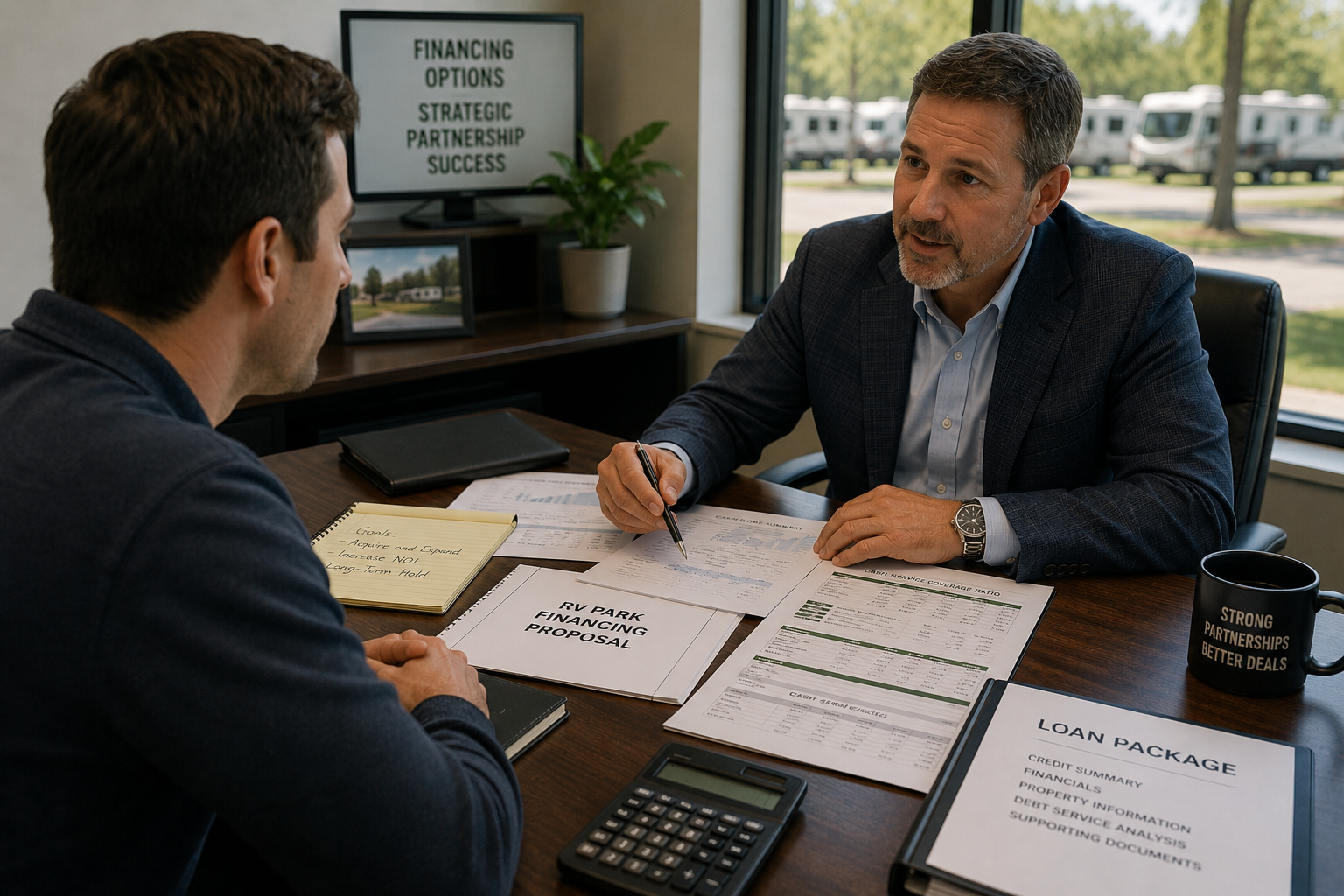
  • How to Evaluate an RV Park Deal: The 6โ€‘Step Proven System That Exposes Hidden Truths in the Numbers

    How to Evaluate an RV Park Deal: The 6โ€‘Step Proven System That Exposes Hidden Truths in the Numbers

    Knowing how to evaluate an RV park deal is the single most important skill you can develop as an outdoor hospitality investor. The market is full of parks listed at prices that only work if you accept the seller’s numbers without question. It is not that buyers are careless. It is that most buyers have never been taught a system for pulling those numbers apart and rebuilding them from scratch. They look at the asking price, glance at the occupancy rate, and trust that the broker package reflects reality. Sometimes it does. Often it does not. And the difference between those two outcomes can cost you hundreds of thousands of dollars.

    This post gives you the system I use to evaluate every deal that crosses my desk, step by step, so you can build a clear picture of what any park is actually worth before you ever make an offer. Here is the system:

    Step 1: Verify gross revenue before you do anything else

    The first step in learning how to evaluate an RV park deal is confirming that the revenue number you are working with is real. This sounds obvious but it is where most buyers skip ahead too fast.

    Ask for three years of P&Ls and the trailing 12 months of bank statements. Then match the deposits in the bank statements to the revenue reported on the P&L month by month. If the numbers do not line up, stop and ask why before you go any further. Common discrepancies include revenue running through a personal account, seasonal timing differences, or outright overstatement of income.

    Also look at the revenue trend across three years. Is it growing, flat, or declining? A park showing peak revenue two years ago and declining numbers since is a very different investment than one with steady growth. The trend tells you as much as the number itself.

    Most new investors donโ€™t realize that learning how to evaluate an RV park deal starts with understanding seasonal revenue patterns. Be sure to pay close attention to this.

    Once you have confirmed the revenue is real and the trend makes sense, write down your verified gross revenue number. That is your starting point for everything that follows, and the baseline needed in how to evaluate an RV park deal.

    A big part of learning how to evaluate an RV park deal is knowing which operational metrics actually matter and which ones are just noise, and verifying gross revenue is definitely number one.

    Step 2: Rebuild expenses from scratch

    This is the step that separates buyers who know how to evaluate an RV park deal from those who get burned. The seller’s expense number is almost never the right expense number for you as the new owner.

    Here is why. Sellers often understate expenses in ways that are entirely legal and sometimes unintentional. They may pay themselves a below-market management salary or no salary at all. They may have deferred maintenance for years. They may own their equipment outright and not account for replacement costs. They may have relationships with vendors that will not transfer to you.

    To rebuild expenses properly, go line by line through the P&L and ask these questions for each category:

    Is this expense realistic for a third-party owned and managed park? Management fees for a professionally managed park typically run 8% to 12% of gross revenue. If the seller manages it themselves and shows zero management expense, add that back in.

    Is this expense complete? Look for missing categories like capital reserves, which should be budgeted at 3% to 5% of gross revenue, and insurance, which many sellers underreport.

    Are there any one-time expenses that should be excluded or one-time revenues that should not be counted going forward?

    When you are done rebuilding expenses, most parks will show a higher expense total than the seller reported. That is normal and expected. For more on what a clean expense rebuild looks like, read RV Park Expenses That Ambush New Owners: 5 Costs Nobody Warns You About After Closing.

    This is one of the most important parts of how to evaluate an RV park deal and the step most buyers rush through.

    Step 3: Calculate your own NOI

    Once you have verified revenue and rebuilt expenses, subtract your expenses from your gross revenue. The result is your reconstructed Net Operating Income, or NOI. This is the number the entire valuation is built on, and it is almost always different from the NOI the seller or broker presented.

    Your reconstructed NOI is the only number you should use going forward. Do not go back to the broker’s NOI at any point in the analysis. If you want to understand why that matters in dollars, read The $312,000 Mistake: What Happens When a Buyer Accepts the Seller’s NOI Without Rebuilding It.

    Understanding how to evaluate an RV park deal really comes down to this step. A wrong NOI produces a wrong valuation every single time. There is no shortcut around it, and no version of how to evaluate an RV park deal that skips this step that ends well.

    Step 4: Apply a market cap rate to determine value

    Now that you have your reconstructed NOI, you can calculate what the park is actually worth. The formula is simple:

    Value = NOI divided by Cap Rate

    The cap rate is the rate of return the market expects for this type of asset in this location. RV parks and campgrounds currently trade in the 7% to 10% cap rate range depending on location, size, amenities, and quality of the revenue stream. Smaller parks in secondary markets typically trade at higher cap rates, meaning lower prices relative to income. Larger, well-located parks with strong occupancy and diversified revenue trade at lower cap rates.

    Here is a quick example. If your reconstructed NOI is $150,000 and the market cap rate for this type of park is 8%, the indicated value is $150,000 divided by 0.08, which equals $1,875,000. If the seller is asking $2,500,000, you now know exactly how far apart you are and why.

    For a deeper explanation of cap rates, read The Number That Tells You If You’re Overpaying for an RV Park Before You Make an Offer.

    Step 5: Stress test the deal

    Knowing how to evaluate an RV park deal means going beyond the best-case scenario. After you calculate value at current NOI, you need to stress test the deal by asking what happens if things go wrong.

    Run three scenarios:

    Base case: Current verified NOI at your market cap rate. This is what you calculated in step 4.

    Downside case: Reduce revenue by 15% to 20% to simulate a soft season, a platform policy change, or a key tenant leaving. Rebuild NOI with that lower revenue and see what the park is worth and whether it still cash flows after debt service.

    Stress case: Reduce revenue by 30% and add a major unexpected capital expense, a failed septic system or a full electrical pedestal replacement. Does the deal survive? Can you still service the debt?

    If the deal only works in the base case, it is a fragile deal. A park that still makes sense in the downside case is a much safer investment. For a real example of occupancy stress testing in action, read RV Park Occupancy Rate: 3 Dangerous Reasons It’s Lying to You.

    Step 6: Model your actual cash on cash return

    The final step in how to evaluate an RV park deal is calculating what you personally will make on your invested capital. Cap rate tells you what the asset is worth in the market. Cash on cash return tells you what it puts in your pocket relative to your down payment.

    Here is how to calculate it:

    Start with your reconstructed NOI. If your expense rebuild in Step 2 was done correctly, property taxes and insurance are already included as line items, which means your NOI is already net of those costs. From your NOI, subtract your annual debt service, your mortgage payment including principal and interest. The result is your pre-tax cash flow, meaning what the park actually puts in your pocket before income taxes.

    Divide that pre-tax cash flow by your total cash invested, your down payment plus closing costs plus any immediate capital improvements needed at closing. That gives you your cash on cash return.

    A healthy RV park acquisition typically targets a cash on cash return of 8% to 12% in year one. If the deal is showing 3% or 4% cash on cash at current NOI and current financing rates, the numbers are not working and you need to either negotiate the price down or walk away.

    This final calculation is where many buyers finally see clearly that how to evaluate an RV park deal is not about whether you like the park. It is about whether the numbers support the investment at the price being asked.

    The RV Industry Association tracks industry benchmarks and market data that can help you calibrate your assumptions when you are modeling a deal.

    Putting the system together

    Here is the full 6-step system in order:

    Step 1: Verify gross revenue against bank statements and check the trend.
    Step 2: Rebuild expenses from scratch using realistic third-party ownership assumptions.
    Step 3: Calculate your own reconstructed NOI.
    Step 4: Apply a market cap rate to determine indicated value.
    Step 5: Stress test with downside and stress scenarios.
    Step 6: Calculate cash on cash return on your actual invested capital.

    Every time you look at a new deal, run it through all six steps before you form an opinion on whether it works. The parks that look great after all six steps are worth pursuing. The ones that only look great after step one or two are the ones that get buyers into trouble. A good broker should be also able to explain how to evaluate an RV park deal in a way that highlights both the financials and the guest experience.

    Once you understand how to evaluate an RV park deal, the whole process of analyzing cash flow and longโ€‘term potential becomes far less intimidating.

    If youโ€™re trying to grow your portfolio, mastering how to evaluate an RV park deal can give you a major edge over other buyers.

    If you want help learning how to evaluate an RV park deal, or running this system on a specific deal, I offer acquisition underwriting and can often do it with a 24-hour turnaround. You send me the financials and I hand you back a complete model with all six steps completed, your reconstructed NOI, your indicated value, your stress test scenarios, and your projected cash on cash return. Reach out at PVIFinancial.com and let’s look at your deal together.

    ~Wendi | Fractional CFO | PVIFinancial.com

  • RV Park Due Diligence Checklist: 10 Critical Items That Protect You From a Costly Mistake

    RV Park Due Diligence Checklist: 10 Critical Items That Protect You From a Costly Mistake

    Every serious buyer needs an RV park due diligence checklist before they get anywhere near a closing table. Due diligence is not a formality. It is the only window in the entire transaction where you have the legal right to demand the truth, verify every number, and walk away without losing your earnest money if the facts do not support the purchase. Most buyers do not use that window well. They get emotionally attached to the deal, rush through the checklist, and find out what they missed six months after they close.

    This post gives you the RV park due diligence checklist I use when I underwrite deals for buyers, so you know exactly what to look for and why each item matters. Here is what every serious buyer needs to review before they close:

    1. Three years of profit and loss statements

    The first item on any RV park due diligence checklist is the financials, and not just one year of them. You need three full years of P&Ls so you can see trends, not just a snapshot. Revenue going up is great. Revenue that peaked two years ago and has been declining since is a very different story, and one year of numbers will not show you that.

    When you get the P&Ls, do not accept them at face value. Look at the expense ratios. Most RV parks run expenses at 35% to 50% of gross revenue. If the seller’s numbers show expenses at 25%, something is being left out. Rebuilding the NOI from the actual financials is non-negotiable, and I covered exactly why in The $312,000 Mistake: What Happens When a Buyer Accepts the Seller’s NOI Without Rebuilding It.

    2. Trailing 12 months of bank statements

    P&Ls can be manipulated, intentionally or not. Bank statements cannot. Matching the deposits in the bank statements to the revenue on the P&L is one of the most important steps in your RV park due diligence checklist and one of the most commonly skipped.

    If the revenue on the P&L does not match what hit the bank account, you have a problem. Either revenue is being overstated on the P&L, some revenue is being run through a personal account and should not be counted as business income, or there are timing issues that need to be explained. Any of these scenarios changes your valuation.

    3. Current rent roll and occupancy data

    Ask for a current rent roll showing every occupied site, the rate being charged, the length of stay, and whether the guest is short term or long term. This one document tells you more about the real health of the business than almost anything else on your RV park due diligence checklist.

    Pay close attention to the mix of short term versus long term tenants. Long term tenants at below-market rates can inflate occupancy numbers while actually suppressing revenue potential and NOI. I covered why this matters in detail in Long-Term RV Guests Are Taking Over: 5 Ways It Breaks Your Books.

    4. Utility infrastructure inspection

    This is the item most first-time buyers underestimate on their RV park due diligence checklist, and it is often the most expensive surprise after closing. Electrical pedestals, water systems, sewer lines, and septic tanks are all costly to repair or replace and none of them show up on a P&L.

    Hire a licensed electrician to inspect the pedestals and panel capacity. Get the septic system pumped and inspected. Have the water system pressure-tested. If the park is on a well, get a water quality test and a yield test. The age and condition of the utility infrastructure will tell you a lot about what you are really buying and what capital you will need in years one through three. For more on what to look for, read What to Look for in RV Park Utility Infrastructure.

    5. Permits, zoning, and licenses

    A complete RV park due diligence checklist always includes a full review of permits and zoning. You need to confirm the park is legally permitted to operate at its current size and capacity, that all required business licenses are current, and that the zoning allows for continued RV park use. Do not accept the sellers statements as fact, verify these yourself.

    This matters more than most buyers realize. If a park was expanded without permits, or if a portion of the revenue comes from structures that are not permitted, you could be buying a liability. Ask for copies of all permits, certificates of occupancy for any structures on the property, and the current zoning classification. Then verify them yourself with the county.

    6. Environmental review

    No RV park due diligence checklist is complete without at least a Phase 1 environmental assessment. This is especially important if the property has any history of fuel storage, dry cleaning, or industrial use on or near the site. Environmental contamination can make a property essentially unsellable and the cleanup costs can be enormous.

    A Phase 1 is a relatively low-cost document review and site inspection by an environmental professional. If it flags anything, you move to a Phase 2, which involves actual soil and water testing. Do not skip this step to save money on due diligence.

    7. Online reputation and booking platform analysis

    The online reputation of the park is a financial asset and your RV park due diligence checklist should treat it that way. Pull all the reviews on Google, Campendium, The Dyrt, and any OTA platforms the park uses. Look at the trends. Are reviews getting better or worse over the past 12 months? What are guests consistently complaining about?

    Also look at OTA dependency. If 60% or more of bookings come through a single platform like Hipcamp or Campspot, you are buying a business with a single point of failure in its revenue stream. A platform policy change or commission increase can materially impact your income overnight. I wrote about this in The Real Cost of Online Travel Agent OTA Dependency.

    8. Deferred maintenance assessment

    Walk every inch of the property with a contractor or property inspector and document every deferred maintenance item you find. Roads, landscaping, signage, bathhouses, laundry facilities, fencing, and any structures on the property all need to be evaluated.

    Deferred maintenance is one of the most common ways a seller artificially inflates NOI. If they have not been spending money on upkeep, expenses look lower than they really are. The RV park due diligence checklist should include a line-item estimate for bringing everything up to standard, and that cost should factor directly into your offer price or your post-close capital reserve. For more on budgeting for these costs, read RV Park Capital Expenditures: 3 Budgeting Mistakes That Wreck New Owners in Year One.

    9. Title search and survey

    A clean title search confirms there are no liens, encumbrances, easements, or ownership disputes attached to the property. A survey confirms the boundaries match what you think you are buying. Both of these are standard in any real estate transaction but they are especially important in rural properties where boundary disputes and easement issues are more common.

    Make sure your title insurance covers any issues that come up and do not waive the survey even if the seller pushes back on the cost. You need to know exactly what land you are acquiring.

    10. Seller interview and transition plan

    The last item on your RV park due diligence checklist is one that many buyers overlook entirely: a structured conversation with the seller about operations. Who are the key vendors? Are there any verbal agreements with tenants not reflected in writing? What does the seller know about the property that is not in any document? You won’t know the very important answer to this one, unless you ask.

    Ask for a transition period where the seller is available to answer questions after closing. Even 30 to 60 days of email access to the previous owner can save you from costly surprises in your first months of operation. The SCORE Small Business Association also has free resources on business acquisition transitions that are worth reviewing before you sit down with a seller.

    How to use this checklist

    The RV park due diligence checklist above is most effective when you start working through it as soon as you are under contract, not in the last week of your due diligence period. Give yourself time to actually act on what you find. If something comes up in week one, you have time to negotiate a price reduction, request a repair credit, or walk away cleanly. If it comes up in the final days, you are under pressure and that is exactly where buyers make bad decisions.

    If you want help working through the financial side of your due diligence, including rebuilding NOI, stress-testing occupancy (what happens if it suddenly drops by 20%?), and building a model that reflects what you are actually buying, that is exactly what I do. A full acquisition underwrite starts at $750 and often can be turned around in 24 hours. Reach out at PVIFinancial.com and let’s make sure you know what you are buying before you sign.

    If you want the full picture, my book From Offer to Operation: The Complete RV Park Investor’s Guide includes a comprehensive 60-item due diligence checklist that covers every category in detail, from financials and infrastructure to legal, environmental, and operational items. It is the most complete RV park due diligence checklist I know of in one place, and it is built for buyers who want to walk into every deal fully prepared.

    ~Wendi | Fractional CFO | PVIFinancial.com

  • RV Park Cash Flow Management: 7 Strategies That Stop Your Park from Sinking in the Off Season

    RV Park Cash Flow Management: 7 Strategies That Stop Your Park from Sinking in the Off Season

    RV park cash flow management is the skill most new owners do not think about until they are staring at a near-empty bank account in February wondering where all the summer money went. The good news is it is not complicated once you have a system. The bad news is almost nobody teaches you the system when you close. The owners who master RV park cash flow management are the ones who are never caught off guard, no matter what the calendar looks like.

    This post gives you that system, step by step, so you can stop guessing and start managing your money the way the numbers actually work in this business.

    Here is that system, seven strategies that keep your cash flow working for you all year:

    1. Know your baseline number before the season starts

    RV park cash flow management starts with one number: your monthly fixed cost floor. This is what it costs you to keep the lights on, the staff paid, the insurance current, and the debt serviced regardless of how many guests are in the park.

    Here is how to find it:

    Add up every expense that hits every single month no matter what. Mortgage or debt service, insurance, utilities on common areas, any salaried staff, software subscriptions, and any loan payments. Do not include variable expenses yet, just the fixed ones.

    That number is your floor. Every month your revenue needs to clear that number or you are dipping into reserves. Write it down and put it somewhere you see it every week. It is the most important number in your business.

    2. Build a 12 month cash flow map in January

    Sit down in January, before your season ramps up, and map out every single month of the year. For each month write down:

    • Expected revenue based on prior year occupancy
    • Fixed expenses
    • Variable expenses you know are coming, maintenance cycles, seasonal staff, marketing pushes
    • Any big one-time costs, equipment, capital improvements, permit renewals

    Now look at where the gaps are. Most parks will show three to four months where expenses exceed revenue. Those months are not surprises, they are scheduled. Once you can see them on paper you can plan for them instead of reacting to them.

    This map does not have to be fancy. A simple spreadsheet with 12 columns, one per month, and rows for each income and expense category is all you need. If you want to see what a clean version of this looks like, How to Do Your Monthly Financial Review: A Step by Step Guide for RV Park Owners is a good starting point.

    3. Open a dedicated cash flow reserve account

    This is the single most impactful thing you can do for RV park cash flow management and most owners skip it entirely.

    Open a separate bank account, not your operating account, and call it your Cash Flow Reserve. Every month during peak season transfer a fixed amount into it. The amount depends on your gap months but a good starting target is enough to cover two to three months of your fixed cost floor.

    Here is the rule: that account is only for covering shortfalls during slow months. It is not for equipment purchases, not for improvements, not for anything else. It is your seasonal buffer and it needs to be off limits for everything except its one job.

    If you are not sure how much to set aside, take your total slow season shortfall from your 12 month map and divide it by the number of peak months you have. That is your monthly transfer amount.

    4. Pay your slow season bills with your peak season revenue

    This sounds obvious but most owners do not actually do it systematically. RV park cash flow management works best when you think of your peak season revenue as covering the whole year, not just the months it comes in.

    Here is a simple way to think about it. If you know November through February will cost you $15,000 more than you bring in across those four months, then your summer needs to generate that $15,000 on top of covering summer expenses. That means your summer pricing, occupancy targets, and ancillary revenue need to account for the slow season too.

    When you set your rates for the season, back into them from your annual number, not just your summer number. Most owners price for summer and hope for the best in winter. Owners who are good at RV park cash flow management price for the whole year.

    5. Create a 90 day rolling cash flow forecast

    Your 12 month map is your big picture plan. Your 90 day rolling forecast is your operational tool.

    Every month update a simple three month look ahead. Take your actual bank balance today, add expected revenue for the next 90 days based on reservations and historical occupancy, subtract every known expense in that window, and see what your ending balance looks like.

    If the ending balance is below your fixed cost floor you have a problem coming and you have 90 days to address it. That might mean a promotional push to fill shoulder season inventory, deferring a non-urgent expense, or drawing from your reserve account.

    The 90 day forecast is where RV park cash flow management goes from theory to action. Do this on the first of every month without fail. It takes about 30 minutes once you have the habit and it will never let a cash crisis sneak up on you again. For more on what to review every month read The Monthly Financial Review Every RV Park Owner Should Be Doing But Almost Nobody Does.

    6. Track revenue per available site every single week

    Most owners track total revenue. Smart RV park cash flow management tracks revenue per available site, or RevPAS, because it tells you whether your pricing and occupancy are actually working together.

    Here is how to calculate it:

    Take your total revenue for the week and divide it by the number of sites you have available multiplied by 7 days. That gives you your RevPAS for the week.

    If your RevPAS is dropping it means either your occupancy is falling, your rates are too low, or both. If it is climbing you are doing something right and you want to know what so you can keep doing it.

    Track this number weekly during peak season and monthly during slow season. Put it in a simple log next to your cash flow forecast. Over time it becomes one of the most useful signals you have for understanding whether your revenue engine is healthy. I wrote more about this metric in The Three Numbers That Expose Every Problem in Your RV Park Before It Costs You Money.

    For industry benchmarking on occupancy and revenue data, RV Industry Association is a good resource.

    7. Do a monthly cash flow check in, not just a bank balance check

    Checking your bank balance is not RV park cash flow management. It is a snapshot of one moment in time and it tells you almost nothing about what is coming.

    A real cash flow check in takes about 20 minutes once a month and covers four things:

    First, compare actual revenue to what you projected for the month. Were you above or below and why?

    Second, compare actual expenses to what you projected. Were there any surprises and are they one-time or recurring?

    Third, update your 90 day rolling forecast with the new actuals.

    Fourth, check your reserve account balance against your projected slow season needs. Are you on track or do you need to adjust your transfer amount?

    That is it. Four questions, 20 minutes, once a month. If you do nothing else from this post, do this. It is the foundation of solid RV park cash flow management and it will tell you everything you need to know about the financial health of your park before a problem becomes a crisis.

    If you want help setting up your cash flow system, building your 12 month map, or doing a monthly review alongside someone who has done this with real parks, that is exactly what I do. Reach out at PVIFinancial.com and let’s get your numbers working for you.

    ~Wendi | Fractional CFO | PVIFinancial.com

  • Workforce Housing Boom: 5 Financial Problems Hitting Campgrounds That Weren’t Built for It

    Workforce Housing Boom: 5 Financial Problems Hitting Campgrounds That Weren’t Built for It

    Workforce housing is landing at campgrounds across the country right now, and most park owners did not plan for it and are not financially prepared to manage it. There is something happening at campgrounds across the country right now that most park owners did not plan for and many are not financially prepared to manage. Out-of-state construction workers, data center crews, traveling tradespeople, they are showing up at RV parks near major infrastructure projects and staying. Not for a weekend. Not for a week. For months. And in some markets they are filling sites so consistently that regular summer campers cannot find a spot.

    This is not a rumor or a trend piece. Campgrounds in Eastern Iowa are reporting nearly full occupancy year-round right now, driven almost entirely by workers arriving for data center construction projects in the Cedar Rapids area. Parks that built their entire financial model around peak season weekend traffic are suddenly running at capacity in months they used to write off. That sounds like great news. And it can be. But it also creates a set of financial management challenges that most small park operators have never had to deal with before, and if you are not set up for them your books are going to reflect that in ways that will hurt you.

    Read on to learn more about the workforce housing boom:

    What the Workforce Housing Boom Actually Is

    Major infrastructure buildouts, data centers, semiconductor plants, highway construction, pipeline work, create a sudden and significant demand for temporary housing in markets that often have very little of it. Hotels fill up fast and get expensive. Apartments require leases. Corporate housing is limited. RV parks, with their flexible stay options, existing utility hookups, and lower nightly cost, become the practical solution for contractors, project managers, and skilled tradespeople who need a place to land for three to six months at a time.

    This is not new exactly, oil field workers have been living in RV parks for decades, but the scale and geography of it is shifting. Data center construction is happening in markets that have never seen this kind of workforce influx before. When it lands in your backyard and your park happens to be the closest option with availability, your occupancy problem is solved almost overnight. Your financial management problem is just beginning.

    I am going to tell you something that most people writing about this topic cannot say. I am currently working as a Fractional CFO on a 250 unit workforce housing program in Texas, setting up the financial infrastructure from the ground up. I am building the controls, the reporting structure, the billing systems, and the accounts receivable processes for a program at that scale right now, in real time.

    So when I tell you what your books need to look like when workforce housing guests move into your park, I am not speaking theoretically. I am doing it. And I can tell you with complete confidence that the financial controls on a workforce housing program, whether it is 250 units or 5 sites at your small park, are not optional. They are the difference between a revenue stream that strengthens your business and one that quietly creates problems you will not find until they are expensive.

    Why Your Current Books Are Not Built for This

    Most small RV park financial systems are built around a simple model. Guest arrives, pays for a night or a few nights, leaves. Revenue is high frequency and low balance. Receivables are essentially zero because guests pay before or at check-in. Cash flow is relatively predictable once you know your seasonal patterns.

    Workforce housing guests break every one of those assumptions. They are staying 30, 60, 90 days or more. They may be billed weekly or monthly rather than nightly. They may have their employer paying their housing costs, which introduces a third party into the billing relationship. They may negotiate a rate that is different from your posted rate. And they have legal protections in many states that transient guests do not have, which changes what you can and cannot do if a situation goes sideways.

    If your park management software and your bookkeeping setup were built for transient guests, you are now trying to run a fundamentally different business model through a system that was not designed for it. That gap creates errors, missed billings, untracked balances, and cash flow surprises that show up in your bank account before they show up anywhere in your reporting.

    The Accounts Receivable Problem

    This is the issue I would address first with any park owner who is seeing significant workforce housing occupancy. When guests stay for extended periods on weekly or monthly billing cycles, you have accounts receivable. Money that is owed to you but has not yet been collected. That is a completely normal part of running a business with longer-term customers, but it requires a system.

    Without a system, here is what tends to happen. A worker checks in and agrees to pay weekly. The first week goes fine. The second week they are a few days late but they pay. By week six you have three guests on slightly different billing cycles, two of them a little behind, one of them significantly behind, and you are tracking all of it in your head or in a notes app on your phone. You are not entirely sure what anyone owes because you have been giving informal grace periods and the amounts have gotten muddled.

    That is not a character flaw. That is what happens when a transient-focused operation suddenly has long-term customers and no receivables process. The fix is straightforward but it has to be intentional. Every long-term guest needs a written agreement specifying their rate, their billing cycle, what constitutes a late payment, and what the consequences are. Every payment needs to be recorded against that guest’s ledger in your bookkeeping system the day it is received. And you need to run an accounts receivable aging report at least weekly so you know exactly who owes you what and how old each balance is.

    The Tax Classification Issue You Cannot Ignore

    I touched on this in an earlier post about long-term guests generally, but it is worth being specific here because workforce housing guests frequently hit the exact threshold where it matters most. In most states, stays of 30 days or more are exempt from transient occupancy tax. Stays under 30 days are taxable. When you have a worker who stays 28 days in one month and then renews, the classification question is not always obvious and the answer varies by state and sometimes by county.

    If you are collecting TOT on guests who legally do not owe it, you are creating a liability. If you are not collecting it on guests who do owe it, you have a compliance exposure. Either way, if your books are not tracking stay length and revenue type by guest, you cannot even run the analysis to find out which situation you are in.

    Get clear on your state’s rules. Talk to your accountant. And make sure your chart of accounts separates transient site revenue from long-term site revenue so the question can be answered from your books rather than from memory.

    The Rate Strategy Question

    Workforce housing guests represent an opportunity to lock in stable, predictable revenue for an extended period. But the rate conversation is different than it is with transient guests, and how you handle it has real financial consequences.

    Many operators discount heavily for long-term stays, sometimes dramatically, because it feels like the right thing to do for someone who is there every day. I understand that instinct. But your cost to serve a long-term guest is not dramatically lower than your cost to serve a transient one. Your utilities run. Your bathhouse gets used. Your infrastructure wears. The main cost savings are on the administrative side, fewer check-ins, less turnover of the site, potentially lower marketing cost if they came to you directly.

    A reasonable long-term discount is 10 to 20 percent off your standard rate, sometimes a little more depending on your market and the length of commitment. Discounting 40 or 50 percent because someone is staying for three months is leaving significant revenue on the table and potentially setting a precedent in your market that is hard to walk back.

    Know your numbers before you negotiate. What is your actual cost per occupied site per night including fixed cost allocation? What is your shoulder season transient rate for comparison? What are comparable extended stay options in your market charging? Answer those questions first and then have the rate conversation from a position of information rather than intuition.

    What Healthy Workforce Housing Revenue Looks Like in Your Books

    If you are going to lean into this revenue stream, and in the right market it absolutely makes sense to, your financial reporting needs to reflect it clearly. I want to see workforce housing revenue as its own income category, separate from transient and separate from recreational long-term stays. I want to see a guest ledger for every extended stay guest updated at least weekly. I want accounts receivable aging reported monthly at minimum. And I want the rate, the billing cycle, and the agreement start and end date tracked somewhere in your system so you know when each commitment expires and can plan for the turnover.

    This is not complicated to set up. But it does require someone to set it up intentionally rather than letting the revenue flow in however it flows and sorting it out later. Later always costs more than now when it comes to books.

    The workforce housing boom is real, it is happening in markets that never expected it, and it is creating genuine financial opportunity for park owners who are positioned to capture it cleanly. Make sure your operation and your bookkeeping are ready to handle what comes with it.

    Read this next: The Hidden Tax on Messy Books: What Disorganized Financials Are Costing Your RV Park


    I cover revenue classification, accounts receivable, and long-term guest financial management for RV park operators in ๐—™๐—ฟ๐—ผ๐—บ ๐—ข๐—ณ๐—ณ๐—ฒ๐—ฟ ๐˜๐—ผ ๐—ข๐—ฝ๐—ฒ๐—ฟ๐—ฎ๐˜๐—ถ๐—ผ๐—ป: ๐—ง๐—ต๐—ฒ ๐—–๐—ผ๐—บ๐—ฝ๐—น๐—ฒ๐˜๐—ฒ ๐—ฅ๐—ฉ ๐—ฃ๐—ฎ๐—ฟ๐—ธ ๐—œ๐—ป๐˜ƒ๐—ฒ๐˜€๐˜๐—ผ๐—ฟ’๐˜€ ๐—š๐˜‚๐—ถ๐—ฑ๐—ฒ ($49). Available at wendipvifinancial.gumroad.com/l/kqmyb and on Amazon under my name, Wendi Rook.

  • RV Park Due Diligence Red Flags: 5 Financial Lies RV Park Sellers Don’t Want You to Find

    RV Park Due Diligence Red Flags: 5 Financial Lies RV Park Sellers Don’t Want You to Find

    RV park due diligence is not a box to check. I have watched smart people buy bad deals. Not because they were careless or uninformed, but because they fell in love with the asset before they finished the work. The park was beautiful. The seller was charming. The location was exactly what they had been looking for. And somewhere between the letter of intent and the closing table, due diligence became a formality instead of an investigation.

    That is the most expensive mistake you can make in an RV park acquisition. Due diligence is not a box to check. It is the only period in the entire transaction where you have the right to demand the truth and walk away without consequence if you do not like what you find. Every day you spend in due diligence is a day you are still protected. The day you close, that protection is gone.

    This post is about what you are actually looking for during due diligence, specifically on the financial side, and the places where sellers, intentionally or not, present a picture that does not match reality.

    Why the Financials You Receive Are a Starting Point in RV Park Due Diligence, Not an Answer

    The first thing a seller or broker will send you is some version of a profit and loss statement, maybe two or three years of them, along with an occupancy summary and possibly a rent roll if there are long-term guests. These documents are not lies exactly, but they are almost never the complete picture either.

    Seller-provided financials are prepared to support a sale. That does not mean they are fraudulent. It means the seller has every incentive to present the numbers in the most favorable light possible, and most of them do. Expenses get omitted. One-time revenue events get normalized as if they happen every year. The owner’s own labor goes uncompensated in the financials, making profit look higher than it would be for someone who actually has to pay a manager. Capital expenditures get treated as irregular rather than recurring. Deferred maintenance does not appear anywhere because it has not been paid yet.

    Your job in due diligence is not to accept the financials you are given. Your job is to rebuild them from scratch using source documents and ask very specific questions about every line that does not make sense.

    The Documents You Need and Why Each One Matters

    Bank statements are the most important financial document in an RV park acquisition and the one sellers are most reluctant to provide. I want to see at least 24 months of bank statements for every operating account, and I want to reconcile them against the P&L the seller provided. If the deposits in the bank statements do not match the revenue on the P&L, something is wrong. It could be innocent, a timing difference, multiple accounts, a payment processor that settles on a delay. It could also be undisclosed revenue that was kept off the books for tax purposes, which creates a completely different problem for you as a buyer.

    Tax returns are the second most important document. A seller who reports $350,000 in revenue on their P&L but $220,000 on their tax return has some explaining to do. The gap is sometimes legitimate, timing differences, depreciation treatment, entity structure. But it needs to be explained and documented, not hand-waved away. If a seller tells you the tax returns do not reflect the real income because they run personal expenses through the business, that is not a reason to pay more for the park. That is a reason to pay based only on what is verifiable.

    Reservation records and occupancy reports from your property management system give you a transaction-level view of revenue that is very hard to fabricate. I want to see actual reservation data for at least two full seasons, not just a summary. I want to know how many sites were occupied on which nights, at what rates, and through which booking channels. This lets me build my own occupancy and revenue picture independently of anything the seller has told me.

    Utility bills for the last 24 months tell you two things. First, they tell you what utilities actually cost to run the property, which is frequently understated in seller financials. Second, they show you seasonal patterns that can reveal operational issues the seller has not disclosed. A spike in water bills in one particular month might indicate a leak. An electricity cost that is dramatically higher than comparable parks might indicate aging infrastructure or an inefficient system.

    Insurance policies and claims history can reveal things about the property that never make it into a financial document. A park that has filed multiple claims for storm damage, slip and fall incidents, or equipment failures is telling you something about the physical condition and operational risk of the asset. Ask for five years of claims history, not just the current policy.

    How to Rebuild the NOI Yourself

    This is the core financial work of due diligence and the step that most buyers either skip or do superficially. Rebuilding NOI means starting from zero with the revenue and expenses you can verify independently, and arriving at a number you are confident represents what the park actually generates under normal operations.

    On the revenue side, I start with reservation records and calculate an independent occupancy and ADR figure for each of the last two full operating years. I adjust for any one-time revenue events, a special event that happened once, a grant that was received, an insurance settlement that inflated one year. I also adjust for revenue that was present but may not continue, a large group booking from a company that has since relocated, a long-term guest who has already given notice.

    On the expense side, I add back everything the seller left out. A management fee at market rate, typically 8 to 12 percent of revenue, even if the owner self-manages. A capital expenditure reserve, typically 3 to 5 percent of revenue for a well-maintained park and higher for one with deferred maintenance. Any expenses that were run through the business personally and need to be removed. Any expenses that were omitted and need to be added, insurance at actual replacement cost, property taxes at the post-sale assessed value, utilities at the actual historical average.

    The number I arrive at after this rebuild is the NOI I underwrite the deal on. Not the seller’s number. Not the broker’s number. Mine.

    The Conversations That Happen When You Push on the Numbers

    How a seller responds when you start asking detailed questions about their financials tells you as much as the documents themselves. A seller who has nothing to hide will be slightly annoyed by the thoroughness of your requests and will provide what you need, maybe slowly, maybe with some grumbling, but they will provide it. A seller who gets defensive, who tells you the questions are excessive, who suggests you are wasting everyone’s time, who offers explanations that do not quite hold together, is showing you something.

    I have walked away from deals that looked attractive on paper because the seller’s behavior during due diligence made it clear the documents could not be trusted.

    What You Are Buying and What You Are Not

    One final thing worth saying clearly. When you buy an RV park, you are buying a business, not just a piece of real estate. You are buying a guest relationship, an operational infrastructure, a reputation, a staff if there is one, a set of systems, and a financial history. All of those things need to be evaluated independently of how pretty the park looks or how compelling the seller’s story is.

    The financials are the language the business uses to tell you the truth about itself. Due diligence is your job of learning to read that language fluently enough to know when something does not add up. Do that work completely, skeptically, and without rushing, and you will either find a deal you can close with confidence or a reason to walk away before it costs you everything.

    I have reviewed deals where the due diligence process was painful and slow and revealed problems significant enough to kill the transaction entirely. That is not a failure. That is the process working exactly the way it is supposed to. The discomfort of a hard due diligence is infinitely cheaper than the discomfort of closing on a deal that should not have closed.

    Either outcome is a win.

    Read this next: The $312,000 Mistake: What Happens When a Buyer Accepts the Seller’s NOI Without Rebuilding It


    I walk through the full due diligence financial checklist for RV park acquisitions in ๐—™๐—ฟ๐—ผ๐—บ ๐—ข๐—ณ๐—ณ๐—ฒ๐—ฟ ๐˜๐—ผ ๐—ข๐—ฝ๐—ฒ๐—ฟ๐—ฎ๐˜๐—ถ๐—ผ๐—ป: ๐—ง๐—ต๐—ฒ ๐—–๐—ผ๐—บ๐—ฝ๐—น๐—ฒ๐˜๐—ฒ ๐—ฅ๐—ฉ ๐—ฃ๐—ฎ๐—ฟ๐—ธ ๐—œ๐—ป๐˜ƒ๐—ฒ๐˜€๐˜๐—ผ๐—ฟ’๐˜€ ๐—š๐˜‚๐—ถ๐—ฑ๐—ฒ ($49). Available at wendipvifinancial.gumroad.com/l/kqmyb and on Amazon under my name, Wendi Rook.

  • You Think Your Park Is Full. Your RV Park Booking Platform Is Quietly Stealing Your 400 Guests.

    You Think Your Park Is Full. Your RV Park Booking Platform Is Quietly Stealing Your 400 Guests.

    Your RV park booking platform may be filling your sites, but it could also be owning your guests. Most RV park owners do not think of themselves as having a booking channel strategy. They signed up for Hipcamp or Campspot or Harvest Hosts because it brought in guests, the guests kept coming, and the system worked. So they leaned into it. Maybe they optimized their listing, collected some reviews, and let the platform do the marketing. That is completely understandable, and for a period of time it probably made a lot of sense.

    The problem is not that you are using an OTA or a booking platform. The problem is when that platform becomes the primary or only way guests find you, and you have no visibility into what that dependency is actually costing you or what happens to your business if the relationship changes. Because platforms change. They raise their commission rates. They change their algorithm. They sunset features. They get acquired. And if your occupancy is built on a foundation you do not control, your financial model has a vulnerability that does not show up anywhere in your P&L.

    This post is about how to see that vulnerability clearly in your numbers, and what your financial reporting needs to include if booking channel dependency is a real part of your operation.

    What RV Park Booking Platform Dependency Actually Costs You

    Let me start with the direct cost because it is larger than most operators realize when they add it up honestly. OTA and booking platform commissions typically run between 8 and 15 percent of the booking value depending on the platform and your agreement. Some are lower, some are higher, and some have tiered structures that reward volume with slightly better rates.

    On the surface that feels manageable. But let’s run the actual math. If your park generates $400,000 in annual site revenue and 70 percent of your bookings come through a platform charging 10 percent commission, you are paying $28,000 a year in commissions. At a 10 percent cap rate, that $28,000 in annual expense represents $280,000 in park value that is being transferred to a third party every single year. That is not a small number, and most operators have never calculated it that way.

    Now add the indirect costs. Guests who book through a platform often have their primary relationship with the platform, not with you. Their review goes on the platform. Their loyalty goes to the platform. When they want to book again, they go back to the platform and search, which means you may be competing against yourself for a repeat guest who already stayed at your park and loved it. Your marketing spend, your hospitality, your operations, all of that work feeds a guest relationship that the platform owns more than you do.

    The Financial Visibility Problem

    Here is the bookkeeping issue that I see constantly with parks that are heavily platform-dependent. Their revenue is recorded as a single line item, total site revenue, with no breakdown by booking source. They know how much came in. They do not know where it came from, what it cost to acquire, or what their margin looks like by channel.

    That matters for several reasons. First, you cannot manage what you cannot measure. If you do not know that 80 percent of your revenue is coming from one platform, you cannot make an informed decision about whether to diversify. Second, commission costs are often buried in a general expense category rather than broken out as a direct cost of revenue. That makes your gross margin look better than it actually is. Third, if that platform ever changes its terms or you lose your listing for any reason, you have no data to understand the impact or build a response.

    What I want to see in a park that uses booking platforms is a revenue breakdown by channel tracked every single month. Direct bookings, Platform A, Platform B, repeat guests, walk-ins. Each one as its own line. And on the expense side, commissions broken out by platform so you can see the true net revenue by channel. That is the reporting that lets you make real decisions.

    What a Healthy Channel Mix Looks Like

    There is no universally correct answer for how much of your revenue should come from any one source. A new park with no brand recognition may legitimately need to lean on OTAs heavily in year one to build occupancy and reviews. An established park with a strong repeat guest base and good direct booking infrastructure has no business giving 15 percent of its revenue to a platform for guests it could be capturing itself.

    What I look for is a trend in the right direction. If a park is doing 80 percent OTA bookings in year one and 60 percent in year three with a growing direct booking share, that is a healthy trajectory. If a park is still doing 80 percent OTA in year five with no change, that is a strategic and financial problem that needs attention.

    The goal most operators I work with target is somewhere around 50 to 60 percent direct bookings within three to five years of operation, with the remainder split across platforms and other channels. Getting there requires investment in your own booking infrastructure, your email list, your website, your repeat guest relationships, and your local marketing. Those are real costs, but they are investments in an asset you own rather than payments to a platform you rent.

    How to Build the Financial Case for Diversification

    This is where I want to be practical, because telling an operator to reduce OTA dependency without showing them the financial logic behind the investment rarely moves anyone to action.

    Start by calculating your true net revenue per booking by channel. Take your total revenue from each platform, subtract the commissions paid to that platform, and divide by the number of bookings. Do the same for direct bookings where your acquisition cost is your own marketing spend divided by direct bookings generated. In almost every case, a direct booking that cost you $15 in email marketing to generate is more profitable than a platform booking that cost you $40 in commission, even if the nightly rate was identical.

    Then build a simple scenario in your budget. If you shift 10 percent of your bookings from platform to direct over the next 12 months, what does that do to your net revenue? At a 10 percent commission rate on a $400,000 revenue base, shifting 10 percent of bookings to direct saves you roughly $4,000 in commissions. That is $40,000 in park value at a 10 percent cap rate. The cost of generating those direct bookings through your own marketing is almost certainly less than $4,000 if you are intentional about it.

    That is the conversation I have with clients. Not that OTAs are bad, they are not, they fill rooms and they reach guests you would never reach on your own. But they should be one channel in a diversified mix, not the foundation your entire occupancy model is built on. And your financial reporting should be showing you exactly where you stand so you can make that decision with data instead of instinct.

    What to Do with This Information

    If you have read this far and you do not currently know what percentage of your bookings come from each channel, that is the starting point. Pull your reservation data for the last 12 months and sort it by booking source. Calculate the commission expense for each platform. Calculate your direct booking volume and what you spent to generate it. Then look at what you find with honest eyes.

    You may discover your channel mix is healthier than you thought. You may discover you have a concentration problem you have been sensing but never quantified. Either way, you will know, and knowing is always better than guessing when it comes to your financial model.

    Your books should tell you this story automatically every month. If they do not, that is a setup problem worth solving.

    Read this next: The Real Cost of Online Travel Agent (OTA) Dependency


    I cover revenue mix, channel strategy, and financial reporting structures for RV park operators in ๐—™๐—ฟ๐—ผ๐—บ ๐—ข๐—ณ๐—ณ๐—ฒ๐—ฟ ๐˜๐—ผ ๐—ข๐—ฝ๐—ฒ๐—ฟ๐—ฎ๐˜๐—ถ๐—ผ๐—ป: ๐—ง๐—ต๐—ฒ ๐—–๐—ผ๐—บ๐—ฝ๐—น๐—ฒ๐˜๐—ฒ ๐—ฅ๐—ฉ ๐—ฃ๐—ฎ๐—ฟ๐—ธ ๐—œ๐—ป๐˜ƒ๐—ฒ๐˜€๐˜๐—ผ๐—ฟ’๐˜€ ๐—š๐˜‚๐—ถ๐—ฑ๐—ฒ ($49). Available at wendipvifinancial.gumroad.com/l/kqmyb and on Amazon under my name, Wendi Rook.

  • Your Park Is Full But Your Cash Flow Is Not. Here Is Why Shoulder Season Changes Everything.

    Your Park Is Full But Your Cash Flow Is Not. Here Is Why Shoulder Season Changes Everything.

    There is a moment almost every RV park owner has experienced at least once. You look at your occupancy numbers for the month and they look fine. Maybe even good. Then you look at your bank account and something does not add up. The park feels busy but the money does not feel right. If that has happened to you, shoulder season is almost certainly part of the explanation.

    Most RV parks are designed financially around peak season. The summer months carry the revenue, cover the debt service, and ideally leave something behind for reserves and operations during the slow months. That model worked reasonably well when peak demand was strong enough to make up for everything else. But in a maturing market with flat growth projections, parks that are still running on a peak-season-only financial model are leaving significant money on the table and taking on more risk than they realize.

    Shoulder season, those weeks in spring and fall that are not quite summer but not quite dead either, is where the financial story of your park actually gets written. Here is why it matters so much more than most operators think, and what your financials need to show if you want to capture it.

    Why Shoulder Season Is a Financial Multiplier

    Your fixed costs do not take shoulder season off. Your mortgage, your insurance, your property taxes, your minimum staffing, your utility base load, these expenses run every month regardless of how many guests are on property. When peak season carries all the revenue, those fixed costs are essentially being front-loaded onto a narrow window. If anything disrupts that window, a bad weather stretch, a slow booking year, a competitor opening nearby, your entire financial model is exposed.

    Shoulder season revenue is different from peak season revenue in one critical way. Because your fixed costs are already covered or mostly covered by peak occupancy, every dollar that comes in during shoulder season carries an outsized contribution to your bottom line. You are not paying for the mortgage again. You are not paying for insurance again. You are adding incremental revenue against a cost base that is already in place. That is what makes shoulder season a financial multiplier, and why operators who have learned to capture it tend to have materially stronger NOI than those who have not.

    A park generating $50,000 in shoulder season revenue it was not capturing before does not just add $50,000 to its top line. It adds most of that $50,000 directly to NOI, because the expenses that would have eaten it during peak season are already absorbed. At a 10% cap rate, that $50,000 in additional NOI translates to $500,000 in added park value. From shoulder season.

    What the Data Is Telling Us Right Now

    The shift toward stronger shoulder seasons is not just anecdotal. Industry data for 2026 points to what analysts are calling shoulder season strengthening, driven specifically by three groups of guests who do not follow the traditional summer camping calendar.

    Remote workers and digital nomads have decoupled travel from the school calendar entirely. They can leave in April, stay through October, and actually prefer the less crowded experience that shoulder season offers. Extended stay guests, including workforce housing residents and traveling professionals, create occupancy that has nothing to do with summer at all. And retirees, one of the fastest growing segments in the RV market, have complete schedule flexibility and often specifically avoid the peak summer crowds.

    If your park is not set up to attract and accommodate these guests during shoulder months, you are watching revenue walk past you to a park that is. The financial question is not whether shoulder season demand exists. It clearly does. The question is whether your operation and your financial setup are positioned to capture it.

    What Capturing Shoulder Season Actually Requires

    This is where I want to get specific, because shoulder season revenue does not just happen because you leave the gate open a few extra weeks. It requires deliberate operational and financial decisions, and those decisions need to show up in your budget and your monthly reporting.

    Pricing strategy is the starting point. Many parks run a single rate all season or have a basic peak and off-peak split. That is not enough to optimize shoulder season. You need tiered pricing that reflects actual demand patterns, with shoulder season rates set at a level that is attractive enough to drive bookings but not so discounted that you undermine your peak perception. Dynamic pricing tools can help with this, but even a simple manually managed rate calendar is better than nothing.

    Amenity availability matters more in shoulder than in peak. In summer, guests come regardless because demand is high. In shoulder season, guests are choosing between you and a hotel, between you and staying home, between you and a park that marketed to them. If your bathhouse is closed, your laundry is winterized, and your office is unstaffed on weekdays, you are telling that guest to go somewhere else. The operational cost of staying open through shoulder season is real, but it is almost always lower than the revenue you are leaving behind.

    Marketing timing is something almost no small park operator gets right. Most marketing budgets and efforts are pointed at summer bookings. But shoulder season guests book on shorter lead times and respond to specific messaging about the experience of visiting when the park is quieter, the weather is comfortable, and the rate is lower. If you are not actively marketing to them in late February for April stays and in late July for September stays, you are missing the window.

    How This Shows Up in Your Financials

    Here is the part that most blog posts about shoulder season skip entirely. Capturing shoulder season revenue requires you to track it separately so you can actually measure whether your efforts are working.

    Your monthly P&L should show you revenue by month so you can see your seasonal distribution clearly. If you are pulling in 85% of your revenue in June, July, and August, your shoulder season capture rate is low and your financial model is fragile. If you can move that to 70% peak and 30% shoulder over two to three years through deliberate effort, your cash flow is more stable, your NOI is stronger, and your park is worth more.

    I also want to see a break-even analysis that accounts for shoulder season specifically. What does occupancy need to be in April and May to cover your operating expenses in those months without drawing down reserves? That number is usually lower than operators expect, because fixed costs are spread across the whole year and variable costs in shoulder season are modest. Knowing your shoulder season break-even gives you a clear target to manage toward rather than just hoping the numbers work out.

    Finally, if you are investing in anything to improve shoulder season performance, whether that is improved Wi-Fi for remote workers, year-round bathhouse upgrades, or a targeted marketing campaign, that investment needs to be in your budget as a line item with an expected return. Too many operators make these investments informally and then have no way to evaluate whether they paid off. Put it in the budget, track the revenue it was intended to generate, and compare the two at year end. That is how you make better decisions next year.

    Shoulder season will not save a fundamentally broken financial model. But for a park that is well-run and paying attention, it is one of the clearest paths to stronger NOI and more stable cash flow in a market that is no longer going to hand you growth automatically.

    Read this next: The Thing That Kills Cash Flow After You Close (That Has Nothing to Do With Revenue)


    I cover cash flow planning and seasonal financial management for RV park owners in ๐—™๐—ฟ๐—ผ๐—บ ๐—ข๐—ณ๐—ณ๐—ฒ๐—ฟ ๐˜๐—ผ ๐—ข๐—ฝ๐—ฒ๐—ฟ๐—ฎ๐˜๐—ถ๐—ผ๐—ป: ๐—ง๐—ต๐—ฒ ๐—–๐—ผ๐—บ๐—ฝ๐—น๐—ฒ๐˜๐—ฒ ๐—ฅ๐—ฉ ๐—ฃ๐—ฎ๐—ฟ๐—ธ ๐—œ๐—ป๐˜ƒ๐—ฒ๐˜€๐˜๐—ผ๐—ฟ’๐˜€ ๐—š๐˜‚๐—ถ๐—ฑ๐—ฒ ($49). Available at wendipvifinancial.gumroad.com/l/kqmyb and on Amazon under my name, Wendi Rook.

  • 5 Financial Warning Signs Your RV Park Won’t Survive the RV Park market slowdown.

    5 Financial Warning Signs Your RV Park Won’t Survive the RV Park market slowdown.

    The RV park market slowdown was not on anyone’s radar during the boom years. If you got into parks between 2020 and 2025 you probably heard some version of this pitch: the industry is exploding, demand is up, new campers are flooding in, this is the best time to buy. And that was true. The industry grew at over 8% annually during that stretch. Occupancy was strong, rates were rising, and parks that were barely functional were still generating solid returns because the tide was lifting everything

    That tide has leveled off. Industry projections now point to near-zero growth through 2030, with some forecasts showing a slight revenue decline over that period. That does not mean RV parks are a bad investment. It means the era where a mediocre operation could hide behind a rising market is over. If your park is going to perform well in a flat market, it has to be built to perform, not just to exist.

    This post is about what that actually means for your financials, and the specific things I look at when I am evaluating whether a park is positioned to hold its ground or slowly erode in a maturing market. Here is what we are going to be looking at:

    What a RV Park Market Slowdown Actually Means for Your NOI

    In a growth market, you can count on some level of natural rate and occupancy increase year over year even if you do nothing. Demand is outrunning supply, so guests come to you. In a flat market, that tailwind disappears. Your NOI does not grow unless you make it grow, and your expenses will almost certainly keep climbing regardless of what revenue does.

    Utilities, insurance, labor, property taxes, and maintenance costs do not plateau just because the market does. If your revenue is flat and your expenses are rising 3 to 5 percent per year, your NOI is shrinking. A shrinking NOI means a shrinking valuation. This can happen slowly enough that you do not notice it until you are sitting across from a buyer or a lender and wondering why the number is lower than you expected.

    The parks that hold their value in a flat market are the ones where the operator is actively managing the spread between revenue and expenses, not just running the park and hoping the numbers work out at year end.

    The Metrics That Matter More Now Than They Did in 2021

    When the market was growing, occupancy was the headline number. If your park was full, you were fine. In a maturing market, occupancy is still important but it is not sufficient on its own. Here are the metrics I focus on with clients when we are trying to understand whether a park is truly healthy or just appears healthy.

    Revenue per available site, or RevPAS, tells you how much income you are generating from each site on average across the entire season, including empty nights. A park with 70% occupancy and a strong RevPAS is in a different position than a park with 70% occupancy and a weak one, usually because of rate, ancillary income, or both. If you are not tracking RevPAS you are missing a key layer of the story.

    Expense ratio is your total operating expenses divided by total revenue. In a well-run park this typically runs between 50 and 65 percent. If you are above 70 percent, your margins are thin and any revenue softness hits you hard. If you do not know your expense ratio off the top of your head, that is the first thing to calculate.

    Operating cash flow, separate from your accounting profit, tells you how much actual cash the business is generating after all operating expenses and debt service. Parks can look profitable on a P&L and still be cash-flow negative because of debt structure, deferred maintenance that is now hitting, or working capital gaps. In a flat market, cash flow discipline is everything.

    Where Operators Lose Ground Without Realizing It

    The most common pattern I see in a slowing market is what I call the quiet squeeze. Revenue holds roughly flat. The operator feels okay because nothing is obviously wrong. But expenses creep up, deferred maintenance starts accumulating, a rate increase gets skipped because it feels risky, and three years later the NOI is meaningfully lower than it was even though the park looks the same from the outside.

    The quiet squeeze is dangerous because it is gradual. You do not feel it the way you would feel a sudden drop in occupancy. You feel it when you go to refinance and the appraisal comes in lower than you expected. You feel it when a buyer makes an offer based on your actual current NOI and it is not the number you had in your head.

    The antidote is a monthly financial review that actually looks at trends, not just snapshots. I want to see revenue month over month, expense categories month over month, and NOI quarter over quarter for at least the last two years. Trends tell you things that a single month never will.

    The Operational Moves That Protect You in a Flat Market

    Surviving a plateau is not about dramatic reinvention. It is about getting very intentional about the levers you control. Here is where I focus with clients who are trying to protect their position in a maturing market.

    Rate discipline matters more than it ever did. If you have not raised rates in two years, your real revenue is declining when you factor in inflation. Even a 5 to 8 percent annual increase on new reservations keeps you moving in the right direction without shocking your regulars.

    Ancillary revenue becomes a meaningful line item. In a boom market you did not need it. In a flat market, income from storage, laundry, firewood, propane, on-site activities, or cabin rentals can be the difference between an NOI that grows and one that stagnates. These revenue streams also tend to carry high margins because your fixed costs are already covered by site revenue.

    Expense management has to be active, not passive. I review every major expense category with my clients quarterly, looking specifically for costs that have crept up without a corresponding increase in value. Insurance is a frequent culprit. So are utility costs that could be partially billed back to guests. So is software that was added during the busy years and never evaluated for ROI.

    Capital expenditure planning becomes critical. Deferred maintenance is the silent killer of NOI in a flat market. Every year you skip a repair or replacement that needs to happen, you are borrowing from your future self. When it finally comes due, it hits the P&L all at once, and it is never at a convenient time. I help clients build a rolling 3-year capital expenditure forecast so they can see what is coming and plan for it rather than react to it.

    What This Means for Your Financial Reporting

    If your books are currently set up to track revenue and expenses at a basic level and spit out a P&L once a month, that was probably sufficient when the market was doing the heavy lifting. It is not sufficient now.

    In a flat market, you need financial reporting that shows you trends over time, breaks out revenue by type and site category, tracks your key metrics monthly, and gives you enough visibility to make decisions before problems become emergencies. That is not complicated to build, but it does require intentional setup. If you are not sure whether your current reporting is giving you what you need, that is worth finding out sooner rather than later.

    The parks that will do well through this plateau are not necessarily the ones with the best locations or the newest amenities. They are the ones with operators who are paying attention and managing with intention. That starts with your numbers.

    Read this next: The Monthly Financial Review Every RV Park Owner Should Be Doing (But Almost Nobody Does)


    I cover what healthy RV park financials look like at every stage of ownership in ๐—™๐—ฟ๐—ผ๐—บ ๐—ข๐—ณ๐—ณ๐—ฒ๐—ฟ ๐˜๐—ผ ๐—ข๐—ฝ๐—ฒ๐—ฟ๐—ฎ๐˜๐—ถ๐—ผ๐—ป: ๐—ง๐—ต๐—ฒ ๐—–๐—ผ๐—บ๐—ฝ๐—น๐—ฒ๐˜๐—ฒ ๐—ฅ๐—ฉ ๐—ฃ๐—ฎ๐—ฟ๐—ธ ๐—œ๐—ป๐˜ƒ๐—ฒ๐˜€๐˜๐—ผ๐—ฟ’๐˜€ ๐—š๐˜‚๐—ถ๐—ฑ๐—ฒ ($49). Available at wendipvifinancial.gumroad.com/l/kqmyb and on Amazon under my name, Wendi Rook.

  • Long-Term RV Guests Are Taking Over: 5 Ways It Breaks Your Books

    Long-Term RV Guests Are Taking Over: 5 Ways It Breaks Your Books

    Long-term RV guests are changing the financial model at parks across the country. Parks that used to run almost entirely on weekend campers and short transient stays are watching their long-term population grow. Some of it is workforce housing demand, data center construction crews, traveling nurses, remote workers who found a cheap and flexible way to live. Some of it is intentional, operators who decided consistent monthly income sounded better than the weekend hustle. Either way, if your guest mix is shifting, your books need to shift with it. Most of the time they do not, and that is where the problems start.

    This post is about what actually changes on the financial side when long-term stays become a significant part of your revenue, and what you need to have in place to manage it correctly.

    Transient vs. Long-Term RV Guests: Two Completely Different Revenue Models

    When you are running primarily on transient guests, your revenue is high-frequency and variable. Someone books for two nights, pays at reservation or check-in, and leaves. Your cash comes in fast, your receivables are essentially zero, and your books reflect a stream of small completed transactions. The financial management is relatively simple.

    Long-term stays work differently. A guest who stays 30, 60, or 90 days may pay weekly or monthly. They may have a standing balance. They may be on a payment plan you set up informally because they seemed trustworthy. If you have multiple long-term guests on different billing schedules, you now have accounts receivable, and most small park operators have no system for managing that. They are tracking it in their head or on a whiteboard, and it is only a matter of time before something falls through the cracks.

    The first thing I ask when a park owner tells me they have shifted toward long-term guests is: how are you billing them and how are you tracking what they owe? The answer tells me almost everything I need to know about the health of their books.

    Income Classification Changes, and It Matters

    This is one of the most overlooked issues in the shift to long-term stays, and it has real tax and legal implications. In most states, short-term stays under 30 days are subject to transient occupancy tax, or TOT, sometimes called lodging tax or bed tax. Long-term stays, typically defined as 30 days or more, are often exempt from that tax. But the line is not always clean, and the rules vary by state and even by county.

    If you are collecting TOT on long-term guests who legally do not owe it, you are overcharging your guests and creating a liability. If you are not collecting it on guests who actually do owe it because you assumed they were long-term, you have a compliance problem. Either way, if your books are not tracking stay length and income type separately, you cannot even audit yourself to find out which situation you are in.

    Your chart of accounts needs to reflect this. I set up separate income categories for transient site revenue, long-term site revenue, and any other ancillary income. That separation is not busywork. It is what lets you run a tax report at the end of the quarter and know exactly what you collected, what was taxable, and what was not.

    Cash Flow Patterns Are Completely Different

    Here is something that surprises a lot of operators when they first make the shift. Long-term stays can feel more stable because you know someone is there for 60 days. But your actual cash flow timing gets more complicated, not less.

    With transient guests, money comes in constantly. With long-term guests, money comes in on billing cycles, and if a guest is a week late on their monthly payment, you feel it. If you have six long-term guests and two of them pay late, your bank account looks very different than your occupancy number suggests. I have seen parks with 80% occupancy show negative cash flow in a given month entirely because of timing issues on long-term collections.

    This is why your monthly financial review needs to include an accounts receivable aging report, not just a P&L. You need to know, as of today, who owes you money and how old that balance is. Seven days past due is a reminder call. Thirty days past due is a formal notice. Sixty days past due is a policy decision. None of that happens consistently without a system.

    What Your Lease or Rental Agreement Needs to Say

    Long-term guests are not just guests, they may have legal tenant rights depending on your state. Some states have very specific laws about how long someone can stay before they acquire tenant protections, including the right to a formal eviction process rather than just being asked to leave. I am not an attorney and you should absolutely talk to one if you are moving into extended-stay territory, but I can tell you from a financial standpoint that you need a written agreement with every long-term guest, without exception.

    That agreement should specify the rate, the billing cycle, what happens when payment is late, and the terms under which the stay can be ended. It protects you legally, yes, but it also protects your cash flow. When a guest knows the late fee is real and the process is documented, they pay differently than when they think it is casual.

    From a bookkeeping standpoint, every long-term guest should have their own ledger in your system. I do not care if you are using QuickBooks, a property management system, or a spreadsheet you built yourself. You need a place where you can see every transaction for that guest, what they were charged, what they paid, and what they owe. That is the minimum.

    The Revenue Mix Ratio to Watch

    Once you have your income properly categorized, you can start looking at your revenue mix as a strategic metric. What percentage of your total site revenue is coming from long-term guests versus transient? There is no universally right answer, but there are tradeoffs at every point on the spectrum.

    Heavy transient means high flexibility on rates and higher potential revenue per night, but more volatility and more operational intensity. Heavy long-term means more predictable cash flow and lower operational overhead, but less pricing power and potential legal complexity. Most operators I work with who have found a balance they like land somewhere in the 30 to 50 percent long-term range, enough to stabilize cash flow through slow seasons without giving up the rate upside on peak weekends.

    Know your number. Track it monthly. And make sure your books are set up to give it to you without you having to dig.

    Read this next: The Real Cost of Online Travel Agent (OTA) Dependency


    I cover revenue mix, income classification, and how to set up your chart of accounts for RV park operations in ๐—™๐—ฟ๐—ผ๐—บ ๐—ข๐—ณ๐—ณ๐—ฒ๐—ฟ ๐˜๐—ผ ๐—ข๐—ฝ๐—ฒ๐—ฟ๐—ฎ๐˜๐—ถ๐—ผ๐—ป: ๐—ง๐—ต๐—ฒ ๐—–๐—ผ๐—บ๐—ฝ๐—น๐—ฒ๐˜๐—ฒ ๐—ฅ๐—ฉ ๐—ฃ๐—ฎ๐—ฟ๐—ธ ๐—œ๐—ป๐˜ƒ๐—ฒ๐˜€๐˜๐—ผ๐—ฟ’๐˜€ ๐—š๐˜‚๐—ถ๐—ฑ๐—ฒ ($49). Available at wendipvifinancial.gumroad.com/l/kqmyb and on Amazon under my name, Wendi Rook.

  • Your RV Park Nightly Rate ($25/Night?) Is Quietly Destroying Your Park Value

    Your RV Park Nightly Rate ($25/Night?) Is Quietly Destroying Your Park Value

    Your RV park nightly rate is one of the most powerful and most underestimated levers in your entire business. Your RV park nightly rate is quietly determining what your park is worth, and most operators never see it coming until they’re sitting across from a buyer. I am going to say something that is going to sting a little. If you are charging $25 or $30 a night when the market around you supports $50 or $55, you are not just leaving money on the table every single night. You are also actively lowering the appraised value of your park. Not because anything is wrong with it, not because your occupancy is bad, not because your guests are unhappy. Simply because your nightly rate is the engine that drives your NOI, and your NOI is what determines what your park is worth to a buyer or a lender.

    Most park owners do not realize this connection until they are already in a transaction. I want you to understand it now, while you still have time to do something about it. This is what we will review:

    How Your RV Park Nightly Rate Directly Affects Your Park Value

    Unlike residential real estate, which is valued based on comparable sales, commercial properties like RV parks are valued on income. Specifically, on a metric called net operating income, or NOI. NOI is your total revenue minus your operating expenses, before debt service and depreciation. A buyer or appraiser takes that number and divides it by a cap rate, which is a market-derived percentage that reflects the risk and return profile of the asset, to arrive at value.

    The formula looks like this: Value = NOI divided by Cap Rate.

    So if your park generates $120,000 in NOI and the market cap rate for parks like yours is 10%, your park is worth $1.2 million. That is the math. Simple, direct, and completely tied to your income.

    Now here is where your nightly rate comes in. Every dollar you add to your average daily rate, across every occupied site, every night of the season, flows almost entirely to the bottom line. Your fixed costs do not change. Your mortgage does not change. Your labor does not change much. So rate increases have an outsized impact on NOI, which means they have an outsized impact on value.

    Most owners set their RV park nightly rate based on what they charged last year or what the park down the road charges, neither of which is a pricing strategy.

    What Below-Market Rates Are Actually Costing You

    Let me show you a real example of how this plays out. Say you have a 50-site park running at 70% occupancy for 200 nights a year. That is 7,000 occupied site nights per season. If you are charging $30 a night, your gross site revenue is $210,000. If the market around you supports $50 a night, your gross site revenue should be $350,000. That is a $140,000 difference in revenue, most of which becomes NOI.

    At a 10% cap rate, that $140,000 difference in NOI translates to $1.4 million in lost value. Same park. Same sites. Same guests. Just a different number on your rate board.

    I see this constantly with mom-and-pop parks that have been owned by the same family for years. The owner knows every guest by name, has not raised rates in a decade because it feels wrong, and genuinely has no idea that they have been shrinking their own net worth year after year. I am not criticizing that loyalty. I am saying the financial consequence of it is something every owner deserves to understand.

    Bringing your RV park nightly rate to market is the single highest return improvement available to most below-market parks.

    How to Find Your Gap

    Pull your average nightly rate right now. If you do not know it off the top of your head, that is the first problem, and I will come back to that. Go to Google and look up three to five comparable parks within 30 to 50 miles of you. Check their websites, check their Campspot or Hipcamp listings, check their Google profile. Write down what they are charging for a standard RV site on a weeknight and on a weekend.

    Now compare that to what you are charging. If there is a $10 gap, that is meaningful. If there is a $20 or $25 gap, you have a valuation problem sitting right there in plain sight.

    The parks you are comparing yourself to are not necessarily better than yours. They may just have an owner who did the math.

    What Your Books Should Be Tracking

    This is where the financial management piece comes in, and it is where I spend a lot of time with clients. Your average daily rate, or ADR, should be a line item on your monthly financial dashboard. Not just total revenue. Not just occupancy percentage. ADR specifically, broken out by site type if you have multiple categories.

    When you track ADR monthly, you can see trends. You can see if you are actually capturing rate increases you have implemented or if discounting and last-minute deals are eroding them. You can compare your ADR month over month and year over year. And when you sit down with a lender or a buyer, you can show them a park that is managed with intention, not just one that happens to generate income.

    If your bookkeeping is not giving you this number every month, that is a gap worth closing.

    A Word on Raising Rates

    You do not have to do this overnight, and I would not recommend it. Guests who have been coming to your park for years deserve some consideration. But there is a middle path between staying flat forever and shocking your regulars with a 40% jump. Phase your RV park nightly rate increase over two seasons rather than implementing it all at once.

    Many operators raise rates 8 to 12 percent annually on new reservations while grandfathering existing long-term guests on a slower schedule. Some parks introduce a new site category, upgraded electric, better location, improved pad, at a higher rate point, which lets the market absorb the increase without it feeling like a blanket hit to everyone.

    The bottom line is that your RV park nightly rate is not just a pricing decision. It is a financial decision that affects your NOI, your cap rate, and your asset value every single day.

    The strategy matters less than the intention. Start tracking your rate. Know your gap. Make a plan. Your future self, and your future sale price, will thank you.

    Read this next: What happens to your cap rate when you raise rates the wrong way


    I cover cap rates, NOI, and how park valuation actually works in ๐—™๐—ฟ๐—ผ๐—บ ๐—ข๐—ณ๐—ณ๐—ฒ๐—ฟ ๐˜๐—ผ ๐—ข๐—ฝ๐—ฒ๐—ฟ๐—ฎ๐˜๐—ถ๐—ผ๐—ป: ๐—ง๐—ต๐—ฒ ๐—–๐—ผ๐—บ๐—ฝ๐—น๐—ฒ๐˜๐—ฒ ๐—ฅ๐—ฉ ๐—ฃ๐—ฎ๐—ฟ๐—ธ ๐—œ๐—ป๐˜ƒ๐—ฒ๐˜€๐˜๐—ผ๐—ฟ’๐˜€ ๐—š๐˜‚๐—ถ๐—ฑ๐—ฒ ($49). Available at wendipvifinancial.gumroad.com/l/kqmyb and on Amazon under my name, Wendi Rook.

  • You Bought at the Peak: 4 Things Your RV Park Financials Need to Show Right Now

    You Bought at the Peak: 4 Things Your RV Park Financials Need to Show Right Now

    Your RV park financials need to tell a clear, accurate story right now, especially if you bought between 2020 and 2022 at peak prices. That is just the reality. Occupancy was record high, interest rates were low, and sellers knew exactly what they had. You probably paid a multiple that made sense at the time, and maybe it still does. But the market has shifted. Debt costs are higher, operating expenses have climbed, and the post-pandemic camping surge has normalized. If your financials are not telling a clear, accurate story right now, you are sitting on a risk you may not fully see yet.

    This is not doom and gloom. It is a call to get eyes on your numbers before someone else does it for you, whether that is a lender, a partner, or a buyer.

    Here is what I look for when I work with park owners who acquired during the boom years.

    Your NOI needs to be real, not optimistic.

    A lot of operators track revenue well but get loose on the expense side. They forget to include a management fee even if they self-manage, they skip reserves for capital expenditures, and they leave out one-time costs that are actually recurring. If your NOI looks healthy on paper but you are always scrambling for cash, those two things are telling you something.

    Here is what a clean NOI calculation actually includes. Total site revenue plus ancillary income, minus every operating expense including a management fee of 8 to 10 percent of revenue even if you manage it yourself, minus a capital expenditure reserve of at least 3 to 5 percent of revenue, minus property taxes, insurance, utilities, payroll, marketing, software, and any other recurring cost of running the park. What is left is your real NOI. Not the number that makes the park look good. The number that tells you the truth.

    Why does this matter so much right now? Because if you ever need to refinance, bring in a partner, or sell, that NOI number is what drives your valuation. A buyer or lender will reconstruct it themselves using your actual documents. If your version and their version are significantly different, the deal either falls apart or reprices against you. Better to know your real number now than to find out at the closing table.

    Your debt service coverage ratio needs room.

    If you financed at peak prices with rates that have since risen, your DSCR may be tighter than it looks on the surface. Lenders want to see at least 1.25, and most prefer closer to 1.35 or higher. If you are sitting at 1.10 or below, you need to know that now and have a plan before your next refinance conversation.

    Let me explain how DSCR works so you can calculate yours right now. Take your real NOI, the clean number we just talked about, and divide it by your annual debt service, which is your total principal and interest payments for the year. If your NOI is $180,000 and your annual debt service is $150,000, your DSCR is 1.20. That is below what most lenders want to see and it leaves you very little cushion if revenue softens or expenses spike.

    If your DSCR is tight, you have a few levers. You can raise rates to increase NOI. You can cut expenses that are not generating value. You can add revenue through ancillary income or shoulder season capture. Or you can refinance into a longer amortization to reduce your annual debt service, though that costs you more over time. None of these are simple, but knowing your number is the first step to making a plan.

    Your revenue mix matters more than it used to.

    During the boom, parks could run on transient weekend traffic and still hit their numbers. That window is narrowing. I look at what percentage of revenue is coming from long-term stays, from shoulder season, and from ancillary income. If you are still 90 percent dependent on peak-season transient guests, your income is more fragile than your P&L suggests.

    A healthy revenue mix in a maturing market looks something like this. Peak season transient at 60 to 70 percent of total revenue. Shoulder season at 15 to 20 percent. Long-term and extended stay at 10 to 20 percent. Ancillary income, storage, laundry, propane, cabin rentals, at 5 to 15 percent. Those percentages will vary by market and park type, but the point is diversification. No single revenue stream should be carrying the entire financial model.

    If you do not know your revenue mix right now, pull your last 12 months of site revenue and break it out by month and by guest type. That one exercise will tell you more about your financial vulnerability than almost anything else you could look at.

    Your books need to be audit-ready, not catch-up ready; your RV park financials need to shine.

    If you had to hand your financials to a lender or buyer today, would they hold up? Commingled accounts, missing receipts, cash transactions that were never recorded, these are the things that kill deals and tank valuations. The time to clean them up is not when you need something. It is now, while you have runway.

    Audit-ready books mean a few specific things. Your business accounts are completely separate from your personal accounts with no commingling. Every transaction has documentation, a receipt, an invoice, a bank record that ties back to what is in your books. Your revenue matches your bank deposits and your tax returns within a reasonable margin that can be explained. Your expense categories are consistent and logical so that someone who has never seen your books can understand what they are looking at.

    If your books are not there yet, the path forward is not complicated but it does take time. Start with a bank reconciliation going back at least 12 months. Get every transaction categorized correctly. Make sure your chart of accounts reflects the actual revenue and expense categories of your business. If you are too far behind to do it yourself, hire someone to get you current. The cost of a cleanup is almost always less than the cost of a bad refinance or a repriced deal.

    Buying at the peak was not a mistake. Not knowing where you stand right now is the actual risk. Get your financials in front of someone who understands this asset class and can tell you the truth.

    If you want a second set of eyes on your numbers, that is exactly what I do.

    Read this next: What a Lender Actually Looks at Before Approving an RV Park Loan


    I cover the financial side of RV park ownership in depth in my book, ๐—™๐—ฟ๐—ผ๐—บ ๐—ข๐—ณ๐—ณ๐—ฒ๐—ฟ ๐˜๐—ผ ๐—ข๐—ฝ๐—ฒ๐—ฟ๐—ฎ๐˜๐—ถ๐—ผ๐—ป: ๐—ง๐—ต๐—ฒ ๐—–๐—ผ๐—บ๐—ฝ๐—น๐—ฒ๐˜๐—ฒ ๐—ฅ๐—ฉ ๐—ฃ๐—ฎ๐—ฟ๐—ธ ๐—œ๐—ป๐˜ƒ๐—ฒ๐˜€๐˜๐—ผ๐—ฟ’๐˜€ ๐—š๐˜‚๐—ถ๐—ฑ๐—ฒ ($49), including how to read your own financials the way a lender does. Available at wendipvifinancial.gumroad.com/l/kqmyb and on Amazon under my name, Wendi Rook.

  • RV Park Cash Flow: The 1 Month Your Books Lie to You and How to Catch It

    RV Park Cash Flow: The 1 Month Your Books Lie to You and How to Catch It

    RV park cash flow is most dangerous not in your slowest month, but in the month right after your peak season ends. Your bank account still looks healthy from the summer, your books are showing strong revenue, and everything feels like it is working.

    That feeling is the lie.

    What your books are not showing you in that moment is what is coming. The slow months ahead. The fixed costs that continue regardless of occupancy. The capital contributions you may have skipped during the rush of peak season. The reserve account that looks adequate right now and will not look adequate in February.

    The month your books lie to you the most is the first month after your best month. And if you do not know how to read what is actually there, you will make decisions based on a financial picture that is already out of date.

    Why peak season creates RV park cash flow and a false sense of security

    During peak season, cash comes in fast. Reservations are full, sites are occupied, the camp store is moving product, and the bank balance climbs in a way that feels like confirmation that everything is working. For most RV park owners, this is the best the business looks all year.

    The problem is that peak season revenue has to do more than cover peak season expenses. It has to carry the entire operation through the months when revenue drops but costs do not. Insurance does not pause in November. Loan payments do not skip January. Utilities do not stop because the sites are empty. Any year-round staff you have does not work for free in the off-season.

    If you spent peak season looking at a healthy bank balance and making decisions based on that number without modeling what the next six months actually require, you have set yourself up for a cash flow problem that will feel sudden but was entirely predictable.

    What your books are not telling you in October

    Your October P&L will show strong revenue if your peak season ran through September. It may show your best month of the year. On paper everything looks fine.

    What it will not show you is that November through March will generate a fraction of that revenue while carrying most of the same fixed costs. It will not show you the gap between what you have in the bank today and what you need in the bank to get through the slow season comfortably. It will not show you whether your reserve account is adequately funded for the capital event that always seems to happen at the worst possible time.

    A P&L is a rearview mirror. It tells you what happened. It does not tell you what is coming. And in a seasonal business, what is coming matters more than what just happened.

    The number your books should be showing you but probably are not

    The financial metric that matters most at the end of peak season is not your revenue. It is your forward cash position. Specifically, what does your cash balance need to be right now to cover every fixed expense, every debt obligation, every planned capital contribution, and a reasonable buffer for the unexpected through the end of your slow season?

    That number is not on your P&L. It is not on your balance sheet in a form most owners look at. It lives in a forward cash flow projection that most RV park owners have never built, which means most RV park owners are making post-peak-season decisions without knowing whether they can actually afford to make them.

    This is how owners end up dipping into reserve accounts to cover operating expenses in January. It is how capital projects that should have been funded from peak season revenue get deferred again. It is how a business that had a great summer ends up in a cash squeeze by spring that nobody saw coming, even though it was visible six months earlier to anyone who was looking at the right numbers.

    The seasonal cash flow trap

    Here is the pattern I see repeatedly. Owner has a strong peak season. Bank balance looks good in October. Owner makes a discretionary purchase, takes a distribution, or simply stops making reserve contributions because the account already looks healthy. November arrives. Revenue drops by 60 to 70 percent. Fixed costs continue. The bank balance starts declining faster than expected. By February the owner is managing cash flow week to week instead of month to month.

    The summer was not the problem. The October decision made without a forward cash flow model was the problem.

    Peak season revenue is not profit until you have confirmed it covers everything the slow season requires. Before that confirmation, it is a float.

    What to do differently

    Before peak season ends, build a month by month cash flow projection through the end of your slow season. Use your actual fixed cost structure. Use conservative revenue estimates for the slow months based on prior year performance, not hope. Calculate the cash reserve you need to carry the operation through comfortably and compare it to what you actually have.

    If the number works, great. Make informed decisions from that position. If the number does not work, you need to know that in October, not in February when the options are limited and the pressure is real.

    Your books will tell you what happened last month. Your job is to use that information to understand what is coming next. In a seasonal business those are two completely different conversations, and only one of them actually protects you.

    The month your books lie to you the most is the one where everything looks fine. That is the month to look harder.


    Read this next: The Monthly Financial Review Every RV Park Owner Should Be Doing But Almost Nobody Does


    If you want the full framework for buying, managing, and understanding the financials on an RV park acquisition, I wrote ๐—™๐—ฟ๐—ผ๐—บ ๐—ข๐—ณ๐—ณ๐—ฒ๐—ฟ ๐˜๐—ผ ๐—ข๐—ฝ๐—ฒ๐—ฟ๐—ฎ๐˜๐—ถ๐—ผ๐—ป: ๐—ง๐—ต๐—ฒ ๐—–๐—ผ๐—บ๐—ฝ๐—น๐—ฒ๐˜๐—ฒ ๐—ฅ๐—ฉ ๐—ฃ๐—ฎ๐—ฟ๐—ธ ๐—œ๐—ป๐˜ƒ๐—ฒ๐˜€๐˜๐—ผ๐—ฟ’๐˜€ ๐—š๐˜‚๐—ถ๐—ฑ๐—ฒ ($49) specifically for investors who want to get this right. You can get it direct here: https://wendipvifinancial.gumroad.com/l/kqmyb, or Amazon has it too, just search author Wendi Rook.

  • RV Park Maintenance Costs: 3 Expensive Surprises Nobody Warns You About at Closing

    RV Park Maintenance Costs: 3 Expensive Surprises Nobody Warns You About at Closing

    RV park maintenance costs are the silent killer that nobody warns you about at closing. You got the deed, the title commitment, the closing statement, maybe an equipment list.

    What you almost certainly did not get was a real maintenance schedule. Not a real one. Not a document that told you when the septic was last pumped, when the electrical pedestals were last inspected, when the roof on the bathhouse was last replaced, or when the water lines were last pressure tested.

    And if nobody gave it to you, there is a good chance nobody had it. Which means right now you are operating infrastructure you cannot fully see, on a timeline you do not know, with capital exposure you have not quantified.

    That gap is costing you money. It may be about to cost you a lot more.

    The problem with inherited infrastructure; RV Park Maintenance costs.

    Every physical system in your park has a lifespan. Septic systems. Electrical distribution. Water lines. Roofs. Roads. HVAC in any structures. Pump stations. Every one of them is somewhere on a curve between brand new and end of life, and when you closed you inherited whatever point on that curve each system happened to be at.

    The previous owner knew where those systems were, at least roughly, because they had been living with them for years. They knew the septic had been giving them trouble. They knew the main electrical panel needed attention. They knew the bathhouse roof had been patched twice and was probably good for one more season. They knew all of that and almost none of it made it into the seller disclosure or the deal package.

    You are now the owner of systems you did not build, cannot fully see, and have no documented history on. And the clock on all of them is running whether you are tracking it or not.

    What deferred maintenance actually looks like from the inside

    It does not usually announce itself. It accumulates quietly while you are focused on occupancy, reservations, guest experience, and the hundred other things that demand attention in the first year of ownership.

    A pedestal that trips occasionally. A water pressure issue in the back loop that guests mention in reviews but has not caused a real problem yet. A bathhouse drain that runs slow. A road section that gets soft after heavy rain. None of these feel urgent. Each one is telling you something.

    What they are telling you is that the system behind them is closer to failure than it was when you bought the park. And because you have no maintenance history, you do not know how close.

    The failure, when it comes, is never at a convenient time. It is peak season weekend. It is a holiday Friday. It is the morning your highest-rated guest of the year is checking in. And instead of running your park you are managing an emergency repair at emergency pricing, writing apology notes, and watching your review score take a hit that will outlast the repair by two years.

    The cost nobody puts in the pro forma

    Emergency repairs cost more than scheduled maintenance. That is not an opinion, it is a procurement reality. A contractor called on a Saturday morning during peak season charges differently than one scheduled six weeks in advance on a Tuesday. Parts sourced overnight cost more than parts ordered on a normal timeline. And the revenue lost while a system is down, sites that cannot be occupied, amenities that cannot be used, is a cost that never shows up anywhere but your bank account.

    Owners who run preventive maintenance schedules spend less over time than owners who run reactively. The systems last longer. The repairs are smaller. The emergencies are fewer. And the capital reserve contributions that fund planned replacements are predictable rather than catastrophic.

    The math on preventive maintenance is not complicated. The reason more owners do not do it is that building the schedule requires work that nobody handed you at closing.

    What a real maintenance schedule actually covers

    A functional preventive maintenance program for an RV park is not complicated but it has to be comprehensive. It covers every major system on a documented inspection and service interval.

    Septic systems should be inspected and pumped on a schedule appropriate to capacity and usage, not when they start showing signs of distress. Electrical systems, including individual site pedestals and receptacles, should be inspected annually by a qualified electrician. Water lines and pressure systems need regular testing. Roofs on all structures need annual inspection and documented repair history. Roads need seasonal assessment and grading before problems develop into guest complaints.

    Beyond the major systems, the smaller items add up. Playground equipment inspections. Laundry machine service. HVAC filter schedules. Fire extinguisher certifications. Generator testing if you have backup power. Each of these is minor in isolation. Together they represent the operational foundation that keeps a park running smoothly and keeps guests writing the kinds of reviews that fill sites.

    Building the schedule you should have received at closing

    If you do not have a maintenance schedule, build one now. Start with a physical walkthrough of every system on the property and document what you find. Age, condition, last known service date if you can determine it, and your best estimate of remaining useful life. That inventory is your starting point.

    From that inventory, build a twelve-month maintenance calendar with specific tasks, assigned responsibility, and estimated cost. Put it in a format someone other than you can follow, because eventually someone other than you will need to.

    Then fund it. Maintenance tasks that are on a schedule and budgeted for get done. Maintenance tasks that depend on available cash when the time comes get deferred. Deferred maintenance is how you end up in the same position as the seller you bought from, operating infrastructure on borrowed time and hoping nothing fails before you can get to it.

    The seller did not give you a maintenance schedule at closing. That is not an excuse to operate without one. It is the first problem you need to solve.


    Read this next: The Expense Category Most RV Park Owners Forget to Budget For Until It Wrecks Their First Year


    If you want the full framework for buying, managing, and understanding the financials on an RV park acquisition, I wrote ๐—™๐—ฟ๐—ผ๐—บ ๐—ข๐—ณ๐—ณ๐—ฒ๐—ฟ ๐˜๐—ผ ๐—ข๐—ฝ๐—ฒ๐—ฟ๐—ฎ๐˜๐—ถ๐—ผ๐—ป: ๐—ง๐—ต๐—ฒ ๐—–๐—ผ๐—บ๐—ฝ๐—น๐—ฒ๐˜๐—ฒ ๐—ฅ๐—ฉ ๐—ฃ๐—ฎ๐—ฟ๐—ธ ๐—œ๐—ป๐˜ƒ๐—ฒ๐˜€๐˜๐—ผ๐—ฟ’๐˜€ ๐—š๐˜‚๐—ถ๐—ฑ๐—ฒ ($49) specifically for investors who want to get this right. You can get it direct here: https://wendipvifinancial.gumroad.com/l/kqmyb, or Amazon has it too, just search author Wendi Rook.

  • RV Park Deal Analysis: 5 Red Flags That Made Me Walk Away From a $1.6M Park Yesterday

    RV Park Deal Analysis: 5 Red Flags That Made Me Walk Away From a $1.6M Park Yesterday

    RV park deal analysis is where deals die, and yesterday one died on my desk. I sat down with a package on a 23-site park asking $1.6 million and walked away. I am not going to name the park or the location. What I am going to do is walk you through exactly what I saw, because if you are actively looking at deals right now there is a reasonable chance something with the same fingerprints is sitting in your inbox.

    I walked away. Here is why.

    The financials on this RV park deal analysis told two different stories

    The package came with what I can only describe as a handmade P&L. Not a formal financial statement. Not something pulled from accounting software. A document that someone built themselves, by hand, to present the park in the best possible light.

    The numbers showed roughly $85,000 in NOI across each of the prior four years, then a jump to $199,000 this year. The seller presented that $199,000 as the number to underwrite to.

    When NOI more than doubles in a single year after four years of flat performance, that is not a trend. That is a question. And it is a question that needs a verifiable answer before you go any further.

    Any serious RV park deal analysis has to start by asking why that number moved so dramatically and whether the answer holds up under scrutiny.

    When I adjusted the numbers, the story changed immediately

    I rebuilt the NOI from what they gave me. Before I even got to management fees or real estate taxes, I had already adjusted the presented $199,000 down to $152,000. That $47,000 gap came from the numbers themselves, before accounting for the expenses that were missing entirely from the P&L.

    Then I added back a market-rate management fee. It was not in the expenses anywhere, because the current owner self-manages. On a park this size that is a real cost that belongs in any honest underwriting.

    Then I looked for real estate taxes. They were not there either. On a $1.6 million asking price asset. That is not an oversight. That is a choice someone made when they built the P&L, and it is the kind of choice that inflates NOI in exactly the way that benefits a seller and misleads a buyer.

    By the time I added both of those back, the number I was actually underwriting to looked very different from $199,000.

    That gap between the seller’s number and the real number is what the RV park deal analysis is supposed to find, and it is why the work matters before you ever make an offer.

    November and December were estimated

    For the last two months of the year, the P&L showed revenue listed as estimated based on an average of the previous ten months.

    That is not how financials work. You do not average your way to a year-end number and present it as performance data in a deal package. November and December for most RV parks are slow months. Averaging them against peak season revenue inflates the annual figure in exactly the way that benefits a seller and misleads a buyer.

    If the actual numbers were not available, the right answer is to say so. Substituting an estimate that produces a better annual total is not a financial statement. It is a guess dressed up as one.

    This is exactly the kind of red flag that a thorough RV park deal analysis is designed to surface, and exactly why you should never accept a seller’s financial package at face value without rebuilding the numbers yourself.

    The operations were, generously speaking, informal

    This park took reservations by phone only. No online booking. No property management software. No digital payment processing.

    Rent collection happened when people paid by cash or check. Sometimes the maintenance guy collected it. I say sometimes because the maintenance guy was also living in the one cabin on the property for free in exchange for his services, and his involvement in collections appeared to be, based on what was presented to me, somewhat optional.

    There was no formal rent collection system. There were no documented processes. There was no way to verify that the revenue reported on the handmade P&L bore any reliable relationship to the cash that actually changed hands at this park over the past year.

    When you cannot trace revenue to a reservation system, a payment processor, or a bank deposit pattern that holds up to scrutiny, you do not have verified financials. You have a number someone wrote down.

    The occupancy told a different story than the revenue

    Last month, six of the park’s 23 sites were unoccupied. That is a 26 percent vacancy rate on a small park that is supposedly generating dramatically higher NOI than it has in any of the prior four years. And that vacancy was not the outlier. The occupancy at this park swings wildly, which means the presented number is not a stabilized figure. It is a peak number being presented as if it were normal.

    When I see occupancy swings that dramatic on a small site count with no formal reservation or payment infrastructure, I want to know what is actually driving the revenue spike this year. I did not get a satisfying answer.

    The upside pitch did not hold up either

    The seller’s position on the $1.6 million asking price leaned heavily on an adjacent acre with ten lots already laid out for expansion. The implication was that the development potential justified the premium over what the current financials would support.

    I understand the logic. I do not agree with the math.

    Undeveloped lots are not revenue. They are a capital project with an unknown timeline, unknown permitting risk, unknown infrastructure cost, and zero guarantee of the occupancy needed to justify the investment once built. You do not pay for lots that do not yet exist as if they were producing income. You price the asset on what it actually generates today and negotiate separately for any legitimate upside that can be quantified.

    At $1.6 million, with a presented NOI that I adjusted down significantly before even accounting for missing expenses, with no formal reservation or payment system, with estimated months in the annual financials, and with a maintenance situation I cannot adequately describe with professional language, this deal was not priced on reality. It was priced on a story.

    Why I am telling you this

    Because someone is going to look at this deal when doing their RV park deal analysis. Maybe they already have. And if they have not done this kind of line-by-line analysis on the financials, they might see a park with a big NOI number, an expansion opportunity, and a motivated seller and think they found something.

    They did not find something. They found a deal that needs to be priced correctly before it becomes a good investment, and right now it is not priced correctly.

    This is the work. Not just reviewing the numbers the seller gave you, but pressure testing every line, identifying what is missing, understanding what the operations actually look like behind the headline number, and being willing to walk away when the story does not hold up.

    I walked away yesterday. I will look at the next one tomorrow.


    Read this next: The Seller’s Pro Forma Is Not Your Pro Forma


    If you want the full framework for buying, managing, and understanding the financials on an RV park acquisition, I wrote ๐—™๐—ฟ๐—ผ๐—บ ๐—ข๐—ณ๐—ณ๐—ฒ๐—ฟ ๐˜๐—ผ ๐—ข๐—ฝ๐—ฒ๐—ฟ๐—ฎ๐˜๐—ถ๐—ผ๐—ป: ๐—ง๐—ต๐—ฒ ๐—–๐—ผ๐—บ๐—ฝ๐—น๐—ฒ๐˜๐—ฒ ๐—ฅ๐—ฉ ๐—ฃ๐—ฎ๐—ฟ๐—ธ ๐—œ๐—ป๐˜ƒ๐—ฒ๐˜€๐˜๐—ผ๐—ฟ’๐˜€ ๐—š๐˜‚๐—ถ๐—ฑ๐—ฒ ($49) specifically for investors who want to get this right. You can get it direct here: https://wendipvifinancial.gumroad.com/l/kqmyb, or Amazon has it too, just search author Wendi Rook.

  • RV Park Rate Increase Mistakes: 3 Costly Ways Operators Destroy Their Own Cap Rate

    RV Park Rate Increase Mistakes: 3 Costly Ways Operators Destroy Their Own Cap Rate

    An RV park rate increase is one of the most powerful levers available to an owner. Done correctly it can add hundreds of thousands in asset value without a single capital improvement. Done incorrectly it can erode occupancy, damage your reviews, and quietly destroy the NOI you were trying to build

    Most of the conversation in RV park investing circles focuses on the upside of raising rates. What gets less attention is how raising rates the wrong way can hurt you, and how the damage often does not show up where you expect it to.

    First, understand what your cap rate actually reflects

    Your cap rate is a function of your NOI and your asset value. When NOI goes up, asset value goes up at the same multiple. When NOI goes down, so does your value. This is the math that makes rate increases so compelling on paper.

    A $10 per night rate increase across 60 sites at 150 occupied nights per year is $90,000 in additional gross revenue. At a 40 percent expense ratio that flows to roughly $54,000 in additional NOI. At an 8 cap that represents approximately $675,000 in added asset value. The math is real and it is why rate discipline gets talked about so much.

    What the math does not capture is what happens to occupancy when you raise rates faster than your market, your product, or your guest base can absorb.

    The occupancy leak nobody models

    When you raise rates aggressively, some guests leave. That is not always a bad thing. If you are replacing budget-conscious guests with higher-rate guests who book more consistently and leave better reviews, the trade is often worth making.

    The problem is when the guests who leave are not replaced. When you raise rates 30 percent in year one at a park that has not had a capital improvement in a decade, you are asking guests to pay premium rates for a product that does not yet support them. Some will pay it once. Most will not come back. And the reviews they leave on their way out will affect your ability to fill those sites at the new rate for longer than you expect.

    Occupancy loss at higher rates can easily produce lower total revenue than the original rate at full occupancy. A 20 percent occupancy drop on a rate increase that was supposed to add $90,000 in revenue can turn into a net revenue loss before you have processed what happened.

    The review problem compounds the math problem

    Here is where it gets worse. Occupancy loss from a rate increase that outpaced your product shows up in your financials within a season. The review damage shows up on Google and Campendium immediately and stays there for years.

    Guests who feel they overpaid for an experience do not write neutral reviews. They write detailed ones. And a pattern of reviews citing value concerns at a park with recently increased rates is one of the most difficult reputational holes to climb out of, because every future guest reading those reviews is doing the math before they book.

    Recovering review scores after a mispriced rate increase typically takes two to three years of consistent operational improvement and deliberate review management. During that window you are competing for bookings at a disadvantage against parks with cleaner profiles, which puts downward pressure on the occupancy you need to justify the rate.

    What a Smart RV Park Rate Increase Actually Looks Like

    Rate increases should be tied to something. A capital improvement that genuinely upgrades the guest experience. A market analysis showing your rates are materially below comparable parks in your trade area. A site-type differentiation strategy that prices premium pull-throughs and waterfront sites differently from standard back-ins.

    Incremental increases that the market can absorb are almost always more effective than large single-year jumps. A five to eight percent annual increase compounded over three years gets you to roughly the same place as a 25 percent increase in year one, with a fraction of the occupancy risk and none of the review exposure.

    Segment before you increase. Not every site in your park supports the same rate. Raising rates uniformly across all site types leaves money on the table at your best sites and creates value objections at your weakest ones. Know what each site type is worth and price accordingly.

    And time it right. Rate increases implemented mid-season on existing reservations create guest friction that is disproportionate to the revenue gained. Increase rates at the start of a new booking season when guests are making fresh decisions, not in the middle of a stay they already budgeted for.

    The cap rate conversation buyers need to have

    If you are buying a park where the pitch includes significant rate upside, pressure test that assumption before you underwrite to it. Ask what comparable parks in the trade area are actually charging. Ask what the current guest mix looks like and whether that mix will support a rate increase or simply leave when one happens. Ask what capital improvements are planned and on what timeline, because rate increases without product improvement are a short-term revenue strategy with long-term consequences.

    The upside is real. The risk is real too. The buyers who execute rate strategies well are the ones who tied the increase to something the guest could see, feel, and justify paying for.

    Rate increases that outpace the product do not build asset value. They borrow against it.


    Read this next: Should You Raise Rates After Acquiring an RV Park? How to Know When the Numbers Support It


    If you want the full framework for buying, managing, and understanding the financials on an RV park acquisition, I wrote ๐—™๐—ฟ๐—ผ๐—บ ๐—ข๐—ณ๐—ณ๐—ฒ๐—ฟ ๐˜๐—ผ ๐—ข๐—ฝ๐—ฒ๐—ฟ๐—ฎ๐˜๐—ถ๐—ผ๐—ป: ๐—ง๐—ต๐—ฒ ๐—–๐—ผ๐—บ๐—ฝ๐—น๐—ฒ๐˜๐—ฒ ๐—ฅ๐—ฉ ๐—ฃ๐—ฎ๐—ฟ๐—ธ ๐—œ๐—ป๐˜ƒ๐—ฒ๐˜€๐˜๐—ผ๐—ฟ’๐˜€ ๐—š๐˜‚๐—ถ๐—ฑ๐—ฒ ($49) specifically for investors who want to get this right. You can get it direct here: https://wendipvifinancial.gumroad.com/l/kqmyb, or Amazon has it too, just search author Wendi Rook.

  • RV Park Expenses That Ambush New Owners: 5 Costs Nobody Warns You About After Closing

    RV Park Expenses That Ambush New Owners: 5 Costs Nobody Warns You About After Closing

    RV park expenses reset the moment you close, and most buyers are not prepared for it. The majority of pre-close energy goes into revenue, what the park generating, what it could generate, what does occupancy look like at different rate scenarios, what is the upside if you reposition the tenant mix or add a few glamping units.

    That focus is not wrong. Revenue matters. But it is incomplete in a way that costs people real money in the first year of ownership, because the thing that most often kills cash flow after you close has nothing to do with revenue at all.

    It is the expense side. Specifically, the expenses that did not exist under the previous owner and appear for the first time under yours.

    Why Your RV Park Expenses Don’t Look Like the Seller’s

    This is the part of the underwriting conversation that does not get enough attention. When you review a seller’s T12 and rebuild the expense side, the standard advice is to add back a management fee if the owner self-manages and normalize owner compensation if it is understated. That is correct and important.

    But there is a broader issue underneath it. The seller’s entire cost structure reflects how they ran the park, not how you are going to run it. And in many cases, especially in mom-and-pop acquisitions, those two things look very different.

    A seller who has owned the park for twenty years has vendor relationships, insurance rates, and operational routines that took two decades to build. Their maintenance costs are low because they know every system in the park and fix most things themselves. Their insurance premium reflects a long claims-free history with a carrier who knows them. Their accounting costs are minimal because their nephew does the books. Their marketing spend is zero because they filled the park on word of mouth and a Good Sam listing they set up in 2009.

    None of that transfers to you at closing.

    What the new expense lines actually look like

    When you take ownership, the cost structure resets in ways that most pro formas do not fully capture.

    Professional management, if you are not self-managing, adds 8 to 12 percent of gross revenue. On a park generating $400,000 a year that is $32,000 to $48,000 in annual expenses that may not exist anywhere in the seller’s numbers.

    Insurance will reprice at renewal under new ownership. If the previous owner had a long claims-free history and a multi-decade relationship with their carrier, your first-year premium may be meaningfully higher than what the T12 reflects.

    Bookkeeping and accounting at a professional level costs money. So does a property management software upgrade if the previous owner was running on a spreadsheet and a handshake reservation system. So does a new website if theirs was last updated during the Obama administration.

    Staffing often changes. If the seller handled maintenance themselves or had a family member doing it informally, you are adding a real labor cost that did not show up in payroll records.

    And then there are the vendor contracts. The landscaper who gave the previous owner a longtime-customer rate. The propane supplier with the legacy pricing agreement. The pest control company the seller’s brother-in-law owns. Those relationships do not come with the park. The rates you negotiate as a new owner may be different, and not in your favor.

    The cash flow impact in year one

    Individually, each of these items feels manageable. Collectively, they can add $40,000 to $80,000 or more in annual expenses to a park that the T12 made look leaner than it actually is under new ownership.

    If your pro forma was built on the seller’s expense structure with a management fee added back and nothing else adjusted, you are likely looking at a year-one cash flow that is materially worse than you projected. Not because the revenue disappointed. Because the expense side was never really your expense structure to begin with.

    I see this consistently when I underwrite acquisitions for buyers. The revenue holds. The occupancy holds. The cash flow does not, because nobody rebuilt the expense side from the buyer’s cost structure rather than the seller’s.

    How to protect yourself before you close

    The fix is not complicated but it requires intentionality. When you are building your pro forma, do not just normalize the seller’s expenses. Rebuild them from scratch using your actual cost structure.

    Get insurance quotes before you close, not after. Talk to property management companies if you are not planning to self-manage and get real numbers. Price out bookkeeping, accounting, and software at professional rates. Talk to vendors in the area and understand what new-owner pricing looks like. Model staffing based on what you will actually need, not what the seller needed.

    Then compare that rebuilt expense structure to the seller’s T12 line by line. The gap between those two numbers is the conversation you need to have about purchase price before you sign, not the cash flow surprise you absorb in month four.

    Revenue gets the attention. Expenses win the year.


    Read this next: Why Your RV Park’s Best Season Can Also Be Its Biggest Financial Risk


    If you want the full framework for buying, managing, and understanding the financials on an RV park acquisition, I wrote ๐—™๐—ฟ๐—ผ๐—บ ๐—ข๐—ณ๐—ณ๐—ฒ๐—ฟ ๐˜๐—ผ ๐—ข๐—ฝ๐—ฒ๐—ฟ๐—ฎ๐˜๐—ถ๐—ผ๐—ป: ๐—ง๐—ต๐—ฒ ๐—–๐—ผ๐—บ๐—ฝ๐—น๐—ฒ๐˜๐—ฒ ๐—ฅ๐—ฉ ๐—ฃ๐—ฎ๐—ฟ๐—ธ ๐—œ๐—ป๐˜ƒ๐—ฒ๐˜€๐˜๐—ผ๐—ฟ’๐˜€ ๐—š๐˜‚๐—ถ๐—ฑ๐—ฒ ($49) specifically for investors who want to get this right. You can get it direct here: https://wendipvifinancial.gumroad.com/l/kqmyb, or Amazon has it too, just search author Wendi Rook.

  • RV Park Occupancy Rate: 3 Dangerous Reasons It’s Lying to You

    RV Park Occupancy Rate: 3 Dangerous Reasons It’s Lying to You

    Your RV park occupancy rate is probably the first number you give when someone asks how your park is performing. We were at 85 percent last summer. We ran 70 percent for the season. And maybe that was true. But occupancy as a standalone number tells you less than you think, and in some cases it actively misleads you about the financial health of your park.

    Here is why.

    Occupancy rate does not tell you what you charged

    A park running at 90 percent occupancy at $35 per night is generating less revenue than a park running at 70 percent occupancy at $60 per night. The math is not complicated, but the implication gets missed constantly.

    Owners who track their RV park occupancy rate without tracking average daily rate alongside it are looking at half the picture. You can have a full park and still be leaving significant money on the table if your rates are below market. You can have a park that looks less full than your competitor and be outperforming them on revenue per available site because your rate discipline is better.

    Your RV Park occupancy rate is a volume metric. It tells you how many sites were sold. It does not tell you anything about what those sites were worth.

    Your RV park occupancy rate does not tell you what kind of guests filled those sites

    Not all occupied sites are equal. A transient nightly guest at full rate generates very different revenue from a long-term monthly tenant at a flat rate that has not been adjusted in three years. A seasonal camper who booked a package deal at a discount fills a site on paper but may be contributing significantly less to your bottom line than the occupancy number suggests.

    When you blend all of those guest types into a single occupancy figure, you lose the ability to see what is actually driving your revenue. A park that is 80 percent occupied with a heavy mix of below-market long-term tenants looks identical to a park that is 80 percent occupied with transient guests at premium rates. They are not the same park. The financial reality is completely different.

    Your RV Park occupancy rate does not account for seasonality

    An annual occupancy figure smooths over the peaks and valleys that actually determine whether your cash flow is manageable. A park that runs 95 percent occupancy in July and 15 percent in January has a very different operational and financial reality than a park with steady 55 percent occupancy year-round, even if the annual average works out similarly on paper.

    The number that matters is not your average RV park occupancy rate. It is your occupancy by month, tracked against the revenue each of those months actually produced, so you can see clearly where your cash flow is being generated and where it is not. That monthly picture is what tells you whether your reserves are adequate, whether your slow season strategy is working, and whether your peak season pricing is capturing the revenue available to you.

    The number you should be tracking instead of RV park occupancy rate

    Revenue per available site night, sometimes called RevPAS, is the metric that actually tells you how your park is performing. It combines occupancy and rate into a single number that reflects real financial output rather than just volume.

    If your RevPAS is growing, your park is improving. If your occupancy is growing but your RevPAS is flat or declining, you are filling more sites but not getting paid more for them, which usually means your rates are not keeping up with your actual demand. That is a revenue management problem, not a success story.

    Track RevPAS monthly. Compare it to the same month in the prior year. Watch the trend. That number will tell you things about your park’s performance that the RV park occupancy rate alone never will.

    What this means if you are buying a park

    If you are evaluating an acquisition and the seller leads with the RV park occupancy rate as the primary performance metric, slow down. Ask for the monthly revenue breakdown. Ask for the average daily rate by site type and guest category. Ask for the revenue mix between transient, seasonal, and long-term tenants.

    A seller who can give you those numbers has a park that is being run with financial discipline. A seller who can only tell you occupancy is either not tracking the right metrics or does not want you looking too closely at the ones that would tell a more complicated story.

    Occupancy is not a vanity metric exactly, but it is an incomplete one. The park that wins is not the one with the most sites filled. It is the one generating the most revenue per available site with a cost structure that lets that revenue flow to the bottom line.

    Those are two very different parks. Make sure you know which one you are buying, or building.


    Read this next: The Three Numbers That Expose Every Problem in Your RV Park Before It Costs You Money


    If you want the full framework for buying, managing, and understanding the financials on an RV park acquisition, I wrote ๐—™๐—ฟ๐—ผ๐—บ ๐—ข๐—ณ๐—ณ๐—ฒ๐—ฟ ๐˜๐—ผ ๐—ข๐—ฝ๐—ฒ๐—ฟ๐—ฎ๐˜๐—ถ๐—ผ๐—ป: ๐—ง๐—ต๐—ฒ ๐—–๐—ผ๐—บ๐—ฝ๐—น๐—ฒ๐˜๐—ฒ ๐—ฅ๐—ฉ ๐—ฃ๐—ฎ๐—ฟ๐—ธ ๐—œ๐—ป๐˜ƒ๐—ฒ๐˜€๐˜๐—ผ๐—ฟ’๐˜€ ๐—š๐˜‚๐—ถ๐—ฑ๐—ฒ ($49) specifically for investors who want to get this right. You can get it direct here: https://wendipvifinancial.gumroad.com/l/kqmyb, or Amazon has it too, just search author Wendi Rook.

  • RV Park Reserve Fund Mistakes: 3 Costly Errors That Turn a Good Deal Into a Nightmare

    RV Park Reserve Fund Mistakes: 3 Costly Errors That Turn a Good Deal Into a Nightmare

    An underfunded RV park reserve fund is the silent deal killer that most buyers never see coming. The deal looked solid. The numbers worked. Due diligence got done. The deal closed. And then somewhere in the first twelve to eighteen months the cash position started tightening in ways that were not in the projections

    In most of those situations, the deal was not bad. The reserve fund was.

    What a reserve fund actually is

    A reserve fund is not a savings account you contribute to when things are going well. It is a dedicated, non-negotiable capital account funded from day one of ownership, sized to absorb the normal variability of running an operating business on a seasonal cash flow cycle.

    Most buyers understand the concept in theory. The problem is in the execution. The reserve gets underfunded at close because the down payment stretched capital further than planned. Or it gets raided in month three because a piece of equipment failed and the operating account was already running thin. Or it never gets funded at all because the buyer assumed the first season’s revenue would build it up organically.

    None of those approaches survive contact with reality.

    The three things your RV park reserve fund has to cover

    When you are sizing your reserve, you are not just planning for one type of risk. You are planning for three that can hit simultaneously.

    The first is capital expenditure. Equipment fails. Infrastructure ages. The septic pump that was fine during due diligence develops a problem in month six. A reserve fund that is not sized for capital events is not a reserve fund. It is a checking account with a different name.

    The second is operating cash flow gaps. RV parks are seasonal businesses. If your park generates most of its revenue between May and September, your reserve fund is what carries you through October, November, February, and March. The fixed costs do not stop because the guests do. Insurance, loan payments, utilities, any year-round staffing, and basic maintenance continue regardless of occupancy. If you do not have reserves sized to cover that gap comfortably, you will be making decisions under pressure during every slow season you own the park.

    The third is the unexpected. Not the dramatic unexpected, just the normal unexpected that every operating business experiences. A key employee leaves. A major OTA platform changes its algorithm and your bookings drop for sixty days while you adjust. A regional weather event cancels a peak weekend. These are not disasters. They are the cost of operating a hospitality business. Your reserve fund is what keeps them from becoming crises.

    What underfunded reserves actually look like in practice

    When a buyer closes without adequate reserves, the signs show up fast. Deferred maintenance starts accumulating almost immediately because every dollar of operating cash is needed for operations. Capital projects get pushed to next season, and then the season after that. Reviews start to reflect it before the financials do.

    The pressure compounds. A slow month creates a cash shortfall. The shortfall gets covered by skipping the reserve contribution. The next unexpected expense hits a reserve account that is already depleted. The buyer is now making every financial decision reactively instead of proactively, which is exactly the operating posture the previous owner was in when they decided to sell.

    I have seen buyers in this position within six months of closing on deals that were genuinely good acquisitions. The park was fine. The capital structure was not.

    What an adequate reserve actually looks like

    There is no universal number, but there are reasonable benchmarks. At minimum, you should close with three to six months of total operating expenses in reserve, separate from your down payment and closing costs. On top of that, any identified CapEx from due diligence should be fully funded before you close, not planned to be funded from operating cash flow after the fact.

    If your park has meaningful seasonality, size the reserve to cover your worst-case slow season cash flow gap with margin to spare. Model that number at the monthly level before you finalize your offer, not after you close.

    A good rule of thumb for ongoing reserve contributions is a minimum of five percent of gross revenue deposited monthly into a dedicated capital reserve account, treated as a non-negotiable operating expense rather than discretionary savings. That account does not get touched for operating expenses. It exists for capital events and genuine emergencies only.

    The conversation most buyers do not have before they close

    The reserve fund conversation almost never happens with the broker. It rarely happens with the lender, whose job is to get the loan closed, not to stress test your post-close capital position. It sometimes happens with a CPA, if the buyer has one engaged early enough.

    What it requires is someone looking at the full capital picture before you commit: down payment, closing costs, identified CapEx, operating reserves, and slow season cash flow requirements, all on one page, sized against the actual cash you have available to deploy.

    If that number does not work, the deal does not work, regardless of what the pro forma says.

    The buyers who close well-capitalized make decisions from a position of strength for the first two years of ownership. The buyers who close thin spend those same two years managing cash flow anxiety instead of building a business.

    The park is the same either way. The experience is not.


    Read this next: The One Financial System Every RV Park Owner Needs Before They Close


    If you want the full framework for buying, managing, and understanding the financials on an RV park acquisition, I wrote ๐—™๐—ฟ๐—ผ๐—บ ๐—ข๐—ณ๐—ณ๐—ฒ๐—ฟ ๐˜๐—ผ ๐—ข๐—ฝ๐—ฒ๐—ฟ๐—ฎ๐˜๐—ถ๐—ผ๐—ป: ๐—ง๐—ต๐—ฒ ๐—–๐—ผ๐—บ๐—ฝ๐—น๐—ฒ๐˜๐—ฒ ๐—ฅ๐—ฉ ๐—ฃ๐—ฎ๐—ฟ๐—ธ ๐—œ๐—ป๐˜ƒ๐—ฒ๐˜€๐˜๐—ผ๐—ฟ’๐˜€ ๐—š๐˜‚๐—ถ๐—ฑ๐—ฒ ($49) specifically for investors who want to get this right. You can get it direct here: https://wendipvifinancial.gumroad.com/l/kqmyb, or Amazon has it too, just search author Wendi Rook.

  • RV Park Capital Expenditures: 3 Budgeting Mistakes That Wreck New Owners in Year One

    RV Park Capital Expenditures: 3 Budgeting Mistakes That Wreck New Owners in Year One

    RV park capital expenditures are the expense category most new owners forget to budget for until it starts quietly wrecking their cash flow. You did the math before you closed. You looked at the T12, built your pro forma, stress-tested your occupancy, and felt confident in the numbers.

    Then you got into year one and something started eating your cash flow. Not dramatically. Not all at once. Just a slow, steady bleed that your pro forma never accounted for.

    For a lot of new RV park owners, that bleed comes from the same place: deferred maintenance and capital expenditure they did not budget for because the seller never flagged it and the broker package never mentioned it.

    This is not a due diligence failure. It is a budgeting failure. And it happens to smart, prepared buyers all the time.

    Here is what tends to get missed.

    The stuff that was already aging when you bought it

    Every RV park comes with infrastructure that has a lifespan. Utility pedestals. Septic systems. Water lines. Roofs on any structures. Gravel roads. The electrical panel in the laundry building nobody has touched in fifteen years.

    None of that shows up as a line item on the T12 because the previous owner was not replacing it. They were patching it, deferring it, or ignoring it entirely. That is often why the park was for sale.

    When you close, you inherit every deferred decision they made. The clock does not reset. The pedestal that was already ten years old on closing day is still ten years old. And when it fails, it is your cash flow that covers it.

    What a realistic RV park capital expenditures reserve actually looks like

    Most buyers who do include a CapEx line in their pro forma use a number that feels reasonable. Somewhere between one and three percent of revenue. Sometimes a flat number like $10,000 or $15,000 a year.

    That is almost always not enough.

    A realistic CapEx reserve for an RV park depends on the age and condition of the infrastructure, the number of sites, and what is due for replacement in the next three to five years. If the park has aging pedestals across 80 sites and each one costs $400 to $600 to replace, that is a $32,000 to $48,000 project sitting in your future. That is not a pro forma line item. That is a capital event.

    The way to budget for this correctly is to do a capital needs assessment before you close, or immediately after, and build a realistic replacement schedule. Not a guess. An actual inventory of what exists, how old it is, and what it will cost to replace.

    The operational expenses that only appear after you own it

    Beyond capital items, there is a category of operating expenses that simply does not exist in the seller’s numbers because the seller was not running the park the way you are going to run it.

    If you are adding a manager where the previous owner self-managed, that is a new expense line. If you are upgrading your booking software, adding a website, switching to a professional payroll service, or actually budgeting for liability insurance at a realistic level, those are new expenses that your pro forma inherited from a business that did not have them.

    This is especially common in mom-and-pop acquisitions. The seller ran lean because they lived on the property, handled everything themselves, and had relationships with vendors going back twenty years. You do not have any of that. Your cost structure is different and your pro forma needs to reflect yours, not theirs.

    What this costs you if you get it wrong

    If you underbudget CapEx and operational expenses by $30,000 to $50,000 in year one, and your projected cash flow was already modest, you are not just short on cash. You are making decisions under pressure. Deferring maintenance you should be addressing. Skipping the reserve contribution because you need the cash for operations. Starting a cycle that looks exactly like the one the previous owner was already in when they sold to you.

    I recently talked to a client who made this exact mistake. He is now selling a park he very recently purchased because he does not have the budget for the needed CapEx and the income will not come close to covering it. I cover this scenario in detail in my book, including it as one of the mistakes that cost people everything, because it is not a rare story. It is one I keep hearing.

    The park is the same. The problem is the same. The only thing that changed is whose name is on the loan.

    The fix

    Before you close, ask for a capital needs assessment or hire someone to do one. Build a CapEx reserve into your pro forma that reflects actual replacement costs on a realistic timeline, not a percentage guess. And when you are reviewing the T12, ask yourself not just what the seller was spending, but what they were not spending that you will have to.

    The expense categories that wreck year one are not usually surprises. They are just the things nobody put in the spreadsheet.


    Read this next: Ignore This Number and Your RV Park Will Cost You Money Every Single Month


    If you want the full framework for buying, managing, and understanding the financials on an RV park acquisition, I wrote ๐—™๐—ฟ๐—ผ๐—บ ๐—ข๐—ณ๐—ณ๐—ฒ๐—ฟ ๐˜๐—ผ ๐—ข๐—ฝ๐—ฒ๐—ฟ๐—ฎ๐˜๐—ถ๐—ผ๐—ป: ๐—ง๐—ต๐—ฒ ๐—–๐—ผ๐—บ๐—ฝ๐—น๐—ฒ๐˜๐—ฒ ๐—ฅ๐—ฉ ๐—ฃ๐—ฎ๐—ฟ๐—ธ ๐—œ๐—ป๐˜ƒ๐—ฒ๐˜€๐˜๐—ผ๐—ฟ’๐˜€ ๐—š๐˜‚๐—ถ๐—ฑ๐—ฒ ($49) specifically for investors who want to get this right. You can get it direct here: https://wendipvifinancial.gumroad.com/l/kqmyb, or Amazon has it too, just search author Wendi Rook.


  • Fractional CFO Confession: The Market Took My Retirement Once. Here Is What I Built With $500 Instead.

    Fractional CFO Confession: The Market Took My Retirement Once. Here Is What I Built With $500 Instead.

    I became a fractional CFO because I lived the version of business ownership where the stakes were real and the margin for error was thin. In 2008 I watched my 401K shrink in real time like a lot of people did. And I decided I was not going to let that happen again

    Not out of anger, just out of clarity. If I was going to have financial security in retirement, I was going to have to build it myself. I was starting over from scratch this time. There was no 401K left.

    So I started a business. With an idea, a goal, and about $500.

    The Part Nobody Talks About

    I did not quit my job and leap. I am not that person. I stayed in my medical field career for two full years while I built the business on the side, because I was scared and because I was practical and because I knew that burning the boats sounds romantic until you have bills due.

    When I finally did go full time it was because the business had earned it, not because I was feeling brave. That distinction matters. Courage is not the absence of fear. It is making the next right move anyway, carefully, with your eyes open.

    For a while it worked. I got focused, I got traction, and the business grew.

    And then the market shifted and someone else’s decisions nearly destroyed everything I had built.

    When Outside Forces Burn It Down

    The first time it happened I watched competition flood the online space and commoditize what I had spent years building. The model that had been working stopped working almost overnight. I had to pivot, rebuild, and find a new angle fast.

    I did. And it worked again.

    Then it happened a second time. Bigger money entered my space, the wholesale model I had built dried up, and I was staring at another moment of having to decide whether to walk away or go all in on something different.

    I went all in. This time on a full retail strategy.

    What I know now is that watching your business get undercut by forces completely outside your control is one of the most clarifying experiences an entrepreneur can have. You find out very quickly what you are actually made of. And you find out that starting over is not the same as failing. Starting over with the knowledge you have accumulated is actually a significant advantage if you are willing to use it.

    The Decision That Changed Everything

    Somewhere in the middle of all of that, after watching two near-destructions and knowing it could happen again at any time, I made a decision that turned out to be one of the smartest things I have ever done.

    I started spreading my risk.

    I became a private money lender. First trust deeds secured by real estate, earning consistent returns on capital I had worked hard to accumulate, backed by an asset I could evaluate and understand. It was not glamorous. It was intentional. I was not going to have all of my financial security sitting in one place ever again.

    That lending business has now been running for over eight years. I have deployed more than four million dollars. And it generates legacy income that does not depend on me showing up and grinding every day.

    How It Ended and What Came Next

    The retail business I rebuilt after that second near-destruction became the strongest version of what I had been building all along. I exited with over 500 accounts and a multi-million dollar outcome.

    I am not telling you that to impress you. I am telling you because in 2008 I was sitting with a depleted retirement account, and I knew the only person I could rely on to get it back was myself. And I chose myself. Scared, practical, deliberate, one move at a time.

    What a Fractional CFO Actually Builds On

    What I do now is help other entrepreneurs build the financial clarity and discipline that makes outcomes like that possible. The Fractional CFO work, the underwriting, the bookkeeping, all of it comes from having lived the version of business ownership where the stakes were real and the margin for error was thin.

    I know what it feels like to not have visibility into your numbers and to be making decisions anyway. I know what it costs. And I know what changes when you finally have a clear picture of where you actually stand.

    That is what PVI Financial is built on. Not theory. Not a credential on a wall. Thirty years of real decisions with real money on the line.

    If you are building something and you want a financial partner who has actually been where you are, I would love to talk. The free financial health check at pvifinancial.com is the best place to start.

    And if you have not grabbed a copy of my book yet, ๐—™๐—ฟ๐—ผ๐—บ ๐—ข๐—ณ๐—ณ๐—ฒ๐—ฟ ๐˜๐—ผ ๐—ข๐—ฝ๐—ฒ๐—ฟ๐—ฎ๐˜๐—ถ๐—ผ๐—ป: ๐—ง๐—ต๐—ฒ ๐—–๐—ผ๐—บ๐—ฝ๐—น๐—ฒ๐˜๐—ฒ ๐—ฅ๐—ฉ ๐—ฃ๐—ฎ๐—ฟ๐—ธ ๐—œ๐—ป๐˜ƒ๐—ฒ๐˜€๐˜๐—ผ๐—ฟ’๐˜€ ๐—š๐˜‚๐—ถ๐—ฑ๐—ฒ ($49), it covers the full financial and operational management framework for running your park with the discipline it deserves. You can get it direct here: wendipvifinancial.gumroad.com/l/kqmyb, or Amazon has it too, just search author Wendi Rook.

    Read this next: “What is a Fractional CFO and Does Your Small Business Need One”

  • Why I Work With Entrepreneurs and Not Corporations

    Why I Work With Entrepreneurs and Not Corporations

    I have been asked more than once why I do not go after corporate clients. The contracts are bigger, the engagements are longer, and the budgets are not a conversation. On paper it makes sense.

    But I have never been drawn to it and I have finally stopped pretending I might be.

    I work with entrepreneurs. Specifically, I work with experienced entrepreneurs, people who have already built something real, who know what they are doing, and who mostly just need clarity and a nudge in the right direction. That is my sweet spot and I am not apologetic about it.

    The Corporate World Moves Too Slow for Me

    I have nothing against large organizations. But the reality of working inside or alongside them is that decisions require committees, changes require approvals, and by the time everyone has weighed in the moment has often passed. There are too many rules, too many layers, and too much energy spent managing the process instead of solving the problem.

    Entrepreneurs do not work that way. When an entrepreneur sees something clearly they move. When you show them a number that changes the picture they act on it. That responsiveness is not just more efficient, it is more satisfying. I can see the impact of the work in real time because the person I am working with is actually using it.

    I Am a Cheerleader, But Only for People Who Are Already Running

    I genuinely love cheering people on. I believe in what my clients are building and I bring real energy to that. But I am not a coach for someone who is still deciding whether to start. I am not the right fit for someone who needs to be convinced to take action.

    The people I do my best work with are already in motion. They have built something, they are running it, and they have hit a point where the financial side of the business needs to catch up with everything else. They are not looking for someone to hold their hand. They are looking for someone to look at the numbers with them, tell them the truth, and help them figure out the next right move.

    That person I can help enormously. And that work energizes me in a way that nothing else does.

    Why Experience Changes Everything

    There is a particular kind of conversation I love. It happens when I am working with someone who has been in business long enough to know what they do not know. They are not defensive about the gaps. They are not pretending the problems are not there. They just want clarity, and they are ready to do something with it once they have it.

    That is a very different conversation than the one where someone needs to be convinced that their financials matter or that the number they think they have is not the number they actually have. I am not the right person for that convincing. I would rather spend that energy going deep with someone who is already a believer and just needs the right information to make their next move confidently.

    What That Looks Like in Practice

    The clients I work with best are the ones who come to me with real businesses, real decisions, and real stakes. Maybe they are about to acquire something and they need the numbers underwritten before they commit. Maybe cash flow has gotten tight in a way they cannot fully explain and they need someone to find it. Maybe they have been running on instinct for years and they are finally ready to have a real financial dashboard that tells them what is actually happening every month.

    In every one of those situations what I am really doing is giving someone who is already capable the visibility they need to perform at the level they are already capable of. That is the work. And honestly it never gets old.

    If you are an experienced business owner who is ready for that kind of clarity, the free financial health check at pvifinancial.com is the best place to start. Fill out the form and let’s talk.

    And if you have not grabbed a copy of my book yet, ๐—™๐—ฟ๐—ผ๐—บ ๐—ข๐—ณ๐—ณ๐—ฒ๐—ฟ ๐˜๐—ผ ๐—ข๐—ฝ๐—ฒ๐—ฟ๐—ฎ๐˜๐—ถ๐—ผ๐—ป: ๐—ง๐—ต๐—ฒ ๐—–๐—ผ๐—บ๐—ฝ๐—น๐—ฒ๐˜๐—ฒ ๐—ฅ๐—ฉ ๐—ฃ๐—ฎ๐—ฟ๐—ธ ๐—œ๐—ป๐˜ƒ๐—ฒ๐˜€๐˜๐—ผ๐—ฟ’๐˜€ ๐—š๐˜‚๐—ถ๐—ฑ๐—ฒ ($49), it covers the full financial and operational management framework for running your park with the discipline it deserves. You can get it direct here: wendipvifinancial.gumroad.com/l/kqmyb, or Amazon has it too, just search author Wendi Rook.

    Read this next: “What is a Fractional CFO and Does Your Small Business Need One”

  • CFO Help Without the CFO Price Tag.

    CFO Help Without the CFO Price Tag.

    CFO help is a lot easier to get and costs a lot less than you think.

    One of the most common things I hear from business owners is some version of this: “I know I need more financial help but I’m not ready for a big monthly commitment.” And I get it. Not every business is at the stage where a full retainer makes sense, and not every financial problem requires ongoing support to solve.

    That is exactly why I built out a full menu of project-based and ร  la carte CFO work – so you can get the CFO help you need. You can get high-level financial expertise for a specific problem, a specific decision, or a specific moment in your business, without signing up for anything ongoing.

    Here is what CFO help actually looks like.

    Business Financial Audit ($1,000 to $2,000)

    This is where a lot of owners start. If you have a nagging sense that something is off in your financials but you cannot put your finger on it, an audit gives you a clear picture of where you actually stand. What is working, what is not, where money is leaking, and what needs to be fixed. CFO help is the answer. It is a diagnosis before a prescription.

    Cash Flow Rescue Plan ($1,000 to $1,500)

    If cash flow is tight right now and you need a clear path forward, this is the engagement. I look at your current cash position, your upcoming obligations, and your revenue timeline, and I build you a concrete plan for stabilizing and improving your cash flow. Not theory. CFO help will give you clarity. An actual plan with specific actions.

    KPI Dashboard Build-Out ($2,000 to $3,000)

    If you are making decisions without real-time visibility into your numbers, a custom KPI dashboard changes that. I build it around your specific business, your specific revenue drivers, and the metrics that actually matter for how you operate. Once it is built, you have a tool you use every month.

    Financial Model Build ($1,500 to $15,000)

    For businesses planning a significant move, whether that is expansion, a new revenue stream, a construction project, or a major operational change, a financial model lets you stress-test the decision before you commit to it. The range reflects the complexity of what you are modeling. This is where CFO help can determine whether the project is a home-run or turn and run!

    New Construction ROI Model ($1,500 to $15,000)

    Specific to owners considering adding cabins, glamping units, amenity buildings, or other capital improvements. Before you spend the money, you need to know what the return looks like, how long the payback period is, and whether the project actually pencils at realistic occupancy and rate assumptions. I can answer those questions for you. I am CFO for a modular cabin company.

    Deal Screening / Deal Review ($500 to $750)

    If you are looking at an acquisition and you want a fast, experienced read on whether the numbers make sense before you go deeper, this is a one-time review. I look at the financials, flag the issues, and tell you what I see. CFO help for quick reviews starts at just $99. Fast, focused, and actionable.

    Acquisition Underwrite ($750 to $1,500)

    A full underwriting goes deeper than a screening. I build out the adjusted NOI, model the debt structure scenarios, identify the red flags, and give you a clear picture of what the deal actually looks like before you make an offer. This is the work that keeps you from overpaying or closing on a deal that looks better on paper than it performs in real life.

    Strategic Expense Recovery (Free Audit)

    This one surprises people. Most businesses are paying for things they do not need, have duplicate subscriptions, vendor relationships that have not been renegotiated in years, or expense categories that have crept up without anyone noticing. I find it. The audit is free because the savings speak for themselves.

    Hourly Advisory ($175 to $225/hour)

    Sometimes you just need an hour with someone who knows their numbers and can help you think through a decision clearly. No project scope, no deliverable. Just a focused conversation with a Fractional CFO who has actually built, run, and exited a business and deployed millions in real estate capital.

    And If You Are Ready for Ongoing Support

    If any of these conversations turns into something bigger, or if you realize what you actually need is consistent monthly visibility and strategy, that is what my Essential, Growth, and Strategic retainer tiers are built for. Starting at $1,500 a month, you get a real financial partner, not just a report.

    The right level of CFO help is whatever solves your actual problem.

    If you are not sure what that is, the free financial health check is the best place to start. Fill out the form at pvifinancial.com and let’s figure it out together.

    And if you have not grabbed a copy of my book yet, ๐—™๐—ฟ๐—ผ๐—บ ๐—ข๐—ณ๐—ณ๐—ฒ๐—ฟ ๐˜๐—ผ ๐—ข๐—ฝ๐—ฒ๐—ฟ๐—ฎ๐˜๐—ถ๐—ผ๐—ป: ๐—ง๐—ต๐—ฒ ๐—–๐—ผ๐—บ๐—ฝ๐—น๐—ฒ๐˜๐—ฒ ๐—ฅ๐—ฉ ๐—ฃ๐—ฎ๐—ฟ๐—ธ ๐—œ๐—ป๐˜ƒ๐—ฒ๐˜€๐˜๐—ผ๐—ฟ’๐˜€ ๐—š๐˜‚๐—ถ๐—ฑ๐—ฒ ($49), it covers the full financial and operational management framework for running your park with the discipline it deserves. You can get it direct here: wendipvifinancial.gumroad.com/l/kqmyb, or Amazon has it too, just search author Wendi Rook.

    Read this next: “What is a Fractional CFO and Does Your Small Business Need One”

  • What a Lender Actually Looks at Before Approving an RV Park Loan

    What a Lender Actually Looks at Before Approving an RV Park Loan

    If you have ever tried to get a loan on an RV park and felt like the process was opaque, you are not imagining it. Commercial lending on outdoor hospitality assets is more specialized than a residential mortgage, and lenders are evaluating factors that are not always obvious from the outside. Understanding what they are actually looking for changes how you prepare, and how you show up to that conversation.

    The Property Has to Make Sense on Its Own

    The first thing a commercial lender evaluates is the property’s ability to service the debt from its own income. They are not primarily interested in your personal income or your net worth as a primary repayment source. They want to see that the park itself generates enough NOI to cover the debt payment with a reasonable cushion.

    That cushion is measured by the Debt Service Coverage Ratio, or DSCR. Most conventional commercial lenders want to see a DSCR of at least 1.25, meaning the property generates $1.25 in NOI for every $1.00 of annual debt service. Some SBA lenders will go to 1.15. Below that, the deal typically does not work regardless of how strong everything else looks.

    This is why NOI accuracy matters so much before you walk into a lending conversation. If your books are not clean, the lender cannot confidently calculate your DSCR, and an uncertain DSCR almost always gets discounted in your favor, not the lender’s.

    Your Financials Need to Be Verifiable

    Lenders do not take your word for income. They want to see at least two to three years of tax returns for the business, trailing twelve month profit and loss statements, bank statements that reconcile to your books, and in many cases a rent roll or occupancy history.

    If your books have been kept inconsistently, if you have been running personal expenses through the business, or if there are revenue streams that show up in your bank account but not in your P&L, those discrepancies become problems. The lender’s underwriter will find them, and when they do, it raises questions about the integrity of everything else in the file.

    Clean, consistent, well-organized financials do not just make you look professional. They reduce the friction in underwriting, shorten the timeline, and give the lender confidence that the income they are underwriting is real.

    The Property Itself Gets Scrutinized

    Beyond the financials, lenders look hard at the physical asset. Infrastructure condition matters because a lender does not want to finance a park that has a $200,000 utility replacement sitting in the near future. Environmental considerations matter, particularly for properties with on-site fuel storage, older septic systems, or adjacent land uses that create contamination risk.

    Market position matters too. A lender wants to understand who your guests are, how competitive your market is, and whether your occupancy is driven by genuine demand or by unsustainably low rates. A park with strong occupancy at market rates in an underserved area looks very different to a lender than a park with strong occupancy because it is the cheapest option in a crowded market.

    Your Personal Financial Profile Still Matters

    Commercial lending on a small park is not purely asset-based. The lender is also evaluating you as the operator. They want to see a personal financial statement, a reasonable personal credit profile, and evidence that you have the liquidity to support the business through lean periods.

    For SBA loans specifically, they will also look at your management experience. If you have never operated a hospitality business before, being able to show a management plan, an advisory team, or relevant transferable experience strengthens the file considerably.

    How to Prepare Before You Apply

    The best thing you can do before approaching a lender is build a clean, current financial package. That means up-to-date books, a trailing twelve month P&L, a current balance sheet, bank statements, and a clear narrative of the business that explains the numbers in plain language. If there are anomalies in your financials, a one-page explanation attached to your package is far better than letting the underwriter discover them without context.

    The owners who move through commercial lending the fastest are the ones who show up prepared. Not just with the numbers, but with the story the numbers tell. That is where having a Fractional CFO in your corner before you apply makes a real difference. I have relationships with RV Park lenders, and help get you pointed in the right direction.

    And if you have not grabbed a copy of my book yet, ๐—™๐—ฟ๐—ผ๐—บ ๐—ข๐—ณ๐—ณ๐—ฒ๐—ฟ ๐˜๐—ผ ๐—ข๐—ฝ๐—ฒ๐—ฟ๐—ฎ๐˜๐—ถ๐—ผ๐—ป: ๐—ง๐—ต๐—ฒ ๐—–๐—ผ๐—บ๐—ฝ๐—น๐—ฒ๐˜๐—ฒ ๐—ฅ๐—ฉ ๐—ฃ๐—ฎ๐—ฟ๐—ธ ๐—œ๐—ป๐˜ƒ๐—ฒ๐˜€๐˜๐—ผ๐—ฟ’๐˜€ ๐—š๐˜‚๐—ถ๐—ฑ๐—ฒ ($49), it covers the full financial and operational management framework for running your park with the discipline it deserves. You can get it direct here: wendipvifinancial.gumroad.com/l/kqmyb, or Amazon has it too, just search author Wendi Rook.

  • How to Calculate Break-Even for Your RV Park (And Why It Changes Everything)

    How to Calculate Break-Even for Your RV Park (And Why It Changes Everything)


    Break-even is one of those terms that gets used a lot in business conversations but rarely gets defined precisely enough to be useful. Most people have a general sense of what it means. Fewer people know their actual break-even number, and almost nobody is tracking whether they have truly crossed it.

    For RV park owners, this matters more than it does in most businesses. Seasonal revenue, high fixed costs, and the gap between a strong summer and a slow winter make break-even awareness a genuine operational necessity, not just a finance concept.

    What Break-Even Actually Means

    Break-even is the point at which your total revenue equals your total expenses. Below it, you are losing money. Above it, you are generating profit. Simple in theory. Complicated in practice, because not all expenses behave the same way.

    Your fixed costs stay constant regardless of occupancy. Debt service, insurance, property taxes, management salaries, utilities with base minimums, and software subscriptions are examples. These bills arrive whether you have 10 rigs on property or 80.

    Your variable costs move with revenue. OTA commissions, credit card processing fees, cleaning supplies, and seasonal labor scale up when business is strong and down when it is slow.

    True break-even accounts for both. It is the revenue number at which your fixed costs are fully covered and your variable costs, scaled to that revenue level, are also covered. Everything above that number is profit.

    Why Seasonal Parks Have a Break-Even Problem

    A park that generates 70% of its annual revenue between Memorial Day and Labor Day is not operating at break-even in October. It is drawing down the cash reserves it built during peak season to cover fixed costs that do not stop just because the rigs do.

    This means a park can be profitable on an annual basis and still run dangerously low on cash in the off-season. The break-even question in outdoor hospitality is not just annual. It is monthly. You need to know which months you cover your costs from operations and which months you are living off of summer’s earnings.

    How to Calculate Your Break-Even

    Start with your total monthly fixed costs. Add those up and that number is your floor. Every month, no matter what, you need at least that much revenue coming in or you are going backward.

    From there, calculate your variable cost ratio. If your variable costs run at roughly 30% of revenue, then for every dollar you bring in, 70 cents is available to cover fixed costs and profit. Divide your total fixed costs by that 70 cents per dollar and you get your break-even revenue number.

    Run this calculation for each month of the year using your actual fixed cost schedule and your historical variable cost ratios. What you end up with is a monthly break-even map that tells you exactly where you are vulnerable and how much cushion your peak season needs to build.

    What to Do With the Number

    Once you know your monthly break-even, a few things become clear. You can see how much cash reserve you need to carry into the slow season to cover the months you will not break even from operations. You can set a minimum acceptable occupancy target for each month. And you can make smarter decisions about off-season rate strategy, because you know exactly what revenue you need to hit instead of guessing.

    The park owners who weather slow seasons without stress are almost always the ones who knew their break-even number going in and planned their cash position accordingly. The ones who get surprised are almost always the ones who never ran the math.

    If you want help building your break-even model, that is one of the first things I build with every new client. It is not complicated, but it is foundational, and having it changes how confidently you run your business.

    And if you have not grabbed a copy of my book yet, ๐—™๐—ฟ๐—ผ๐—บ ๐—ข๐—ณ๐—ณ๐—ฒ๐—ฟ ๐˜๐—ผ ๐—ข๐—ฝ๐—ฒ๐—ฟ๐—ฎ๐˜๐—ถ๐—ผ๐—ป: ๐—ง๐—ต๐—ฒ ๐—–๐—ผ๐—บ๐—ฝ๐—น๐—ฒ๐˜๐—ฒ ๐—ฅ๐—ฉ ๐—ฃ๐—ฎ๐—ฟ๐—ธ ๐—œ๐—ป๐˜ƒ๐—ฒ๐˜€๐˜๐—ผ๐—ฟ’๐˜€ ๐—š๐˜‚๐—ถ๐—ฑ๐—ฒ ($49), it covers the full financial and operational management framework for running your park with the discipline it deserves. You can get it direct here: wendipvifinancial.gumroad.com/l/kqmyb, or Amazon has it too, just search author Wendi Rook.

    Read this next: “Why Your RV Park’s Best Season Can Also Be Its Biggest Financial Risk”

  • The Hidden Tax on Messy Books: What Disorganized Financials Are Costing Your RV Park

    The Hidden Tax on Messy Books: What Disorganized Financials Are Costing Your RV Park

    If you ever plan to sell your RV park, refinance it, bring in a partner, or take out a business line of credit, your books are not just a back-office function. They are a core component of your asset value. And most owners do not realize how directly the quality of their financial records affects the number they walk away with.

    This is not about having perfect books for some hypothetical future event. It is about understanding that messy financials cost you real money, and that the cost is not small.

    How Parks Are Valued

    RV parks are valued primarily on Net Operating Income. A buyer, a lender, or an appraiser takes your NOI and applies a cap rate to arrive at a value. The formula is straightforward: NOI divided by cap rate equals value.

    That means two things matter above everything else. The NOI number itself, and the confidence a buyer or lender has in that number. Clean books produce both. Messy books undermine both.

    What Messy Books Actually Do to a Deal

    When a buyer or their due diligence team opens your financials and finds inconsistent categorization, missing records, commingled personal and business expenses, or revenue that cannot be traced and verified, a few things happen in sequence.

    First, they discount the income. If they cannot verify that a revenue number is real and repeatable, they will not pay full price for it. They will apply a haircut to the NOI they are willing to underwrite, which flows directly into a lower offer.

    Second, they extend the timeline. Every question your books raise adds time to due diligence. Time kills deals. Buyers get cold feet. Financing terms change. The longer a deal sits in due diligence, the more likely it is to fall apart or reprice.

    Third, they renegotiate. Issues found during due diligence become leverage. A buyer who finds $30,000 in unexplained expenses or inconsistent revenue does not usually walk away. They come back with a lower number and a take-it-or-leave-it posture, and you are negotiating from a weak position because the problems are in your own records.

    A recent report from North Star Brokerage noted that clean, organized, verifiable financials are one of the most consistent factors separating properties that close at or near asking price from those that reprice or fall apart in due diligence. That tracks exactly with what I see working with park owners.

    What Lenders See

    Even if you are not selling, your books matter every time you need capital. A bank evaluating a refinance or a line of credit is doing the same analysis a buyer does. They want to see that the income is real, that the expenses are reasonable, and that the business is being run with financial discipline.

    Lenders have gotten more conservative in 2025 and 2026. Clean financials are not just nice to have in this environment. They are often the difference between getting the loan and not getting it.

    What Clean Books Actually Look Like

    Clean books mean your income and expenses are categorized consistently every month. They mean personal and business expenses are completely separated. They mean your bank statements reconcile to your books. They mean you have a profit and loss statement, a balance sheet, and a cash flow statement that are current and accurate. And they mean you can hand your financials to a stranger and they can understand your business without needing you to explain it.

    If you are not there yet, the best time to fix it was the day you closed. The second best time is today. Because the longer messy books compound, the more expensive the cleanup becomes, and the more it costs you when it matters most.

    And if you have not grabbed a copy of my book yet, ๐—™๐—ฟ๐—ผ๐—บ ๐—ข๐—ณ๐—ณ๐—ฒ๐—ฟ ๐˜๐—ผ ๐—ข๐—ฝ๐—ฒ๐—ฟ๐—ฎ๐˜๐—ถ๐—ผ๐—ป: ๐—ง๐—ต๐—ฒ ๐—–๐—ผ๐—บ๐—ฝ๐—น๐—ฒ๐˜๐—ฒ ๐—ฅ๐—ฉ ๐—ฃ๐—ฎ๐—ฟ๐—ธ ๐—œ๐—ป๐˜ƒ๐—ฒ๐˜€๐˜๐—ผ๐—ฟ’๐˜€ ๐—š๐˜‚๐—ถ๐—ฑ๐—ฒ ($49), it covers the full financial and operational management framework for running your park with the discipline it deserves. You can get it direct here: wendipvifinancial.gumroad.com/l/kqmyb, or Amazon has it too, just search author Wendi Rook.

    Read this next: “What is NOI and How to Find the Real Number”

  • The Real Cost of Online Travel Agent (OTA) Dependency

    The Real Cost of Online Travel Agent (OTA) Dependency

    If your RV park fills up every summer, you might think your booking strategy is working. And maybe it is. But if most of those bookings are coming through Hipcamp, Campspot, Outdoorsy, or any other online travel agency, you are paying for that occupancy in ways that do not always show up where you expect them to.

    This is the real cost of OTA dependency, and it is something every park owner needs to understand before they look at their revenue numbers and feel good about what they see.

    What OTAs Actually Cost You

    The commission structure on most OTA platforms runs between 8% and 15% per booking. On a $50 nightly site that does not sound catastrophic. But run it across a full season on 40 sites and you are handing over tens of thousands of dollars in revenue that never hits your bank account. It shows up in your gross revenue line but disappears before it ever becomes cash you can use.

    That is the first problem. Gross revenue looks strong. Net revenue tells a different story.

    The second problem is data. When a guest books through an OTA, the platform owns that relationship. You get a name and a date. You do not get an email address you can market to, a phone number to follow up with, or any real ability to build a direct relationship with that guest. You filled the site. The OTA built their list.

    The third problem is pricing control. Many OTA agreements include rate parity clauses, meaning you cannot offer a lower price on your own website than you list on their platform. So even if you build a beautiful direct booking system, you are not allowed to incentivize it with a better rate. You are competing with a platform that has a bigger marketing budget than you and your hands are partially tied.

    What It Does to Your NOI

    Net Operating Income is the number that determines what your park is worth. Every dollar you lose to OTA commissions is a dollar that does not flow through to NOI. And because parks are valued on a cap rate multiple, losing $20,000 a year in commissions does not just cost you $20,000. At a 7% cap rate, it costs you nearly $285,000 in property value.

    That is not a rounding error. That is real money that disappears because of how your bookings are structured.

    What a Healthy Booking Mix Looks Like

    This is not an argument against using OTAs. They have a place, especially for filling shoulder season gaps, reaching new guests who have never heard of your park, and maintaining visibility on platforms where your competitors are listed. The goal is not zero OTA bookings. The goal is not being dependent on them.

    A healthy booking mix for a stabilized park trends toward 60 to 70 percent direct bookings over time. That means your own website is converting, your repeat guest rate is strong, and you have an email list you actually use. OTAs become a tool you deploy strategically, not a lifeline your revenue depends on.

    Getting there takes time and intentional effort. It means building a direct booking engine, capturing guest emails at check-in, creating a reason for guests to come back and book directly next time, and tracking your booking source every single month so you know whether your mix is improving.

    How to Track This in Your Books

    If you cannot see OTA commissions as a separate line item in your financials right now, that is the first thing to fix. Gross booking revenue and net revenue after platform fees need to live in different places so you always know what you are actually keeping.

    From there, track direct bookings as a percentage of total bookings monthly. Watch that number. It is one of the most important operational KPIs your park has, and most owners are not tracking it at all.

    The parks that build long-term financial strength are the ones that treat their booking channel mix as a financial strategy, not just a marketing decision. Those two things are the same thing, and the sooner you run them together, the better your numbers will look.

    And if you have not grabbed a copy of my book yet, ๐—™๐—ฟ๐—ผ๐—บ ๐—ข๐—ณ๐—ณ๐—ฒ๐—ฟ ๐˜๐—ผ ๐—ข๐—ฝ๐—ฒ๐—ฟ๐—ฎ๐˜๐—ถ๐—ผ๐—ป: ๐—ง๐—ต๐—ฒ ๐—–๐—ผ๐—บ๐—ฝ๐—น๐—ฒ๐˜๐—ฒ ๐—ฅ๐—ฉ ๐—ฃ๐—ฎ๐—ฟ๐—ธ ๐—œ๐—ป๐˜ƒ๐—ฒ๐˜€๐˜๐—ผ๐—ฟ’๐˜€ ๐—š๐˜‚๐—ถ๐—ฑ๐—ฒ ($49), it covers the full financial and operational management framework for running your park with the discipline it deserves. You can get it direct here: wendipvifinancial.gumroad.com/l/kqmyb, or Amazon has it too, just search author Wendi Rook.

    Read this next “What Financial Reports Should You Review Every Month”

  • The Three Numbers That Expose Every Problem in Your RV Park Before It Costs You Money

    The Three Numbers That Expose Every Problem in Your RV Park Before It Costs You Money

    Numbers run every business. But not all numbers are created equal. Some tell you what happened. Some tell you why. And a few, if you track them consistently, tell you where you are headed before you get there.

    Stick with me on this one. It gets a little technical but I promise it is worth the read. These are the numbers that tell you the real story of how your park is performing, and once you understand them you will never look at your financials the same way again.

    In an RV park there are three operating metrics that matter more than any others. They are not complicated. They do not require sophisticated software or a finance degree to calculate. But they are the metrics that separate owners who manage their asset with precision from owners who manage it by feel, and over time that difference shows up dramatically in the financial performance of the park.

    Here they are, what they mean, how to calculate them, and what they are actually telling you when you look at them together.

    Occupancy Rate

    Occupancy rate is the percentage of your available site nights that were actually occupied during a given period. It tells you how full your park was relative to its capacity.

    How to calculate it: divide occupied site nights by total available site nights and multiply by 100 to get a percentage.

    Here is a simple example. Your park has 50 sites. In the month of June there are 30 days. Your total available site nights for June are 50 sites multiplied by 30 days which equals 1,500 available site nights. If 1,050 of those site nights were actually occupied, your occupancy rate for June is 1,050 divided by 1,500 which equals 70 percent.

    What it is telling you: occupancy rate measures demand. A high occupancy rate means guests want to be at your park. A low occupancy rate means either demand is weak, your marketing is not reaching the right people, your pricing is too high, or some combination of all three.

    One important nuance. Occupancy rate alone does not tell you whether you are making money. A park running at 95 percent occupancy at $20 per night is generating less revenue than a park running at 60 percent occupancy at $65 per night. That is why you need all three metrics together, not just one.

    What to watch for: track occupancy rate month over month and year over year. A declining occupancy trend over two or three consecutive months is an early warning signal worth investigating before it shows up as a revenue problem. Rising occupancy combined with flat revenue means your pricing needs attention.

    Average Daily Rate (ADR)

    Average daily rate, or ADR, is the average revenue you earn per occupied site per night. It tells you how effectively you are pricing your inventory.

    How to calculate it: divide total site rental revenue by total occupied site nights.

    Using the same example. Your park generated $68,250 in site rental revenue in June with 1,050 occupied site nights. ADR equals $68,250 divided by 1,050 which equals $65 per night average.

    Some sites rented for $85 a night. Some rented for $45. Some had weekly discounts applied. The ADR blends all of that into one number that tells you on average what you earned per occupied site per night.

    What it is telling you: ADR measures your pricing effectiveness. It reflects the rate you are charging, the mix of site types you are selling, and any discounts or promotions you are running. A low ADR relative to comparable parks in your market suggests you have pricing upside. A declining ADR over time suggests you are discounting more than you should be or your revenue mix is shifting toward lower rate site types or longer stay guests.

    What to watch for: compare your ADR to comparable parks in your market at least once per season. If you are consistently running 15 to 20 percent below market rate and your occupancy is not significantly higher than competitors, you are leaving money on the table. Rate optimization is often the highest return initiative available to a new owner because it requires no capital investment, just pricing discipline.

    Revenue Per Available Site Night (RevPAS)

    Revenue per available site night, sometimes called RevPAS, is the single most powerful operating metric in an RV park because it combines both occupancy and rate into one number. It tells you how much revenue each site in your park generated on average, whether it was occupied or not.

    How to calculate it: divide total site rental revenue by total available site nights.

    Using the same example. Total site rental revenue of $68,250 divided by 1,500 available site nights equals $45.50 RevPAS for June.

    Notice the difference between ADR and RevPAS. ADR was $65 because it only counted occupied site nights. RevPAS is $45.50 because it counts all available site nights including the empty ones. The gap between those two numbers, $65 versus $45.50, reflects your vacancy cost. Every empty site night is a missed revenue opportunity that cannot be recovered.

    What it is telling you: RevPAS is your most honest measure of overall revenue performance because it does not let high occupancy mask low rates or high rates mask low occupancy. Two parks can have identical ADRs and very different RevPAS numbers if their occupancy rates differ. Two parks can have identical occupancy rates and very different RevPAS numbers if their pricing differs. RevPAS captures both simultaneously.

    What to watch for: track RevPAS month over month and year over year. This is the number to compare against your original pro forma projection because it reflects the combined impact of every pricing and occupancy decision you make. A RevPAS that is consistently running below your pro forma means either your rates are lower than projected, your occupancy is lower than projected, or both.

    Reading the Three Metrics Together

    The real power of these metrics comes from looking at all three simultaneously and understanding what the combination is telling you.

    Occupancy up, ADR up, RevPAS up. Everything is working. Understand what is driving it and replicate it.

    Occupancy up, ADR down, RevPAS flat. You are filling sites but discounting to do it. You have a pricing discipline problem.

    Occupancy down, ADR up, RevPAS flat. Your pricing is working but your marketing or demand is lagging. You have a volume problem.

    Occupancy up, ADR up, RevPAS flat or down. Check your math. This combination usually means you have more available sites than you are accounting for, or some sites are being taken out of inventory for maintenance and not being tracked properly.

    Occupancy down, ADR down, RevPAS down significantly. You have a fundamental performance problem that needs immediate investigation. Check your reviews, your competition, your marketing, and your pricing against the market before you do anything else.

    How Often to Track These

    Monthly at minimum. Weekly during peak season if your reservation system makes it easy to pull the data. The value of these metrics comes from the trend over time, not from a single data point. A single month of low occupancy might be weather or a local event. Three consecutive months of declining RevPAS is a pattern that requires a response.

    Build these three numbers into your monthly financial review alongside your P&L review. They contextualize everything else on the income statement and they tell you the operational story that the financial statements alone cannot tell.

    A Note on Data Quality

    These metrics are only as reliable as the data behind them. If your reservation system is not accurately tracking occupied site nights, if you are not recording discounts properly, or if some site types are being categorized inconsistently, your metrics will be misleading.

    Clean data starts with a properly configured reservation and property management system and a consistent process for recording every booking, cancellation, and discount accurately. If you are not confident your data is clean, that is the place to start before you invest time in tracking metrics that may not reflect reality.

    If you want help setting up the tracking and reporting framework to monitor these metrics consistently every month, reach out at pvifinancial.com.

    And if you have not grabbed a copy of my book yet, ๐—™๐—ฟ๐—ผ๐—บ ๐—ข๐—ณ๐—ณ๐—ฒ๐—ฟ ๐˜๐—ผ ๐—ข๐—ฝ๐—ฒ๐—ฟ๐—ฎ๐˜๐—ถ๐—ผ๐—ป: ๐—ง๐—ต๐—ฒ ๐—–๐—ผ๐—บ๐—ฝ๐—น๐—ฒ๐˜๐—ฒ ๐—ฅ๐—ฉ ๐—ฃ๐—ฎ๐—ฟ๐—ธ ๐—œ๐—ป๐˜ƒ๐—ฒ๐˜€๐˜๐—ผ๐—ฟ’๐˜€ ๐—š๐˜‚๐—ถ๐—ฑ๐—ฒ ($49), it covers the full financial and operational management framework for running your park with the discipline it deserves. You can get it direct here: wendipvifinancial.gumroad.com/l/kqmyb, or Amazon has it too, just search author Wendi Rook.


    I think you will find this very helpful as well: “How to Do Your Monthly Financial Review: A Step by Step Guide for RV Park Owners”

  • Your Shoulder Season Revenue Is Being Decided Right Now. Are You Ready?

    Your Shoulder Season Revenue Is Being Decided Right Now. Are You Ready?

    Most RV park owners think about shoulder season when it arrives. The smart ones think about it three to four months before it gets here.

    There is a shift happening in outdoor hospitality that changes the shoulder season conversation entirely. Remote work travel, longer stay behavior, and seasonal migration patterns are filling what used to be dead zones on the calendar. The guest who used to show up only in July is now showing up in April and October too, sometimes for weeks at a time, because their laptop comes with them and their boss does not care where they work from.

    Extended-stay guests now function as an economic stabilizer. They smooth cash flow and reduce reliance on weekend volatility. Parks that optimize for longer bookings are not just increasing occupancy, they are reducing revenue risk.

    But here is the catch. Those guests do not show up automatically just because you are open. They go to the parks that are ready for them, that have positioned themselves correctly, that have the amenities and the marketing in place to attract them. And most of that positioning work needs to happen before shoulder season arrives, not after you are already in it.

    Here is what to be thinking about right now if you want shoulder season to actually move your numbers this year.

    Know Your Numbers From Last Shoulder Season First

    Before you do anything else, pull your occupancy and revenue data from last year’s shoulder season. Not your peak season numbers. Your April, May, September, and October numbers specifically.

    What was your occupancy rate in those months? What was your average daily rate (ADR)? What was your revenue per available site night? How did those numbers compare to your pro forma projections for the same period?

    If you do not have that data broken out by month you have a bookkeeping setup problem to fix before next shoulder season. You cannot manage what you cannot measure and you cannot improve what you have never actually looked at specifically.

    The gap between your peak season performance and your shoulder season performance is your opportunity. Understanding how big that gap is and what is driving it tells you where to focus your energy between now and when shoulder season arrives.

    Who Is Your Shoulder Season Guest?

    Peak season guests are relatively easy to understand. Families on summer vacation, road trippers, RV club rallies. The demand is predictable and the guests largely find you.

    Shoulder season guests are different and understanding who they are changes how you market to them and what you offer them.

    The remote worker is the fastest growing shoulder season guest segment right now. They are not constrained by school calendars or peak season pricing. They can come in April when your park is quiet and stay for two or three weeks because the scenery is good and the Wi-Fi works. They typically have higher household income than the average leisure traveler, they stay longer, and they spend more on-site.

    The seasonal migrant is another significant segment. Snowbirds moving between northern summers and southern winters, retirees following the weather, full-time RV travelers who plan their routes around avoiding peak crowds and peak prices. These guests want longer term availability and they book further in advance than transient guests.

    The shoulder season event attendee is a third segment worth cultivating. Fall festivals, harvest events, local sporting events, hunting season, and fishing season all drive demand in specific markets during shoulder months. Knowing what events happen in your area in April, May, September, and October and positioning your park as the right place to stay for those events is a specific and often underutilized marketing strategy.

    What Your Park Needs to Be Ready

    The remote worker segment in particular has specific needs that not every park is set up to meet. Reliable, fast Wi-Fi is not optional for this guest. Not adequate Wi-Fi. Fast, reliable Wi-Fi that can support video calls, file uploads, and multiple devices simultaneously. If your Wi-Fi infrastructure is consumer-grade equipment that barely covers the office, you are not competitive for this segment regardless of how beautiful your location is.

    A workspace or quiet area where guests can work without being surrounded by children on summer vacation is a differentiator that costs relatively little to create and matters significantly to this guest. A picnic table near a power outlet in a quiet corner of the park is not glamorous but it serves the need.

    For longer stay guests generally, the quality of your laundry facilities matters more than it does for transient guests. So does the reliability of your electrical hookups, the quality of your water pressure, and the availability of package or mail delivery. These guests are living at your park, not just sleeping there. Design the experience accordingly.

    The Marketing Work That Needs to Happen Now

    Shoulder season guests book differently than peak season guests. They are not booking two weeks in advance for a long weekend. They are often planning further out, researching more carefully, and looking for specific features rather than just availability.

    This means your listings on Campendium, The Dyrt, Good Sam, and your own website need to specifically call out what makes your park a good shoulder season destination. Do you have reliable Wi-Fi? Say so explicitly and tell people the speed. Are you near fall foliage? Mention it with the specific months. Do you stay open through October or November when other parks in your area close? That is a competitive advantage worth advertising loudly.

    Your Google Business listing should have current photos that show the park in shoulder season conditions, not just summer shots. A photo of your park in fall foliage with a guest working on a laptop at a picnic table tells a story that a July Fourth crowd photo does not.

    Email your past guest list now if you have one. A simple message that says we are open through October, here is what we have going on this fall, and here is a link to book directly is one of the highest return marketing activities available to you. Past guests who had a good experience are your most likely shoulder season bookings and reaching them costs you almost nothing.

    The Financial Payoff

    National occupancy in 2026 is projected around 65 to 67 percent annually, but the distribution is what tells the real story. The key shift is shoulder season strengthening. Parks that capture that shift outperform the market. Parks that do not capture it are leaving occupancy and revenue on the table during months when their fixed costs are running whether guests show up or not. RV Park University

    Every occupied site night in April or October that would otherwise have been empty is almost pure margin. Your fixed costs, your insurance, your property taxes, your debt service, your base staffing, those are running regardless. The revenue from a shoulder season booking flows to your bottom line at a much higher margin than a peak season booking because you are not adding cost to generate it.

    That is the financial case for taking shoulder season seriously. Not as a nice supplement to peak season revenue, but as a deliberate strategic priority with specific marketing, amenity, and operational decisions behind it.

    The parks that figure this out before shoulder season arrives will outperform the ones that figure it out after.

    If you want help modeling what a stronger shoulder season could do to your annual NOI and asset value, reach out at pvifinancial.com.

    And if you have not grabbed a copy of my book yet, ๐—™๐—ฟ๐—ผ๐—บ ๐—ข๐—ณ๐—ณ๐—ฒ๐—ฟ ๐˜๐—ผ ๐—ข๐—ฝ๐—ฒ๐—ฟ๐—ฎ๐˜๐—ถ๐—ผ๐—ป: ๐—ง๐—ต๐—ฒ ๐—–๐—ผ๐—บ๐—ฝ๐—น๐—ฒ๐˜๐—ฒ ๐—ฅ๐—ฉ ๐—ฃ๐—ฎ๐—ฟ๐—ธ ๐—œ๐—ป๐˜ƒ๐—ฒ๐˜€๐˜๐—ผ๐—ฟ’๐˜€ ๐—š๐˜‚๐—ถ๐—ฑ๐—ฒ ($49), it covers operations, revenue management, and everything you need to run your park with financial discipline year round. You can get it direct here: wendipvifinancial.gumroad.com/l/kqmyb, or Amazon has it too, just search author Wendi Rook.


    Read this next “Don’t Overlook The Vendor Relationships That Can Make or Break Your First Year of RV Park Ownership”

  • Your Bookkeeper Is Not Enough. Here Is What You Are Actually Missing.

    Your Bookkeeper Is Not Enough. Here Is What You Are Actually Missing.

    I want to be clear about something before I say anything else. A good bookkeeper is valuable. If you have someone keeping your books clean, your accounts reconciled, and your transactions categorized correctly every month, that is not nothing. That is the foundation everything else sits on and it matters enormously.

    But a bookkeeper and a CFO are not the same thing. And confusing the two is one of the most common and most expensive mistakes RV park owners make in the first few years of ownership.

    Here is the difference, why it matters, and what you are missing if you only have one of them.

    What a Bookkeeper Does

    A bookkeeper’s job is to accurately record what happened financially in your business. Every transaction gets categorized. Every bank account gets reconciled. The profit and loss statement reflects what came in and what went out. The balance sheet is accurate. The books are clean.

    That is the job. Record, categorize, reconcile, report. Done well it is essential work and it requires real skill and attention to detail. Done poorly it creates a financial picture that is actively misleading and that compounds every bad decision you make from it.

    But here is the key word in that description. A bookkeeper records what happened. Past tense. They are looking backward at transactions that have already occurred and making sure they are accurately represented in your financial records.

    That backward looking function is necessary but it is not sufficient for running a multi-million dollar hospitality business with seasonal cash flow, capital intensive infrastructure, and performance metrics that need to be actively managed month to month.

    What a CFO Does

    A CFO uses the financial records the bookkeeper produces and turns them into forward looking intelligence that drives better decisions.

    Where a bookkeeper tells you what your revenue was last month, a CFO tells you whether that revenue is tracking to your annual projection, what the variance means, and what you should do about it.

    Where a bookkeeper records that your maintenance expense was $8,400 last month, a CFO flags that maintenance has been running below your normalized budget for three consecutive months, which means deferred capital is accumulating, and recommends increasing the reserve contribution before it becomes an emergency.

    Where a bookkeeper reconciles your bank accounts and confirms your balances, a CFO looks at those balances in the context of your upcoming obligations, your seasonal cash flow pattern, and your capital reserve target, and tells you whether you are in a healthy position or heading toward a cash crunch in month four.

    Where a bookkeeper produces a P&L, a CFO reads it against your original underwriting assumptions, identifies the variances that matter, and helps you understand whether the park is performing to the investment thesis you bought it on.

    The bookkeeper produces the map. The CFO reads it and tells you where you are, where you are going, and whether you need to change course.

    Why This Gap Is Especially Dangerous in RV Parks

    In a simple, stable business the gap between bookkeeping and CFO oversight is meaningful but manageable. In an RV park it is particularly consequential for a few reasons.

    Seasonality means your financial picture changes dramatically month to month. A bookkeeper recording accurate monthly transactions does not automatically flag that your peak season cash flow needs to fund six months of off-season expenses. A CFO models that cash flow pattern, sets the reserve targets, and makes sure you are not spending peak season revenue that belongs to February.

    Capital intensity means the decisions you make about maintenance, reserves, and infrastructure investment have long tails. Deferring a capital expenditure to improve your monthly cash flow looks fine in the bookkeeping records until the deferred item fails at the worst possible moment. A CFO tracks the capital picture, funds the reserves, and helps you make those tradeoff decisions with full visibility into the downstream consequences.

    NOI management is the difference between building asset value and just breaking even. A bookkeeper tracks your income and expenses. A CFO actively manages your NOI, identifies the levers that can improve it, and connects your operational decisions to their impact on the value of the asset you own.

    And lender relationships require financial fluency that goes beyond clean books. If you have a loan on the park, your lender expects you to know your numbers. Not to be able to produce a P&L when asked, but to know your DSCR, your occupancy trend, your NOI variance to projection, and your capital reserve position at any given moment. That level of financial fluency requires someone who is actively managing the financial picture, not just recording it.

    What Fractional CFO Actually Means

    Most RV park owners do not need a full time CFO. A full time CFO at market rate costs $150,000 to $250,000 per year in salary alone. That is not a realistic expense for a park at any size where most individual investors operate.

    A fractional CFO provides the same expertise and oversight on a part-time or project basis at a fraction of the cost. You get someone who knows your numbers, reviews your financials every month, flags the issues that need attention, advises on the decisions that affect your financial performance, and makes sure the financial infrastructure is set up to give you the visibility you need to run the asset well.

    For an RV park owner that might mean a monthly financial review engagement where someone goes through the P&L with you, compares it to your pro forma, identifies the variances that matter, and tells you what to do about them. It might mean setting up the chart of accounts, the bank account structure, and the reporting framework when you first take ownership so the foundation is right from day one. It might mean being available when you are evaluating a capital expenditure decision or a financing refinance and need someone to model the numbers before you commit.

    What it is not is a replacement for a bookkeeper. The bookkeeper keeps the records clean. The fractional CFO uses those clean records to help you run the business better. Both have a role and neither replaces the other.

    The Question Worth Asking

    If someone asked you right now what your NOI was last month versus your pro forma projection, could you answer? If they asked whether your capital reserve is adequately funded for the infrastructure needs you identified at acquisition, would you know? If your lender called tomorrow and asked for a financial update, would you be the most informed person in that conversation?

    If the answer to any of those is no or not really, that is the gap a fractional CFO closes.

    Clean books tell you what happened. Active financial management tells you what it means and what to do about it. Both matter. The parks that build real lasting value are the ones run by owners who have both.

    If you want to talk about what fractional CFO support looks like for your park, reach out at pvifinancial.com.

    And if you have not grabbed a copy of my book yet, ๐—™๐—ฟ๐—ผ๐—บ ๐—ข๐—ณ๐—ณ๐—ฒ๐—ฟ ๐˜๐—ผ ๐—ข๐—ฝ๐—ฒ๐—ฟ๐—ฎ๐˜๐—ถ๐—ผ๐—ป: ๐—ง๐—ต๐—ฒ ๐—–๐—ผ๐—บ๐—ฝ๐—น๐—ฒ๐˜๐—ฒ ๐—ฅ๐—ฉ ๐—ฃ๐—ฎ๐—ฟ๐—ธ ๐—œ๐—ป๐˜ƒ๐—ฒ๐˜€๐˜๐—ผ๐—ฟ’๐˜€ ๐—š๐˜‚๐—ถ๐—ฑ๐—ฒ ($49), it covers the full financial management framework for running your park the right way from day one. You can get it direct here: wendipvifinancial.gumroad.com/l/kqmyb, or Amazon has it too, just search author Wendi Rook.


    Read this next: “The Monthly Financial Review Every RV Park Owner Should Be Doing

  • Ignore This Number and Your RV Park Will Cost You Money Every Single Month

    Ignore This Number and Your RV Park Will Cost You Money Every Single Month

    Here is a scenario that plays out more often than it should in RV park acquisitions.

    A buyer finds a park they love. Good location, solid occupancy, clean financials, a motivated seller, and a cap rate that looks attractive for the market. They make an offer, negotiate a price, get financing, and close. And then somewhere in the first few months of ownership they sit down and actually look at the monthly numbers and realize the park is not producing the cash flow they expected. In some cases it is barely breaking even. In a few cases it is costing them money every month.

    Nothing went wrong with the park. The revenue is performing roughly as projected. The expenses are in line. The problem is that the loan payment is consuming most of what is left after expenses and there is almost nothing flowing through to the owner.

    This is a financing structure problem, not an operational problem. And it is almost always detectable before closing if the buyer runs the debt coverage math before they fall in love with the deal rather than after.

    What Debt Service Coverage Ratio Actually Means

    Debt Service Coverage Ratio, or DSCR, is the relationship between what a property earns and what it costs to service the debt on it. It is calculated by dividing the net operating income by the annual debt service, which is the total of all principal and interest payments on the loan.

    A DSCR of 1.0 means the property earns exactly enough to cover the loan payment. Nothing more. A DSCR of 1.25 means the property earns 25 percent more than the loan payment, which is the minimum most commercial lenders require before they will approve financing. A DSCR of 0.90 means the property does not earn enough to cover the loan payment and the owner is subsidizing the shortfall out of pocket every month.

    The formula is simple. Take your rebuilt NOI, the one you calculated from verified data with all missing expenses added back, not the seller’s version, and divide it by your projected annual loan payment. That ratio tells you whether the deal cash flows at the financing terms you are likely to obtain.

    Why Buyers Skip This Step

    The most common reason buyers do not run this calculation before making an offer is that they do not have their financing terms nailed down yet. They are still in the early stages of evaluating the deal and they have not talked to a lender about specific rates and terms for this property.

    That is understandable but it is not a reason to skip the math. You do not need exact financing terms to model DSCR. You need reasonable assumptions. If you know you are likely to put down 25 percent on a commercial loan at roughly current market rates with a 25-year amortization, you can model your approximate annual debt service before you make an offer. That model may shift slightly when you get actual lender terms but it will be close enough to tell you whether the deal is likely to cash flow or not.

    Running the DSCR model on the front end also helps you negotiate. If you know that the deal only achieves a 1.10 DSCR at the asking price with the financing terms you can obtain, you know exactly how much price reduction you need to get to a comfortable 1.25. That is a much stronger negotiating position than making an offer and hoping the financing works out.

    Walking Through the Math

    Let me show you how this works with a straightforward example.

    A park has a rebuilt NOI of $180,000. The asking price is $2,000,000. You plan to put 25 percent down, which means a loan of $1,500,000. At a current commercial rate of 7.5 percent on a 25-year amortization, your approximate annual debt service is around $133,000.

    DSCR equals $180,000 divided by $133,000, which is 1.35. That clears the lender’s minimum of 1.25 comfortably and produces positive cash flow of about $47,000 per year after debt service. That is a deal that works financially.

    Now change one variable. The seller will not come down on price and you pay $2,400,000. Your down payment is now $600,000 and your loan is $1,800,000. At the same rate and term your annual debt service is approximately $160,000.

    DSCR equals $180,000 divided by $160,000, which is 1.125. That is below most lender minimums and it means the park produces only $20,000 per year in cash flow after debt service. One slow month, one unexpected repair, one staffing disruption and you are subsidizing the park out of pocket.

    Same park. Same NOI. Same financing terms. The only variable that changed was the purchase price, and the difference between paying $2,000,000 and $2,400,000 is the difference between a park that works and one that is a financial stress every single month.

    The Lender’s Perspective and Why It Matters to You

    Your lender calculates DSCR too and their calculation determines whether you get the loan. Most commercial lenders require a minimum DSCR of 1.20 to 1.25 at the loan amount you are requesting. If your deal does not clear that threshold, the lender will either decline the loan, reduce the loan amount, or require a larger down payment.

    Understanding this before you make an offer means you are never surprised by a lender telling you the deal does not pencil at your financing assumptions. You have already run the math and you know exactly what DSCR looks like at different price points and loan amounts.

    It also means you can have a more intelligent conversation with your lender. Instead of presenting a deal and hoping it qualifies, you can walk in and say here is the NOI, here is the purchase price, here is the down payment, and here is the DSCR at those terms. Lenders respond very differently to borrowers who know their numbers going in.

    What to Do When the DSCR Does Not Work

    If you run the DSCR calculation and the deal does not cash flow at the asking price with realistic financing terms, you have several options.

    The first is to negotiate a lower price. Every dollar you take off the purchase price reduces your loan amount, reduces your debt service, and improves your DSCR. Use the DSCR math to calculate exactly how much price reduction you need to reach your target coverage ratio and make that the basis of your negotiation.

    The second option is a larger down payment. Putting 30 or 35 percent down instead of 25 reduces your loan amount and improves your debt coverage. This only works if you have the additional capital available and if the improved cash flow justifies tying up more equity in the deal.

    The third option is to walk away. If the seller will not negotiate to a price that makes the financing work and you do not have the capital for a larger down payment, the deal does not work for you at this time. That is not a failure. That is the discipline that protects you from owning an asset that costs you money every month.

    The Bigger Point

    DSCR is not a complicated concept and the math is not difficult. But it requires you to model the financing before you make an offer rather than after, which means you need to have a reasonably clear picture of the financing terms you are likely to obtain before you get too deep into any deal.

    Talk to your lender early. Not after you have a signed purchase agreement, but before you make an offer on any park you are seriously considering. Understand what rate and terms you are likely to get on a commercial RV park loan at your current financial profile. Then run the DSCR on every deal you evaluate before you get emotionally attached to any of them.

    The buyers who build real wealth in this asset class are the ones who run the numbers before they fall in love, not the ones who fall in love and then hope the numbers work out.

    If you want help modeling the debt coverage on a specific deal you are evaluating, reach out at pvifinancial.com. That is exactly the kind of analysis I do before my clients make an offer.

    And if you have not grabbed a copy of my book yet, ๐—™๐—ฟ๐—ผ๐—บ ๐—ข๐—ณ๐—ณ๐—ฒ๐—ฟ ๐˜๐—ผ ๐—ข๐—ฝ๐—ฒ๐—ฟ๐—ฎ๐˜๐—ถ๐—ผ๐—ป: ๐—ง๐—ต๐—ฒ ๐—–๐—ผ๐—บ๐—ฝ๐—น๐—ฒ๐˜๐—ฒ ๐—ฅ๐—ฉ ๐—ฃ๐—ฎ๐—ฟ๐—ธ ๐—œ๐—ป๐˜ƒ๐—ฒ๐˜€๐˜๐—ผ๐—ฟ’๐˜€ ๐—š๐˜‚๐—ถ๐—ฑ๐—ฒ ($49), it covers DSCR and every other financial metric you need to evaluate an RV park deal with confidence. You can get it direct here: wendipvifinancial.gumroad.com/l/kqmyb, or Amazon has it too, just search author Wendi Rook.


    You might want to read this next: “Before You Fall in Love With That RV Park, Do This First”

  • Don’t Overlook The Vendor Relationships That Can Make or Break Your First Year of RV Park Ownership

    Don’t Overlook The Vendor Relationships That Can Make or Break Your First Year of RV Park Ownership

    There is a moment that happens to almost every new RV park owner somewhere in the first 90 days of ownership. Something breaks, or a service needs to be scheduled, or a vendor shows up expecting payment on terms you did not know existed, and you realize that the previous owner had a web of relationships, agreements, and informal arrangements that nobody thought to document and nobody transferred to you at closing.

    The pool chemical supplier who has been coming every Tuesday for eight years and bills net 30 does not know you exist. The electrician who knows the quirks of the aging distribution system and shows up same day when something fails has never heard your name. The waste hauler who has a verbal arrangement with the previous owner about pickup scheduling just keeps showing up on whatever schedule they agreed to two years ago.

    Some of those relationships will transfer smoothly. Others will not. And the ones that do not tend to reveal themselves at the worst possible moment, during peak season, on a holiday weekend, when you are already managing a full park and cannot afford an operational disruption.

    Here is how to think about vendor relationships from pre-close through your first year so you are not the new owner piecing it together after the fact.

    Before You Close: Know What You Are Inheriting

    The due diligence phase is your opportunity to understand every vendor relationship the park has and what the terms of each one are. Most buyers focus on the financial and legal documents and treat vendor contracts as a secondary concern. That is a mistake.

    Request a complete list of all current vendors and service providers as part of your due diligence document request. For each one you want to know the nature of the service, the contract terms if there is a written agreement, the payment terms, the renewal or termination provisions, and how long the relationship has been in place.

    Pay particular attention to any vendor with a contract that has a remaining term. A laundry equipment lease with 24 months left at $450 per month is a $10,800 obligation you are inheriting. A pest control contract with an auto-renewal clause that triggered last month means you are locked in for another year whether you wanted that vendor or not. A propane supply agreement with a price lock expiring in three months means you are about to face a cost increase that was not in anyone’s financial projections.

    Also ask specifically about any verbal or informal arrangements. Long-term owner-operated parks frequently have handshake deals that have never been written down. The seller may not even think to mention them because they are so embedded in how the park operates that they feel like just the way things work. Ask directly: are there any vendor relationships or service arrangements that are not covered by a written contract?

    For any vendor with a significant contract, confirm whether the agreement transfers automatically to a new owner or requires the vendor’s consent to assign. Some contracts have anti-assignment clauses that require the vendor to agree to the transfer. If the vendor decides they do not want to work with the new owner, or if they use the transition as an opportunity to renegotiate terms, you need to know that before closing, not after.

    At Closing: The Transition That Most Buyers Skip

    One of the most valuable things you can negotiate in your purchase agreement is a structured vendor transition period. This means the seller agrees to introduce you to key vendors, facilitate the transfer of accounts and relationships, and remain available for a defined period after closing to answer questions and help smooth the handoff.

    Most sellers are willing to do this. Most buyers do not think to ask for it specifically enough to make it happen.

    The vendors worth prioritizing in the transition are the ones where the relationship is personal and the institutional knowledge is significant. The electrician who knows your distribution system. The plumber who has dealt with your well and septic infrastructure. The maintenance contractor who knows which sites have drainage issues and which equipment is approaching end of life. These are not interchangeable service providers you can replace with a Google search. They carry knowledge that took years to accumulate and that knowledge has real operational value.

    Ask the seller to make personal introductions. Not a list of phone numbers but an actual introduction, even if it is just a phone call or an email that says this is the new owner, please work with them the way you have worked with me. That introduction changes the dynamic significantly in the first few months when you are still learning the property and need vendors who will show up and give you the benefit of the doubt.

    Your First 90 Days: Building the Relationships That Will Sustain You

    Once you own the park, the vendor relationship work shifts from inheriting what exists to actively building what you need.

    Start by meeting every significant vendor in person within the first 30 days. Show up when they are on site. Introduce yourself. Ask questions about the property, not just about the service they provide. A good vendor who has been working with a park for years knows things about the physical condition and history of the property that never made it into any document. That knowledge is worth cultivating.

    Pay your vendors on time, every time, from day one. This sounds obvious but new owners who are managing cash flow carefully sometimes slow-walk vendor payments when money is tight. Nothing damages a new vendor relationship faster or more permanently than a pattern of late payment in the first few months. Your vendors talk to each other, and a reputation for paying slowly follows you in ways that are difficult to recover from.

    Be honest about what you do not know. Vendors who have been working with a property for years are often the best source of operational intelligence you have in the first 90 days. Ask them what they have observed about the property. Ask them what they think you should know. Most vendors appreciate being treated as partners rather than just service providers and they will tell you things that would otherwise take you years to learn on your own.

    Building New Vendor Relationships When the Old Ones Do Not Transfer

    Sometimes the seller’s vendor relationships do not transfer. The longtime handyman retires. The pool service company is bought out and the new owners raise rates significantly. The electrician who knew your system moves away. These transitions happen and they are disruptive, but they are manageable if you approach them proactively rather than reactively.

    Do not wait until something breaks to find a new electrician. In the first 30 days of ownership, identify the critical service categories where you do not have a reliable vendor relationship and start building those relationships before you need them urgently. Get quotes. Meet contractors. Find out who other park owners in your area use and trust.

    Your local RV park and campground association is one of the best resources for vendor referrals. Other park owners in your region have already done the work of finding reliable service providers and most of them are willing to share that knowledge. Join the association, go to the meetings, and ask the questions. The vendor network you build through those relationships will serve you for as long as you own the park.

    The Bigger Picture

    Vendor relationships are not a glamorous part of RV park ownership. They do not show up in the pro forma and they do not get discussed at acquisition conferences. But they are one of the most reliable predictors of how smooth or how chaotic your first year of ownership will be.

    The parks that transition well are the ones where the new owner knew what they were inheriting, asked the right questions during due diligence, negotiated a proper transition period, and invested time in building relationships with the people who keep the property running. The parks that struggle in year one are often the ones where the new owner discovered the vendor situation the hard way, one broken piece of equipment or one missed service call at a time.

    Do the work before you close. Build the relationships after you close. And treat every vendor who shows up at your park as a partner in making the asset perform the way you need it to.

    If you want help thinking through the vendor and operational transition for a park you are acquiring, or want a fractional CFO in your corner as you navigate the first year of ownership, reach out at pvifinancial.com.

    And if you have not grabbed a copy of my book yet, ๐—™๐—ฟ๐—ผ๐—บ ๐—ข๐—ณ๐—ณ๐—ฒ๐—ฟ ๐˜๐—ผ ๐—ข๐—ฝ๐—ฒ๐—ฟ๐—ฎ๐˜๐—ถ๐—ผ๐—ป: ๐—ง๐—ต๐—ฒ ๐—–๐—ผ๐—บ๐—ฝ๐—น๐—ฒ๐˜๐—ฒ ๐—ฅ๐—ฉ ๐—ฃ๐—ฎ๐—ฟ๐—ธ ๐—œ๐—ป๐˜ƒ๐—ฒ๐˜€๐˜๐—ผ๐—ฟ’๐˜€ ๐—š๐˜‚๐—ถ๐—ฑ๐—ฒ ($49), it covers the full operational transition framework for new RV park owners. You can get it direct here: wendipvifinancial.gumroad.com/l/kqmyb, or Amazon has it too, just search author Wendi Rook.


    Read this next: “Before You Fall in Love With That RV Park, Do This First”

  • Before You Fall in Love With That RV Park, Do This First

    Before You Fall in Love With That RV Park, Do This First

    I looked at a deal yesterday. Someone brought it to me excited, good location, decent revenue, motivated seller, and a price that was at least a starting point worth the conversation. And sitting right there in the property description was a detail that changed the entire conversation.

    The park had its own wastewater treatment plant.

    Not a septic system. Not a municipal sewer connection. A full commercial wastewater treatment facility on the property that the owner was responsible for operating, maintaining, and keeping in compliance with state and federal environmental regulations.

    That single detail did not kill the deal. But it changed everything about how you have to look at it. The capital exposure, the regulatory risk, the operational complexity, the insurance implications, the cost to remediate if something goes wrong. A wastewater plant that fails or falls out of compliance is not a $50,000 problem. It can be a $500,000 to $1,000,000 problem and it can shut your park down while you fix it.

    The buyer who walked into that deal without knowing what to look for would have seen a park with good bones and a motivated seller. The buyer who knows what questions to ask sees a completely different asset.

    Here is how to put eyes on a deal before you fall in love with it.

    Step 1: Run the Red Flag Pass First

    Before you rebuild a single number, before you model the debt coverage, before you think about what you are going to offer, run a red flag pass on the deal. This is a quick but deliberate scan of the property, the financials, and the operational setup specifically looking for the issues that can make a deal uninvestable or require significant price adjustment.

    The red flags fall into five categories and you need to check all five before you go any deeper.

    Financial red flags are the ones hiding in the numbers. Is the NOI missing a management fee because the owner self-manages? Is the owner working full time in the business without drawing a market rate salary? Are the utility costs suspiciously low? Is maintenance running below 4 percent of gross revenue, which almost always means deferred capital is building up? Does the revenue show a declining trend over the last three years? Any one of these changes the value of the deal.

    Operational red flags tell you whether the business actually runs without the current owner. Is there a manager in place or does the owner handle everything personally? Are there documented systems and processes or does the institutional knowledge live entirely in one person’s head? What do the online reviews look like over the last two years? A park with declining review scores is showing you the early signs of a revenue problem that has not shown up in the financials yet.

    Infrastructure red flags are the ones that cost you the most money and give you the least warning. When was the septic or wastewater system last inspected? What is the age and capacity of the electrical distribution system? Are the roads maintained or are there signs of deferred grading and drainage issues? What is the condition of the bathhouses? Every major system has a finite lifespan and a replacement cost. Know where each one sits in that lifespan before you make an offer.

    And then there is the wastewater plant situation. A private wastewater treatment facility is a category of infrastructure risk that goes beyond a standard septic inspection. You are looking at regulatory compliance requirements, operator licensing, ongoing testing and reporting obligations, and capital exposure that is difficult to estimate without an environmental engineer on site. If a deal has one, it needs a specialist assessment before you can price it accurately. Do not guess on this one.

    Legal and compliance red flags include zoning that has not been confirmed in writing, permits that may not transfer to a new owner, open code violations, environmental concerns including flood plain designation and wetlands, and any pending or threatened legal claims. Zoning nonconformity in particular is one of the most dangerous and least visible risks in any RV park acquisition. A park that has been operating for years without anyone ever confirming the use is legally conforming can face serious exposure if the municipality ever decides to enforce.

    Structural red flags are about the deal itself rather than the property. Is this an asset purchase or a stock purchase and do you fully understand the liability implications? Has the revenue mix been verified and does it create financing challenges with your lender? Are there advance reservation deposits that are not properly accounted for? Are there OTA contracts with auto-renewal clauses or rate parity requirements that limit how you can run the park after closing?

    If the red flag pass surfaces more than two or three significant issues, that does not automatically mean you walk away. It means you need to understand the cost and complexity of each issue before you go any further. A red flag with a quantifiable cost is a negotiating point. A red flag with an unknown cost is a reason to slow down.

    Step 2: If It Passes, Underwrite It

    If the red flag pass comes back clean or with issues you understand and can price, now you underwrite the deal.

    Start by rebuilding the NOI from the source documents. Not from the broker package. Not from the seller’s summary. From the actual bank statements and tax returns. Three years of each.

    Pull the gross revenue from the bank deposits and confirm it matches what the financials show. Then rebuild the expense side from scratch. Add back every missing expense, the management fee if the owner self-manages, market rate compensation for any owner labor not reflected in the books, normalized maintenance to at minimum 4 percent of gross, a capital reserve contribution of 5 percent of gross, and any utility costs that have been understated or absorbed.

    What you are left with after that rebuild is the real NOI. Divide that by the cap rate appropriate for the market and the asset quality and you have your supportable value. Compare that to the asking price and you know whether you have a deal worth pursuing or a price negotiation to have.

    Then model the debt coverage at the financing terms you can realistically obtain. Does the rebuilt NOI support your loan payment with a DSCR of at least 1.20 to 1.25? What does your cash-on-cash return look like on your total capital deployment including down payment, closing costs, reserves, and any identified CapEx?

    If the numbers hold up after that analysis you have a deal worth making an offer on. If they do not, you have the information you need to either renegotiate or move on.

    The Most Expensive Mistake in RV Park Investing

    The most expensive mistake buyers make is doing these two steps in the wrong order. They underwrite the deal first, fall in love with the numbers, start imagining what the park could be, and then run the red flag pass as a formality rather than a genuine investigation. By that point they are emotionally committed and the red flags become obstacles to rationalize rather than signals to respect.

    Run the red flag pass first. Every time. On every deal. Before you model a single number.

    The wastewater plant deal I mentioned at the top? The buyer is still evaluating it. It may still be a good deal at the right price with the right environmental assessment and the right capital budget. But they are going into that assessment with clear eyes because they ran the flags first, not after they had already decided they wanted the park.

    That is the difference between a buyer who knows what they are buying and one who finds out after they close.

    If you want a second set of eyes on a deal you are evaluating, reach out at pvifinancial.com. Acquisition underwriting and red flag review is exactly what I do.

    And if you have not grabbed a copy of my book yet, ๐—™๐—ฟ๐—ผ๐—บ ๐—ข๐—ณ๐—ณ๐—ฒ๐—ฟ ๐˜๐—ผ ๐—ข๐—ฝ๐—ฒ๐—ฟ๐—ฎ๐˜๐—ถ๐—ผ๐—ป: ๐—ง๐—ต๐—ฒ ๐—–๐—ผ๐—บ๐—ฝ๐—น๐—ฒ๐˜๐—ฒ ๐—ฅ๐—ฉ ๐—ฃ๐—ฎ๐—ฟ๐—ธ ๐—œ๐—ป๐˜ƒ๐—ฒ๐˜€๐˜๐—ผ๐—ฟ’๐˜€ ๐—š๐˜‚๐—ถ๐—ฑ๐—ฒ ($49), it covers the full red flag framework and underwriting process in detail, plus a bonus report with 34 specific red flags to verify before you close. You can get it direct here: wendipvifinancial.gumroad.com/l/kqmyb, or Amazon has it too, just search author Wendi Rook.


    Read this next: “The $312,000 Mistake: What Happens When a Buyer Accepts the Seller’s NOI Without Rebuilding It”


  • How to Do Your Monthly Financial Review: A Step by Step Guide for RV Park Owners

    How to Do Your Monthly Financial Review: A Step by Step Guide for RV Park Owners

    Most RV park owners know they should be reviewing their financials every month. Very few of them know exactly how to do it in a way that is actually useful rather than just stressful.

    This post is the step by step guide. Not a list of things to look at, but a walkthrough of how to actually do each piece of the review, what you are looking for, and what to do with what you find. Keep it open the first few times you sit down with your numbers. Eventually it becomes second nature.

    Before you start, make sure your books are closed and reconciled for the month. Every bank account should match your bookkeeping software. Every transaction should be categorized. If your books are not reconciled, do that first. Reviewing unreconciled financials is like reading a map with missing roads. You will get somewhere but it will not be where you intended.

    Set a recurring appointment on the same day every month. The 10th works well for most operators because it gives enough time after month end for everything to settle. Treat it as a fixed commitment, not something you get to when you have time.

    Step 1: Revenue Review

    Open your profit and loss statement for the month. Start at the top with total gross revenue.

    Write down three numbers side by side: what you brought in this month, what you brought in during the same month last year, and what your pro forma projected for this month. You are looking for the story those three numbers tell together.

    If you are ahead of last year and ahead of pro forma, something is working. Your job is to understand what specifically drove the improvement so you can replicate it. Was it a rate increase? Better occupancy? A new revenue stream? Dig one level deeper before you move on.

    If you are behind last year or behind pro forma, your job is to understand why before you explain it away. Slow months happen. Weather happens. Local events cancel. But a gap between projected and actual revenue that does not have a clear explanation is a signal worth investigating, not dismissing.

    Now break revenue down by stream. This is where the real information lives. Total revenue tells you what happened. Revenue by stream tells you where it came from and where it did not.

    Look at each stream individually. Transient nightly revenue, long-term tenant revenue, cabin and glamping income, utility recovery, store and ancillary sales, laundry, events. For each one ask: is this performing the way I expected it to? Is it growing, flat, or declining relative to last year? If you do not have this level of detail in your books, that is a setup problem to fix before next month, not something to work around indefinitely.

    Step 2: Expense Review

    Move down the P&L to the expense section. Go through every line item and compare it to two things: your budget for that line and the same line from the same month last year.

    You are looking for two types of variance and both matter.

    The first is expenses running above budget. Pull out any line that is more than 10 to 15 percent above what you budgeted and write it down. For each one, ask why. Was it a planned expense that hit in a different month than expected? A price increase from a vendor? A repair that came up unexpectedly? Every above-budget line has a story and knowing the story tells you whether it is a one-time event or a trend that needs to be addressed.

    The second type of variance is expenses running below budget, and this one catches people off guard because it looks like good news. Sometimes it is. But a maintenance line running 40 percent below budget during peak season is almost never good news. It usually means maintenance is being deferred. That deferred cost does not disappear. It is money you will eventually spend, just later and usually at a worse time. Watch the low variances just as carefully as the high ones.

    Pay particular attention to your utilities line. Pull your actual utility bills and compare them to what your books show for the month. Make sure every utility cost is accounted for, including any electrical costs for long-term tenant sites that might be getting absorbed rather than passed through.

    Step 3: NOI Calculation and Variance

    Once you have reviewed revenue and expenses, calculate your actual NOI for the month. Gross revenue minus total operating expenses. Write that number down.

    Now pull your pro forma and find the projected NOI for that same month. Compare the two.

    The variance between actual and projected NOI is the most important number in your monthly review. It tells you whether the park is performing to the investment thesis you underwrote when you bought it.

    If actual NOI is consistently running below projected NOI, you have a performance gap that needs to be understood and addressed. Is it coming from the revenue side, the expense side, or both? The answer to that question determines what you do about it.

    If actual NOI is running above projected, understand why before you assume you are just doing well. Sometimes above-projection NOI is genuinely driven by better performance. Sometimes it is driven by deferred maintenance or costs that have not hit yet. Know which one it is.

    Track your year-to-date NOI alongside the monthly number. A single month can be misleading. A cumulative picture is more reliable.

    Step 4: Cash Position Review

    Set aside the P&L and look at your bank accounts directly.

    Check your operating account balance. Does it reflect what you expected based on the month’s revenue and expenses? If there is a meaningful gap between what the P&L shows and what is actually in the account, find out why before you move on. Timing differences happen but unexplained gaps need investigation.

    Check your capital reserve account. Confirm that this month’s transfer went in. Your capital reserve should receive a minimum of 5 percent of gross revenue every single month without exception. If you skipped it because it was a slow month, transfer it now. The capital needs that reserve is protecting do not take slow months off.

    Check your tax reserve account. Confirm the monthly contribution went in. If you are uncertain what percentage of net income to set aside for taxes, that is a conversation to have with your CPA, but whatever the number is, it needs to be funded monthly not scrambled for at tax time.

    Step 5: Operating Metrics

    The last piece of the review is your operating metrics. These three numbers together tell you more about the health of the business than any single line on the income statement.

    Occupancy rate is the percentage of available site nights that were actually occupied during the month. Calculate it by dividing occupied site nights by total available site nights. Compare it to the same month last year and to your pro forma projection.

    Average daily rate, or ADR, is your average revenue per occupied site per night. Here is a simple example so you can picture it clearly. Say your park has 40 sites and last month 30 of those sites were occupied for the full 30 days of the month. That gives you 900 occupied site nights. If your total site rental revenue for the month was $36,000, your ADR is $36,000 divided by 900, which equals $40 per night. Some sites may have rented for $55, some for $30, some had weekly discounts. The ADR averages all of that into one number that tells you what you earned on average per occupied site per night. Compare your ADR to the same month last year and to your pro forma.

    Revenue per available site night combines both metrics into one number that accounts for both rate and occupancy simultaneously. Calculate it by dividing total site rental revenue by total available site nights, not just occupied ones. Using the same example, if your park has 40 sites and 30 days in the month, you have 1,200 available site nights. Divide your $36,000 revenue by 1,200 and you get $30 revenue per available site night. This number is particularly useful because it captures both how full you were and how much you charged, all in one figure.

    When you look at these three metrics together you can diagnose what is driving your revenue performance quickly. Occupancy up and ADR up means strong performance on both fronts. Occupancy up but ADR down means you are filling sites but leaving rate on the table, which is a pricing opportunity. ADR up but occupancy down means your pricing may be working against your volume, which is a marketing or demand issue. Both flat or both down means something more fundamental needs attention.

    Step 6: Document Your Findings and Decide What to Do

    The review is not finished when you have looked at all the numbers. It is finished when you have documented what you found and made a decision about what if anything you are doing about it.

    For every material variance, write down three things: what the variance was, what caused it, and what action if any you are taking. Keep this in a running monthly log that you add to every month. Over time this log becomes one of your most valuable operational documents. It shows you patterns, informs your planning, and if you ever sell the park it demonstrates to buyers that the asset was actively and intelligently managed.

    If a variance has no action because it is explainable and acceptable, write that down too. The act of documenting forces you to actually think through whether you are comfortable with what you found rather than just moving on.

    A Note on Setup

    If you sat down to do this review and realized you do not have the data you need, that is important information. Revenue that is not broken out by stream, expenses that are lumped into generic categories, bank accounts that are not reconciled, these are setup problems that make every future review harder and less useful than it should be.

    The time to fix the setup is now, not after another month of incomplete information. A chart of accounts built specifically for an RV park, connected bank feeds, and a clean monthly close process are the foundation everything else sits on.

    If you want help setting up that foundation or want someone to run this review for you every month so you always have a clear picture of where you stand, reach out at pvifinancial.com.

    And if you have not grabbed a copy of my book yet, ๐—™๐—ฟ๐—ผ๐—บ ๐—ข๐—ณ๐—ณ๐—ฒ๐—ฟ ๐˜๐—ผ ๐—ข๐—ฝ๐—ฒ๐—ฟ๐—ฎ๐˜๐—ถ๐—ผ๐—ป: ๐—ง๐—ต๐—ฒ ๐—–๐—ผ๐—บ๐—ฝ๐—น๐—ฒ๐˜๐—ฒ ๐—ฅ๐—ฉ ๐—ฃ๐—ฎ๐—ฟ๐—ธ ๐—œ๐—ป๐˜ƒ๐—ฒ๐˜€๐˜๐—ผ๐—ฟ’๐˜€ ๐—š๐˜‚๐—ถ๐—ฑ๐—ฒ ($49), it covers the full financial management framework for running your park with the discipline it deserves.

    You can get it direct here: https://wendipvifinancial.gumroad.com/l/kqmyb, or Amazon has it too, just search author Wendi Rook.

    Download the free Monthly Financial Review Checklist here to use alongside this guide every month.

  • The Due Diligence Items Nobody Talks About (That Could Cost You More Than the Septic)

    The Due Diligence Items Nobody Talks About (That Could Cost You More Than the Septic)

    Everyone who has spent time in the RV park acquisition space knows to inspect the septic. They know to pull the financials and verify the revenue. They know to walk the property and assess deferred maintenance.

    What most buyers, including experienced ones, do not think to dig into are the operational and technology commitments that come with the park. The contracts, platforms, software subscriptions, and commission arrangements that are quietly running in the background and that transfer to you at closing whether you knew about them or not.

    These are not the sexiest due diligence items. They are not the ones that show up in the inspection report or the title commitment. But they are the ones that quietly erode your NOI in year one while you are busy trying to figure out everything else.

    Here are the ones that matter most and what to ask about each one.

    OTA Contracts and What They Are Actually Costing

    Most buyers look at the revenue a park generates through online travel agencies like Hipcamp, Campspot, Booking.com, and Good Sam and see it as a positive. Online bookings mean occupancy. Occupancy means revenue. Revenue is good.

    What they do not look at carefully enough is what that revenue actually costs to generate.

    OTA commissions in the outdoor hospitality space typically run between 8 and 25 percent of the booking value depending on the platform and the agreement. On a park generating $200,000 in OTA-sourced revenue at an average commission of 15 percent, that is $30,000 per year in commission expense. If that $30,000 is not clearly broken out as a line item in the seller’s financials, which it often is not because it gets netted out of revenue rather than shown as an expense, the NOI looks better than it actually is.

    Beyond the commission cost, OTA contracts can contain terms that significantly affect how you run the park after closing. Rate parity clauses require you to offer the same rate on the OTA platform as on your own website, which prevents you from incentivizing direct bookings. Auto-renewal clauses lock you into a platform for another year if you do not give notice within a specific window. Termination provisions can require 30 to 90 days notice and sometimes carry penalties.

    What to ask: Request copies of all active OTA contracts before you remove contingencies. What are the commission rates on each platform? Are there rate parity requirements? What is the termination notice period and are there any penalties? What percentage of total bookings came through each OTA versus direct channels in the last 12 months?

    What to do: Model the true net revenue from OTA bookings after commissions. Assess whether the park has a direct booking strategy and what it would cost in time and marketing spend to shift the mix toward direct over time. Factor the transition period into your first year revenue projections.

    The Property Management Software Situation

    Every operating RV park runs on some kind of reservation and property management system. It might be a sophisticated platform like Campspot, RMS Cloud, or ResNexus. It might be a basic system that was set up ten years ago and has never been updated. It might be a combination of a spreadsheet and a phone.

    The software the park runs on matters for three reasons.

    First, it holds all the historical data. Reservation history, guest contact information, occupancy records, rate history. That data is one of your most valuable operational assets going into year one and you need to confirm it transfers to you at closing. Some platforms make data export straightforward. Others make it difficult or expensive. And if the reservation system login credentials are tied to the seller’s personal account rather than a business account, you could find yourself locked out of your own booking history after closing.

    Second, the software has costs that may not be visible in the financials. Subscription fees, per-booking fees, processing fees. These are often small individually but they add up and they belong in your expense model.

    Third, the software determines what you can and cannot do operationally. A park on an outdated system with no online booking capability is a value-add opportunity but also an immediate operational project in year one. Budget for it, plan for the transition period, and factor the potential occupancy disruption into your projections.

    What to ask: What reservation and property management software does the park currently use? Is the account tied to the seller personally or to the business? Can all historical reservation and guest data be exported and transferred at closing? What are the monthly costs? Is the contract month-to-month or does it have a remaining term?

    What to do: Log into the system with the seller during due diligence and confirm you can see the data. Understand the transfer process before closing day, not after. If the system is outdated or inadequate, get quotes on replacement and include the cost and transition timeline in your planning.

    Wi-Fi Infrastructure and the Contracts Behind It

    Wi-Fi has gone from a nice-to-have amenity to a basic guest expectation in almost every market. Guests arrive with multiple devices and they expect to stream, work, and stay connected. A park with inadequate Wi-Fi coverage or speed gets penalized in reviews in ways that directly affect future bookings.

    What most buyers do not look at carefully enough is what the park’s Wi-Fi infrastructure actually consists of and what contracts support it. Is it a consumer-grade router plugged into a cable modem or a purpose-built outdoor Wi-Fi system with access points distributed across the property? Is there a managed service provider handling the network or is it the seller’s personal internet account?

    Managed Wi-Fi service contracts for RV parks, companies like Tengo Internet or RV Park Wi-Fi, are common and they often have multi-year terms with early termination fees. If the park is locked into a contract for another 18 months at $800 per month and the service is inadequate, you are paying for something that is generating negative reviews until the contract expires.

    What to ask: Who provides the Wi-Fi service and what are the contract terms? Is there a managed service provider or is the internet service tied to the seller’s personal account? What is the monthly cost? Are there any minimum term commitments or early termination fees? What does the coverage look like across the full property including the back sites?

    What to do: Walk the property with your phone and test the Wi-Fi signal in multiple locations including the sites furthest from the office. If coverage is spotty or the system is inadequate, get quotes on upgrade or replacement before closing and include the cost in your acquisition budget.

    Vendor Contracts With Remaining Terms

    Beyond the technology-specific contracts, parks often have vendor relationships with remaining contractual terms that are not immediately visible in a review of the financials. Laundry equipment leases. Propane supply agreements. Pest control contracts. Vending machine arrangements. Pool chemical service agreements. Landscaping contracts.

    Each of these individually is small. Collectively they can represent a meaningful set of commitments that transfer to you at closing. A laundry equipment lease with 30 months remaining at $400 per month is a $12,000 obligation you are inheriting. A propane supply agreement with a price lock that expires next year may mean you are about to face a significant cost increase.

    What to ask: What vendor contracts does the park currently have and what are the remaining terms on each? Are any of these contracts personally guaranteed by the seller? Which of these transfer automatically to a new owner and which require the vendor to consent to the assignment?

    What to do: Request copies of all vendor contracts as part of your due diligence document request. Review the remaining terms and calculate the total committed obligation across all of them. Confirm which require consent to assign and start that process early enough that it does not delay your closing.

    The Guest Database and What It Is Worth

    This one almost nobody thinks about until after they close and realize the previous owner took the guest list with them.

    A park with three or four years of operation has a guest database that represents real value. Past guests are your highest probability future guests. They have stayed at the park, they liked it enough to complete their stay, and if you can reach them directly you can market to them for essentially zero cost.

    The guest database lives in the reservation system. If the reservation system account transfers cleanly to you at closing, the database transfers with it. If the account is tied to the seller personally, they may have the ability to export the guest data and you may end up with nothing.

    This is not hypothetical. It happens in acquisitions when nobody thinks to address it specifically in the purchase agreement.

    What to ask: Where does the guest database live and who controls it? Can you confirm at closing that the full guest history and contact database will transfer to the new owner? Is there any data that is stored outside the reservation system?

    What to do: Address the guest data transfer specifically in the purchase agreement. Require that the full guest database be exported and delivered to the buyer at closing as a condition of the sale. This costs the seller nothing and protects you from losing an asset that has real marketing value.

    Why This All Matters

    None of the items above are individually deal-breakers. But collectively they represent a category of due diligence that most buyers, including experienced ones, give minimal attention to because they are focused on the bigger ticket items like infrastructure, financials, and legal.

    The pattern is this: buyers close on a park, spend the first few weeks getting oriented, and then start discovering commitments they did not know they had, platforms they cannot access, contracts they cannot exit, and a guest database that the seller took with them.

    Every one of those discoveries is avoidable with the right questions asked at the right time in the due diligence process.

    If you want help building a complete due diligence framework for a specific deal you are evaluating, reach out at pvifinancial.com. And if you have not grabbed a copy of my book yet, ๐—™๐—ฟ๐—ผ๐—บ ๐—ข๐—ณ๐—ณ๐—ฒ๐—ฟ ๐˜๐—ผ ๐—ข๐—ฝ๐—ฒ๐—ฟ๐—ฎ๐˜๐—ถ๐—ผ๐—ป: ๐—ง๐—ต๐—ฒ ๐—–๐—ผ๐—บ๐—ฝ๐—น๐—ฒ๐˜๐—ฒ ๐—ฅ๐—ฉ ๐—ฃ๐—ฎ๐—ฟ๐—ธ ๐—œ๐—ป๐˜ƒ๐—ฒ๐˜€๐˜๐—ผ๐—ฟ’๐˜€ ๐—š๐˜‚๐—ถ๐—ฑ๐—ฒ ($49), it covers the full due diligence framework in great detail.

    You can get it direct here: wendipvifinancial.gumroad.com/l/kqmyb, or Amazon has it too, just search author Wendi Rook.


    Click here to read “The $312,000 Mistake: What Happens When a Buyer Accepts the Seller’s NOI Without Rebuilding It” (psst, it includes a FREE calculator)

  • The Monthly Financial Review Every RV Park Owner Should Be Doing (But Almost Nobody Does)

    The Monthly Financial Review Every RV Park Owner Should Be Doing (But Almost Nobody Does)

    Let me ask you something. When was the last time you sat down with your financials, not to pay bills, not to check your bank balance, but to actually review how your business performed last month against how you expected it to perform?

    If you are like most RV park owners the honest answer is either not recently or not ever in any structured way. You know roughly what came in. You know roughly what went out. You have a general sense of whether it was a good month or a slow one. But you do not have a formal monthly review process and you definitely do not have a document that shows you exactly where you are relative to your original projections.

    That gap is costing you. Not just in missed opportunities to catch problems early, but in the compounding cost of making operating decisions without accurate, current financial information.

    Here is the monthly financial review every RV park owner should be doing, what it covers, how long it takes, and why it is the single highest return use of one hour of your time every month.

    Why Monthly and Not Quarterly

    A lot of small business owners review their financials quarterly because that is what their accountant asks for. Quarterly is better than never but it is not enough for a seasonal hospitality business.

    In an RV park a single month can represent 20 to 30 percent of your annual revenue. A problem that surfaces in month one of peak season and is not caught until a quarterly review has already cost you two months of peak season performance before you even know it exists. By the time you identify it and course correct you may have lost half your peak season.

    Monthly review catches problems while they are still small. It also catches opportunities while they are still actionable. That is the whole point.

    Set a Standing Date and Keep It

    Pick one day every month and commit to it. The 10th works well for most operators because it gives you enough time after month end for your books to be closed and reconciled. Put it on your calendar as a recurring appointment and treat it like a meeting you cannot cancel.

    The review does not work if it only happens when you get around to it. It works because it happens every single month without fail, good months and slow months alike.

    What the Review Covers

    The monthly financial review has five components and in a well-run operation with clean books it takes 30 to 60 minutes start to finish.

    Revenue by stream versus prior month and prior year

    Start with the top line. What did the park generate in total revenue last month? How does that compare to the same month last year? How does it compare to your pro forma projection for that month?

    Then break it down by revenue stream. How did transient nightly revenue perform? Long-term tenant revenue? Cabin or glamping revenue if applicable? Utility recovery? Store and ancillary income?

    Every revenue stream has its own story. Transient nightly revenue down 12 percent from last year might mean a pricing issue, a marketing issue, a competitive issue, or a weather issue. You cannot know which one it is until you look at the individual line and ask the question. A blended revenue number tells you something happened but not what.

    Expenses versus budget and prior year

    Go through every expense category and compare it to your budget and to the same month last year. You are looking for two things: line items running significantly above budget and line items running suspiciously below budget.

    Above budget items need an explanation. Was it a one-time repair? A vendor price increase? A staffing overtime situation? Understanding why an expense is elevated tells you whether it is a problem to address or a normal variation to absorb.

    Below budget items need just as much attention. A maintenance line running 40 percent below budget in the middle of peak season almost always means maintenance is being deferred, not that the park suddenly got cheaper to maintain. Deferred maintenance is a future capital expense hiding in a current period variance.

    NOI versus pro forma

    After revenue and expenses, calculate your actual NOI for the month and compare it to what you projected in your original underwriting. This is the number that tells you whether the park is performing to the thesis you bought it on.

    If your actual NOI is consistently running below your pro forma projection you have a fundamental performance gap that needs to be understood and addressed. Is it a revenue problem? An expense problem? A mix problem? The monthly review is where you identify which one it is early enough to do something about it.

    Cash position and 30/60/90 day forecast

    After you have reviewed the income statement, look at your cash position. What is your current operating account balance? What is your capital reserve balance? What is your tax reserve balance?

    Then project forward 90 days. Based on your expected revenue and known upcoming expenses, what will your cash position look like at the end of month one, month two, and month three? Are there any months where cash gets tight? Any large expenses coming up that need to be planned for?

    This forward-looking piece is what separates a financial review from a financial autopsy. The autopsy tells you what happened. The forecast tells you what is coming so you can prepare for it rather than react to it.

    Key operating metrics

    Finish with your operating metrics. Occupancy rate for the month compared to prior year and pro forma. Average daily rate (ADR) compared to prior year and pro forma. Revenue per available site night. These three numbers together tell you more about the operational health of your park than any single line on the income statement.

    If occupancy is up but ADR is down you have a pricing opportunity. If ADR is up but occupancy is down you have a marketing or demand issue. If both are up but NOI is flat you have an expense problem. The metrics point you toward the question worth asking.

    What to Do With What You Find

    The monthly review is not just a reporting exercise. Every variance has a story and your job is to understand the story well enough to make a decision.

    Ahead of projection on revenue? Great. What drove it and can you replicate it next month? Behind on occupancy? Why, and what specific action are you taking to address it? Maintenance running above budget for the third month in a row? That is a pattern worth investigating before it becomes a capital surprise.

    Document your findings every month in a simple running log. What was the result, what was the variance, what is the explanation, and what if anything are you doing about it. That log becomes one of your most valuable operational documents over time. It shows you patterns, it informs your planning, and if you ever sell the park it demonstrates to buyers that the asset was actively managed by an owner who knew their numbers.

    The 30 to 60 Minute Investment

    If your books are clean, your chart of accounts is set up properly for an RV park, and your pro forma tracking document is current, this entire review takes 30 to 60 minutes. One hour a month on a multi-million dollar investment is not a burden. It is the minimum responsible stewardship of an asset that size.

    If the review consistently takes longer than that, the problem is usually the books. A chart of accounts that is not structured for RV park operations forces you to do manual translation every time you review your financials. A bookkeeper who is not familiar with outdoor hospitality produces reports that require interpretation rather than analysis. Both are fixable problems and fixing them pays dividends every single month going forward.

    If you want help setting up the monthly review process for your park, or want a fractional CFO to run it with you every month so you always have a clear picture of where you stand, reach out at pvifinancial.com. That is exactly what I do.

    And if you have not grabbed a copy of my book yet, ๐—™๐—ฟ๐—ผ๐—บ ๐—ข๐—ณ๐—ณ๐—ฒ๐—ฟ ๐˜๐—ผ ๐—ข๐—ฝ๐—ฒ๐—ฟ๐—ฎ๐˜๐—ถ๐—ผ๐—ป: ๐—ง๐—ต๐—ฒ ๐—–๐—ผ๐—บ๐—ฝ๐—น๐—ฒ๐˜๐—ฒ ๐—ฅ๐—ฉ ๐—ฃ๐—ฎ๐—ฟ๐—ธ ๐—œ๐—ป๐˜ƒ๐—ฒ๐˜€๐˜๐—ผ๐—ฟ’๐˜€ ๐—š๐˜‚๐—ถ๐—ฑ๐—ฒ ($49), it covers the full financial management framework including everything you need to run your park with the discipline it deserves.

    You can get it direct here: wendipvifinancial.gumroad.com/l/kqmyb, or Amazon has it too, just search author Wendi Rook.


    You might want to read this next: “Your bank balance is lying to you”

  • The $312,000 Mistake: What Happens When a Buyer Accepts the Seller’s NOI Without Rebuilding It

    The $312,000 Mistake: What Happens When a Buyer Accepts the Seller’s NOI Without Rebuilding It

    This is not a story about one specific deal. It is a pattern that shows up in RV park acquisitions over and over again, different parks, different markets, different sellers, same mistake. A buyer does little investigation, accepts the seller’s NOI nearly at face value, makes an offer based on that number, and closes on a park that is worth significantly less than what they paid.

    Here is what that pattern typically looks like, and more importantly, what to do about it before you make your next offer.

    The Deal That Looks Clean

    Picture a mixed use park, call it Cedar Creek RV and Mobile Home Resort. Sixty-two sites, sitting on twelve acres about twenty minutes outside a mid-size recreational market. Decent reviews, a mix of long-term monthly tenants and transient nightly guests, a motivated seller, and a broker package that looks clean.

    The financials presented look like this:

    Gross Revenue: $524,000 Operating Expenses: $274,000 Net Operating Income: $250,000 Asking Price: $1,875,000 Implied Cap Rate: 7.5%

    On the surface that looks reasonable. A 7.5 cap in a decent market, expenses running at about 52 percent of gross. Nothing obviously wrong.

    But when you rebuild NOI for a real acquisition you do not accept the surface. You go line by line.

    Line by Line: Where the Numbers Change

    Management Fee The seller has owned and operated this park for eleven years. He lives on the property, handles guest check-ins personally, manages all vendor relationships, and coordinates maintenance. There is no management fee in the expenses because he never paid one. He just worked.

    Owner Labor Beyond Management Beyond the management function the seller is also performing the role of maintenance coordinator and handling all bookkeeping internally. To replace those two functions with hired help would cost approximately $28,000 per year combined. Also not in the expenses.

    Utility Costs Pulling the actual utility bills and comparing them to what is in the financials reveals that the seller has been absorbing electrical costs for the long-term tenant sites without passing any of it through to tenants. The actual utility cost when you include the tenant site electrical is $18,400 higher than what is presented in the financials.

    Maintenance The park has not had a significant capital expenditure in four years. The maintenance expense in the financials is running unusually low at $14,200 per year for a sixty-two site property with aging road infrastructure and bathhouses that were last renovated years ago. A normalized maintenance budget for a park this size and age runs closer to $28,000 per year. That is another $13,800 in understated expenses that will land on the new owner whether they budgeted for it or not.

    Insurance The seller’s current policy is significantly underinsured for a hospitality property of this type. An independent quote at appropriate coverage levels comes in $9,600 higher than what is reflected in the financials.

    The Rebuilt Numbers

    Here is what the NOI actually looks like once every missing and understated expense is added back:


    Seller PresentedRebuilt
    Gross Revenue$524,000$524,000
    Management Fee$0$47,160
    Owner Labor$0$28,000
    Utility ExpenseUnderstated by $18,400Corrected
    Maintenance$14,200$28,000
    InsuranceUnderstated by $9,600Corrected
    Total Additional Expenses$0$116,960
    Net Operating Income$250,000$133,040

    Want to run these numbers on your own deal? Use the free NOI Calculator here.

    The seller presented an NOI of $250,000. The real NOI is $133,040. Not because the seller is being dishonest. Because an owner-operator presenting their own financials shows the business the way they experience it, not the way a buyer needs to evaluate it. They absorbed their own labor, let deferred costs accumulate, and presented the numbers the way they actually look from the inside.

    That is not fraud. It is just the natural gap between owner financials and acquisition financials. And closing that gap is the buyer’s responsibility, not the seller’s.

    What That Means for the Price

    At the seller’s presented NOI of $250,000 and a 7.5 cap, the asking price of $1,875,000 is internally consistent.

    At the real NOI of $133,040 and the same 7.5 cap, the supportable value drops to $1,773,867.

    But there is more to it than just recalculating at the same cap rate. A park with this many normalization adjustments required carries more execution risk than a clean stabilized asset. Sophisticated buyers in this market apply a 7.5 cap to well-run stabilized parks. A park with missing management infrastructure, deferred maintenance, and understated utilities warrants a higher cap rate to reflect that risk. At an 8.5 cap the supportable value based on the real NOI is $1,565,176.

    The asking price is $1,875,000. The supportable value based on verified numbers and an appropriate cap rate is approximately $1,563,000. That is a $312,000 gap between what the seller is asking and what the park is actually worth.

    A buyer who catches this before making an offer has a very different negotiating conversation than a buyer who catches it after closing.

    This Is Not a Rare Deal. This Is a Typical Deal.

    The pattern in Cedar Creek shows up in the overwhelming majority of RV park acquisitions that get reviewed carefully. Missing management fees, understated owner labor, deferred maintenance masquerading as a lean expense structure, utility costs that do not reflect actual consumption.

    The specific numbers vary. The pattern does not.

    The buyers who avoid overpaying are the ones who rebuild the NOI from source documents before they make an offer. They pull three years of bank statements and tax returns. They add back what is missing. They normalize what is understated. They apply a cap rate that reflects the real risk profile of the asset. And they make their offer based on that number, not the seller’s version.

    The buyers who overpay are the ones who trusted the broker package.

    Do the Work Before You Make the Offer

    If you are evaluating a park right now, go through the Cedar Creek checklist on your own deal before you make an offer. Is there a management fee in the expenses? Is there market-rate owner compensation reflected? Have you pulled the actual utility bills and compared them to the financials? Have you normalized the maintenance budget based on the age and condition of the property? Have you gotten an independent insurance quote?

    Every one of those questions has a dollar value attached to it. And every dollar of missing expense translates directly into overstated NOI and an inflated asking price.

    To make this easier, there is a free NOI calculator at PVIFinancial.com that walks through this same rebuilding process line by line. Plug in your numbers and see what the real NOI looks like on the deal you are evaluating before you commit to anything.

    And if you want professional eyes on a specific deal before you make an offer, acquisition underwriting is available at PVIFinancial.com. No retainer required.

    If you have not grabbed a copy of my book yet, ๐—™๐—ฟ๐—ผ๐—บ ๐—ข๐—ณ๐—ณ๐—ฒ๐—ฟ ๐˜๐—ผ ๐—ข๐—ฝ๐—ฒ๐—ฟ๐—ฎ๐˜๐—ถ๐—ผ๐—ป: ๐—ง๐—ต๐—ฒ ๐—–๐—ผ๐—บ๐—ฝ๐—น๐—ฒ๐˜๐—ฒ ๐—ฅ๐—ฉ ๐—ฃ๐—ฎ๐—ฟ๐—ธ ๐—œ๐—ป๐˜ƒ๐—ฒ๐˜€๐˜๐—ผ๐—ฟ’๐˜€ ๐—š๐˜‚๐—ถ๐—ฑ๐—ฒ ($49), it covers the full underwriting framework including everything you need to know about rebuilding NOI, evaluating cap rates, and structuring your offer.

    You can get it direct here: https://wendipvifinancial.gumroad.com/l/kqmyb, or Amazon has it too, just search author Wendi Rook.


    Click here to use my FREE RV Park NOI Calculator to rebuild the NOI before you make an offer.

    You might want to read this next: “The Seller’s Pro Forma Is Not Your Pro Forma”

  • The First 90 Days: What Nobody Tells You About Running a Park After You Close

    The First 90 Days: What Nobody Tells You About Running a Park After You Close

    You spent months getting to closing day. You did the diligence, negotiated the deal, signed the papers, and wired the funds. And then you got the keys and realized nobody prepared you for what comes next.

    The first 90 days of RV park ownership are unlike anything else in the acquisition process. The due diligence is over. The excitement of closing fades fast. And what replaces it is the reality of running an operating hospitality business that does not care that you are new, does not slow down while you get your bearings, and will surface every problem the previous owner left behind within the first few weeks of your ownership.

    I want to talk about what those first 90 days actually look like across three areas that will make or break your first year: your financial systems, your staffing situation, and your guest experience. Because if you do not have a handle on all three from day one, you will spend the rest of year one playing catch up.

    Your Financial Systems: Set Them Up Before You Need Them

    The single biggest mistake new RV park owners make in the first 90 days is letting the financial systems slide while they focus on operations. They are busy learning the property, meeting guests, dealing with whatever surprises the park throws at them in the first few weeks, and the bookkeeping gets pushed to next week. Then next week becomes next month. And by the time they sit down to look at the numbers they have 60 or 90 days of transactions to untangle with no clean baseline to measure performance against.

    Your first month of ownership is your most important baseline. It tells you what the park actually produces under your ownership, not under the previous owner’s. Every month after that gets measured against it. If you do not capture it cleanly you are flying blind for the rest of year one.

    Here is what needs to be in place before you receive your first dollar of revenue. Three dedicated bank accounts: one for operations where all revenue comes in and all operating expenses go out, one for capital reserves where you transfer a minimum of 5 percent of gross revenue every month without exception, and one for tax reserves where you set aside a percentage of net income every month so a tax bill never catches you off guard.

    Get your bookkeeping software connected to those accounts from day one. Build a chart of accounts that reflects the specific revenue and expense structure of an RV park, not a generic template designed for a retail business. And build a simple tracking document that shows your actual monthly results alongside your original underwriting projections so you can see immediately where you are ahead, where you are behind, and why.

    That financial foundation does not take long to build. But it has to be built before the chaos of ownership sets in, not after.

    Your Staffing Situation: Know What You Have Before You Change It

    One of the most common instincts new owners have is to make staffing changes immediately. They want to put their own team in place, establish their own culture, and make it clear that things are going to be done differently going forward.

    Resist that instinct for at least the first 30 days.

    The staff that was running this park before you bought it knows things you do not. They know which vendor calls back on weekends and which ones do not. They know which guests have been coming for 10 years and what matters to them. They know where the water shutoff is, why the back gate sticks, and which maintenance issues the previous owner was ignoring. That institutional knowledge is worth more in the first 90 days than almost anything else you have access to.

    Your job in the first month is to observe, ask questions, and listen. Find out who your key people are, what they do, and what it would cost you operationally if they left. If you have someone who has been running this park reliably for years, that person is an asset. Treat them accordingly.

    That does not mean you cannot make changes. It means you make informed changes instead of reactive ones. There is a significant difference between letting someone go because you have assessed their performance and determined they are not the right fit, and letting someone go in the first two weeks because you want to put your own stamp on the operation. The first approach protects the business. The second one creates chaos at exactly the moment you can least afford it.

    If you identified during due diligence that a key employee was planning to leave after the sale, you should have addressed that in the purchase agreement. If you did not, address it now. A retention incentive tied to a 90 or 180 day stay is a fraction of the cost of losing that person and the operational disruption that follows.

    Your Guest Experience: You Are Being Reviewed From Day One

    Here is something most new owners do not fully appreciate until they see it happen. Guests who stayed at your park the week after you closed are already writing reviews about their experience. Not about the previous owner’s experience. About yours.

    You inherited the park’s review history the moment you closed. Every star rating on Google, every comment on Campendium and The Dyrt, that is the reputation you are now responsible for. And guests who visit in your first 90 days are going to add to it based on what they experience under your ownership.

    This means your guest experience standards need to be in place from day one, not after you have figured everything else out. Walk the property every single morning as if you are a guest seeing it for the first time. What do you notice? What needs attention? The things you walk past without seeing are exactly what guests write about in their reviews.

    Respond to every review, positive and negative, that exists on your listing. Introduce yourself as the new owner. Thank guests for their feedback. Address negative reviews directly and professionally. This signals to prospective guests that ownership has changed, that someone is paying attention, and that the experience they have been reading about is being actively managed.

    Fix the small things immediately. A broken picnic table, a bathhouse light that is out, a gate that does not latch properly. These are the details that show up in one-star reviews and they are all fixable in an afternoon. New ownership is your best opportunity to reset the guest experience narrative and you only get one chance to make that first impression.

    The One Thing That Ties All Three Together

    Financial discipline, operational stability, and guest experience are not three separate priorities in the first 90 days. They are one. A park with clean financials knows whether it can afford to fix the bathhouse. A park with stable staffing delivers a consistent guest experience. A park with strong reviews fills sites, which funds the financial reserves, which funds the maintenance that keeps the reviews strong.

    Everything connects. And it all starts with how you manage the first 90 days.

    The owners who build real lasting wealth from RV parks are not the ones who close and then figure it out as they go. They are the ones who walk in on day one with a plan for the financials, a clear-eyed view of the staffing situation, and an understanding that their reputation with guests starts the moment the keys change hands.

    That is the version of ownership worth building toward. And it starts on day one.

    If you want help setting up the financial systems for your new acquisition, or want a fractional CFO in your corner as you navigate the first year of ownership, reach out at pvifinancial.com. That is exactly what I do.

    And if you have not grabbed a copy of my book yet, ๐—™๐—ฟ๐—ผ๐—บ ๐—ข๐—ณ๐—ณ๐—ฒ๐—ฟ ๐˜๐—ผ ๐—ข๐—ฝ๐—ฒ๐—ฟ๐—ฎ๐˜๐—ถ๐—ผ๐—ป: ๐—ง๐—ต๐—ฒ ๐—–๐—ผ๐—บ๐—ฝ๐—น๐—ฒ๐˜๐—ฒ ๐—ฅ๐—ฉ ๐—ฃ๐—ฎ๐—ฟ๐—ธ ๐—œ๐—ป๐˜ƒ๐—ฒ๐˜€๐˜๐—ผ๐—ฟ’๐˜€ ๐—š๐˜‚๐—ถ๐—ฑ๐—ฒ ($49), it covers everything from underwriting the deal through running the asset, plus a bonus report with 34 red flags to verify before you close. You can get it direct here: https://wendipvifinancial.gumroad.com/l/kqmyb, or Amazon has it too, just search author Wendi Rook.


    If you found this helpful, check out my post on “The One Financial System Every RV Park Owner Needs Before They Close”

  • Not All RV Parks Are Created Equal: What Every Investor Needs to Know Before They Buy

    Not All RV Parks Are Created Equal: What Every Investor Needs to Know Before They Buy

    One of the most common mistakes I see buyers make before they ever look at a single financial statement is assuming that an RV park is an RV park. They find a listing, they like the location, they request the financials, and they start running numbers without ever stopping to ask a more fundamental question.

    What kind of park is this, and does that match what I am trying to buy?

    It sounds basic. It is not. The type of park you are buying determines your revenue model, your financing options, your operational complexity, your guest profile, your risk exposure, and ultimately your returns. Getting clear on park type before you underwrite a deal is not a detail. It is the foundation.

    There are five distinct types of RV parks, and each one operates as a fundamentally different business.

    1. Roadside RV Parks

    These are the highway corridor stops, the parks that exist because a traveler needs to sleep somewhere between Point A and Point B. Guests stay one to two nights and move on. There is no loyalty, no repeat booking relationship, and no reason for the guest to choose your park specifically over the one three exits down except convenience and availability.

    From an investor standpoint, roadside parks are the most traffic-dependent and the most volatile. A new highway bypass, a competing park with better online reviews, or a slow travel season can all hit occupancy hard and fast. They can work as investments but they require the right price, the right location, and a clear-eyed view of the demand drivers before you commit.

    2. RV Park Campgrounds

    Typically located one to two hours outside a metro area, these parks benefit from tourism demand, nearby outdoor recreation, lakes, trails, state parks, and the kind of destination that draws weekend and week-long travelers. Guests are not just passing through. They chose this area.

    These parks tend to have stronger repeat guest potential than roadside parks and benefit from the growing demand for outdoor recreation experiences. They are also more sensitive to seasonal patterns, so monthly cash flow modeling matters significantly when you are underwriting one of these.

    3. RV Park Communities

    Long-term stay communities where residents live on-site full time or for extended periods. The revenue profile looks more like a mobile home park than a hospitality business, predictable monthly income from a stable tenant base with low turnover.

    The tradeoff is rate. Long-term tenants pay significantly less per night than transient guests, and as I have written about before, a heavy concentration of long-term tenant revenue can create real financing challenges with SBA and conventional lenders who classify that income as residential rather than commercial. If you are buying a community-style park, understand the financing implications before you go under contract.

    4. RV Park Resorts

    The premium tier. These parks compete on amenities and experience, pools, water slides, clubhouses, entertainment, the full resort package. Guests come specifically because of what the park offers, not just where it is located. Premium nightly rates are possible and repeat guest loyalty can be very strong.

    The operational overhead is higher, the amenity capital requirements are real, and the management complexity is greater than any other park type. These are not beginner acquisitions. But for an experienced operator with the capital and the team to run them well, the return profile can be exceptional.

    5. Hybrid RV Parks

    The newest and most complex category. Hybrid parks combine multiple revenue models, sometimes including fractional ownership or timeshare-style interests alongside traditional site rentals. The revenue diversification can be attractive but the legal and operational complexity is genuinely significant.

    If you are evaluating a hybrid park, make sure you have both a real estate attorney and a CFO in your corner before you go far down the road. The structures vary widely and the due diligence required goes well beyond what a standard park acquisition demands.

    Why This Matters for Your Underwriting

    Every number in a park’s financials means something different depending on the park type. A 70 percent occupancy rate at a roadside park tells a very different story than a 70 percent occupancy rate at a destination campground. A strong T12 at a resort park built on amenity-driven demand is a different asset than a strong T12 at a community park built on long-term tenant stability.

    When I underwrite a park deal for a client, the first thing I want to understand is not the revenue number. It is the revenue model. What type of park is this, who is the guest, why do they come, and what happens to occupancy if one of those drivers changes?

    The type determines the risk. The risk determines the price.

    The Bottom Line

    Before you request financials on your next deal, ask yourself what type of park you are actually looking at. Each model has different risks, different rewards, and a different operational reality once you own it. Knowing the difference before you make an offer is not optional. It is the starting point for every other analysis you are going to do.

    If you want help figuring out what type of park you are evaluating and whether the numbers support the price being asked, that is exactly what I do at pvifinancial.com.

    And if you have not grabbed a copy of my book yet, From Offer to Operation: The Complete RV Park Investor’s Guide ($49), it covers the full acquisition and operations framework including a bonus report with 34 red flags to verify before you close. I am very confident you will learn something you had not thought of.

    You can get it direct here: https://wendipvifinancial.gumroad.com/l/kqmyb

    Or if you prefer Amazon has it too, just search author Wendi Rook.

    ~Wendi | Fractional CFO | PVIFinancial.com

    Click here to read “The Sellers Proforma is Not Your Proforma” next

  • I Have Never Owned an RV Park. Here Is Why I Am the Person You Want Looking at Your Deal.

    I Have Never Owned an RV Park. Here Is Why I Am the Person You Want Looking at Your Deal.


    I get this question more than you might think. Sometimes it is asked directly. Sometimes I can just feel it hanging in the air when I am talking to a buyer or an owner for the first time.

    You have never owned an RV park. So why should I listen to you? Just the other day someone commented on one of my Facebook posts “why should we listen to you? What makes you special over all the other mentors out there teaching about RV parks?”

    It is a fair question and I want to answer it honestly, because I think the honest answer is actually more useful to you than the polished version.

    I am a real estate investor who has built and sold a seven figure real estate portfolio over the last 30 years. I am a private money lender who has put over $4 million into first trust deeds secured by real estate over the last 8 years. I bootstrapped a seven figure business from $500 and built it into something worth selling. And I am a Fractional CFO and bookkeeper who lives in business financials every single day. That combination of skills is exactly what you need when you are evaluating an RV park deal, and it is not a combination you find very often in one person

    Here is what I mean by that.

    The Investor Lens

    When I look at an RV park deal, I am not looking at it as a consultant who has read about investing. I am looking at it as someone who has personally been through the acquisition process, understands what it feels like to have real money on the line, and knows the difference between a deal that looks good on paper and a deal that actually holds up when you start pulling on the threads.

    I have walked away from deals that did not pencil. I have pushed through deals that had problems because the problems were quantifiable and the price reflected them. I have been the person sitting at the closing table wondering if I did enough diligence. That experience does not come from a textbook and it changes how you look at everything.

    The Lender Lens

    Eight years of lending on real estate has taught me something that most people on the buyer side never fully appreciate. The lender sees everything. Every deal that came across my desk as a private money lender came with a story the borrower was telling me about why it was a good investment. My job was to look past the story and evaluate the collateral, the numbers, and the risk.

    When you have spent years on the lender side of the table, you develop a very specific kind of skepticism about financial presentations. You learn to ask where a number came from before you accept it. You learn that the most important information in any deal package is often what is missing, not what is there. That skepticism is exactly what a buyer needs when they are evaluating a seller’s financials.

    I did not have to take somebody’s word for what a property was worth. I had to verify it independently, every single time, because my own money was on the line if I got it wrong. That discipline is built into how I approach every underwriting engagement I take on for a client.

    The CFO and Bookkeeper Lens

    This is the one people underestimate the most.

    I spend my professional life inside the financials of small businesses. I know what clean books look like and I know what messy books look like. I know the difference between a P&L that was prepared to accurately reflect the business and one that was prepared to tell a specific story to a specific audience. I know where expenses get buried, how revenue gets overstated, and which line items are the first places a seller cleans up before putting a park on the market.

    I also know what it takes to build the financial infrastructure to run a business properly after you close. Not just the acquisition, but the day-to-day systems, the reporting, the cash flow management, the bank account structure, the chart of accounts that actually gives you visibility into how the business is performing. Most buyers close on a park and then figure this part out as they go. The ones who have it in place from day one make better decisions faster and avoid the expensive lessons that come from flying blind in the first year of ownership.

    So Why Not Just Hire Someone Who Owns Parks?

    You can. There are operators out there with direct park ownership experience who offer consulting services. That experience is genuinely valuable, particularly on the operational side.

    But ownership experience alone does not make someone qualified to pressure test your financial assumptions, rebuild a seller’s NOI from the source documents, identify what is missing from a set of financials, or set up the bookkeeping infrastructure that turns your new acquisition into a manageable business. That work requires a specific financial skill set, and it is the skill set I have been building for over a decade across real estate, lending, and CFO work.

    I bring three lenses to every RV park deal I look at. The investor who understands what is at stake. The lender who has been trained to verify everything. And the CFO who knows what the numbers are supposed to look like and what to do when they do not.

    That combination is what I offer. And I think it is exactly what most buyers in this space are missing.

    If you are evaluating a park right now and want that combination working for you before you commit, reach out at pvifinancial.com.

    And if you have not already grabbed a copy of my book, From Offer to Operation: The Complete RV Park Investor’s Guide ($49), it is everything you want to know about how to evaluate, acquire, and run an RV park, plus a bonus report with 34 red flags to verify before you close so you are not buying someone else’s problem.

    You can get it direct here: https://wendipvifinancial.gumroad.com/l/kqmyb

    Or if you prefer Amazon has it too, just search author Wendi Rook.

    ~Wendi | Fractional CFO | PVIFinancial.com

    Read this next “The Two Line Items That Will Wreck Your First RV Park Deal”

  • Your Chart of Accounts Is Lying to You (And It Is Costing You More Than You Think)

    Your Chart of Accounts Is Lying to You (And It Is Costing You More Than You Think)

    Most RV park owners who are using QuickBooks have the same problem. They opened the software, picked the closest industry template, answered a few setup questions, and started categorizing transactions. The books are technically getting done. The bank reconciles every month. Their accountant is happy.

    And they have absolutely no idea what their business is actually telling them.

    The chart of accounts is the backbone of your entire bookkeeping system. It is the structure that determines how every dollar of income and every dollar of expense gets categorized, reported, and ultimately analyzed. Get it right and your financials become a management tool that tells you exactly where you are and what to do about it. Get it wrong and you have a document that satisfies your tax preparer and tells you almost nothing else.

    For RV parks specifically, getting it wrong is the default. Here is why, and what to do about it.

    The Generic Template Problem

    QuickBooks and most bookkeeping software offer industry templates when you set up a new company file. There is no RV park template. There is no outdoor hospitality template. So owners pick the closest thing, usually something in the general services or hospitality category, and start from there.

    The problem is that a generic hospitality chart of accounts was not designed around the revenue and expense structure of an RV park. It does not distinguish between your transient nightly revenue, your long-term monthly tenant revenue, your seasonal site revenue, and your cabin or glamping income. It lumps all of those into a single revenue line called something like “Sales” or “Service Revenue.”

    That single line number tells you that money came in. It tells you nothing about where it came from, which revenue stream is growing, which is shrinking, which is performing above your underwriting assumptions, and which is dragging the whole operation.

    For a business where the revenue mix is one of the most consequential variables in both operations and valuation, that is a significant blind spot.

    What a Proper RV Park Chart of Accounts Actually Looks Like

    A chart of accounts built specifically for an RV park breaks revenue down by stream so you can actually manage each one. At minimum, you want separate income accounts for transient nightly site revenue, weekly site revenue, monthly long-term tenant revenue, seasonal site revenue, cabin and glamping revenue if applicable, utility recovery income, camp store and retail sales, laundry and vending income, and any event or group booking revenue.

    Each of those lines tells a different story. Your transient nightly revenue tells you whether your rate and occupancy are moving in the right direction for short-term guests. Your long-term tenant revenue tells you whether your monthly base is stable or eroding. Your utility recovery income tells you whether your pass-through on electrical costs is covering what you are actually spending. None of that is visible if everything lives in one bucket called “Revenue.”

    The expense side needs the same level of specificity. Payroll should be broken down by function, management, maintenance, and guest services, not pooled into a single payroll line. Utilities should separate electricity, water, sewer, trash, and internet rather than combining them into one utilities expense. Maintenance should distinguish between routine maintenance, repairs, and capital improvements, because those three things are financially and tax-wise very different from each other.

    Why This Matters for More Than Just Reporting

    Clean, properly structured financials do three things beyond keeping your accountant satisfied.

    First, they make you a better operator. When you can see month over month that your transient nightly revenue is up 12 percent but your long-term tenant revenue is down because two sites turned over, you can make a deliberate decision about how to fill those sites rather than just watching the total revenue number and hoping for the best.

    Second, they protect you at resale. When you eventually sell the park, a sophisticated buyer or their CFO is going to request financials and rebuild the NOI from the source. If your books are structured so that every revenue stream and every meaningful expense category is clearly broken out, that process takes days instead of weeks and gives the buyer confidence in your numbers. That confidence translates into a smoother transaction and a stronger price. If your books are a mess of generic categories that require significant interpretation, buyers discount for the uncertainty.

    Third, they are what lenders actually want to see. If you ever refinance, apply for an SBA loan, or bring in a capital partner, your financials need to tell a clear story about the performance of the asset. A lender looking at a single revenue line and three or four expense buckets cannot underwrite your park accurately. A lender looking at a detailed, properly segmented set of financials can. That difference can be the difference between getting the terms you want and not getting the loan at all.

    The Fix Is Not Complicated, But It Has to Be Done Right

    Rebuilding a chart of accounts mid-stream in an existing QuickBooks file is not a weekend project, but it is also not as painful as it sounds when it is done by someone who knows what they are doing. The bigger issue is doing it right the first time, before you have 18 months of transactions categorized into a structure that does not serve you.

    If you are setting up books for a new acquisition, build the chart of accounts before you categorize a single transaction. If you are already operating and your books are on a generic template, the right time to fix it is now, before you need those financials to do something important.

    What I do at PVI Financial is set up bookkeeping systems specifically for RV park owners, with a chart of accounts built around how this asset class actually operates, not how a generic software template assumes it does. Whether you want someone to set it up and hand it back to you, or you want ongoing fractional CFO support to manage it month to month, the conversation starts at pvifinancial.com.

    And if you are still in the acquisition phase and want to understand what clean financials should look like before you buy a park, grab a copy of my book, From Offer to Operation: The Complete RV Park Investor’s Guide ($49). It covers the full picture from underwriting through operations, including a bonus report with 34 red flags to verify before you close so you are not buying someone else’s problem.

    You can get it direct here: https://wendipvifinancial.gumroad.com/l/kqmyb

    Or if you prefer Amazon has it too, just search author Wendi Rook.

    ~Wendi | Fractional CFO | PVIFinancial.com

    If you liked this, you might want to read this next “Your Bank Balance is Lying To You”

    Click here to Download my free guide, “The 5 Numbers Every RV Park Buyer Must Know Before Making an Offer”

  • The Two Line Items That Will Wreck Your First RV Park Deal (And Why They Never Show Up in the Broker Package)

    The Two Line Items That Will Wreck Your First RV Park Deal (And Why They Never Show Up in the Broker Package)

    I have reviewed a lot of RV park deals. Rebuilt the NOI from scratch, stress tested the assumptions, gone line by line through the financials looking for what the seller was not saying out loud.

    And over and over again, the same two things show up after closing that nobody budgeted for. Not because the buyer was careless. Not because they skipped the financials. But because these two items do not live in the financials at all.

    They live in the ground. And in the walls. And by the time you find out they are a problem, you already own the park.

    I am talking about septic and electrical.

    If you are evaluating an RV park right now, or planning to, read this before you make an offer.

    The Septic Problem

    A private septic system does not show up on a profit and loss statement. It does not appear in the T12. It will not come up in a conversation with the seller unless you specifically ask for inspection records, and even then, many sellers have not had the system professionally inspected in years.

    Here is why this matters. A commercial septic system serving an RV park is not the same animal as the system behind a single family home. It is handling waste from dozens or hundreds of connections simultaneously, often for extended periods during peak season. These systems have a capacity rating and a lifespan, and when they are at or near the end of both, the indicators are not always visible. The grass looks fine. The system seems to be draining. And then on your busiest weekend in July, it fails.

    Remediation costs for a failed commercial septic system start around $50,000 on the low end. Parks with larger systems, difficult soil conditions, or local regulatory requirements can be looking at $200,000 to $500,000 or more. I have seen it. The number is real.

    What makes this particularly dangerous in an acquisition is that the seller may genuinely not know the system is approaching failure. They have been running the park successfully for years. The system has always worked. They have no reason to disclose a problem they are not aware of.

    Your job as a buyer is not to assume good faith covers the risk. Your job is to require a professional inspection with a written capacity assessment before you remove contingencies. Not after. Before.

    What you want from that inspection is not just confirmation that the system is currently functioning. You want to know the rated capacity relative to the number of sites, the estimated remaining useful life, and whether the system has ever been pumped, repaired, or expanded. If the seller cannot provide documentation and will not allow an independent inspection, that is your answer.

    The Electrical Problem

    The electrical distribution system at an RV park is infrastructure most buyers never think to interrogate because it is invisible. You cannot see it during a walkthrough the way you can see a deteriorating road or a bathhouse that needs renovation. The pedestals look fine. The lights are on. Guests are plugging in without complaint.

    But here is the reality. The average RV on the road today draws significantly more power than the average RV from 15 or 20 years ago. Modern rigs with residential refrigerators, washer-dryer combos, multiple air conditioning units, and entertainment systems routinely require 50-amp service. Many parks, especially those built or last upgraded in the 1990s or early 2000s, were wired for a world of 30-amp service that no longer reflects the market.

    An aging electrical distribution system creates three problems. First, it limits the guest segment you can serve. Larger, newer rigs will either avoid your park or generate complaints when they cannot get the power they need. Second, it creates reliability issues. Older wiring and pedestals fail more frequently, and a power outage during peak occupancy is a guest experience and revenue problem on top of a maintenance problem. Third, upgrading the system is one of the most expensive capital projects you will face as a park owner. Running new service, replacing pedestals, upgrading panel capacity, and bringing a dated system to current standards can run well into six figures on a mid-sized park.

    Like the septic issue, none of this appears in the financials. The seller is not hiding it. It just is not a line item. It is a future capital requirement that the current owner has been deferring, intentionally or not, and that you will inherit at closing.

    The fix here is straightforward. Hire an independent licensed electrician to assess the distribution system before you close. Not the electrician the seller recommends. An independent one. Ask specifically for the amperage capacity at each site type, the age and condition of the distribution panels, and a written estimate on what it would cost to bring the system to current standards. Get that number before you finalize your offer, because it belongs in your total acquisition cost calculation, not as a surprise in year one.

    Why These Two Items Are Different From Everything Else

    When you find a problem in the financials, you can quantify it and negotiate it into the price. A seller who left out a management fee, a revenue figure that does not reconcile with the bank statements, an expense that looks inflated, these are all things you can put a number on and address at the negotiating table.

    Infrastructure surprises do not work that way. You cannot negotiate a septic replacement after you close. You cannot renegotiate the purchase price because the electrical system you did not inspect turned out to be inadequate. The risk transfers at closing, fully and completely, to you.

    This is why the physical inspection of the utility infrastructure is not a nice-to-have in your due diligence process. It is a requirement. The cost of the inspection is a rounding error compared to the cost of discovering the problem after you own the park.

    What This Means for Your Offer

    If you complete independent inspections of both systems and they come back clean, great. You have eliminated two of the most significant sources of post-close capital surprise and you can price the deal with confidence.

    If the inspections surface problems, you have options. You can negotiate a price reduction that reflects the remediation cost. You can require the seller to address the issue before closing. You can use the findings to renegotiate other terms. Or you can walk away from a deal that does not work at a price that accounts for what you found.

    None of those options are available to you if you skip the inspection.

    A Practical Checklist Before You Remove Contingencies

    Before you finalize any RV park acquisition, make sure you have checked off both of these:

    Septic: Written professional inspection with capacity assessment relative to number of sites, documentation of pumping and maintenance history, and an independent estimate on remaining useful life and any recommended repairs.

    Electrical: Independent licensed electrician assessment of the full distribution system, site-level amperage capacity documentation, age and condition of all panels and pedestals, and a written estimate on what upgrade to current standards would cost.

    If either of those is missing when you are heading into the final stretch of due diligence, get them before you remove your contingencies. Not after.

    The Bottom Line

    The broker package shows you what the park looks like on paper. The physical infrastructure shows you what the park will cost you to operate. Those are two different conversations, and the second one only happens if you go looking for it.

    I help buyers pressure test RV park deals before they commit, including identifying the capital requirements that do not show up in the financials.

    If you are evaluating a park right now and want a second set of eyes on the numbers, reach out at pvifinancial.com, and before you make your next offer, request a copy of my book, From Offer to Operation: The Complete RV Park Investor’s Guide ($49). It covers everything from underwriting the deal to running the asset, and includes a bonus report with 34 red flags to verify before you close so you are not buying someone else’s problem.

    You can get it direct here: https://wendipvifinancial.gumroad.com/l/kqmyb

    Or if you prefer Amazon has it too, just search author Wendi Rook.

    ~Wendi | Fractional CFO | PVIFinancial.com

    Click here to read “The Seller’s Proforma is Not Your Proforma”

    Click here to Download my free guide, “The 5 Numbers Every RV Park Buyer Must Know Before Making an Offer”

  • The Seller’s Pro Forma Is Not Your Pro Forma

    The Seller’s Pro Forma Is Not Your Pro Forma

    Every RV park listing comes with a pro forma. A clean one page summary showing gross revenue, expenses, NOI, and a cap rate that makes the deal look compelling. It is professionally formatted. The numbers add up. And it was built entirely to sell you the park.

    That is not your pro forma. That is the seller’s story.

    Here is what I mean by that.

    A pro forma is only as honest as the assumptions behind it. And the seller’s assumptions are always the most optimistic version of the truth. Not necessarily because anyone is lying. But because every single line item in that document was built from the seller’s cost structure, the seller’s relationships, the seller’s management style, and the seller’s years of accumulated advantages that will not transfer to you at closing.

    Let me show you what I mean.

    The seller self manages the park. No management fee in the expenses. Looks lean and efficient. But you are not moving to that park to work 60 hours a week. You need a manager. Add $40,000 to $60,000 in annual expenses that are nowhere on that pro forma.

    The seller has had the same insurance broker for 20 years. Grandfathered rate. Not available to new buyers. Your quote comes in $8,000 higher. Not on the pro forma.

    The seller’s maintenance guy has been coming out for half price for years because they are old friends. He retires when the seller does. Your maintenance costs double. Not on the pro forma.

    The seller has not put meaningful money back into the property in five years. No CapEx line item because nothing major has broken yet. But the electrical pedestals are aging, the bathhouse fixtures are worn, and the roads need grading. All of that is coming out of your pocket in year one. Not on the pro forma.

    By the time you rebuild the NOI honestly, adding real management costs, market rate expenses, normalized CapEx, and actual vacancy, that 8% cap rate on the flyer is often a 5% cap rate in reality. And at the asking price that is a completely different deal.

    So how do you build your own pro forma?

    This is the part most buyers skip because it feels complicated. It is not. It is methodical. Here is exactly how I do it.

    Step 1 โ€” Start with verified gross revenue.

    Do not use the number on the flyer. Ask for three years of bank statements and tax returns and build the revenue from actual deposits, not reported income. Look at each revenue stream separately. Site rentals, laundry, store sales, event income. Know which ones are recurring and which ones are one time. If the seller cannot provide bank statements that match the reported revenue that is a red flag before you even get to expenses.

    Step 2 โ€” Apply a real vacancy rate.

    Most pro formas use 5% vacancy or less. The reality for most parks is closer to 8 to 12% depending on seasonality and market. This is one variable that sellers almost universally get wrong in a pro forma.

    A seller’s pro forma is typically built on either current peak occupancy, historical best year occupancy, or a stabilized projection that assumes everything goes right. What it rarely accounts for is a realistic vacancy factor based on the actual seasonal patterns of that specific park in that specific market.

    Before you accept any revenue projection at face value, pull the monthly occupancy numbers for the last three years and build your own occupancy assumption from the bottom up. If the park runs at 90 percent in July and 20 percent in January, your annual average is not 55 percent and your cash flow model needs to reflect the monthly reality, not the annual average.

    A pro forma that ignores vacancy is not a financial model. It is a best case scenario dressed up as a projection.

    Step 3 โ€” Rebuild every expense line from scratch.

    Do not accept the seller’s expense numbers. Go line by line and ask yourself one question for each item. Is this what I would actually pay? Here is what to examine:

    Property taxes: Call the county assessor and confirm the current tax bill. Ask whether a sale would trigger a reassessment. In some states a sale resets the assessed value and your tax bill goes up significantly.

    Insurance: Get your own quote before you make an offer. Do not use the seller’s number.

    Management: If you are not self managing add 8 to 12% of gross revenue as a management fee regardless of whether it is in the current expenses. If you are self managing, add it anyway and then decide if the deal still works. Because someday you will not want to self manage and you need to know the park can support that cost.

    Maintenance: Industry standard is 5 to 8% of gross revenue for a well maintained park. If the seller is showing less than that ask why. If the park has deferred maintenance budget more.

    CapEx reserve: This is the one most buyers skip entirely. Every major system in an RV park has a finite lifespan. A healthy CapEx reserve is typically 3 to 5% of gross revenue set aside annually for future capital needs. If the seller has no CapEx in their expenses they have been withdrawing equity from the property and handing you the bill.

    Utilities: Get the actual utility bills for 24 months. Not the seller’s estimate. The actual bills.

    Payroll: Get the actual payroll records. Know who is on payroll, what they make, and whether any of them are family members being compensated below or above market.

    Step 4 โ€” Add your debt service.

    This is where most deals either work or fall apart. Take your actual financing terms, the real loan amount, the real interest rate, the real payment, and model it against the NOI you just rebuilt. Not the seller’s NOI. Yours. The debt service coverage ratio should be at least 1.25. I want to see 1.5 or above before I feel comfortable.

    Step 5 โ€” Model the seasonality.

    Build a 12 month cash flow projection, not just an annual total. Map revenue and expenses month by month. Identify your worst cash month. Make sure you have enough reserves to cover it. A park that generates 80% of its revenue in three months needs a financial cushion that most buyers do not account for until they are sitting in month 9 with an empty park and a full expense load.

    Step 6 โ€” Stress test the assumptions.

    Run the numbers at 10% lower revenue than your projection. Run them at 10% higher expenses. If the deal still works under those scenarios you have a margin of safety. If it only works when everything goes exactly as planned, it is too thin.

    When you have done all six of those steps you have your pro forma. Not the seller’s version. Yours. Built from real numbers, real costs, and assumptions that reflect what this park will actually look like under your ownership.

    That is the number that tells you what the deal is worth. And that is the only number that matters when you are deciding whether to make an offer.

    The seller’s pro forma tells you what they want you to believe. Your pro forma tells you what you are actually buying.

    If you want to go deeper on what to look for before you close; (and to protect yourself) you might want to pickup a copy of my $49 book “From Offer to Operations: The Complete RV Park Investor’s Guide”. This guide covers exactly this and a lot more, and it could save you from a very expensive mistake!

    You can get it direct here: https://wendipvifinancial.gumroad.com/l/kqmyb

    Or if you prefer Amazon has it too, just search author Wendi Rook.

    ~Wendi | Fractional CFO | PVIFinancial.com

    If you liked that one, read this next “What is NOI and How to Find the Real Number in an Acquisition”

    Click here to Download my free guide, The 5 Numbers Every RV Park Buyer Must Know Before Making an Offer

  • What Your P&L Is Trying to Tell You Before You Buy

    What Your P&L Is Trying to Tell You Before You Buy

    Every seller hands you a P&L. Most buyers glance at the revenue number, nod, and move on. That’s a mistake that can cost you everything.

    A P&L is not just a scorecard of what a business earned. It’s a story. And if you know how to read it, that story will tell you whether the deal in front of you is as good as it looks, better than it looks, or a disaster waiting to happen.

    Here’s what to look for before you make an offer.

    Revenue Trends Matter More Than Revenue Totals

    A business that did $800,000 last year sounds great. But was that up from $600,000 the year before or down from $1.2 million? Direction matters as much as the number itself. Always ask for two to three years of P&Ls so you can see the trend, not just a snapshot. A business in decline can still show impressive trailing numbers while the foundation is quietly crumbling underneath.

    Expense Lines Tell You How the Business Was Really Run

    Look at every expense category and ask whether it makes sense for the size and type of business. Payroll as a percentage of revenue, cost of goods as a percentage of revenue, marketing spend, maintenance, utilities. If any category looks unusually low compared to industry norms ask why. Sometimes expenses are being deferred, maintenance skipped, staff underpaid, or costs run through a different entity entirely. Low expenses on paper can mean a capital problem waiting for you on day one of ownership.

    One Time Items Can Inflate the Picture

    Sellers love to show you their best year. What they don’t always volunteer is that their best year included a one time contract, an insurance payout, a PPP loan that hit as income, or a related party transaction that won’t repeat. Always ask what was unusual about any year that looks significantly better than the others. Normalized earnings, what the business actually produces in a typical year, is what you’re buying.

    Owner Compensation is Almost Never What It Appears

    In a small owner operated business the owner’s salary, or lack of one, dramatically affects what the P&L shows. Some owners pay themselves very little and run personal expenses through the business. Some pay themselves above market to reduce taxable income. You need to recast the financials with a fair market owner salary to understand what the business actually earns after replacing the owner’s labor. This is called a recasted or adjusted P&L and it’s the number that should drive your valuation.

    Gross Margin is Your Early Warning System

    Gross margin is revenue minus the direct cost of delivering that revenue. It tells you how efficiently the business converts sales into profit before overhead. If gross margin is shrinking year over year it means either prices aren’t keeping up with costs or the cost of delivery is rising. Either way it’s a problem that gets worse after you own it, not better.

    What the P&L Can’t Tell You

    Here’s the part most buyers miss. A P&L only shows you what was recorded. If bank accounts weren’t connected, if expenses were paid in cash, if revenue was deposited without being invoiced, none of that shows up. A clean looking P&L on a poorly kept set of books is not a clean business. It’s a clean looking document sitting on top of an unknown mess.

    This is why underwriting a deal means going beyond the P&L. Bank statements, tax returns, reconciliation history, and a proper review of the books behind the numbers will tell you far more than the summary document the seller hands you at the first meeting.

    The P&L is where the conversation starts. Not where it ends.

    If you’re looking at a deal right now and want a second set of eyes on the numbers, that’s exactly what I do. I offer a free initial review. Let’s talk.

    ~Wendi | Fractional CFO | PVIFinancial.com

    Click here to read: “The Hidden Financial Risk of Buying a Mom-and-Pop Operation”

    Click here to Download my free guide, The 5 Numbers Every RV Park Buyer Must Know Before Making an Offer

  • Nobody talks about the month after they closed on their RV park.

    Nobody talks about the month after they closed on their RV park.

    They post the keys. They post the sign. They post the big smile in front of the entrance with the caption “we did it” and 200 people like it and leave fire emojis in the comments.

    What they do not post is the phone call two weeks later when the manager who knew every single tenant, every quirky electrical panel, every vendor relationship, and every unwritten rule about how that park actually ran, calls to say she is not coming back. She was loyal to the previous owner. Not to you.

    They do not post the septic inspection they skipped because the seller said it was fine and they were already two weeks past the deadline and everyone just wanted to close.

    They do not post the moment they sit down with the actual financials and realize that the previous owner had been running that park on a handshake with the same three vendors for fifteen years. The landscaper who charged half of market rate because they were old friends. The electrician who came out at midnight for almost nothing because he owed the owner a favor. The insurance broker who had grandfathered them into a policy that no longer exists for new buyers. Those numbers were real. They just were not your numbers. And nobody told you that before you signed.

    They do not post the moment they realize that what looked like a lean, efficiently run operation was actually an operation built entirely around one person’s relationships, one person’s sweat, and one person’s decades of accumulated goodwill that evaporated the day the deed transferred.

    Nobody posts that part.

    I have talked to buyers who are living that story right now. Not one or two. Several. And here is what they all have in common. They are not careless people. They are not inexperienced people. They did their research. They read the books. They listened to the podcasts. They underwrote the deal three different ways and it cash flowed every time.

    But they made their final decisions while they were excited. And excitement is the most expensive state of mind in commercial real estate.

    When you are excited you round up on revenue and round down on expenses. When you are excited the manager seems dependable and the infrastructure seems solid and the seller seems trustworthy and the market seems strong. When you are excited you see the upside and you file the concerns away under “we will figure it out.”

    And then you close. And the excitement fades. And the business does not care about your excitement at all. It just needs to be run.

    Here is the thing nobody tells you before you buy your first RV park.

    The deal does not hurt you. The assumptions do.

    You assumed the revenue would hold. You assumed the manager would stay. You assumed the expenses reflected reality. You assumed the NOI on the flyer was built the same way you would build it. You assumed the infrastructure was as solid as it looked on the surface tour. You assumed that what worked for the previous owner under their cost structure and their debt load and their management style would work the same way for you.

    And every single one of those assumptions felt completely reasonable at the time.

    This is not a story about bad deals. Most of the parks I see are decent assets. The land is real. The income is real. The demand is real. This is a story about what happens when someone buys a business without a clear and honest picture of what it actually costs to run it under new ownership, with new debt, and without the institutional knowledge that walked out the door at closing.

    The gap between the seller’s story and your reality is where deals go sideways. Not at closing. After.

    The buyers who do well are not smarter than the ones who struggle. They are not luckier. They do not have some special access to better deals. They just had someone in their corner before they signed who was willing to tell them the uncomfortable version of the story. Someone who rebuilt the NOI from scratch instead of accepting it. Someone who asked the hard questions about the manager and the infrastructure and the revenue mix before it was too late to walk away or renegotiate.

    Someone whose job it was to be the calm voice in the room when everyone else was caught up in the excitement of the deal.

    If you are looking at a park right now and something feels off but you cannot quite put your finger on it, that feeling is worth paying attention to. It is usually your gut doing the underwriting your spreadsheet missed.

    And if you want someone to look at the numbers with you before you decide, that is exactly what I do.

    ~Wendi | PVI Financial | Fractional CFO and Bookkeeping Services for Small Business and Outdoor Hospitality

    Read this next “The Hidden Financial Risks of Buying a Mom and Pop Operation”

    Click here to Download my free guide, The 5 Numbers Every RV Park Buyer Must Know Before Making an Offer

  • The Number That Tells You If You’re Overpaying for an RV Park Before You Make an Offer

    The Number That Tells You If You’re Overpaying for an RV Park Before You Make an Offer

    Most buyers look at the asking price, see the NOI on the broker’s flyer, do some quick math, and decide the deal makes sense. I get it. The numbers look clean. The cap rate looks reasonable. The cash flow looks solid.

    But here is the thing. That is not underwriting. That is the seller’s story. And the seller’s story is always the best version of the truth.

    The number that actually tells you whether you are overpaying is not on any flyer. You have to build it yourself. And most buyers never do.

    What most buyers actually do

    They take the NOI the broker provides, divide it by the asking cap rate, and decide if the price feels right. Maybe they run it through a quick calculator. Maybe they check the debt service and see that it cash flows on paper.

    That is it. Deal made.

    And then six months after closing they are sitting at their kitchen table wondering why the numbers do not look anything like what they were shown. Not because they were lied to. Because nobody rebuilt the numbers honestly before they signed.

    The number that actually matters

    Your reconstructed NOI. Not the seller’s NOI. Yours.

    Built from verified income, real vacancy, market rate management costs, honest CapEx, accurate expenses, and a debt structure you can actually survive. That number, divided by what you are paying, is the only cap rate that matters.

    Everything else is marketing.

    The three things that inflate almost every seller’s NOI

    I have underwritten a lot of RV park deals. And I see the same three things inflating the NOI on almost every single one.

    The first one is no management fee. The current owner self manages the park. They take no salary, they charge no management fee, and their expenses look lean and efficient. Except you are not them. If you plan to hire a manager, or if you ever want to sell this park to someone who will not self manage, that NOI is overstated by $40,000 to $60,000 a year on a park doing $500,000 in revenue. That is not a small number.

    The second one is deferred CapEx. The seller has not put meaningful money back into the property in years. Roads, bathhouses, electrical, roofs, equipment. None of it shows up as an ongoing expense because they have just been letting things age. But you are going to inherit all of it. And in your first few years of ownership you will pay for every dollar they did not spend.

    The third one is below market expenses. Long term vendors, family deals, owner relationships that disappear the day you close. The insurance agent who gave them a deal because they have been friends for 20 years. The maintenance guy who works cheap because the owner does half the work himself. Those numbers are not your numbers.

    What the reconstructed NOI usually looks like

    Let me give you a real example of how this plays out.

    A park is advertised at a 9% cap rate. Looks great on paper. Buyer gets excited. But when you rebuild the NOI honestly, adding a market rate management fee, normalizing CapEx, adjusting the vendor expenses to what a new owner would actually pay, and running real vacancy numbers, that 9% cap rate becomes a 5.5% cap rate.

    At the asking price that is a completely different deal. At a 5.5% cap rate you are now overpaying by hundreds of thousands of dollars for the same cash flow. And you will not find that out until after you close.

    That is not a hypothetical. That is what I see on a regular basis.

    This is the sentence I want you to write down:

    The price you pay is permanent. The NOI you inherit is not.

    The price you agree to on day one is locked in. You cannot go back and renegotiate it when the numbers do not pan out. But the NOI is not fixed. It can go up and it can go down, and the seller has every incentive to show you the version where it goes up.

    Your job before you make an offer is to figure out what the NOI actually looks like under your ownership, with your costs, your management structure, and your debt. Not the seller’s version. Yours.

    That reconstructed NOI is the number that tells you if you are overpaying. And it is the only number that matters.

    If you want help rebuilding the numbers on a deal you are looking at before you make an offer, that is exactly what I do – Acquisition Underwriting for RV parks. Reach out at pvifinancial.com before you sign anything.

    ~Wendi | Fractional CFO | PVIFinancial.com
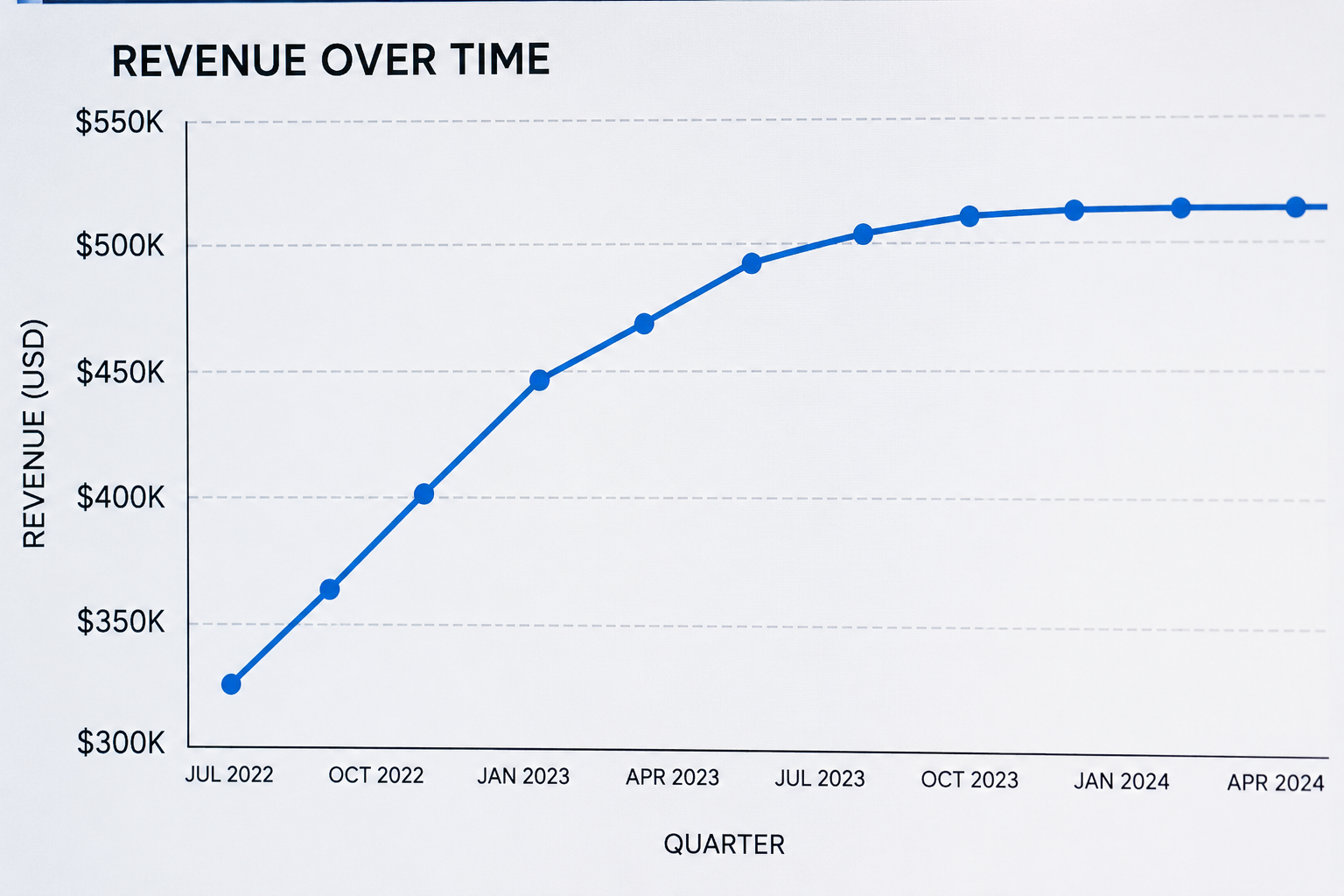
    If you liked this, read this next “What is NOI and How to Find the Real Number in an Acquisition”

    Click here to Download my free guide, The 5 Numbers Every RV Park Buyer Must Know Before Making an Offer

  • The One Financial System Every RV Park Owner Needs Before They Close

    The One Financial System Every RV Park Owner Needs Before They Close

    Set this up before day one and thank yourself later

    In the RV park acquisition community there’s a pattern I see over and over again.

    Buyers spend months doing due diligence. They verify the T12, they walk the property, they review the lease agreements and utility infrastructure and staffing model. They are thorough, careful, and smart.

    And then they close, and they have absolutely no financial system in place to manage the asset they just bought.

    The books are a mess from the transition. The bank accounts are commingled. Nobody knows what the first month actually produced because there’s no baseline reporting structure. And by the time they figure it out they’re already three months in and flying blind on a multi-million dollar investment.

    It’s one of the most common gaps I see in new acquisitions. And it’s completely avoidable.

    Here’s the financial system every RV park owner needs to have in place before, or immediately after, they close.

    Step 1: Get your banking structure right from day one

    Before you receive a single dollar of revenue you need at least three separate bank accounts:

    Operating account. This is your day to day account. Revenue comes in here. Operating expenses go out from here. Payroll, utilities, supplies, management fees, all paid from this account.

    CapEx reserve account. Every month transfer 5% of gross revenue into this account and don’t touch it for anything other than capital improvements and major repairs. This account is your future roof, your aging electrical hookups, your road resurfacing. Fund it from month one even when everything looks fine.

    Tax reserve account. Set aside a percentage of net income every month for taxes. The exact percentage depends on your entity structure and tax situation, so talk to your CPA, but a general starting point is 25-30% of net profit. Nothing creates more stress than a surprise tax bill you didn’t plan for.

    This three account structure eliminates more financial stress than almost anything else I recommend. When your operating account tells you what you actually have available to spend, not a commingled number that includes your CapEx and tax reserves, you make better decisions. It will also save you from paying expensive bookkeeping clean up fees.

    Step 2: Set up your bookkeeping system immediately

    Get QuickBooks Online or your preferred bookkeeping software set up and connected to your bank accounts before you close or within the first week after. Every transaction from day one should flow through your books.

    I know this sounds basic but new owners often let the first month or two slide because they’re busy getting the operations figured out. Then they have a backlog of transactions to clean up and no clean baseline to measure performance against.

    Your first month of ownership is your most important baseline. Capture it cleanly.

    Set up your chart of accounts to reflect the specific revenue and expense categories of an RV park, including site type revenue, utility income, amenity fees, staffing, utilities, maintenance, management fees, insurance, and debt service as separate line items. A generic chart of accounts designed for a retail business will not give you the visibility you need.

    Step 3: Build your pro-forma tracking document

    Take the pro-forma you used during underwriting and turn it into a living monthly tracking document. Every month you enter your actual results alongside your projections and calculate the variance.

    This document is your single most important management tool in year one. It tells you whether you’re on track, where you’re ahead, and where you’re behind, and it forces you to ask why on both sides.

    Ahead on occupancy? Great, what drove that and can you replicate it? Behind on rate? Why, is it a pricing issue, a mix issue, or a market issue? Every variance has a story and understanding the story is how you manage the asset instead of just watching it.

    Step 4: Establish your monthly reporting rhythm

    Pick a day and commit to reviewing your financials every single month on that day without fail the 10th of the month works well for most operators.

    Your monthly review should cover your P&L for the month compared to pro-forma and prior year, your cash position and 30/60/90 day forecast, your occupancy and rate by site type compared to pro forma, your expense ratio and any line items running above budget, and your CapEx reserve balance and any upcoming capital needs.

    The whole review should take 30 to 60 minutes if your books are clean and your reporting is set up properly. That’s one hour a month to stay on top of a multi-million dollar investment. There is no better return on your time.

    Step 5: Know your numbers before your lender asks for them

    If you have a loan on the property, seller carry, bank financing, or otherwise, your lender will likely require periodic financial reporting. But more importantly you want to be the person who knows your numbers cold before anyone asks.

    Lenders get nervous when borrowers don’t know their own financials. They get confident when a borrower calls them proactively and says here’s where we are, here’s what’s working, here’s what we’re watching. That relationship dynamic matters, especially if you ever need flexibility from your lender.

    Know your numbers. Own your numbers. Be the most informed person in the room about your own asset.

    The bottom line

    The financial system I just described is not complicated. It doesn’t require a finance degree or expensive software. What it requires is intentionality, setting it up before the chaos of ownership sets in and committing to maintaining it consistently.

    The RV Park operators who build real lasting wealth are the ones who treat the financial side of their business with the same seriousness as the operational side. They know their numbers. They track the right metrics. And they never let more than 30 days go by without a clear picture of where they stand.

    You can absolutely build this yourself. And if you want help setting it up, or want someone to manage it for you so you can focus on running the park, that’s exactly what I help new owners build. I’d love to work with you from day one.

    Visit me at https://www.pvifinancial.com and let’s talk about getting your financial foundation right from day one.

    ~Wendi | PVI Financial | Fractional CFO & Bookkeeping Services for Small Business & Outdoor Hospitality

    If you found value in that one, click here to read “What Good Bookkeeping Actually Looks Like and Why Most Small Businesses Don’t Have It”

    Click here to Download my free guide, The 5 Numbers Every RV Park Buyer Must Know Before Making an Offer

  • Why Your RV Park’s Best Season Can Also Be Its Biggest Financial Risk

    Why Your RV Park’s Best Season Can Also Be Its Biggest Financial Risk

    And what to do about it before the shoulder season hits

    Ask any RV park owner what their favorite time of year is and they’ll tell you summer. The sites are full, the revenue is flowing, the energy is high and everything feels great.

    And then September arrives.

    For a lot of RV park owners the shoulder season is when the financial chickens come home to roost. The cash that felt abundant in July suddenly has to stretch a lot further. Expenses don’t drop as fast as revenue does. Payroll still runs. Debt service still runs. Insurance still runs. And if you didn’t manage your peak season cash wisely you can find yourself in a surprisingly tight spot on a property that just had its best revenue months of the year.

    I call this the peak season trap. And it catches more new owners than almost anything else.

    Here’s how to avoid it.

    Understand your revenue curve before you close

    Every RV park has a seasonality profile. Some are heavily summer weighted with 60-70% of annual revenue coming in May through August. Others have a more even distribution with strong spring and fall shoulder seasons. Some have winter demand driven by snowbirds or proximity to ski areas.

    Before you close on any RV park acquisition you should understand exactly what the monthly revenue distribution looks like over a full year. Don’t just look at the annual T12 number, break it down month by month.

    Ask for monthly revenue data going back at least two years. Map it out. Understand when the peaks are, when the valleys are, and how deep those valleys go. That monthly revenue curve is your cash flow roadmap for the first year of ownership.

    Build your budget around the valleys, not the peaks

    This is the mindset shift that separates financially savvy operators from ones who get caught short.

    When you’re in peak season it’s tempting to make spending decisions based on current cash flow. Revenue is strong, the bank account looks healthy, and there are always improvements to make and expenses to approve.

    But your peak season cash has to carry you through the valley. Every dollar you spend in July is a dollar that isn’t available in November.

    Build your annual budget starting from your lowest revenue month. Make sure your fixed costs, debt service, payroll, insurance, utilities, can be covered in your worst month with your lowest expected revenue. Everything above that is your operating cushion and your growth fund.

    If your worst month revenue can’t cover your fixed costs you have a structural problem that needs to be addressed, whether that’s adding long term tenants for stable monthly income, reducing fixed costs, or building a larger cash reserve before you close.

    Use peak season to fund your reserves

    Peak season is not just when you make money. It’s when you build the financial cushion that protects you the rest of the year.

    Here’s the system I recommend for every RV park owner going into their first peak season:

    Every week during peak season calculate what percentage of your monthly revenue target you’ve hit. Once you’ve covered your projected monthly operating expenses, debt service, and CapEx reserve contribution, every additional dollar should be split between your tax reserve and your operating cash cushion.

    The goal is to exit peak season with enough cash in your operating account to cover at least three months of fixed expenses. That cushion is your shoulder season safety net.

    If you hit that target and still have surplus cash, that’s when you think about reinvestment, improvements, or distributions. Not before.

    Watch your expense timing carefully

    One of the most common mistakes new RV park owners make is front loading expenses into peak season without thinking about the cash flow timing.

    You want to repave the entrance road. You want to upgrade the bathhouse. You want to add a new amenity. All of those are valid investments, but if you execute them during peak season you’re consuming cash at exactly the moment you should be building it.

    In general capital improvements and major discretionary expenses are better timed for the shoulder season or off season when your operations are quieter and your team has more bandwidth. Your cash will thank you.

    Plan for the transition before it happens

    Most new owners don’t start thinking about shoulder season until they’re in it. By then it’s too late to adjust.

    The time to plan for the shoulder season is during peak season, when revenue is strong and you have the mental space to think clearly. Build your shoulder season budget in July. Know exactly what your cash position needs to look like on September 1st to get you comfortably through to the following spring.

    Then manage toward that number intentionally for the rest of peak season.

    The bottom line

    Seasonality is one of the great joys of the outdoor hospitality business. There is something genuinely wonderful about a full park on a summer weekend. But it’s also one of the great financial risks, because the math of a seasonal business is unforgiving if you’re not managing it intentionally.

    The owners who thrive long term are the ones who use their best months to protect their worst months. They budget from the valley up, they build their reserves during peak season, and they never let a strong July lull them into decisions that hurt them in November.

    You can absolutely do this. And if you want a financial partner who tracks your seasonality with you, builds your cash flow forecast, and makes sure you’re set up for every season, I’d love to work with you.

    Visit me at https://www.pvifinancial.com to get started with a free Financial Health Check.

    ~Wendi | PVI Financial | Fractional CFO & Bookkeeping Services for Small Business & Outdoor Hospitality

    If this resonates you will want to read this next: “Why Profitable Businesses Run Out of Cash”

    Click here to Download my free guide, The 5 Numbers Every RV Park Buyer Must Know Before Making an Offer

  • How to Analyze a Seller Carry Deal and Whether the Terms Actually Work for You

    How to Analyze a Seller Carry Deal and Whether the Terms Actually Work for You

    Because seller financing sounds great until you run the actual numbers

    If you spend any time in the creative real estate space you hear about seller carry deals constantly. And for good reason, when they’re structured well they can be genuinely transformative. Lower barriers to entry, flexible terms, no bank approval required, and a motivated seller who wants the deal to work as much as you do.

    But here’s what doesn’t get talked about enough. Seller carry deals can also be structured in ways that look attractive on the surface and quietly destroy your returns underneath. The terms matter enormously and not all seller financing is created equal.

    I’ve analyzed a lot of these deals. Here’s how I think through them and what I look for before I ever say yes.

    What is a seller carry deal?

    For anyone newer to the concept, a seller carry deal, also called seller financing or an owner carry, is when the seller of a property acts as the lender instead of a bank. Rather than you going to a bank to borrow the purchase price the seller carries a note and you make payments directly to them over time.

    The appeal is obvious. No bank qualification process, potentially lower interest rates than conventional financing, more flexible terms, and a seller who is often motivated to make the deal work because they’re receiving monthly payments rather than a lump sum.

    The risk is equally obvious once you understand it. The terms are entirely negotiable which means they can be structured in your favor or against you depending on how well you understand what you’re agreeing to.

    The four numbers that determine whether a seller carry deal actually works

    Before I get excited about any seller carry deal I run four numbers. All four have to make sense together or I keep negotiating or I walk.

    1. The interest rate

    Seller carry deals typically come with interest rates somewhere between 5% and 8% in today’s market though this varies widely. The rate matters because it directly determines your monthly payment and therefore your cash flow.

    A $3,000,000 seller carry note at 5% interest only for 10 years costs you $12,500 per month. The same note at 7% costs you $17,500 per month. That $5,000 monthly difference is $60,000 per year that comes directly out of your cash flow.

    Always model the payment at the actual proposed rate and make sure your NOI can absorb it with adequate cushion. Which brings me to the second number.

    2. The debt service coverage ratio

    The DSCR is especially critical in seller carry deals because the terms are flexible and sellers sometimes propose payment structures that look affordable without being sustainable.

    Divide your adjusted NOI by your annual debt service. I want to see at least 1.5x coverage, meaning my NOI covers the payments by 50%. Anything below 1.25x and I’m either renegotiating the terms or walking away.

    A seller carry deal with a 1.05x DSCR looks like it works on paper. But one bad month, one unexpected expense, one occupancy dip, and you’re behind on your payments to the seller. That’s not a position you want to be in.

    3. The balloon payment

    Most seller carry deals have a balloon payment, a point in time where the remaining balance becomes due in full. Common balloon terms are 3, 5, 7, or 10 years.

    The balloon is where a lot of buyers get into trouble. They structure a deal that cash flows well for 5 years and then discover they can’t refinance or sell at the balloon date under favorable conditions. Maybe the market shifted. Maybe their credit situation changed. Maybe interest rates moved and conventional financing no longer pencils.

    Before you sign any seller carry agreement you need a clear plan for what happens at the balloon date. Can you refinance with a conventional lender at that point? Will the property have realistically appreciated enough to sell? Can you negotiate an extension with the seller if needed?

    Never assume the balloon will take care of itself. Plan for it from day one.

    4. The amortization schedule

    This one surprises a lot of newer investors. A seller carry note can have an interest only payment structure, a fully amortizing structure, or something in between. The difference matters enormously for your cash flow and your equity building.

    An interest only note means every payment goes entirely to interest and your principal balance never decreases. Your monthly payment is lower which helps cash flow but you’re not building equity through paydown and you’ll owe the full original balance at the balloon date.

    A fully amortizing note means each payment includes both principal and interest. Your payment is higher but your balance decreases over time and you’re building equity with every payment.

    Neither structure is automatically better. It depends on your cash flow situation, your hold period, and your exit strategy. What matters is that you understand exactly what you’re agreeing to and have modeled both scenarios.

    The terms that are negotiable and the ones that matter most

    Everything in a seller carry deal is negotiable. Here are the terms worth fighting hardest for:

    The interest rate is obviously important but it’s not always the most important. A slightly higher rate with a longer balloon and no prepayment penalty can be better than a lower rate with a short balloon and a penalty for paying it off early.

    The prepayment penalty is one people often overlook. If you plan to refinance or sell before the balloon date a prepayment penalty can cost you significantly. Always ask about prepayment terms and try to negotiate them out entirely or limit them to the first year or two.

    The balloon date itself is worth negotiating hard on. Longer is almost always better because it gives you more time to stabilize the asset, build your cash reserves, and position yourself for a favorable refinance or sale.

    A real world example

    Let me walk you through how I analyzed the seller carry on an RV park deal recently.

    The property had an adjusted NOI of approximately $400,000. The seller carry was structured at approximately $220,000 in annual debt service on a $4,500,000 purchase price.

    DSCR: $400,000 divided by $220,000 equals 1.82x. Healthy coverage with good cushion.

    Cash flow after debt service: $180,000 annually or $15,000 per month.

    After a 5% CapEx reserve of $25,000 annually the free cash flow was $155,000 per year.

    The terms worked mathematically. The deal ultimately didn’t close for reasons unrelated to the financing structure but the seller carry terms themselves were workable and the numbers supported them.

    That’s what a properly analyzed seller carry deal looks like. The numbers tell a clear and consistent story at every level.

    The bottom line

    Seller carry deals are a powerful tool when they’re structured correctly and analyzed rigorously. They can open doors that conventional financing closes and create win-win situations for both buyer and seller.

    But the flexibility that makes them attractive is the same flexibility that can get you into trouble if you don’t know what you’re analyzing. Know your four numbers. Understand your balloon. Negotiate your terms. And make sure the deal works not just at closing but at every point in your hold period.

    If you want help analyzing the terms of a seller carry deal you’re looking at I would love to work through the numbers with you. That’s exactly the kind of analysis that can save you from a deal that looks good and isn’t, or give you the confidence to move forward on one that truly is.

    Visit me at https://www.pvifinancial.com and let’s look at your deal together.

    ~Wendi | PVI Financial | Fractional CFO & Bookkeeping Services for Small Business & Outdoor Hospitality

    Click here to read “I Have Analyzed Dozens of RV Park Deals, Here is What I Look At Before I Look At Anything Else”

    Click here to Download my free guide, The 5 Numbers Every RV Park Buyer Must Know Before Making an Offer

  • Why Your Books and Your Guest Experience Are Actually the Same Thing

    Why Your Books and Your Guest Experience Are Actually the Same Thing

    Want to understand what good books actually look like first? Start here, “What Good Bookkeeping Looks Like”

    This one might surprise you.

    When most people think about bookkeeping they think about compliance. Taxes. Staying out of trouble. Necessary but boring back office stuff that has nothing to do with the actual guest experience.

    But here’s what I’ve seen over and over working with hospitality and outdoor property owners. The owners who have clean financial visibility make better decisions. And better decisions, almost without exception, lead to a better guest experience. Let me explain what I mean.

    When your books are a mess you make reactive decisions.

    You raise rates because you feel like you need more revenue, not because the data supports it. You cut maintenance because the bank balance looks low, not because it’s actually the right call. You delay an amenity upgrade because you’re not sure if you can afford it, even though the numbers might actually support it if you could see them clearly.

    Reactive decisions frustrate guests. They notice when maintenance slips. They notice when the pool equipment hasn’t been updated. They notice when your pricing feels random compared to the experience you’re delivering.

    Now flip it.

    When your numbers are clean and current you can see exactly what each revenue stream is generating. You know your cost per occupied site. You know which amenities are pulling their weight and which ones aren’t.

    Think about it this way. A $5 per night rate increase on a 100 pad park running at 75% occupancy is 75 occupied sites per night. That’s $375 per night, $11,250 per month, $135,000 per year in additional gross revenue straight to your bottom line. Small moves on rate add up fast when you have the volume to back them up. But if you don’t know your data, you can’t even consider this logically, and if you price by gut feel instead of numbers you may find your guests heading down the street to someone who figured it out.

    That clarity lets you make intentional decisions instead of reactive ones. And intentional decisions protect and improve the guest experience because you’re investing where it actually matters instead of cutting blindly or spending without a plan.

    There’s another side to this too.

    Industry leaders in the outdoor hospitality space talk about the danger of mixing investor language with guest language. When owners are so focused on squeezing NOI and talking about yield optimization, guests start to feel like a transaction instead of a vacationer. The best operators are the ones who use the financial data internally to run a smarter business while still showing up for guests as a place that genuinely cares about the experience.

    Clean books make that possible. They give you the confidence to invest in the right places because you actually know what you can afford and what will move the needle.

    Your guest experience is a reflection of how well you run your business financially.

    The two are not separate.

    If your books can’t tell you where to invest, how to price, or which parts of your operation are profitable, you’re making those decisions blind. And your guests will eventually feel it.

    Want to know what financial clarity actually looks like for a hospitality property? I offer a free initial review. Let’s talk.

    Ready to look at the numbers behind your property? Read this next, “What Squeezed NOI Actually Looks Like”

  • What Squeezed NOI Actually Looks Like (And How to Fix It)

    What Squeezed NOI Actually Looks Like (And How to Fix It)

    New to NOI? Read this first, What is NOI, then come back here.

    You’ve probably heard the term NOI thrown around constantly in the investment space. Net Operating Income. The number everyone uses to value a property, qualify for financing, and measure performance.

    But what happens when NOI stops growing and starts shrinking?

    That’s called squeezed NOI and it’s happening across the outdoor hospitality space right now. Revenue softening while expenses keep climbing. The gap between what comes in and what goes out getting tighter every month. And a lot of new owners who bought at peak valuations in 2020 to 2022 are now staring at a financial picture that looks nothing like what the pro forma said.

    So what does squeezed NOI actually look like in real life?

    It looks like this:

    Your occupancy is solid but your net is shrinking. You raised rates a little but utilities, insurance, payroll and maintenance ate the increase before it hit the bottom line. You’re busy but you don’t feel profitable. Your bank balance looks ok but you can’t figure out where the money went.

    Sound familiar?

    Here’s what’s usually driving it:

    Expenses that were never properly tracked or categorized so you don’t even know where the leaks are. Rate structures that haven’t been pressure tested against actual cost increases. Revenue streams that are underleveraged, amenities, add-ons, extended stays, that are generating activity but not optimized for profitability. And books that can’t tell you which part of the business is making money and which part is dragging everything down.

    Here’s how you fix it:

    First you have to be able to see it clearly. That means clean books, real numbers, and a P&L that breaks down revenue and expenses by category, not just one big blended picture. You cannot fix what you cannot measure.

    Second you look at every expense line and ask whether it’s fixed, variable, or discretionary. Fixed costs are what they are. Variable and discretionary costs are where you find the margin.

    Third you look at revenue per site, per night, per guest, and ask honestly whether you’re leaving money on the table. Most properties are. Not because owners are lazy but because they’re too busy operating to step back and analyze.

    Fourth you build a simple 12 month forward projection so you’re not reacting to the numbers every month, you’re anticipating them.

    This is exactly the kind of work a fractional CFO does. Not just recording what happened but helping you understand why it happened and what to do about it.

    Squeezed NOI is a warning, not a death sentence. But you have to catch it early and you have to have the right financial visibility to act on it.

    If your books can’t tell you where your margin is going, that’s the first thing to fix.

    Questions about your NOI picture? I offer a free initial financial review. Let’s talk.

    ~Wendi | Fractional CFO | PVIFinancial.com
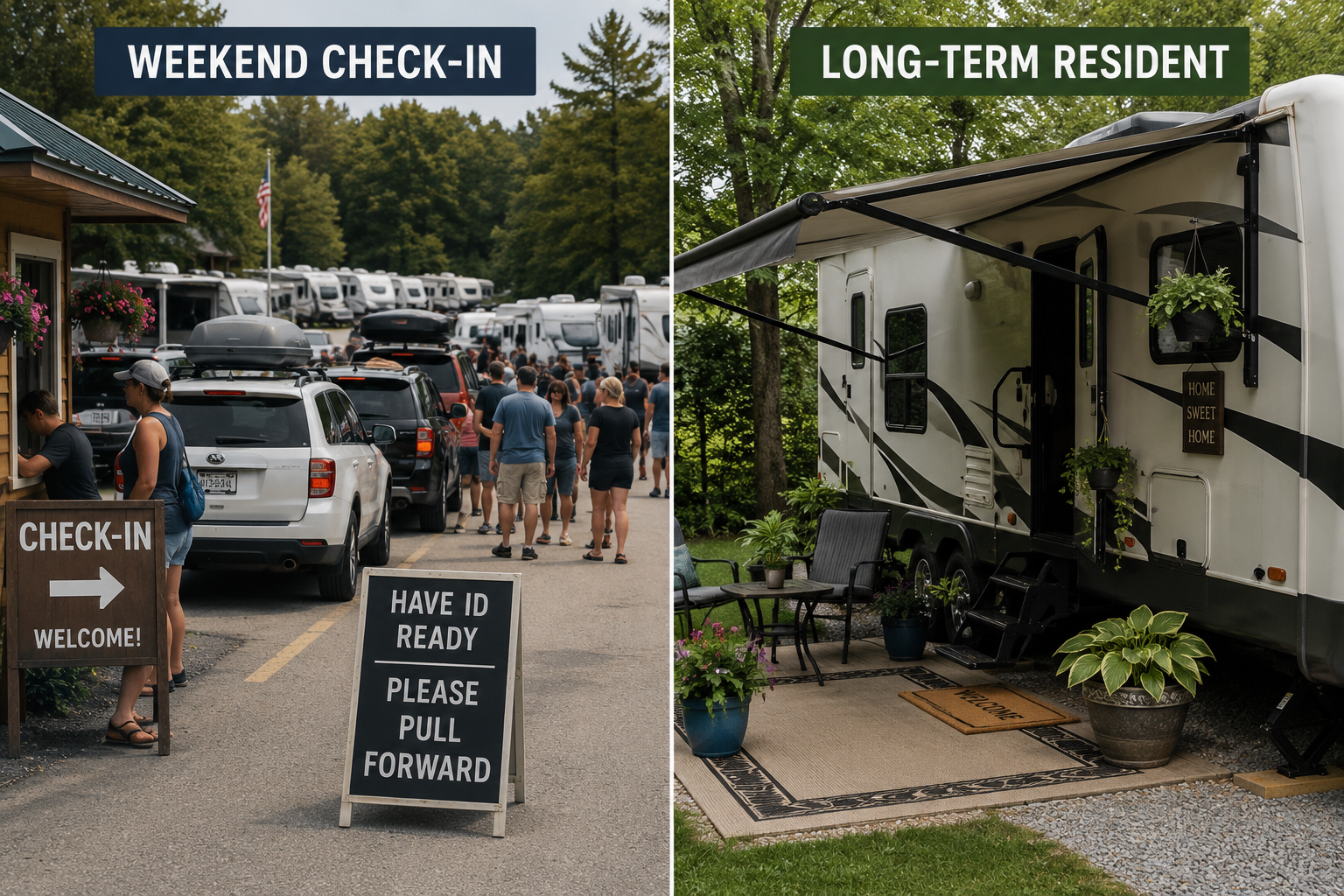
    If your NOI is getting squeezed there’s a good chance cash flow is feeling it too. Read this next: “Why Profitable Businesses Run Out of Cash and How To Make Sure Your’s Doesn’t”

    Click here to Download my free guide, The 5 Numbers Every RV Park Buyer Must Know Before Making an Offer

  • The Hidden Financial Risks of Buying a Mom-and-Pop Operation

    The Hidden Financial Risks of Buying a Mom-and-Pop Operation

    You found the deal. You closed it. You’re fired up and ready to go.

    And then you open the books.

    If you’ve recently acquired a small business or hospitality property, an RV park, a resort, a retail operation, there’s a good chance you inherited more than you bargained for financially. Not because the seller was necessarily dishonest. But because most mom-and-pop operations were never run with clean books to begin with.

    Here are some of the most common things I find hiding in inherited QuickBooks files:

    ๐Ÿ”ด Bank accounts that aren’t connected to the books. Multiple checking accounts, a savings account, credit cards, and only one of them actually flows through the accounting software. That means a significant portion of real business activity is either missing entirely or manually entered with no reconciliation. The P&L looks like it has expenses. But none of it can be verified. You can’t make good decisions on numbers you can’t trust.

    ๐Ÿ”ด Payroll liabilities recorded incorrectly. Negative payroll liability balances are a red flag. It usually means someone was recording tax payments by going directly into the bank register instead of using the proper payroll workflow. The taxes may have actually been paid, but the books can’t prove it without a CPA reconciling IRS transcripts against what the software shows.

    ๐Ÿ”ด Employee loans buried as business expenses. This one comes up more than you’d think. A loan to an employee gets quietly written off as an operating expense instead of being run through payroll as taxable compensation. The prior owner may have filed a tax return with that entry in it. Now it’s sitting in your inherited file. Know what’s in there before anyone touches it.

    ๐Ÿ”ด Depreciation recapture exposure. When you buy an LLC outright you may be stepping into the prior owner’s accumulated depreciation, which means when those assets are eventually sold the IRS will recapture that depreciation as ordinary income regardless of who took the original deductions. This is a conversation to have with your CPA before you close, not after. Understanding what you’re buying and how it’s structured can significantly impact your long term tax picture.

    ๐Ÿ”ด Balance sheet accounts that are pure fiction. Inventory balances from years ago never updated. Loans that were paid off at closing still showing as liabilities. Assets with no supporting documentation. A balance sheet that looks complete but reflects nothing about the real state of the business you just bought.

    So What Do You Do About It?

    Don’t panic and don’t start fixing things randomly. A wrong entry in the wrong place makes a mess worse.

    Get your closing statement and purchase agreement in hand before anyone touches anything. That document establishes what you actually bought, what liabilities you assumed, and what your opening balances should look like.

    Draw a clean line at your acquisition date. Archive the prior owner’s history. Build your books forward from day one of YOUR ownership with correct opening balances established by a CPA.

    And understand that this isn’t just a cleanup, it’s a new owner setup. One of the most important investments you’ll make in your first 90 days.

    The money you spent to acquire that business deserves a financial foundation that actually reflects reality. You can’t make smart decisions on rates, staffing, capital improvements, or exit strategy if your books are built on someone else’s mess.

    Get the foundation right first. Everything else flows from there.

    Questions about what you inherited? I offer a free initial file review. Let’s talk.

    ~Wendi | Fractional CFO | PVIFinancial.com
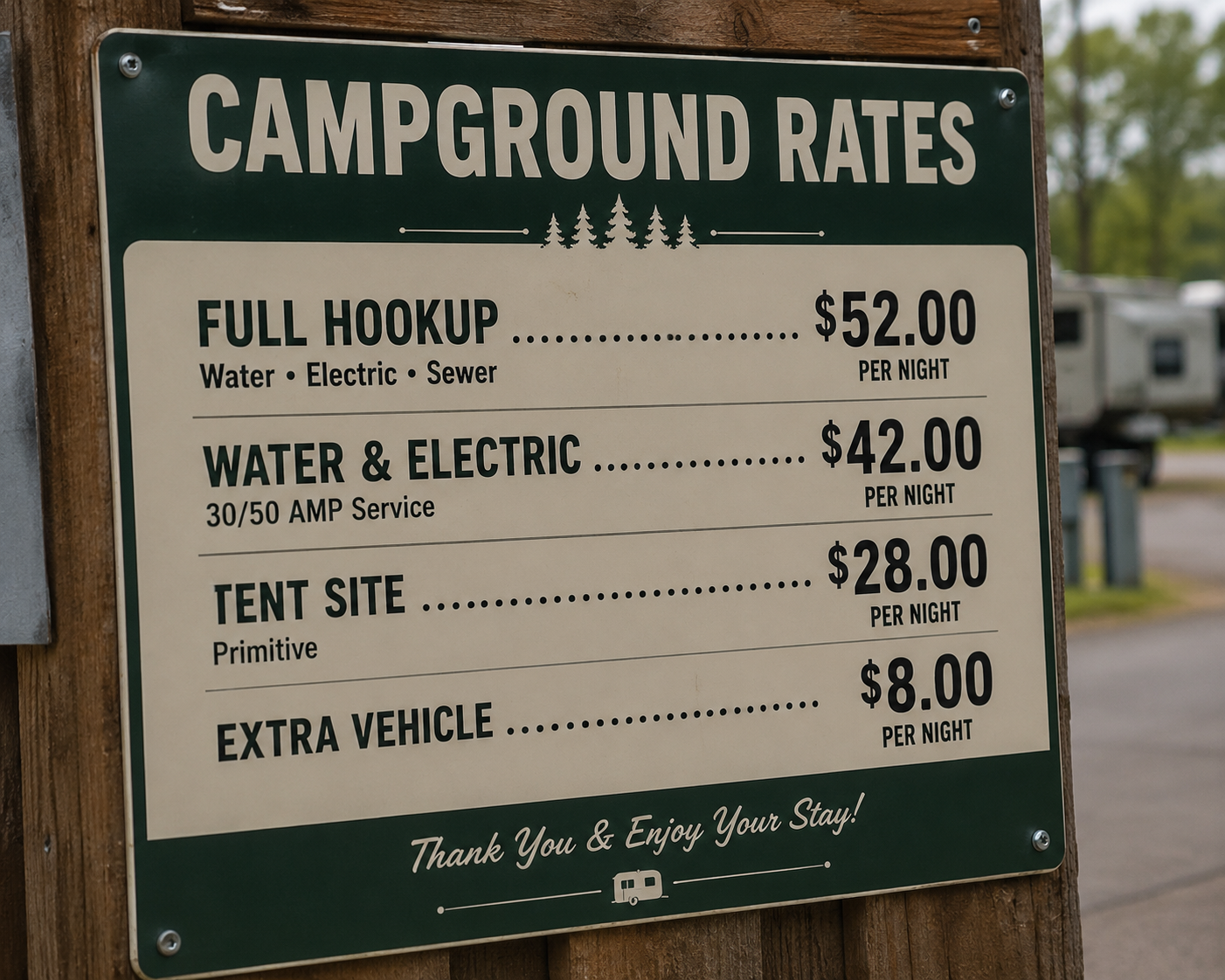
    Click here to read “What Good Bookkeeping Looks Like and Why Most Small Businesses Don’t Have It”

    Click here to read “How To Structure Your First 90 Days as a New RV Park Owner”

  • I Have Underwritten Dozens of RV Park Deals. Here is Exactly What I Look at Before I Look at Anything Else.

    I Have Underwritten Dozens of RV Park Deals. Here is Exactly What I Look at Before I Look at Anything Else.

    If you have been scrolling through RV park listings lately you already know the feeling. The photos look great, the location seems solid, and the revenue numbers the broker is showing you look attractive. So you start getting excited. You start running the math in your head. You maybe even start picturing yourself as the owner.

    And then you dig in and realize the deal is nothing like what it appeared to be on the surface.

    I have been there more times than I can count. I have underwritten RV park deals that looked incredible on a one page marketing flyer and fell completely apart under scrutiny. I have also passed on deals that looked rough on the outside and turned out to have real upside hiding underneath the surface numbers.

    After doing this work over and over the same framework keeps proving itself. Here is exactly what I look at before I look at anything else.

    The Revenue Mix Tells You Everything

    Before I look at a single expense I want to understand how the revenue is being generated. Specifically I want to know the breakdown between long term tenants, short term seasonal guests, and transient nightly guests.

    This matters more than most buyers realize. A park that generates 80% of its revenue from long term tenants looks stable on paper but carries significant risk. Long term tenants pay less per night, they are harder to remove if needed, and many lenders including SBA will not finance a park with that revenue composition. If you are planning to reposition the park toward higher paying short term guests you need to understand exactly what that transition looks like, how long it takes, and what happens to your cash flow during the process.

    A healthy revenue mix for most acquisition purposes is somewhere around 60% short term and transient combined with no more than 40% long term. If the numbers are flipped that is not automatically a dealbreaker but it is the first conversation you need to have.

    The Occupancy Number is Rarely What It Seems

    Sellers love to quote peak season occupancy. What you need is annual average occupancy by site type and by month. Twelve months of data minimum. Ideally two to three years.

    A park that runs at 95% occupancy in July and 20% in January is a very different investment than a park that runs at 70% occupancy year round. The blended annual average tells you the real story and it directly determines how you underwrite the income.

    Also ask how many sites are actually available for rent versus taken offline for storage, employee use, or owner personal use. I have seen parks quote 150 sites where 30 of them were permanently occupied by staff or family members generating zero revenue. That changes your effective inventory and your income projections significantly.

    The Seller’s NOI is a Starting Point Not a Destination

    Every broker and seller will present you with a net operating income figure. Your job is to treat that number as a starting point for your own investigation, not a conclusion.

    Here is what commonly gets left out of a seller’s NOI that you need to add back in as expenses before you can trust the number. Management fees are almost always missing if the owner is self managing. A professional management fee typically runs 8 to 12 percent of gross revenue. If you are not planning to self manage you need to include this. If you are planning to self manage you still need to include it because your time has value and you need to understand what the park looks like without you in it.

    Owner salary is another common omission. If the owner is working full time in the park and not paying themselves a salary the expenses are understated. Capital expenditure history is almost always missing. When was the last time the roofs were replaced, the bathhouses were renovated, the electrical was upgraded? Deferred maintenance shows up in the purchase price negotiation and in your first year of ownership.

    Legal and professional fees that spike in a single year are worth investigating. I have seen deals where a large legal fee appeared in one year of the financials that turned out to be related to a tenant dispute or regulatory issue that was never fully disclosed.

    Infrastructure is Where Deals Go to Die

    The physical infrastructure of an RV park is where deals go to die if you are not paying attention. Utility systems, septic, water, electrical, and roads are the unglamorous backbone of the operation and they are expensive to fix when they fail.

    Here is what I specifically investigate on every deal. Who owns the utilities? A park on city water and sewer is a very different risk profile than a park on a private well and septic system. Private systems require regular maintenance, have finite lifespans, and can come with significant regulatory requirements depending on the state. Find out the age of every major system, when it was last serviced, and what the estimated remaining useful life is.

    Roads and common areas are often overlooked. Gravel roads that have not been graded in years, drainage issues, and aging common area infrastructure all represent capital expenditure that needs to be budgeted. Walk the property on foot, not just in a car. The things you see on foot tell a completely different story than the aerial photos in the marketing package.

    The Real Estate and the Business are Two Separate Things

    One of the most common mistakes I see buyers make is evaluating the real estate and the business as one thing. They are not. You are buying both and they need to be evaluated separately.

    The real estate question is straightforward. What is the land worth, what are the comparable sales in the area, and is the property appropriately zoned for its current and intended use? Are there any title issues, easements, or encumbrances that affect the property?

    The business question is more nuanced. What systems are in place for reservations, guest management, and operations? Is there a management team or is everything dependent on the owner? What is the online reputation of the park on Google, Campendium, and The Dyrt? Reviews tell you what the financials cannot. They tell you whether guests are happy, whether the facilities are well maintained, and whether there are recurring issues that show up over and over in the comments.

    A park with strong financials and terrible reviews is a business that is heading in the wrong direction. A park with modest financials and excellent reviews is a business with real upside potential.

    The Lease and Permit Situation

    If the park is on leased land rather than owned land this is the first thing I want to understand. What are the lease terms, what happens at expiration, is there a right of first refusal, and what does the rent escalation look like over time? A 25 year lease with a first right of refusal is very different from a 5 year lease with no renewal option.

    Permits and licenses are equally important. Is the park operating with all required permits current and in good standing? Are there any open violations, pending regulatory actions, or zoning issues? In some states RV parks require specific operating licenses and the transfer of those licenses to a new owner is not always automatic. Find out before you close, not after.

    My Final Rule

    After doing this work across dozens of deals I have one rule that I always come back to. Never fall in love with a deal before you have verified the numbers yourself.

    The seller’s package is a marketing document. The broker’s pro forma is an optimistic projection. Your job as the buyer is to reconstruct the financials from scratch using verified data, apply your own expense assumptions, and determine what the property is worth to you at your required return, not what the seller thinks it is worth to them.

    If the deal still works after you have done that work it is worth pursuing. If it does not you just saved yourself from a very expensive mistake.

    That is the job. And if you want someone in your corner who has done this work on real deals and knows exactly what to look for, that is exactly what I do at PVI Financial.

    Reach out at pvifinancial.com and let’s take a look at what you are working with.

    And if you have not grabbed a copy of my book yet, From Offer to Operation: The Complete RV Park Investor’s Guide ($49), it covers the full acquisition and operations framework including a bonus report with 34 red flags to verify before you close. I am very confident you will learn something you had not thought of.

    You can get it direct here: https://wendipvifinancial.gumroad.com/l/kqmyb

    Or if you prefer Amazon has it too, just search author Wendi Rook.

    Click here to read “What is NOI? And How To Find the REAL Number in an Acquisition”

    Click here to Download my free guide, The 5 Numbers Every RV Park Buyer Must Know Before Making an Offer

  • What is NOI? And How to Find the REAL Number in an Acquisition

    What is NOI? And How to Find the REAL Number in an Acquisition

    Because the number on the listing and the number that matters are often very different things

    If you’ve spent any time looking at RV parks, campgrounds, or commercial real estate you’ve seen the term NOI everywhere. Net Operating Income. It’s the number brokers lead with, sellers brag about, and buyers base their offers on.

    And it’s also one of the most manipulated numbers in a deal.

    I don’t say that to scare you. I say it because understanding how NOI gets inflated, and how to find the real number, is one of the most valuable skills you can develop as a real estate investor. It’s the difference between buying a great asset and buying a great story.

    Let’s break it down.

    What is NOI really?

    Net Operating Income is the income a property generates after operating expenses but before debt service, taxes, depreciation, and capital expenditures.

    The formula is simple:

    Gross Revenue โˆ’ Operating Expenses = NOI

    A property with $738,000 in gross revenue and $338,000 in operating expenses has a $400,000 NOI. Simple right?

    Sure, until you start asking what’s actually in those two numbers.

    The revenue side and what to verify

    Sellers and brokers present gross revenue in the most favorable light possible. That’s not dishonest, it’s how deals get done. But your job as a buyer is to verify every dollar.

    Here’s what to look for on the revenue side:

    One time or non-recurring income. Did they have an unusually strong season last year due to a local event, a viral social media moment, or a competitor closing? One time revenue inflates the T12 and won’t repeat. Back it out.

    Owner managed revenue. If the current owner is personally managing the property and not taking a salary that income looks great on paper. The moment you hire a manager that expense hits and your NOI drops. Always underwrite a management fee even if the current owner doesn’t take one, a safe number to use would be 8-10% of gross revenue for an RV park or campground.

    Projected or pro forma revenue. Some listings include “projected” revenue from planned improvements or expansions that haven’t happened yet. That is not T12 income. It’s a dream. Underwrite only what the property is actually producing right now.

    Gross vs net revenue. If the property uses OTA platforms like Airbnb, Hipcamp, or Booking.com those platforms take 15-25% in commissions. Make sure you’re looking at net revenue after commissions, not gross bookings.

    The expense side and what gets left out

    This is where the real manipulation happens. Expenses get minimized, forgotten, or deliberately excluded to make NOI look bigger. Here’s what to watch for:

    Owner salary or management fee. As mentioned above. If the owner runs the property themselves and takes no salary add a market rate management fee back in. This alone can drop NOI by $50,000-$80,000 on a mid-size park.

    Deferred maintenance. The roof that needs replacing next year, the electrical hookups that are aging out, the roads that need grading. These aren’t on the income statement but they’re coming out of your pocket. A thorough property inspection and a CapEx analysis will surface these. Budget 5% of gross revenue annually for CapEx and make sure your NOI can absorb it.

    Property management software and booking systems. Small line items but real costs that often get buried or omitted in seller financials.

    Insurance. Was the property underinsured? Iโ€™ve talked to some owners recently who are not insured! Get your own insurance quote before you close and make sure the actual cost is in your underwriting not the seller’s potentially outdated number.

    Utilities. Did the seller get a sweetheart rate that won’t transfer to you? Verify utility costs independently especially if the property has well water, septic, or propane infrastructure.

    Seasonal labor. Some sellers understate seasonal staffing costs. Ask for payroll records not just the summary expense line.

    Non-arm’s-length expenses. Did the seller’s brother-in-law do the landscaping for below market rates? Did they use their own equipment instead of hiring out? Real world costs may be higher than what the books show.

    The adjustments that give you REAL NOI

    Once you’ve verified the revenue and normalized the expenses you’re ready to calculate what I call Adjusted NOI; the number that actually tells you what the property will perform to under YOUR ownership.

    Here’s the adjustment process:

    Start with the seller’s stated NOI. Then:

    +Add back any non-arm’s length expenses that were below market

    -Subtract any one time or non-recurring revenue that won’t repeat

    -Subtract a market rate management fee if not already included

    -Subtract a CapEx reserve (5% of gross revenue)

    -Subtract any expenses that were omitted or understated

    -Subtract OTA commissions if not already netted out

    What you’re left with is your Adjusted NOI; the real number. And I promise you it is almost always lower than what was on the listing.

    That doesn’t mean it’s a bad deal. It means you’re buying it with your eyes open.

    Why this matters so much

    NOI drives valuation. Most commercial properties are valued using a cap rate; you divide NOI by the cap rate to get value. If a broker is using an inflated NOI to set the asking price the property is overvalued relative to what it will actually produce for you.

    A $50,000 difference in NOI at a 7% cap rate is a $714,000 difference in value. That’s not a rounding error. That’s the difference between a great deal and a very expensive mistake.

    Know your NOI. Know how it was calculated. And always, always, build your own adjusted number from verified data before you make an offer.

    You can do this

    I know this might feel like a lot, but I promise you it’s learnable. Every sophisticated real estate investor goes through this process on every deal. It becomes second nature.

    And if you want a partner to help you work through the numbers on a specific acquisition, that’s exactly what I do. Acquisition underwriting is one of my favorite things because there’s nothing more satisfying than helping an investor see a deal clearly and make a confident decision.

    Whether you decide to buy or walk away, you deserve to do it with full clarity!

    Visit me at https://www.pvifinancial.com and let’s talk about your next deal.

    โ€” Wendi | PVI Financial | Fractional CFO & Bookkeeping Services for Small Business & Outdoor Hospitality

    Click here to read โ€œ5 Financial Mistakes New RV Park Owners Make in Year Oneโ€

    Click here to Download my free guide, The 5 Numbers Every RV Park Buyer Must Know Before Making an Offer

  • How to Evaluate an RV Park Manager Before You Close

    How to Evaluate an RV Park Manager Before You Close

    Because the person running your park day to day can make or break your investment

    When investors analyze an RV park acquisition they spend a lot of time on the financials. They verify the T12, they stress test the NOI, they model the debt service coverage, and they walk the physical property looking for deferred maintenance and capital needs.

    All of that is absolutely right and necessary.

    But there’s one due diligence item that often gets less attention than it deserves and in my experience it’s one of the most important factors in whether a stabilized RV park stays stabilized after you close.

    The manager.

    The person or people running your park day to day are not just employees. They are the face of your business to every guest who checks in. They are the reason your long term guests come back year after year. They are the operational backbone that keeps things running while you’re not on site. And in a remotely operated park they are essentially the business.

    Getting this evaluation right before you close can save you enormous headaches, expense, and lost revenue after you close. Here’s how I think about it.

    Why the manager evaluation matters so much

    Let me paint two pictures for you.

    In the first picture you close on a stabilized park, the manager stays on, guests love them, operations continue smoothly, and your financial results in year one track closely to the T12 you underwrote. Your transition is seamless.

    In the second picture you close on the same park, the manager leaves or turns out to be underperforming, guests notice the change in service quality, your online reviews take a hit, your repeat guest rate drops, and six months into ownership you’re scrambling to hire and train a replacement while trying to figure out why your revenue is running 15% below pro forma.

    The difference between those two scenarios is often the manager. And you have a much better chance of landing in the first picture if you do a thorough manager evaluation before you close rather than just hoping for the best.

    Step 1, understand the current manager’s relationship with the owner

    The first thing to understand is how the current manager relates to the outgoing owner. Are they a professional property manager with a formal contract? A longtime employee who has been there for years? A family member of the seller? Someone who was recently hired and has no deep roots in the property?

    Each of those situations has very different implications for your transition.

    A professional manager with a formal contract gives you clarity on terms, compensation, and expectations. A longtime employee with deep guest relationships is a huge asset worth protecting but may also have loyalty to the previous owner that takes time to transfer. A family member of the seller may not be interested in staying under new ownership at all. A recently hired manager may have less institutional knowledge than you’d hope.

    Understanding this dynamic tells you a lot about the stability of your management situation going into close.

    Step 2, review their track record objectively

    Look at the operational results on their watch. Occupancy trends, online review scores and volume, repeat guest rates if you can get them, maintenance response times, and any guest complaints or incidents that are documented.

    A manager who has been running a park at 85% occupancy with 4.7 stars on Google for three years is a very different asset than one who recently took over a declining property that happens to look stabilized on a trailing 12 month basis.

    Ask the seller directly how long the current manager has been in the role and what the occupancy and review trends looked like before and after they took over. The answer tells you a lot about whether the financial performance you’re underwriting is because of the manager or in spite of them.

    Step 3, have a direct conversation with them

    This is the step many buyers skip and it’s a mistake. Before you close ask the seller for permission to have a direct conversation with the manager. Most sellers will agree especially if they want a smooth transition.

    In that conversation you’re not just gathering information. You’re also building a relationship. Here’s what to cover:

    How long have they been in the role and what did they do before. What they love about the property and what they find challenging. How they handle guest complaints and difficult situations. What systems and processes they have in place for operations. What they think the property needs most. Whether they’re interested in continuing under new ownership and what their expectations are around compensation and their role going forward.

    Pay attention not just to what they say but how they say it. Do they talk about guests with genuine care? Do they have a clear and organized approach to operations? Do they seem proud of the property? Do they ask thoughtful questions about your plans as the new owner?

    A manager who is engaged, knowledgeable, and genuinely invested in the property is an asset worth paying for. A manager who seems checked out, vague about operations, or primarily concerned about their own situation is a risk worth understanding before you close.

    Step 4, verify their compensation and understand the full cost

    Make sure you understand exactly what the current manager is being paid, including salary or hourly rate, any housing provided on site, utilities covered, bonuses, and any other benefits or perks.

    This matters for two reasons. First, you need to make sure the full cost of management is accurately reflected in your underwriting. Second you need to know what it will take to retain them if you want to.

    A manager who is being paid below market is a flight risk. If they leave shortly after your acquisition because a competitor offers them more money, you’re left scrambling at exactly the wrong time. If retaining them requires a compensation adjustment factor that into your numbers before you close not after.

    Step 5, have a retention plan ready

    If your evaluation tells you this is a strong manager worth keeping have a retention conversation before or immediately after closing. Not a vague “we hope you’ll stay” conversation but a specific discussion about their role, their compensation, their responsibilities, and your expectations going forward.

    Strong managers have options. They know good parks want them. If you want to keep yours, give them a reason to stay early and make it concrete.

    A simple retention bonus tied to staying through the first 12 months of your ownership, a modest compensation increase that reflects their value, and a clear conversation about your plans for the property and their role in those plans goes a long way toward securing the continuity that protects your investment.

    What to do if the manager is a risk

    Sometimes your evaluation tells you the current manager is not someone you want to retain. Maybe their track record doesn’t support the financial results. Maybe they’re clearly not interested in staying. Maybe the seller confirms they’re planning to leave regardless.

    In that case your job before closing is to have a replacement plan ready. Not a theoretical plan but an actual plan. Who will manage the property on day one if the current manager walks? Do you have a candidate identified? Do you have a relationship with a professional property management company that specializes in RV parks?

    Walking into close without a management succession plan when you know the current manager is a risk is one of the most preventable mistakes in RV park acquisition. Don’t let it happen to you.

    The bottom line

    The financial analysis you do before closing tells you what the property has been. The manager evaluation tells you a big part of what it will be under your ownership.

    A great manager is one of the most valuable assets you can inherit in an acquisition. A problematic management situation is one of the most expensive problems to fix after the fact.

    Do the work before you close. Have the conversation. Understand what you have. And walk in on closing day with a clear plan for the person who is going to run your investment every single day.

    If you want help reviewing the deal or thinking through your management transition plan, I would love to work with you.

    Visit me at https://www.pvifinancial.com and let’s make sure you’re set up for success from day one.
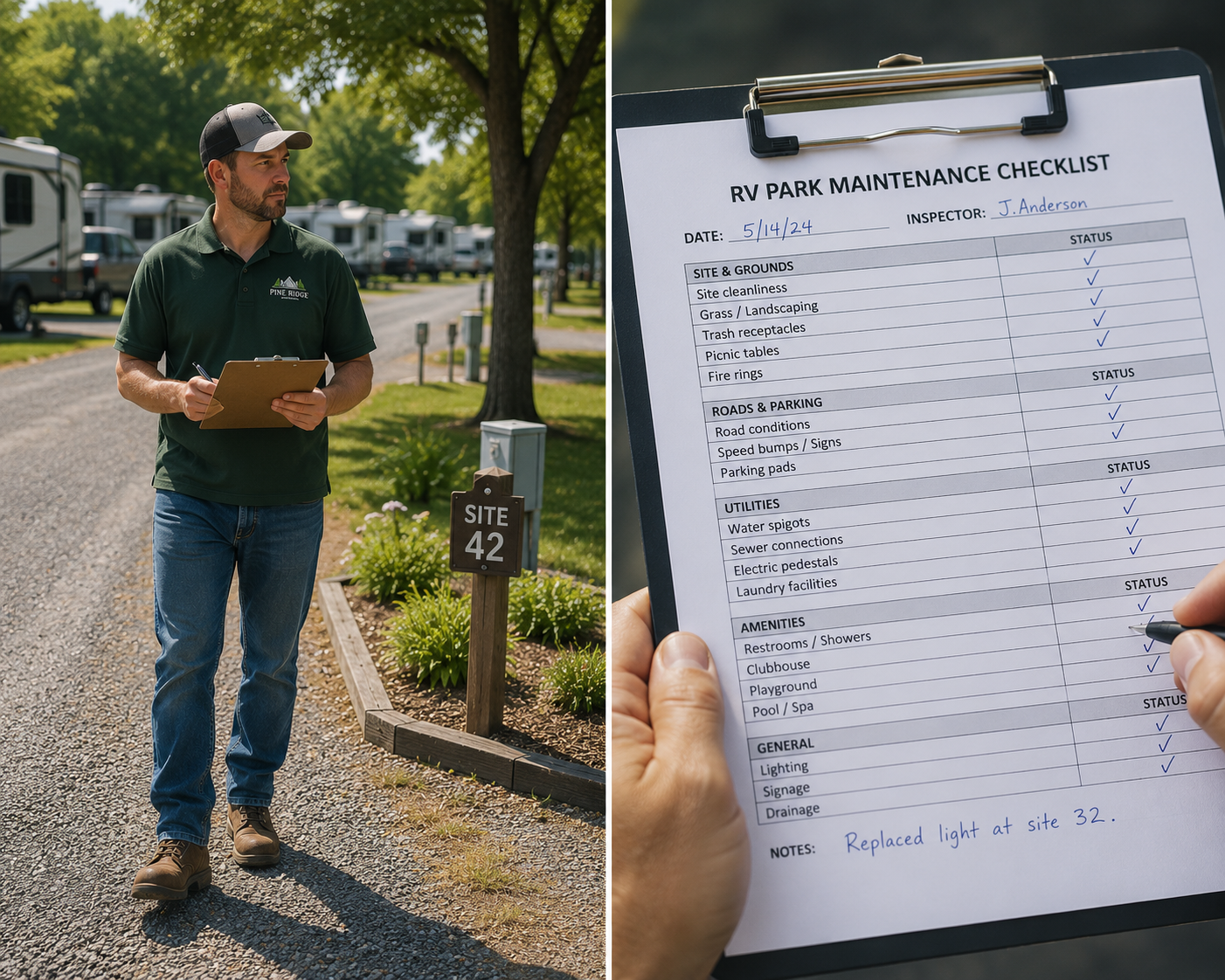
    ~Wendi | PVI Financial | Fractional CFO & Bookkeeping Services for Small Business & Outdoor Hospitality

    Click here to read “How to Structure Your First 90 Days as a New RV Park Owner”

  • What Good Bookkeeping Actually Looks Like and Why Most Small Businesses Don’t Have It

    What Good Bookkeeping Actually Looks Like and Why Most Small Businesses Don’t Have It

    Clean books are not just nice to have. They are the foundation everything else is built on.

    If you asked most small business owners whether their bookkeeping is in good shape they would probably say yes. And then if you asked them when their books were last reconciled, what their accounts receivable aging looks like, or whether their chart of accounts actually reflects how their business operates, you would get a very different answer.

    Good bookkeeping is one of those things everyone assumes they have until they actually need it. And by the time they need it, it is usually because something has gone wrong.

    Here is what good bookkeeping actually looks like, why most small businesses fall short, and what it means for your business when you get it right.

    What good bookkeeping is not

    Let me start here because there is a lot of confusion about what bookkeeping actually is and what it is supposed to do.

    Good bookkeeping is not just recording transactions. Anyone can categorize expenses and import a bank feed. That is data entry, not bookkeeping.

    Good bookkeeping is not just having a QuickBooks file. A lot of businesses have QuickBooks. Very few have QuickBooks that is actually clean, accurate, and up to date.

    Good bookkeeping is not something you catch up on once a year before tax time. If your bookkeeper is doing a big cleanup every spring that is not bookkeeping, that is archaeology. And by the time you are filing taxes it is too late to use that information to make better decisions.

    Good bookkeeping is also not the same as accounting or tax preparation. Your bookkeeper keeps your records clean and current. Your CPA uses those records to file your taxes and advise on tax strategy. They are two different roles and confusing them is one of the most common and costly mistakes small business owners make.

    What good bookkeeping actually looks like

    Good bookkeeping is a system that runs consistently every month and produces financial information you can actually use to run your business. Here is what that looks like in practice.

    Transactions are coded correctly and consistently

    Every transaction in your books should be categorized to the right account every time. Not approximately right, actually right. Income goes to the right revenue account. Expenses go to the right expense category. Owner draws are not mixed in with business expenses. Personal charges are not sitting in your business accounts.

    A well structured chart of accounts is the foundation of this. Your chart of accounts should reflect how your specific business operates, not a generic template that was set up when you first opened QuickBooks and never touched again.

    Bank and credit card accounts are reconciled every single month

    Reconciliation is the process of matching every transaction in your books to your actual bank and credit card statements. It is how you catch errors, identify fraud, and make sure your books actually reflect reality.

    If your accounts are not being reconciled every month your financial statements are not reliable. Full stop. You might have duplicate transactions, missing entries, or outright errors sitting in your books that are distorting every report you look at.

    Good bookkeeping means every account is reconciled every month without exception.

    Financial statements are produced on a consistent schedule

    Your P&L, balance sheet, and cash flow statement should be produced and reviewed every single month, not just at year end. Monthly financial statements are how you catch problems early, spot trends, and make informed decisions throughout the year.

    If you are only seeing your financials once a year at tax time you are making every business decision with a blindfold on for eleven months of the year.

    The books are current

    Good bookkeeping means your books are never more than thirty days behind. Ideally they are closed within ten to fifteen days after the end of each month. If your bookkeeper is consistently behind, constantly catching up, or doing quarterly instead of monthly closes that is a problem.

    Current books mean current information. Current information means better decisions. It really is that simple.

    Accounts receivable and payable are tracked

    If your business invoices customers you should know at any given moment exactly who owes you money, how much, and how long they have owed it. That is your accounts receivable aging report and it is a critical piece of your cash flow picture.

    Similarly if you have outstanding bills or obligations your accounts payable should be tracked and current so you always know what is coming due.

    A lot of small business bookkeeping focuses entirely on what has already happened and ignores what is outstanding. That is an incomplete picture and it creates cash flow surprises.

    Why most small businesses don’t have this

    If good bookkeeping is this straightforward why do so many small businesses fall short? Here are the most common reasons.

    The owner is doing it themselves. I have enormous respect for business owners who handle their own books in the early days. But as a business grows the complexity grows with it and the time required to do bookkeeping well competes directly with the time required to run and grow the business. Something always gives, and it is usually the books.

    They hired the cheapest option. Bookkeeping is one of those services where you often get exactly what you pay for. A bookkeeper who charges very low rates is either very new, working very fast, or both. Fast and cheap bookkeeping is almost always incomplete bookkeeping.

    Nobody is actually reviewing the output. Even businesses with a dedicated bookkeeper often have nobody reviewing the financial statements to make sure they make sense. Errors sit in the books for months or years because nobody is looking critically at the numbers.

    The setup was never done correctly. A lot of bookkeeping problems start on day one when the chart of accounts is set up incorrectly, the opening balances are wrong, or the software is configured for a generic business instead of the specific one. Bad setup creates compounding problems that get harder to fix the longer they sit.

    They think their CPA handles it. A CPA who sees your books once a year at tax time is not your bookkeeper. They are working with whatever they are given, cleaning up what they have to, and filing your return. That is not the same as maintaining clean, current, accurate books throughout the year.

    What it costs you when your books are a mess

    This is the part most people do not think about until it is too late.

    Bad bookkeeping costs you time. Every hour you spend hunting for receipts, explaining transactions to your CPA, or trying to figure out why your numbers do not add up is an hour you are not spending on your business.

    Bad bookkeeping costs you money. Your CPA charges more when your books are a mess because cleanup takes time. You may miss deductions because expenses were not categorized correctly. You may overpay taxes because your income was recorded incorrectly.

    Bad bookkeeping costs you opportunities. If you ever want to get a business loan, bring in a partner, sell your business, or acquire another one you will need clean accurate financial records. Messy books kill deals and delay timelines at exactly the wrong moment.

    Bad bookkeeping costs you clarity. When your books are a mess you cannot trust your financial statements. And when you cannot trust your financial statements you are making every decision in the dark. That anxiety, that uncertainty, that feeling of not really knowing where your business stands, that is the real cost of bad bookkeeping. And it is completely avoidable.

    What changes when you get it right

    When your books are clean, current, and accurate something shifts. You stop guessing and start knowing. You stop reacting and start planning. You stop dreading the conversation with your CPA and start having real strategic conversations about where your business is going.

    One of my clients came to me with five years of incomplete books, unfiled taxes, and no idea what her business actually made. We cleaned everything up, built the right systems, and got everything current. In the ten months since she has more than doubled her revenue, paid off all her business debt, and knows exactly where her business stands at any given moment.

    That is not a coincidence. That is what happens when the financial foundation is right.

    The bottom line

    Good bookkeeping is not glamorous. It is not the most exciting part of running a business. But it is the foundation that everything else is built on, your cash flow visibility, your tax strategy, your ability to get financing, your ability to make confident decisions, and ultimately your ability to grow.

    If you are not sure whether your books are actually in good shape I would love to take a look. A free Financial Health Check is a great place to start.

    Visit me at https://www.pvifinancial.com and let’s make sure your foundation is solid.

    ~Wendi | PVI Financial | Fractional CFO & Bookkeeping Services for Small Business & Outdoor Hospitality

    Click here to read “Why Profitable Businesses Run Out of Cash, and How To Make Sure Yours Doesn’t”

  • Should You Raise Rates After Acquiring an RV Park? How to Know When the Numbers Support It

    Should You Raise Rates After Acquiring an RV Park? How to Know When the Numbers Support It

    Because raising rates too fast can hurt you just as badly as leaving money on the table

    One of the first questions new RV park owners ask after closing is some version of this: the previous owner was charging below market rates, can I just raise them right away?

    It’s a fair question and the instinct behind it is right. If you underwrote the deal partly based on a rate increase thesis you want to start capturing that upside as quickly as possible. Every month you’re charging below market is money you’re leaving on the table.

    But here’s the thing. Rate increases after an acquisition are one of the highest leverage moves you can make AND one of the easiest ways to damage a business you just paid a lot of money for. The difference between a rate increase that works and one that backfires almost always comes down to timing, magnitude, and how well you understand what you actually have.

    Here’s how I think through it.

    First, understand why the previous owner charged what they charged

    Before you change anything you need to understand the pricing strategy you inherited. Was the previous owner charging below market because they didn’t know better? Because they wanted to keep long term guests happy? Because the property has specific limitations that justify lower rates? Because they were afraid of losing occupancy?

    Each of those situations calls for a different approach.

    An owner who simply never raised rates because they were too comfortable is a very different situation from an owner who kept rates low intentionally to maintain 95% occupancy in a market where competitors sit at 70%. In the first case you have real upside. In the second case raising rates aggressively might just trade occupancy for revenue with no net benefit.

    Know why rates are where they are before you decide where they should go.

    The math behind a rate increase

    Let me show you why rate increases are so powerful when they work.

    A 100 site park averaging 75% occupancy at $65 per night generates $1,780,125 in annual revenue. That same park at $70 per night, just a $5 increase, generates $1,916,250. That’s $136,125 in additional annual revenue assuming occupancy holds.

    At a 7% cap rate that incremental revenue adds nearly $2 million in property value. A $5 rate increase becomes a $2 million value creation event if you execute it correctly.

    That’s why rate optimization is one of the first things sophisticated operators look at after acquisition. The upside is enormous.

    But notice the assumption in that math. Occupancy holds. That’s the variable you have to manage.

    The occupancy trade off

    Every rate increase carries some risk of occupancy reduction. The question is how much and whether the math still works.

    Here’s a simple way to think about it. If you raise rates by 10% and occupancy drops by 5% are you better or worse off?

    At $65 per night and 75% occupancy on 100 sites your monthly revenue is approximately $148,750.

    At $71.50 per night and 70% occupancy your monthly revenue is approximately $150,150.

    You’re slightly ahead even with the occupancy drop. The rate increase worked.

    Now run the same math with a 15% occupancy drop and the picture changes. This is why you model before you move.

    When to raise rates and when to wait

    Here’s my general framework for rate increases after acquisition:

    Raise rates immediately if:

    Your rates are more than 20% below comparable properties in your market. You inherited a property with consistently full sites and a waiting list. Your due diligence showed rates haven’t been adjusted in several years. You’re heading into peak season and demand is strong.

    Wait and learn if:

    You just closed and you’re still in your first 30-60 days of ownership. You inherited a property with occupancy below 80% that needs to be stabilized first. You’re heading into shoulder season where demand is softer. You don’t yet have enough data to understand your guests’ price sensitivity.

    Never raise rates if:

    Your DSCR is already tight and any occupancy reduction would put your debt service at risk. You have a significant number of long term tenants whose contracts specify a rate and require notice. You haven’t yet reviewed your competitive set and don’t know where market rates actually are.

    How to raise rates without losing guests

    The how matters as much as the when. Here are the approaches that work best:

    Raise rates on new bookings first. Don’t change rates for guests who are already booked. Honor existing reservations at the old rate and apply new rates to future bookings. This is the least disruptive approach and gives you real data on how new bookings respond before you affect existing relationships.

    Start with your highest demand site types. Full hookup pull-throughs are typically your most in-demand sites. Start your rate increase there where demand is strongest and price sensitivity is lowest. Leave your lower demand site types alone until you have more data.

    Use dynamic pricing if your booking system supports it. Rather than a single flat rate increase consider implementing seasonal pricing, weekend versus weekday pricing, and advance booking discounts. Dynamic pricing lets you capture maximum revenue during peak demand without scaring away guests during slower periods.

    Communicate proactively with long term guests. If you have monthly or seasonal guests who are accustomed to a certain rate a rate increase requires advance notice, often 30-60 days depending on your lease terms. A personal conversation or a well-written letter explaining that you’re investing in improvements goes a long way toward preserving those relationships.

    The competitive set analysis you need to do first

    Before you change a single rate spend an afternoon doing a competitive set analysis. Identify the five to ten RV parks most comparable to yours within a reasonable drive, similar amenities, similar site types, similar market. Check their current rates on their website or on the booking platforms they use.

    Build a simple spreadsheet that shows your current rates versus market rates for each site type. Where are you at market? Where are you below? Where are you actually above market and potentially vulnerable to losing guests to competitors?

    That analysis tells you exactly where your rate increase opportunity is and where you need to be careful. It takes a few hours and it’s worth every minute.

    The bottom line

    Raising rates after an RV park acquisition is one of the most powerful value creation levers available to you. Done correctly it can add significant revenue and meaningful property value in a relatively short period of time.

    Done incorrectly it can damage guest relationships, hurt occupancy, and create the kind of revenue volatility that makes lenders nervous and makes your life stressful.

    The difference is doing the analysis first. Know your market. Know your occupancy. Know your guests. Model the math before you move. And when you do raise rates do it thoughtfully, communicating clearly and honoring existing commitments.

    The numbers will tell you when the time is right. Trust the numbers.

    If you want help analyzing your rate increase opportunity and modeling the revenue impact before you make any changes I would love to work through it with you.

    Visit me at https://www.pvifinancial.com and let’s look at your numbers together.

    ~Wendi | PVI Financial | Fractional CFO & Bookkeeping Services for Small Business & Outdoor Hospitality

    Click here to read “How To Structure Your First 90 Days as an RV Park Owner”

  • How to Structure Your First 90 Days as a New RV Park Owner

    How to Structure Your First 90 Days as a New RV Park Owner

    The decisions you make in the first three months set the trajectory for everything that follows

    Closing day is one of the best feelings in real estate. You’ve done the work, you’ve run the numbers, you’ve negotiated the terms, and now the keys are yours. It’s exciting and it should be.

    And then reality sets in.

    The first 90 days of owning an RV park are simultaneously the most important and the most overwhelming period of the entire ownership experience. You’re learning the operations, building relationships with staff and guests, figuring out the systems the previous owner had in place, and trying to protect the investment you just made, all at the same time.

    Most new owners wing it. They show up with good intentions and figure it out as they go. And while that works eventually it almost always means missed opportunities, preventable mistakes, and a slower start than necessary.

    Here’s a better way. A structured 90 day plan that gives you clarity, protects your investment, and sets you up for long term success.

    The mindset going in

    Before we get into the specifics I want to address the most common mistake new RV park owners make in their first 90 days, and it’s not a financial mistake or an operational mistake. It’s a mindset mistake.

    The mistake is trying to change too much too fast.

    You just bought a stabilized business. It was working before you arrived. The guests who come back year after year, the staff who know the property, the systems that keep things running, those are assets. Treat them that way.

    Your job in the first 90 days is not to reinvent the park. It’s to learn it, stabilize it, and build the foundation for intentional improvement. Change comes later, after you understand what you have.

    ๐——๐—ฎ๐˜†๐˜€ ๐Ÿญ-๐Ÿฏ๐Ÿฌ: ๐—Ÿ๐—ฒ๐—ฎ๐—ฟ๐—ป ๐—ฒ๐˜ƒ๐—ฒ๐—ฟ๐˜†๐˜๐—ต๐—ถ๐—ป๐—ด.

    Your first month has one primary goal. Learn the business as it actually operates, not as it looked in the financials.

    Here’s what that looks like in practice:

    Meet every staff member individually. Understand their role, their tenure, their relationship with the previous owner, and their concerns about the transition. Your staff knows things about this property that no due diligence package will ever tell you. Treat that knowledge as the asset it is.

    Walk every inch of the property with fresh eyes. Not the due diligence walk you did before closing, a slower more deliberate walk now that you own it. Look at what needs attention, what’s been deferred, what surprises the inspector might have missed. Start a running list.

    Talk to your long term guests and regulars if you have them. These are the people who love your park and come back year after year. Their loyalty is worth protecting. Introduce yourself, thank them for their business, and listen to what they have to say. You’ll learn more in those conversations than you will from any report.

    Review every vendor contract and service agreement. Know what you’re paying, who you’re paying, and when each contract expires or renews. Look for anything that seems overpriced or underperforming.

    Get your books connected and your bookkeeping system live. As we talked about in a recent post your first month of ownership is your most important baseline. Capture every transaction from day one.

    ๐——๐—ฎ๐˜†๐˜€ ๐Ÿฏ๐Ÿญ-๐Ÿฒ๐Ÿฌ: ๐—ฆ๐˜๐—ฎ๐—ฏ๐—ถ๐—น๐—ถ๐˜‡๐—ฒ ๐—ฒ๐˜ƒ๐—ฒ๐—ฟ๐˜†๐˜๐—ต๐—ถ๐—ป๐—ด.

    Your second month shifts from learning to stabilizing. You now have enough context to start making informed decisions. Here’s what to focus on:

    Build your first monthly financial report. Now that you have a full month of actual results compare them to your pro forma. Where are you ahead? Where are you behind? Why? This is your first real look at how the property is actually performing under your ownership and it sets your baseline for everything that follows.

    Address any urgent operational issues you identified in month one. Not the wish list items, the genuine problems that could affect guest experience, safety, or revenue if left unaddressed.

    Confirm your staffing model is right. Is the team you inherited the right team going forward? Are there gaps? Are there redundancies? Month two is when you start to have enough information to make thoughtful staffing decisions rather than reactive ones.

    Review your booking channels and pricing strategy. How are guests finding you? What percentage of bookings come through OTA platforms versus direct? What does your pricing look like relative to comparable parks in your market? You don’t need to change anything yet but you need to understand the current state before you can improve it.

    Establish your monthly reporting rhythm. Pick your review date, set up your KPI dashboard, and commit to looking at your numbers on the same day every month going forward. The discipline of consistent financial review is one of the highest value habits you can build as an operator.

    ๐——๐—ฎ๐˜†๐˜€ ๐Ÿฒ๐Ÿญ-๐Ÿต๐Ÿฌ: ๐—ฃ๐—น๐—ฎ๐—ป ๐—ฒ๐˜ƒ๐—ฒ๐—ฟ๐˜†๐˜๐—ต๐—ถ๐—ป๐—ด

    Your third month is about looking forward. You’ve learned the business, you’ve stabilized the operations, and now it’s time to build the plan for the first full year of ownership.

    Build your annual operating budget. Using your pro forma as a starting point and your first two months of actual results as a reality check, build a month by month budget for the full year. Include revenue projections by site type, all operating expenses, debt service, CapEx reserve contributions, and tax reserve contributions. This budget becomes your financial roadmap for year one.

    Identify your top three value creation opportunities. After 90 days of learning the business you should have a clear picture of where the biggest opportunities are. Maybe it’s raising rates on a specific site type that’s consistently at 95% occupancy. Maybe it’s adding a direct booking capability to reduce OTA dependency. Maybe it’s a specific capital improvement that would meaningfully increase revenue or reduce costs. Pick your top three and build a simple plan for each one.

    Have your first formal review with your property manager if you have one. Set clear expectations, align on goals for the year, and establish the reporting and communication cadence that will govern your working relationship going forward.

    Review your insurance coverage. Now that you’ve owned the property for 90 days you have a much better understanding of what you actually have. Make sure your coverage is appropriate, not just what the previous owner had.

    Check in with your lender. If you have a seller carry or any other financing, a proactive check in at 90 days is a smart relationship move. Share your early results, highlight what’s going well, and flag anything you’re watching. Lenders who feel informed are lenders who give you flexibility when you need it.

    The financial foundation checklist at 90 days

    By the end of your first 90 days here’s what your financial infrastructure should look like:

    Three bank accounts are set up and funded, operating, CapEx reserve, and tax reserve. Your bookkeeping system is live and current with zero backlog. You have two full months of actual financial results in your books. Your first monthly CFO report has been produced and reviewed. Your pro forma tracking document is live with actual versus projected variance for months one and two. Your annual operating budget is built and approved. Your KPI dashboard is set up and you’ve reviewed it at least twice.

    If you have all of that in place at 90 days you are in genuinely great shape. You have the financial visibility to manage the asset intentionally, the baseline to measure performance against, and the systems to catch problems early before they become expensive.

    The bottom line

    The first 90 days of RV park ownership are not the time to swing for the fences. They’re the time to learn, stabilize, and build the foundation that makes everything else possible.

    The operators who build real lasting wealth in this asset class are almost always the ones who were patient and intentional in the beginning. They didn’t rush to change things. They took the time to understand what they had, built the right systems, and then made thoughtful improvements from a position of knowledge rather than assumption.

    You can absolutely do this. And if you want a financial partner to help you build your 90 day financial foundation, produce your monthly CFO reports, and make sure your numbers are telling you the full story from day one, I would love to work with you.

    Visit me at https://www.pvifinancial.com and let’s talk about getting your first 90 days right.

    ~Wendi | PVI Financial | Fractional CFO & Bookkeeping Services for Small Business & Outdoor Hospitality

    Click here to read “The 5 Financial Mistakes New RV Park Owners Make in Year One

    Click here to read “What is a Fractional CFO and Does Your Small Business Need One”

  • About the PVI Financial Blog

    About the PVI Financial Blog

    I’m Wendi โ€” founder of PVI Financial and a fractional CFO, bookkeeper, and real estate investor based in Oregon.

    I started this blog to share what I’ve learned over many years in business โ€” not just as a financial advisor to others, but as a business owner myself who lived the same challenges my clients face. I know what it feels like to run a business, manage the finances, and try to grow โ€” all at the same time.

    You’ll find practical financial content here โ€” no fluff, no jargon, just real insights you can actually use.

    Whether you’re a small business owner trying to understand your cash flow, an RV park or outdoor hospitality operator looking for financial clarity, or a real estate investor analyzing your next acquisition โ€” you’re in the right place.

    New posts coming regularly. I’m glad you’re here!

    โ€” Wendi https://pvifinancial.com

    Here’s a preview of my 1st post: