RV park maintenance costs are the silent killer that nobody warns you about at closing. You got the deed, the title commitment, the closing statement, maybe an equipment list.
What you almost certainly did not get was a real maintenance schedule. Not a real one. Not a document that told you when the septic was last pumped, when the electrical pedestals were last inspected, when the roof on the bathhouse was last replaced, or when the water lines were last pressure tested.
And if nobody gave it to you, there is a good chance nobody had it. Which means right now you are operating infrastructure you cannot fully see, on a timeline you do not know, with capital exposure you have not quantified.
That gap is costing you money. It may be about to cost you a lot more.
The problem with inherited infrastructure; RV Park Maintenance costs.
Every physical system in your park has a lifespan. Septic systems. Electrical distribution. Water lines. Roofs. Roads. HVAC in any structures. Pump stations. Every one of them is somewhere on a curve between brand new and end of life, and when you closed you inherited whatever point on that curve each system happened to be at.
The previous owner knew where those systems were, at least roughly, because they had been living with them for years. They knew the septic had been giving them trouble. They knew the main electrical panel needed attention. They knew the bathhouse roof had been patched twice and was probably good for one more season. They knew all of that and almost none of it made it into the seller disclosure or the deal package.
You are now the owner of systems you did not build, cannot fully see, and have no documented history on. And the clock on all of them is running whether you are tracking it or not.
What deferred maintenance actually looks like from the inside
It does not usually announce itself. It accumulates quietly while you are focused on occupancy, reservations, guest experience, and the hundred other things that demand attention in the first year of ownership.
A pedestal that trips occasionally. A water pressure issue in the back loop that guests mention in reviews but has not caused a real problem yet. A bathhouse drain that runs slow. A road section that gets soft after heavy rain. None of these feel urgent. Each one is telling you something.
What they are telling you is that the system behind them is closer to failure than it was when you bought the park. And because you have no maintenance history, you do not know how close.
The failure, when it comes, is never at a convenient time. It is peak season weekend. It is a holiday Friday. It is the morning your highest-rated guest of the year is checking in. And instead of running your park you are managing an emergency repair at emergency pricing, writing apology notes, and watching your review score take a hit that will outlast the repair by two years.
The cost nobody puts in the pro forma
Emergency repairs cost more than scheduled maintenance. That is not an opinion, it is a procurement reality. A contractor called on a Saturday morning during peak season charges differently than one scheduled six weeks in advance on a Tuesday. Parts sourced overnight cost more than parts ordered on a normal timeline. And the revenue lost while a system is down, sites that cannot be occupied, amenities that cannot be used, is a cost that never shows up anywhere but your bank account.
Owners who run preventive maintenance schedules spend less over time than owners who run reactively. The systems last longer. The repairs are smaller. The emergencies are fewer. And the capital reserve contributions that fund planned replacements are predictable rather than catastrophic.
The math on preventive maintenance is not complicated. The reason more owners do not do it is that building the schedule requires work that nobody handed you at closing.
What a real maintenance schedule actually covers
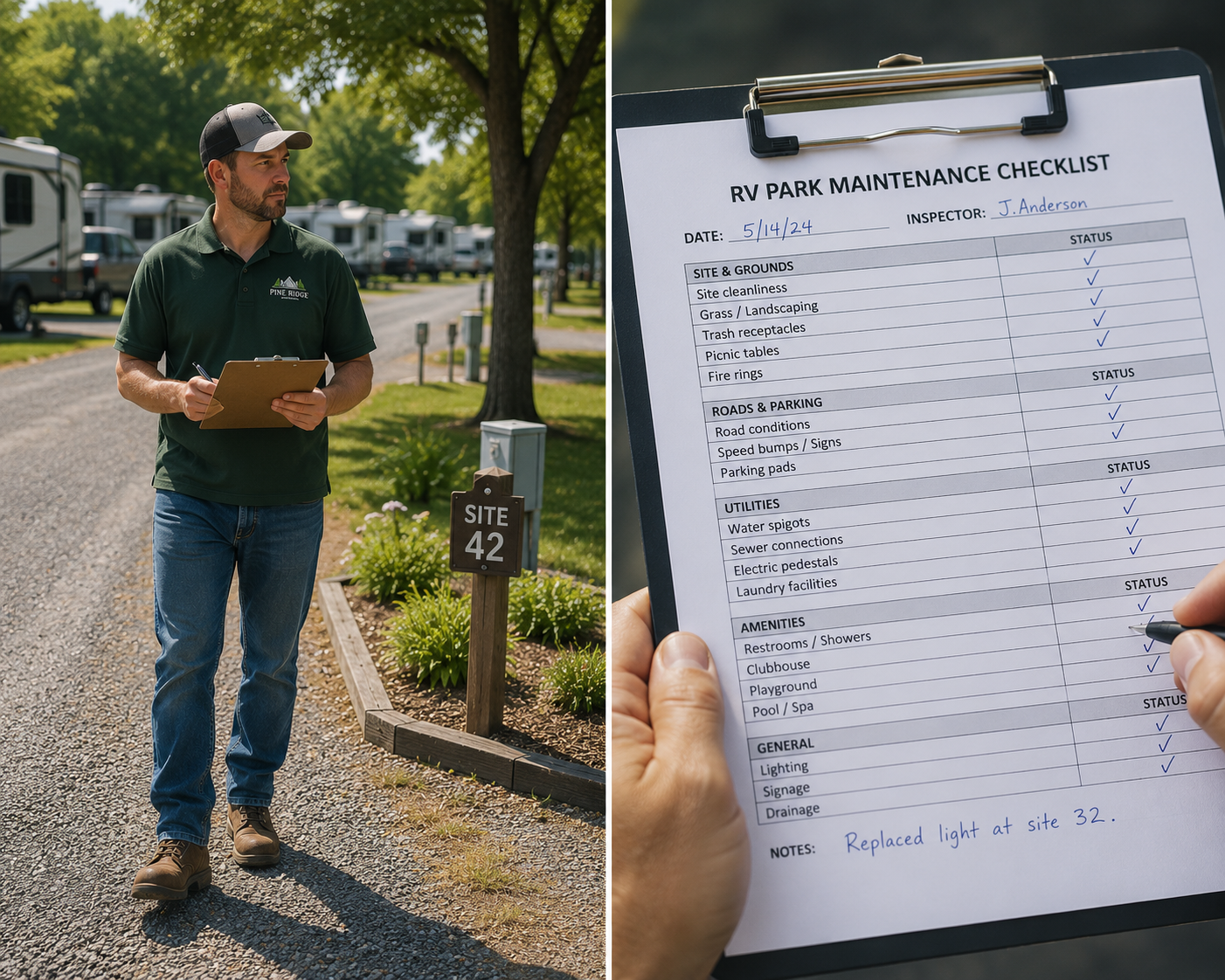
A functional preventive maintenance program for an RV park is not complicated but it has to be comprehensive. It covers every major system on a documented inspection and service interval.
Septic systems should be inspected and pumped on a schedule appropriate to capacity and usage, not when they start showing signs of distress. Electrical systems, including individual site pedestals and receptacles, should be inspected annually by a qualified electrician. Water lines and pressure systems need regular testing. Roofs on all structures need annual inspection and documented repair history. Roads need seasonal assessment and grading before problems develop into guest complaints.
Beyond the major systems, the smaller items add up. Playground equipment inspections. Laundry machine service. HVAC filter schedules. Fire extinguisher certifications. Generator testing if you have backup power. Each of these is minor in isolation. Together they represent the operational foundation that keeps a park running smoothly and keeps guests writing the kinds of reviews that fill sites.
Building the schedule you should have received at closing
If you do not have a maintenance schedule, build one now. Start with a physical walkthrough of every system on the property and document what you find. Age, condition, last known service date if you can determine it, and your best estimate of remaining useful life. That inventory is your starting point.
From that inventory, build a twelve-month maintenance calendar with specific tasks, assigned responsibility, and estimated cost. Put it in a format someone other than you can follow, because eventually someone other than you will need to.
Then fund it. Maintenance tasks that are on a schedule and budgeted for get done. Maintenance tasks that depend on available cash when the time comes get deferred. Deferred maintenance is how you end up in the same position as the seller you bought from, operating infrastructure on borrowed time and hoping nothing fails before you can get to it.
The seller did not give you a maintenance schedule at closing. That is not an excuse to operate without one. It is the first problem you need to solve.
Read this next: The Expense Category Most RV Park Owners Forget to Budget For Until It Wrecks Their First Year
If you want the full framework for buying, managing, and understanding the financials on an RV park acquisition, I wrote 𝗙𝗿𝗼𝗺 𝗢𝗳𝗳𝗲𝗿 𝘁𝗼 𝗢𝗽𝗲𝗿𝗮𝘁𝗶𝗼𝗻: 𝗧𝗵𝗲 𝗖𝗼𝗺𝗽𝗹𝗲𝘁𝗲 𝗥𝗩 𝗣𝗮𝗿𝗸 𝗜𝗻𝘃𝗲𝘀𝘁𝗼𝗿’𝘀 𝗚𝘂𝗶𝗱𝗲 ($49) specifically for investors who want to get this right. You can get it direct here: https://wendipvifinancial.gumroad.com/l/kqmyb, or Amazon has it too, just search author Wendi Rook.
Leave a Reply