Break-even is one of those terms that gets used a lot in business conversations but rarely gets defined precisely enough to be useful. Most people have a general sense of what it means. Fewer people know their actual break-even number, and almost nobody is tracking whether they have truly crossed it.
For RV park owners, this matters more than it does in most businesses. Seasonal revenue, high fixed costs, and the gap between a strong summer and a slow winter make break-even awareness a genuine operational necessity, not just a finance concept.
What Break-Even Actually Means
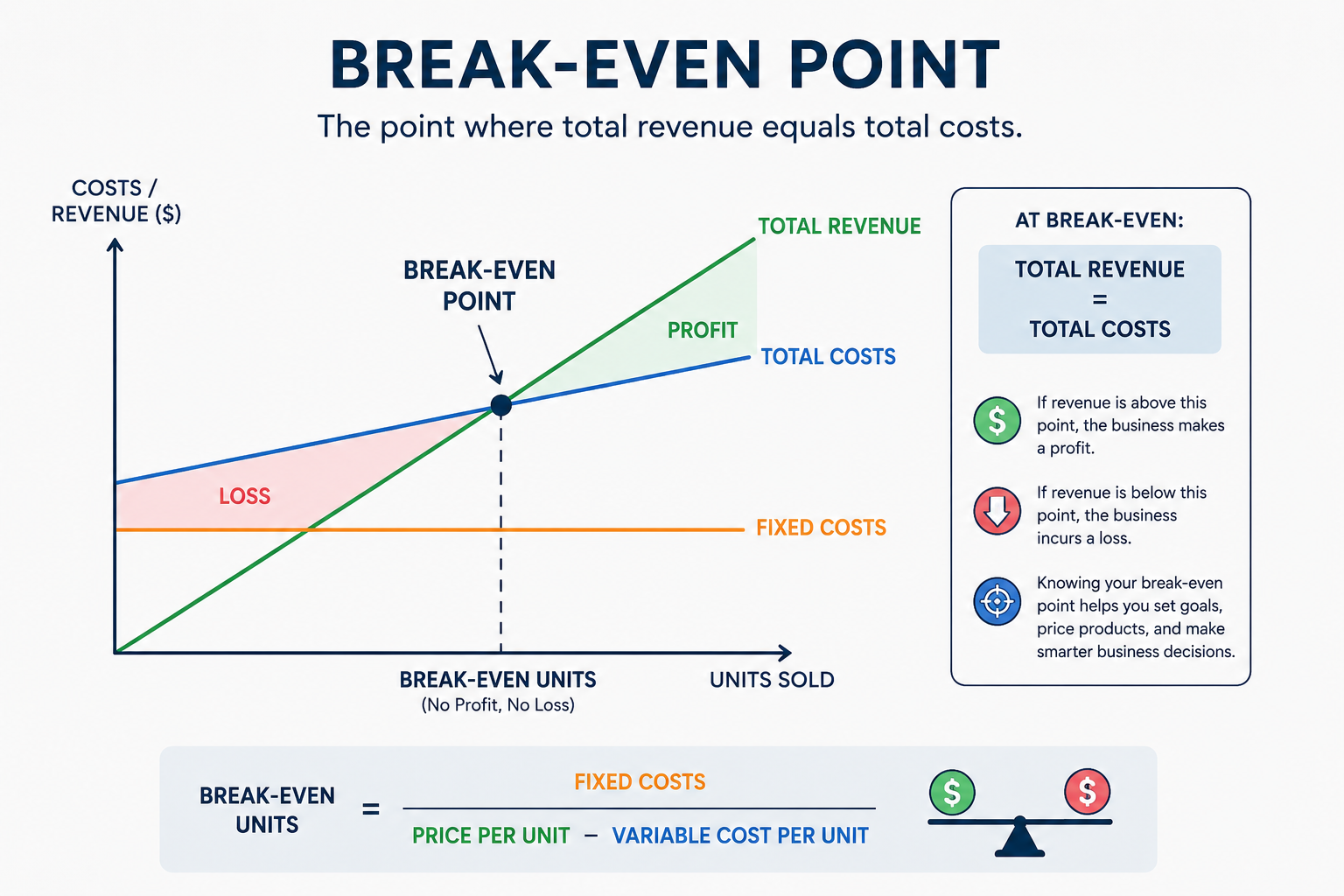
Break-even is the point at which your total revenue equals your total expenses. Below it, you are losing money. Above it, you are generating profit. Simple in theory. Complicated in practice, because not all expenses behave the same way.
Your fixed costs stay constant regardless of occupancy. Debt service, insurance, property taxes, management salaries, utilities with base minimums, and software subscriptions are examples. These bills arrive whether you have 10 rigs on property or 80.
Your variable costs move with revenue. OTA commissions, credit card processing fees, cleaning supplies, and seasonal labor scale up when business is strong and down when it is slow.
True break-even accounts for both. It is the revenue number at which your fixed costs are fully covered and your variable costs, scaled to that revenue level, are also covered. Everything above that number is profit.
Why Seasonal Parks Have a Break-Even Problem
A park that generates 70% of its annual revenue between Memorial Day and Labor Day is not operating at break-even in October. It is drawing down the cash reserves it built during peak season to cover fixed costs that do not stop just because the rigs do.
This means a park can be profitable on an annual basis and still run dangerously low on cash in the off-season. The break-even question in outdoor hospitality is not just annual. It is monthly. You need to know which months you cover your costs from operations and which months you are living off of summer’s earnings.
How to Calculate Your Break-Even
Start with your total monthly fixed costs. Add those up and that number is your floor. Every month, no matter what, you need at least that much revenue coming in or you are going backward.
From there, calculate your variable cost ratio. If your variable costs run at roughly 30% of revenue, then for every dollar you bring in, 70 cents is available to cover fixed costs and profit. Divide your total fixed costs by that 70 cents per dollar and you get your break-even revenue number.
Run this calculation for each month of the year using your actual fixed cost schedule and your historical variable cost ratios. What you end up with is a monthly break-even map that tells you exactly where you are vulnerable and how much cushion your peak season needs to build.
What to Do With the Number
Once you know your monthly break-even, a few things become clear. You can see how much cash reserve you need to carry into the slow season to cover the months you will not break even from operations. You can set a minimum acceptable occupancy target for each month. And you can make smarter decisions about off-season rate strategy, because you know exactly what revenue you need to hit instead of guessing.
The park owners who weather slow seasons without stress are almost always the ones who knew their break-even number going in and planned their cash position accordingly. The ones who get surprised are almost always the ones who never ran the math.
If you want help building your break-even model, that is one of the first things I build with every new client. It is not complicated, but it is foundational, and having it changes how confidently you run your business.
And if you have not grabbed a copy of my book yet, 𝗙𝗿𝗼𝗺 𝗢𝗳𝗳𝗲𝗿 𝘁𝗼 𝗢𝗽𝗲𝗿𝗮𝘁𝗶𝗼𝗻: 𝗧𝗵𝗲 𝗖𝗼𝗺𝗽𝗹𝗲𝘁𝗲 𝗥𝗩 𝗣𝗮𝗿𝗸 𝗜𝗻𝘃𝗲𝘀𝘁𝗼𝗿’𝘀 𝗚𝘂𝗶𝗱𝗲 ($49), it covers the full financial and operational management framework for running your park with the discipline it deserves. You can get it direct here: wendipvifinancial.gumroad.com/l/kqmyb, or Amazon has it too, just search author Wendi Rook.
Read this next: “Why Your RV Park’s Best Season Can Also Be Its Biggest Financial Risk”
Leave a Reply