Blog

  • 5 Financial Mistakes New RV Park Owners Make in Year One


    And how to avoid the ones that quietly kill your returns

    Buying an RV park or glamping property is one of the most exciting things you can do as a real estate investor. The cash flow potential is real, the asset class is growing, and if you buy right you can own a business that practically runs itself with the right systems in place.

    But year one is where a lot of new owners quietly get into trouble — not because the deal was bad, but because they didn’t have the right financial infrastructure in place from day one. I’ve seen it happen, and I’ve cleaned up the aftermath. Here are the five mistakes I see most often and exactly how to avoid them.

    1. Assuming the seller’s numbers will just continue

    When you buy a stabilized RV park the trailing 12 months of financials look great. Occupancy is solid, revenue is consistent, NOI is healthy. And then you close and six months later you’re scratching your head wondering where the money went.

    Here’s what happens: ownership transitions are disruptive. Staff changes, booking patterns shift, returning guests who were loyal to the previous owner don’t come back, and small operational details that the seller handled intuitively don’t get transferred in a two-week handoff.

    The mistake is assuming the T12 numbers are a guarantee rather than a baseline. They’re a starting point. Your job in year one is to protect that baseline while you learn the business — not to immediately start optimizing for growth.

    What to do instead: build a 12-month financial model before you close that stress-tests the numbers. What happens if occupancy drops 10% in year one? What happens if you lose your property manager? What’s your cash position in each scenario? Know your downside before you close, not after.

    2. Not separating operating cash from your personal cash fast enough

    This sounds obvious but it happens constantly — especially to first time hospitality operators who are used to residential real estate where the cash flows are simpler.

    An RV park generates revenue daily. Weekends, holidays, and peak season dump cash into your account fast and it feels great. The problem is that cash has to carry you through the shoulder season, cover payroll, fund your CapEx reserve, and service your debt — all at the same time. When it’s all sitting in one account it’s very easy to look at a healthy balance in July and make spending decisions that leave you scrambling in November.

    What to do instead: from day one set up separate accounts for operating cash, CapEx reserve, and tax reserve. Fund each one according to a monthly plan. Your operating account is the only one you spend from day to day. This one simple system eliminates more financial stress than almost anything else I recommend to new operators.

    3. Skipping the CapEx reserve

    RV parks are physical assets. Things break, wear out, and need replacing — roofs, electrical hookups, water systems, roads, amenities. A well-run park budgets 5% of gross revenue annually into a dedicated CapEx reserve account.

    New owners skip this because the cash feels tight in year one and the roof looks fine right now. Then year three arrives and they’re facing a $60,000 electrical infrastructure repair with no reserve and a cash flow that can’t absorb it.

    What to do instead: fund your CapEx reserve from month one even if it feels premature. Treat it like a non-negotiable expense, not an optional savings account. Your future self will thank you.

    4. Not tracking the right KPIs for your specific property type

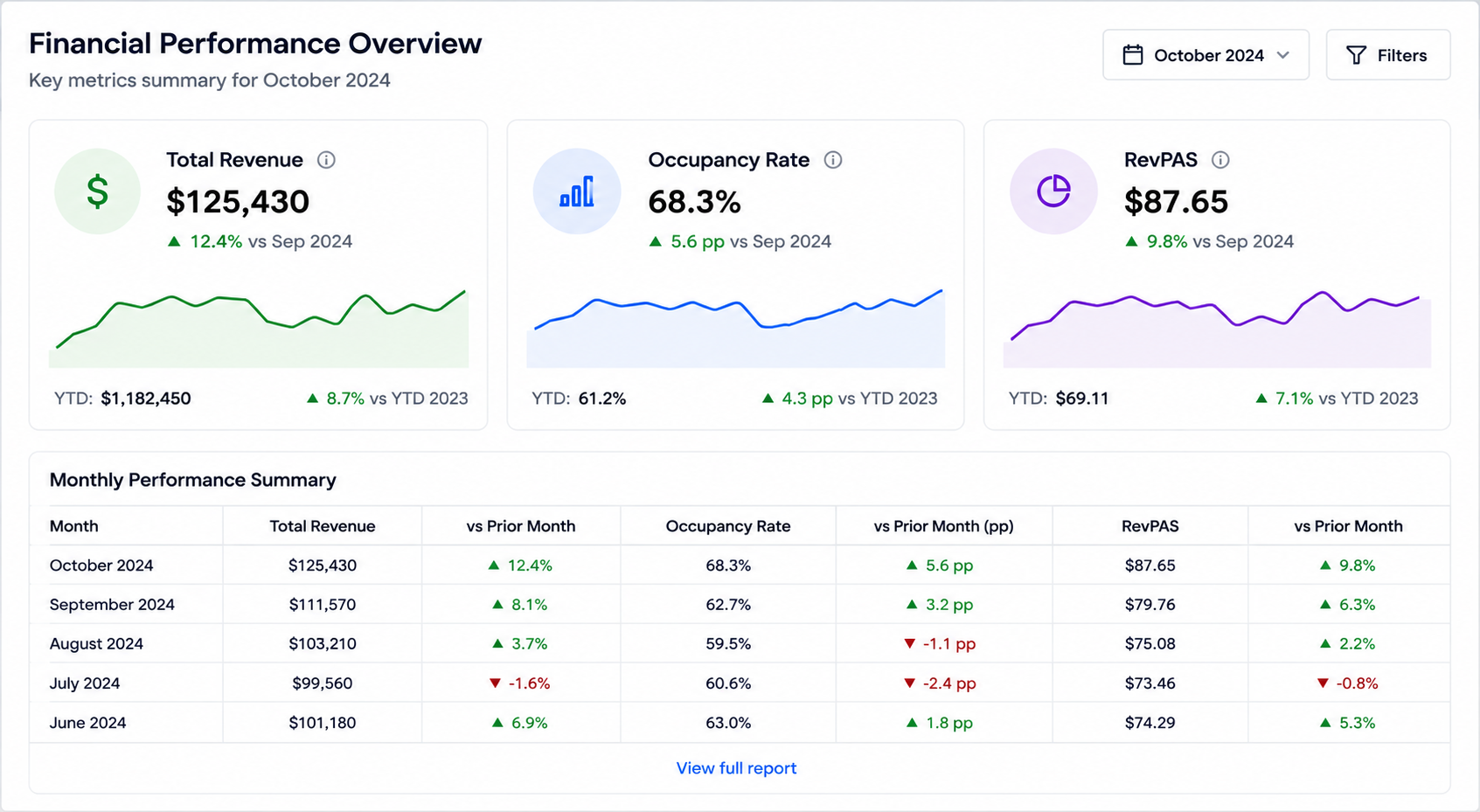
    Most new RV park owners track revenue and expenses. That’s bookkeeping. What you actually need is a dashboard of KPIs that tell you whether your business is healthy, growing, or starting to slip — before it shows up as a problem in your P&L.

    For an RV park or glamping property the KPIs that matter most are:

    • Occupancy rate by site type (glamping vs RV vs tent — they tell very different stories)
    • Average nightly rate by site type
    • Revenue per available site (RevPAS)
    • Operating expense ratio (excluding debt service)
    • Cash runway — how many months of expenses does your current cash cover?

    If you’re not tracking these monthly you’re flying blind. And flying blind in year one — when you’re still learning the business — is how small problems become expensive ones.

    What to do instead: set up a monthly KPI dashboard from day one that tracks these numbers consistently. This is exactly what I build for every client — a clean, simple report that shows you what’s happening in your business at a glance so you can spot trends early and act before small problems become expensive ones. If you’re not sure where to start visit me at pvifinancial.com and let’s talk.

    5. Waiting too long to get financial help

    This is the big one and honestly the one I feel most strongly about.

    Most new RV park owners wait until something goes wrong to get financial help. They try to manage it themselves, they rely on their CPA for year-end guidance, and they don’t build real financial visibility into their operation until they’re already in trouble.

    The problem with that approach is that by the time the problem is visible in your financials it’s usually been building for months. Cash flow issues, occupancy slippage, expense creep — these things don’t appear overnight. They show up slowly and then all at once.

    Year one is exactly when you need the most financial support — not because you’re bad at business, but because you’re learning a new asset class while simultaneously trying to protect your investment and service your debt. That’s a lot to carry without a financial partner who knows the numbers as well as you do.

    What to do instead: get a fractional CFO or financial advisor in place before you close or in the first 30 days after. Someone who will build your reporting infrastructure, track your KPIs, flag problems early, and give you a clear picture of your financial position every single month. The cost of that support is a fraction of what one missed problem in year one can cost you.

    The bottom line

    Buying a great RV park or glamping property is the beginning, not the end. The operators who build real wealth in this asset class are the ones who treat the financial side of the business with the same seriousness as the operational side.

    Know your numbers. Track the right metrics. Build the right systems from day one. And don’t wait until something goes wrong to ask for help.

    If you’re buying or have recently bought an RV park or outdoor hospitality property and want to talk through your financial setup, I’d love to connect. The first conversation is always free.

    — Wendi | PVI Financial Fractional CFO & Bookkeeping Services for Small Business & Outdoor Hospitality https://pvifinancial.com

  • Welcome to the PVI Financial Blog

    I’m Wendi — founder of PVI Financial and a fractional CFO, bookkeeper, and real estate investor based in Oregon.

    I started this blog to share what I’ve learned over many years in business — not just as a financial advisor to others, but as a business owner myself who lived the same challenges my clients face. I know what it feels like to run a business, manage the finances, and try to grow — all at the same time.

    You’ll find practical financial content here — no fluff, no jargon, just real insights you can actually use.

    Whether you’re a small business owner trying to understand your cash flow, an RV park or outdoor hospitality operator looking for financial clarity, or a real estate investor analyzing your next acquisition — you’re in the right place.

    New posts coming regularly. I’m glad you’re here.

    — Wendi https://pvifinancial.com