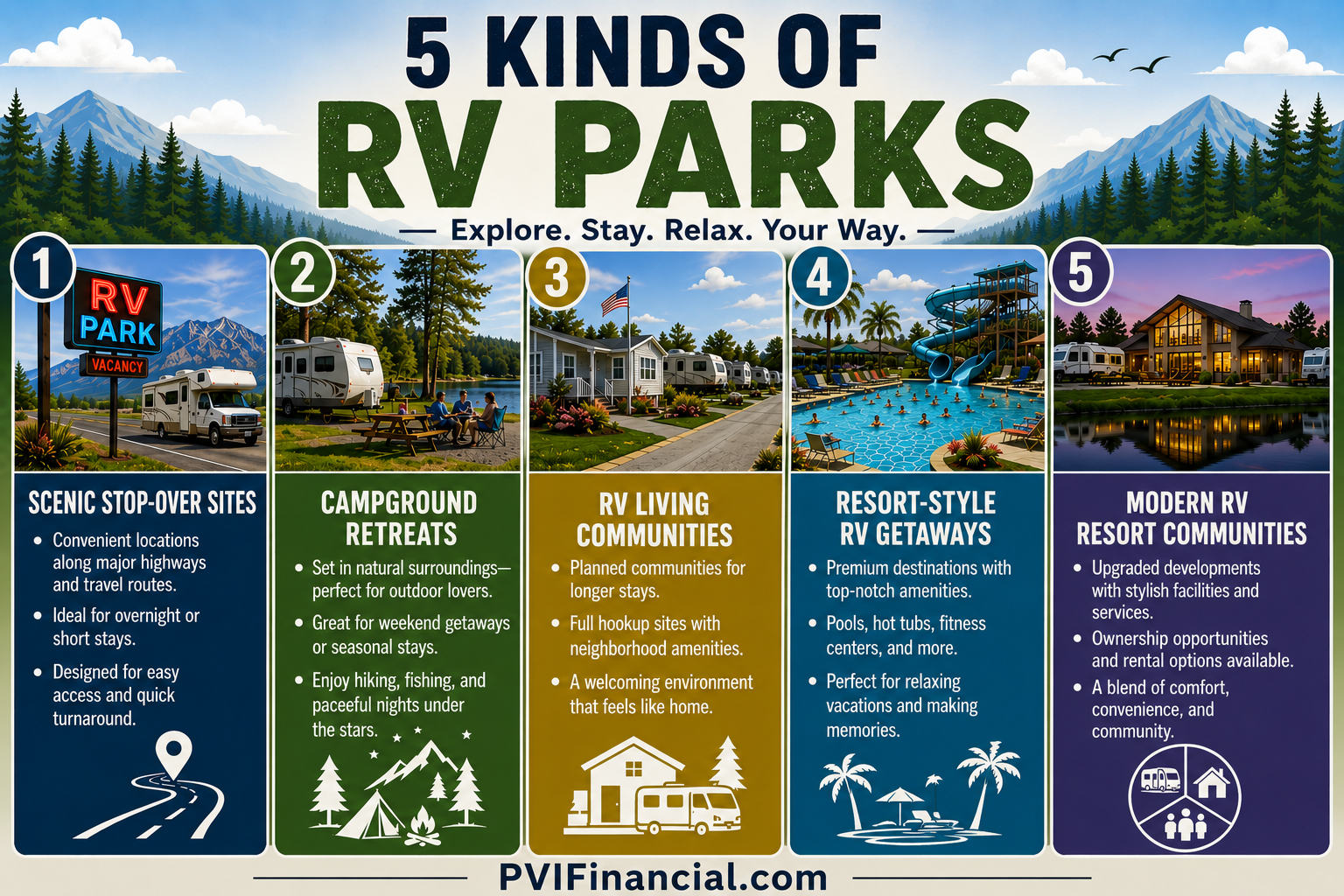
Buying an RV park looks simple from the outside. Find a park, check the cap rate, get a loan, collect the site rent.
The reality has more moving parts, and the buyers who get hurt are the ones who skip steps. I underwrite these deals for a living, and this roadmap walks through the major stages of buying an RV park, from the market itself to your first 90 days as an owner.
Why RV Parks Are Attracting Investors in 2026
The demand side keeps growing. The RV Industry Association reports over 11 million American households now own an RV.
Remote work turned full-time RV living into a real option for working professionals. Boomers are retiring into the lifestyle, and Millennials are the fastest-growing buyer group.
The supply side barely moves. Most counties make new park zoning very difficult, and some existing parks get converted to housing developments and disappear.
Growing demand plus near-fixed supply is the backdrop for anyone buying an RV park right now.
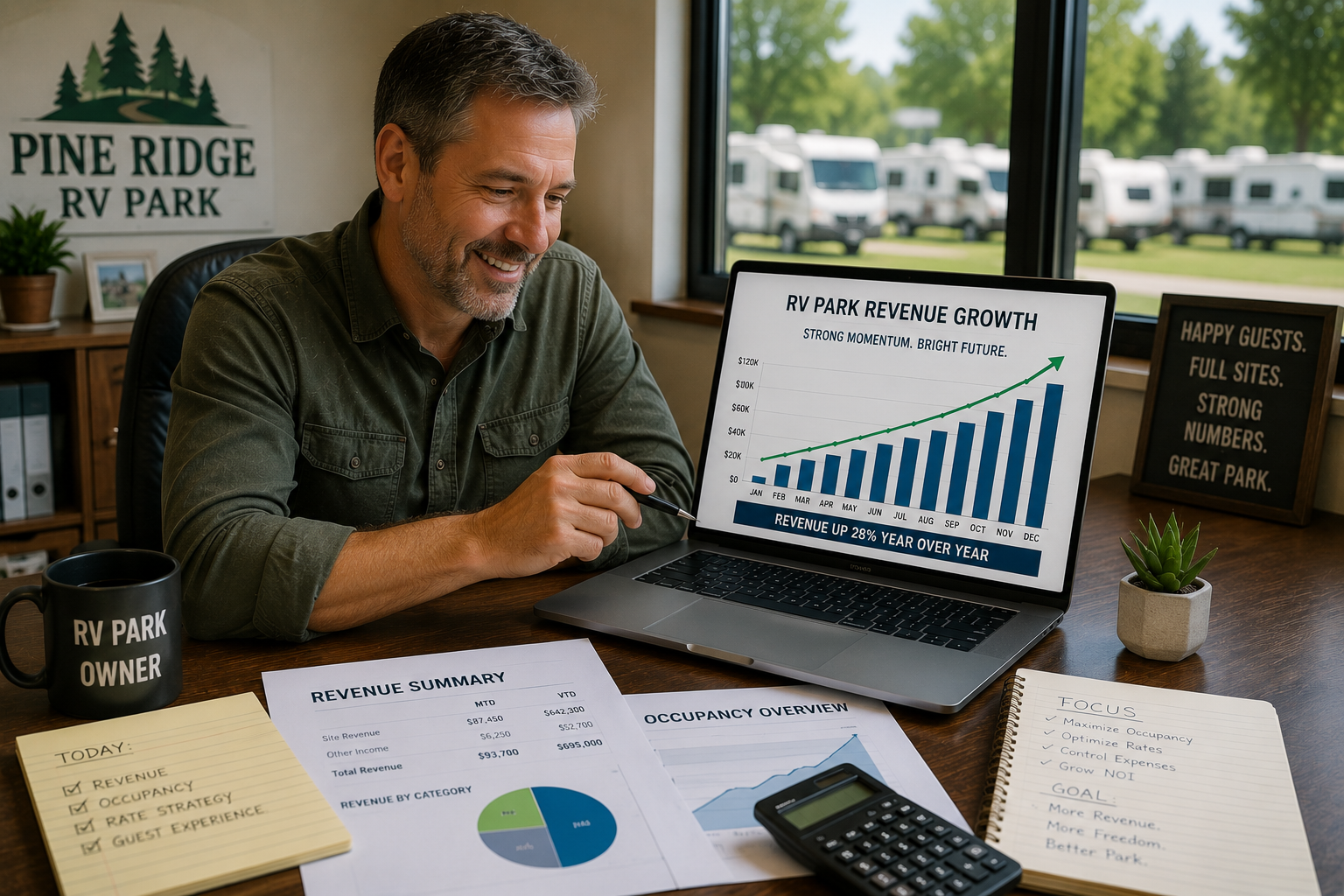
One caution: an RV park is not passive income. It is part commercial real estate, part hospitality business. The land appreciates like real estate, but the revenue behaves like a hotel, with seasonality, reviews, and guests who expect service. That is why parks can outperform passive real estate, and why they demand more of you.
Site Mix: What Actually Drives the Money
Two 100-site parks can have completely different earning power. Site mix is the biggest reason, and it is the first thing I study when buying an RV park.
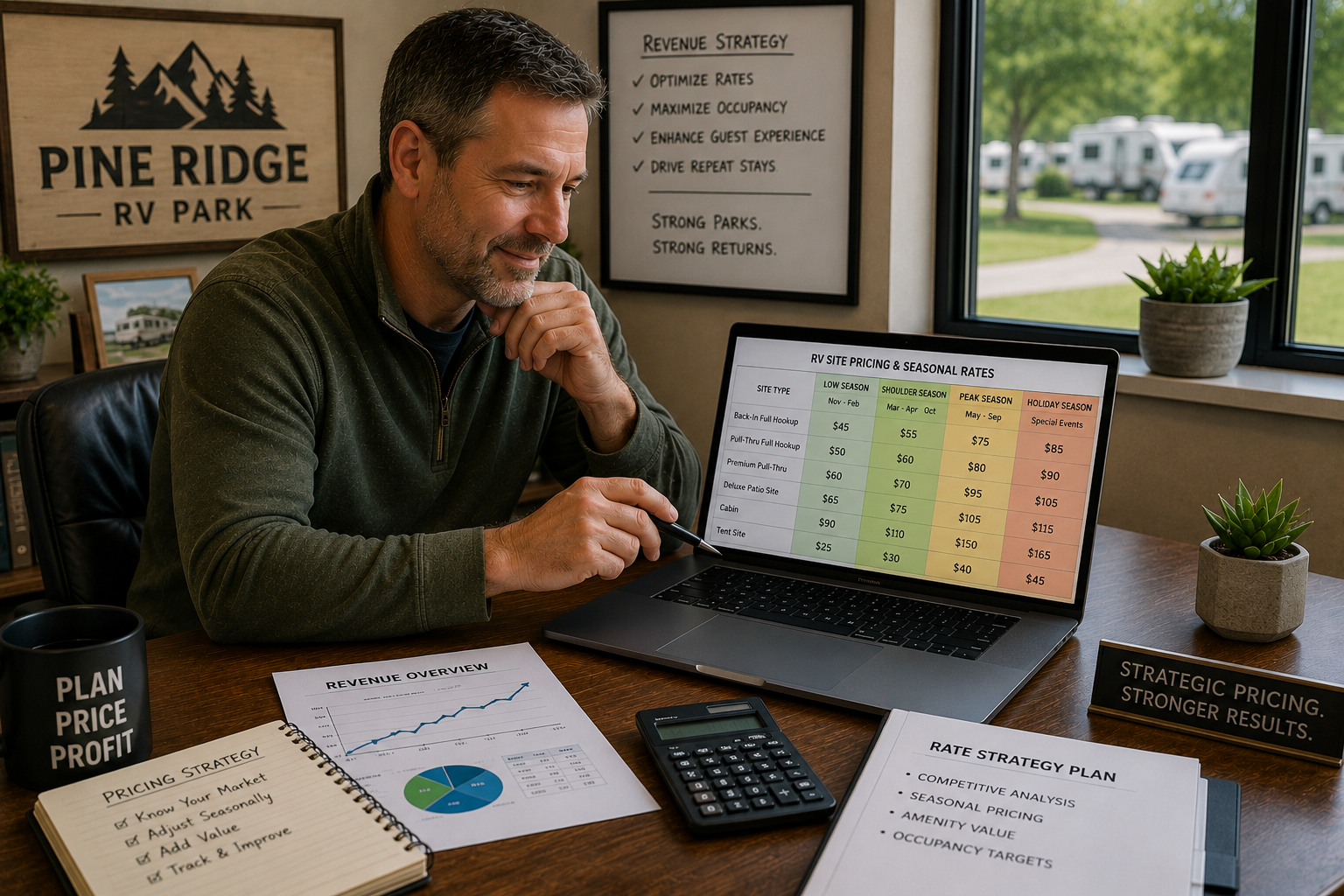
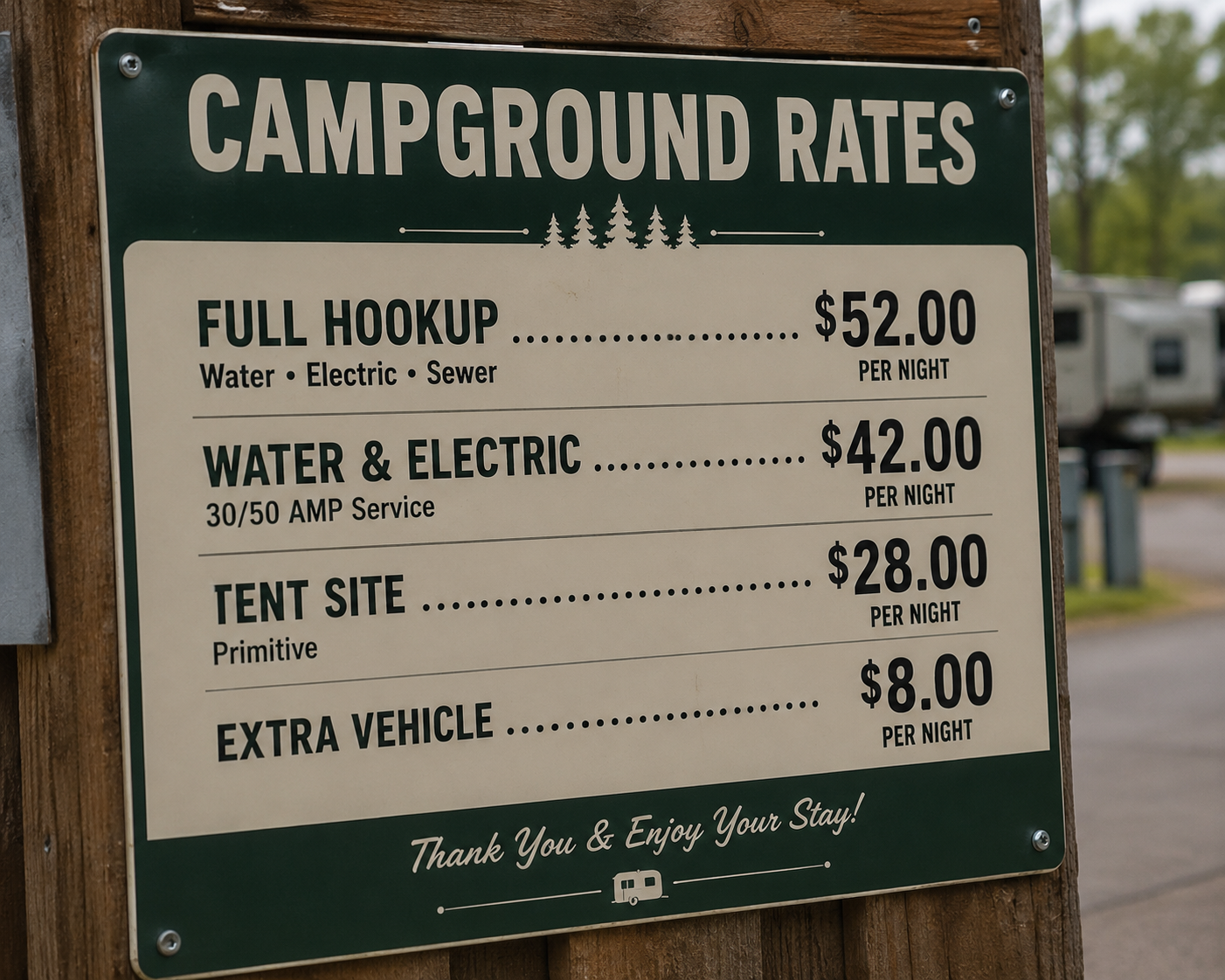
Full hookup sites (water, sewer, electric) are the premium product. Typical nightly rates run $50 to $80 in most markets, higher at destination resorts.
Partial hookup sites rent meaningfully lower. Tent and primitive sites lower still.
Converting a partial site to full hookup typically costs $5,000 to $15,000 per site, and it is one of the cleanest value-add plays in the asset class.
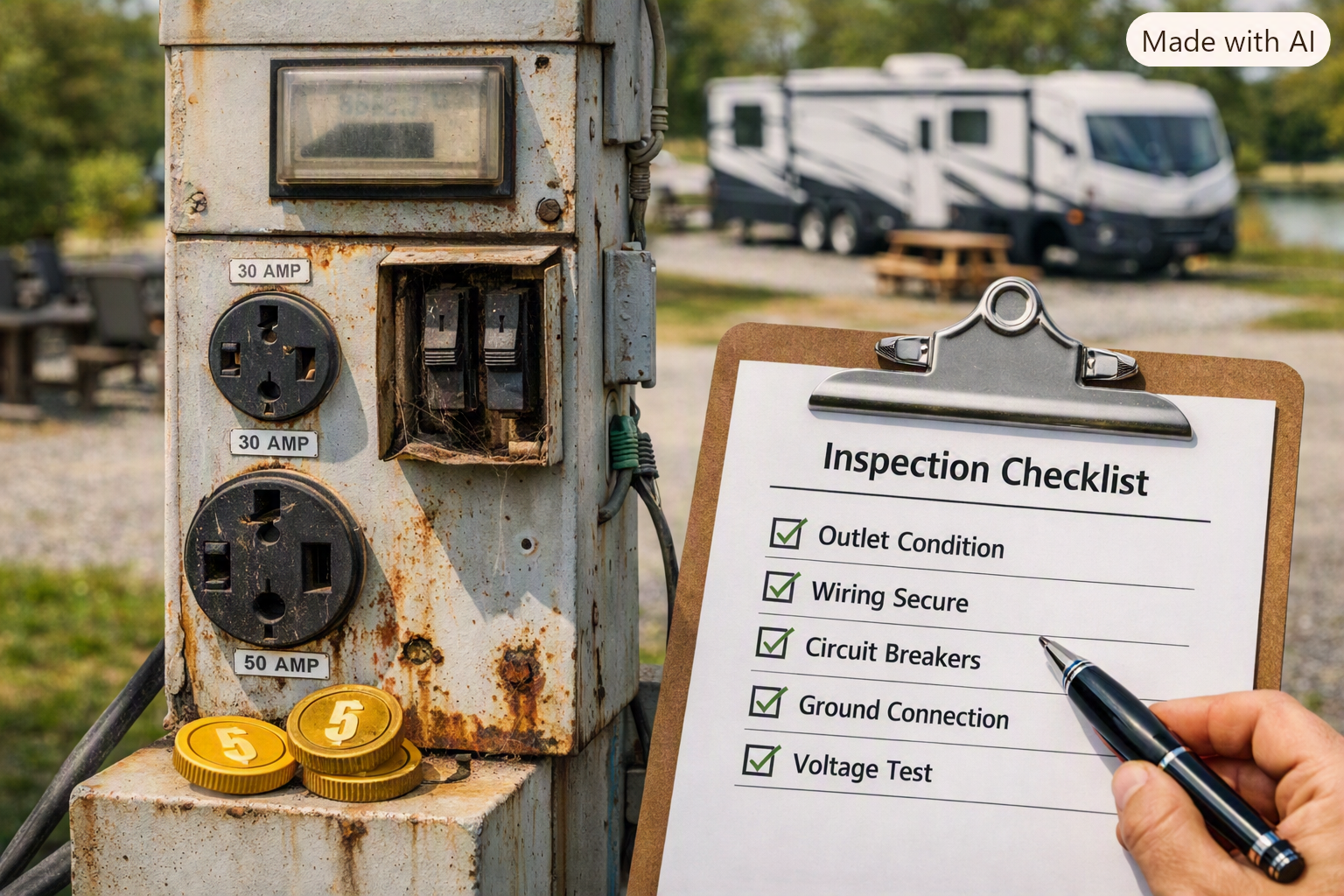
Electrical service matters just as much. Modern rigs need 50-amp power. A park stuck on 30-amp pedestals is invisible to the highest-paying guests, and upgrades run a few thousand dollars per site. Count the 50-amp sites yourself when buying an RV park, and never take the listing’s word for it.
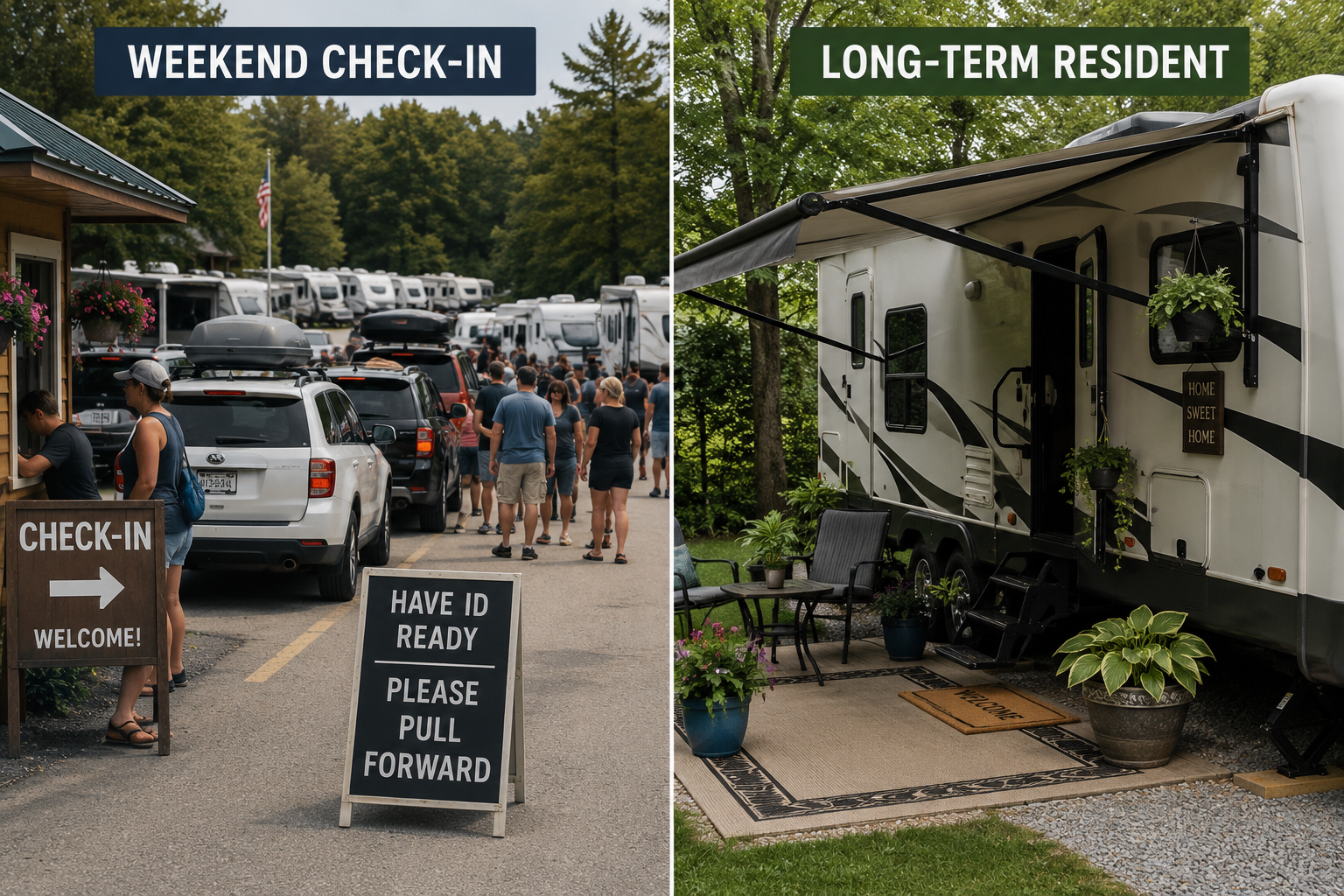
Guest mix is the other half of the equation. Monthly long-term guests provide stable income at lower rates, usually a few hundred to $1,500 per month. Nightly transient guests pay far more but disappear in the off-season, and balancing the two is a core decision in buying an RV park.
Neither is better in the abstract. What matters is knowing which business you are actually buying.
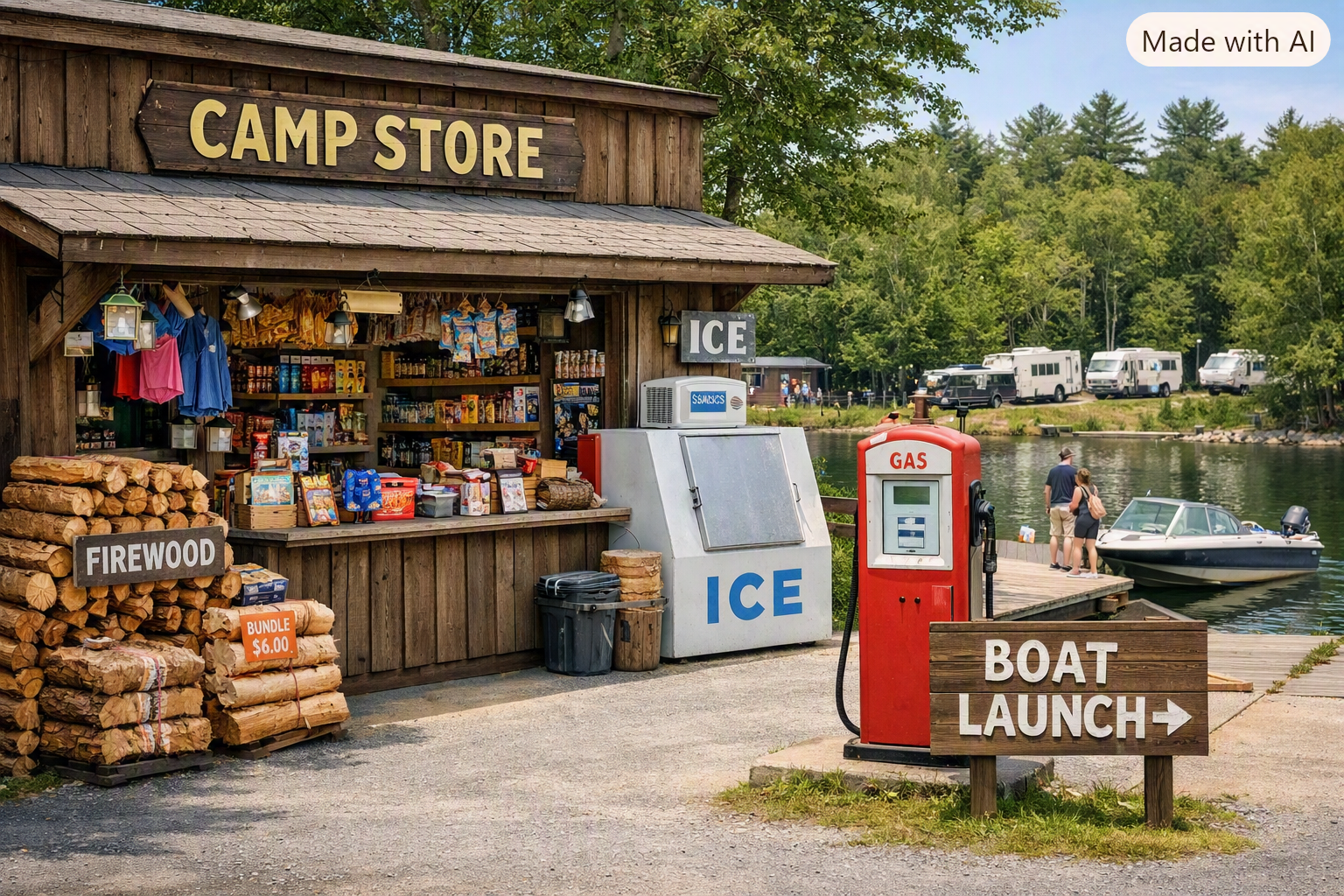
Clearly break down your revenue mix. Site rent is usually 70 to 85 percent of total revenue. The rest comes from cabins, the camp store, laundry, and fees. Cabins deserve special attention, because they rent for double or triple a site and open the park to people who do not own an RV at all.
Occupancy Is a Curve, Not a Number
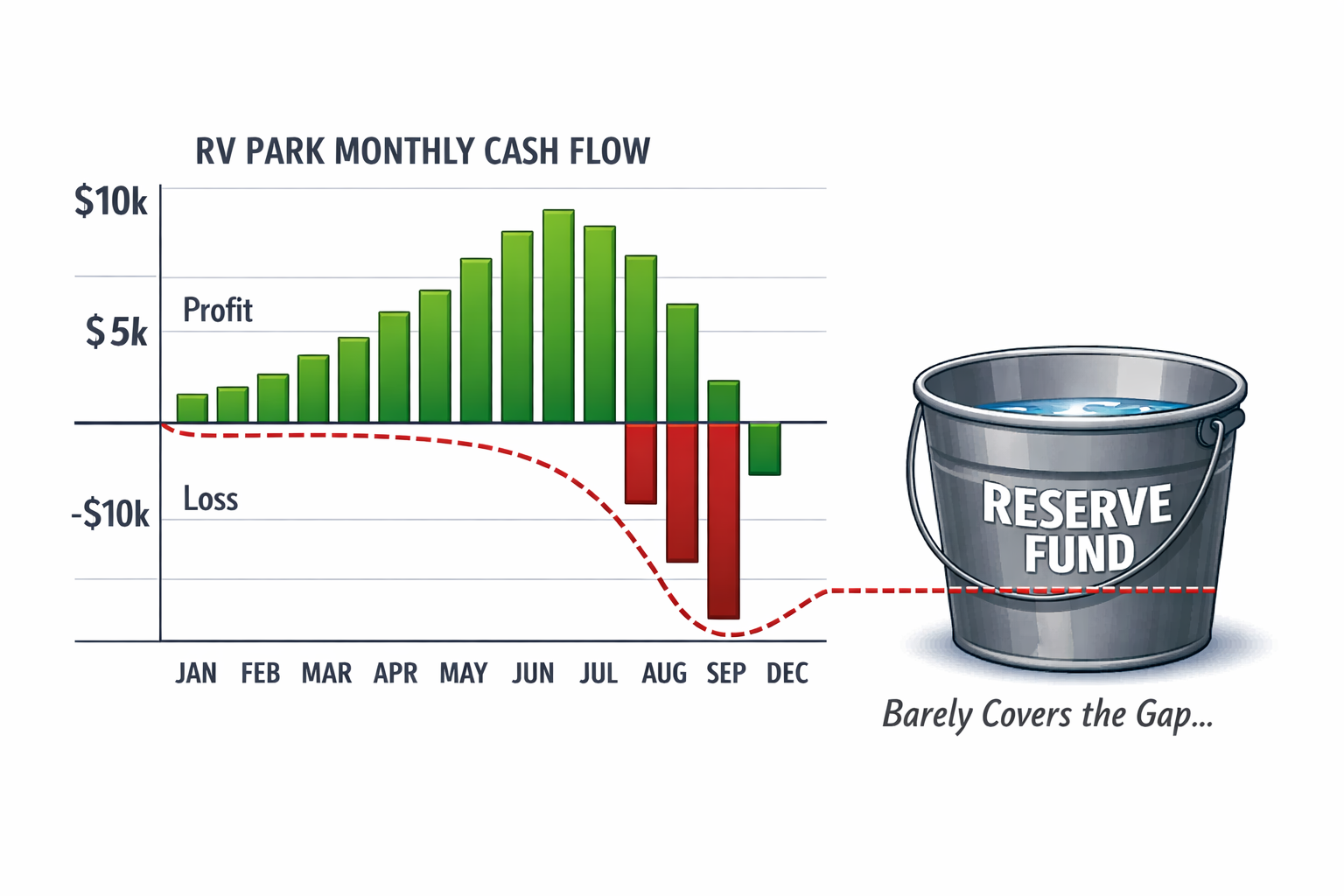
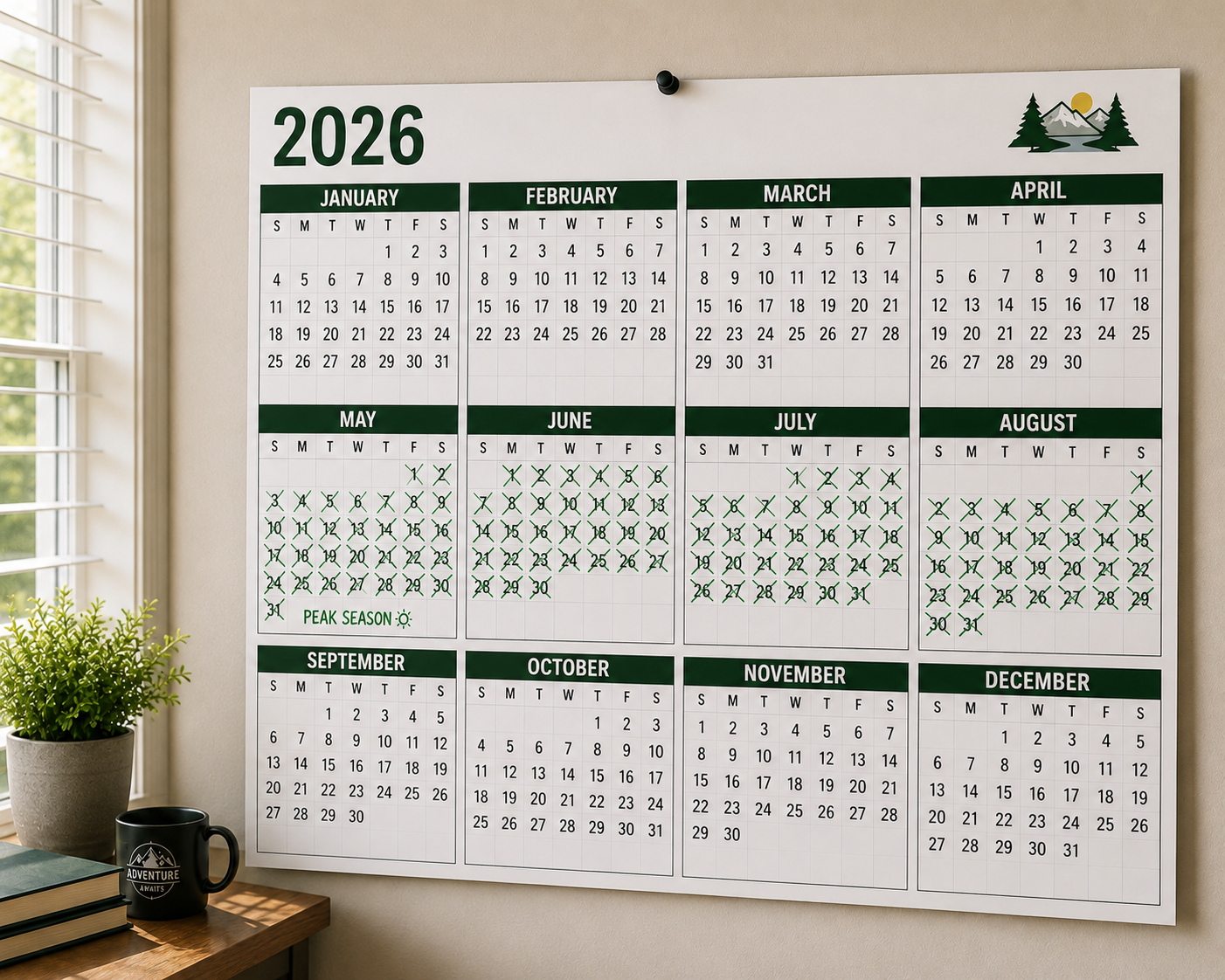
The occupancy pattern depends entirely on where the park sits, and reading it correctly is step one in buying an RV park.
Snowbird markets (Florida, desert Southwest): full all winter, quiet all summer.
Northern parks: most revenue lands between Memorial Day and Labor Day, some close completely for winter.
Year-round markets: steadier occupancy, often in the 70s and 80s.
Highway travel-route parks: lower overall, swinging with the seasons.
None of these patterns is a problem by itself. But you need to see the pattern clearly before you commit.
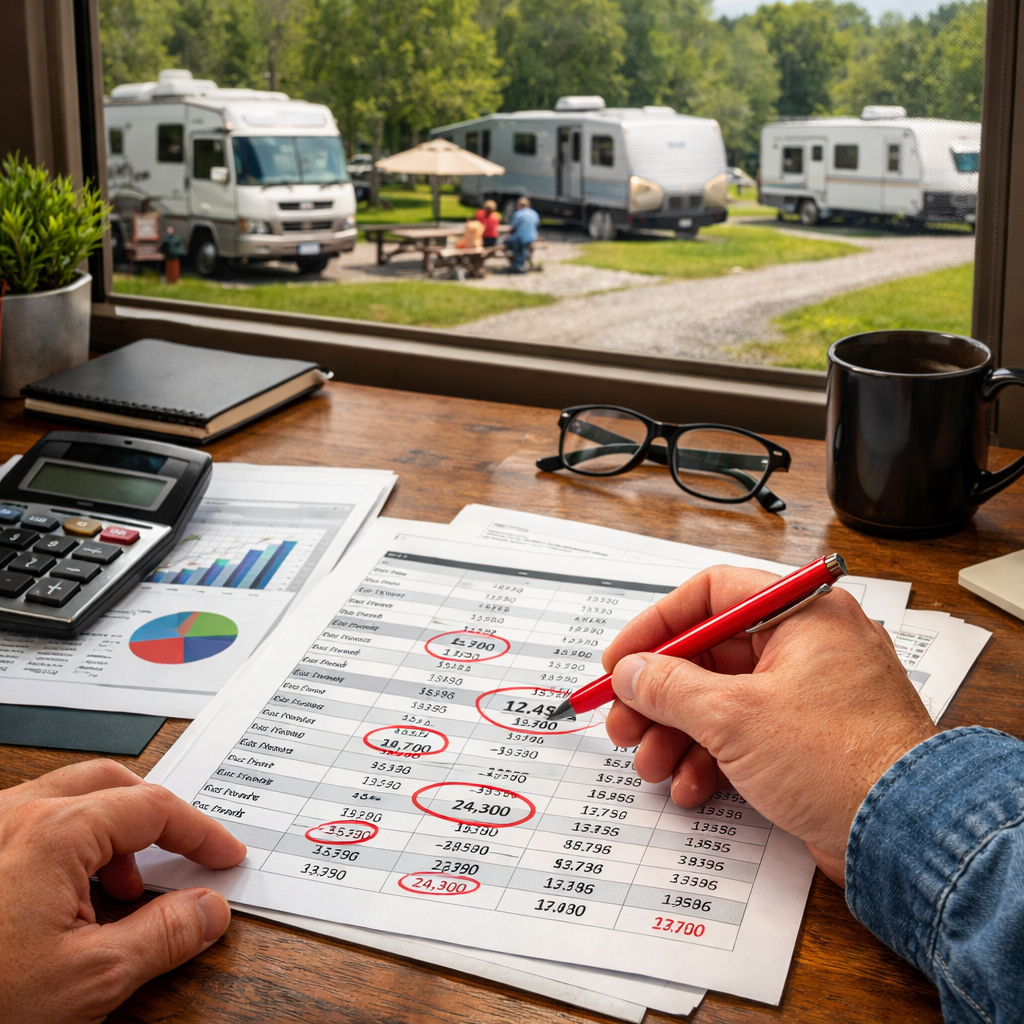
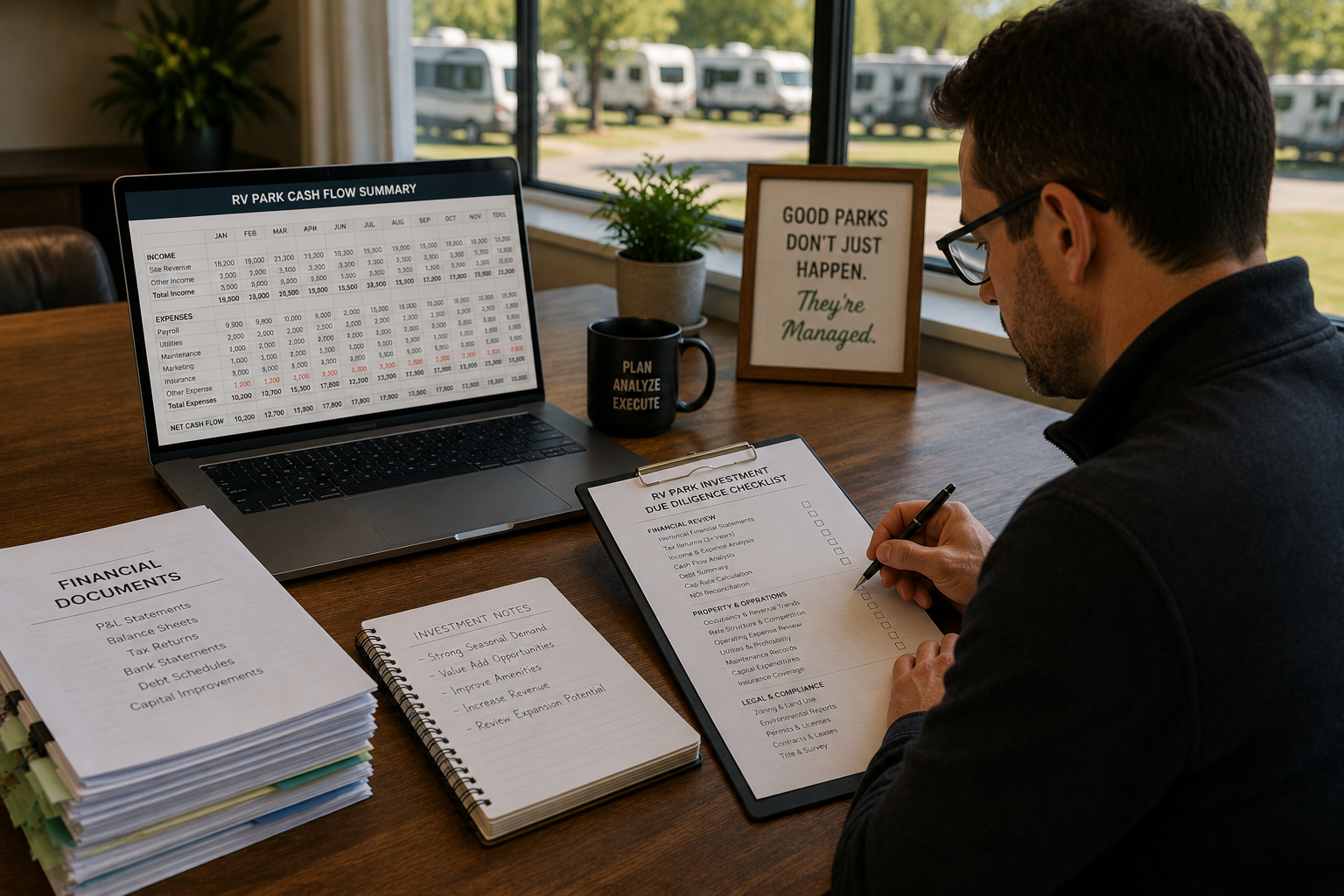
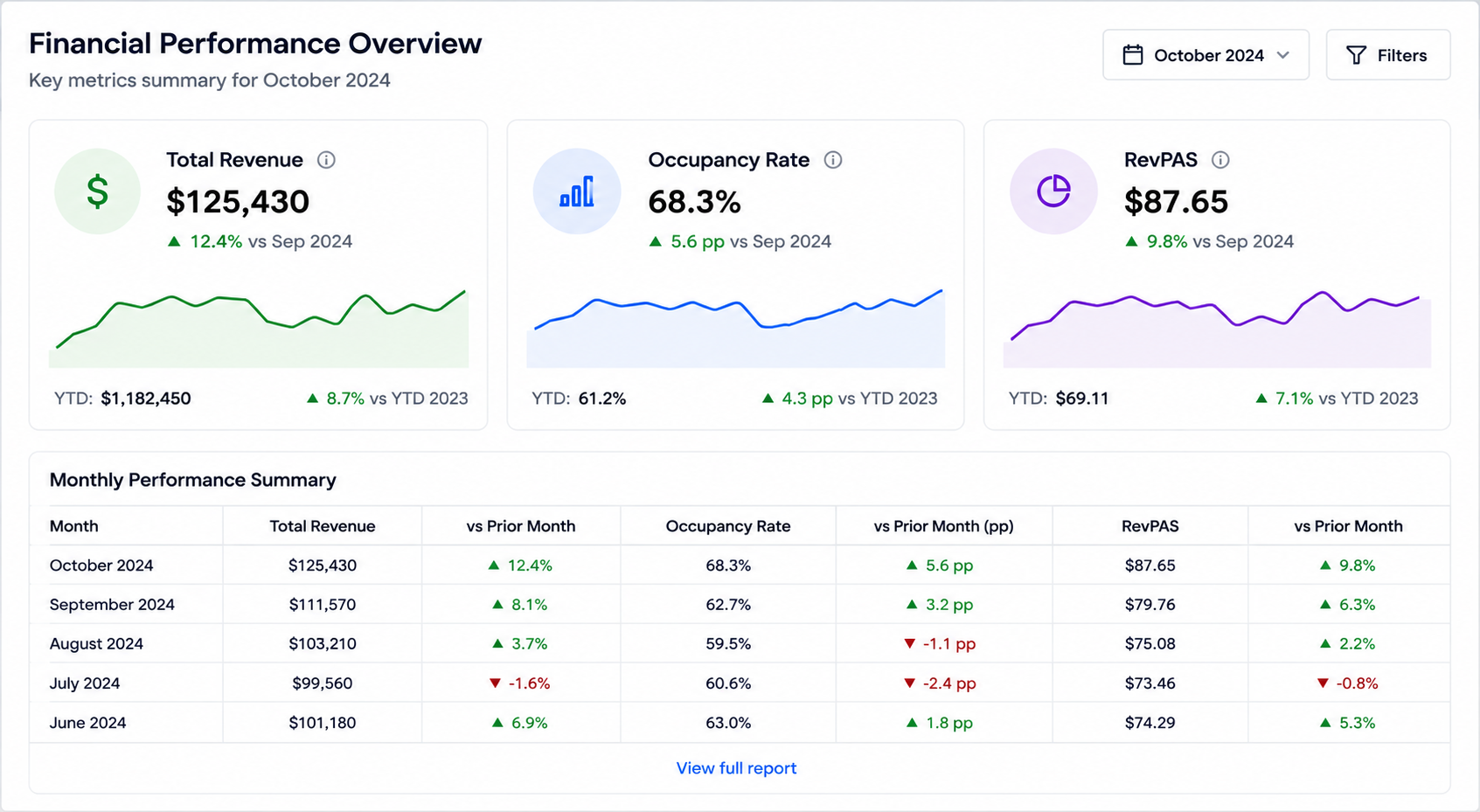
Plot the trailing 24 to 36 months of revenue by month before you even think of writing an offer. If the seller cannot produce monthly numbers, that tells you something too. Buying an RV park without seeing the revenue curve is buying blind.
The Seller’s Books Will Be Messy. Plan on It.
Here is what nobody tells you about buying an RV park: the financials you receive will almost never be usable as-is.
Most parks run cash basis books in QuickBooks, or a shoebox. The P&L often includes the owner’s truck, health insurance, sometimes groceries.
Revenue gets recorded when deposits hit the bank, not when the stays happened. That distorts seasonality and makes year-over-year comparisons meaningless, which is a real problem when buying an RV park.
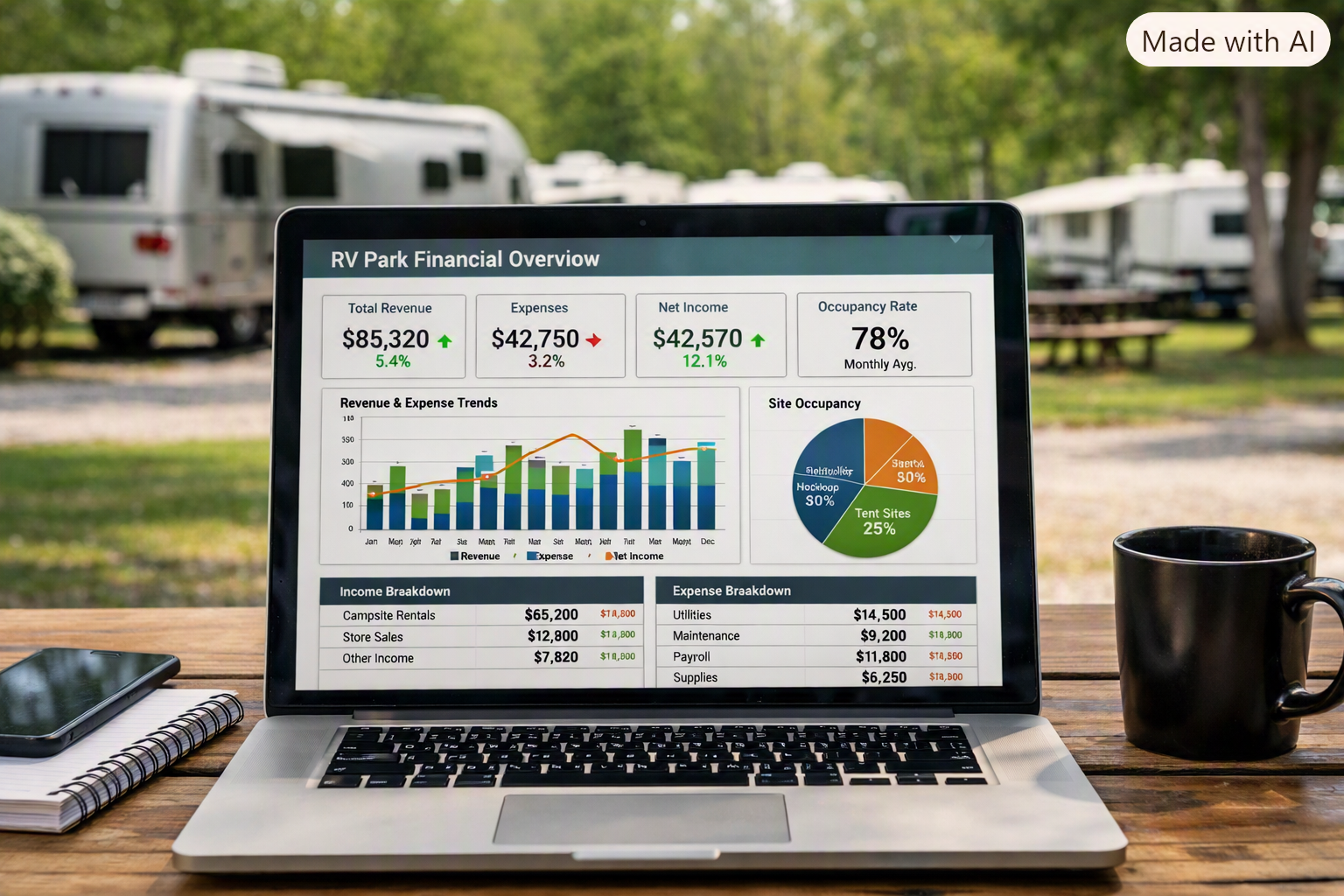
Before you can value anything, rebuild the revenue on an accrual basis and strip the personal spending out of the expenses. In my underwriting work, that reconstruction regularly moves NOI by 10 to 20 percent, in either direction.
Every number that follows, the price, the loan, the returns, sits on top of that rebuilt NOI. Get it right first.
Valuation: Cap Rates and What Parks Actually Trade For
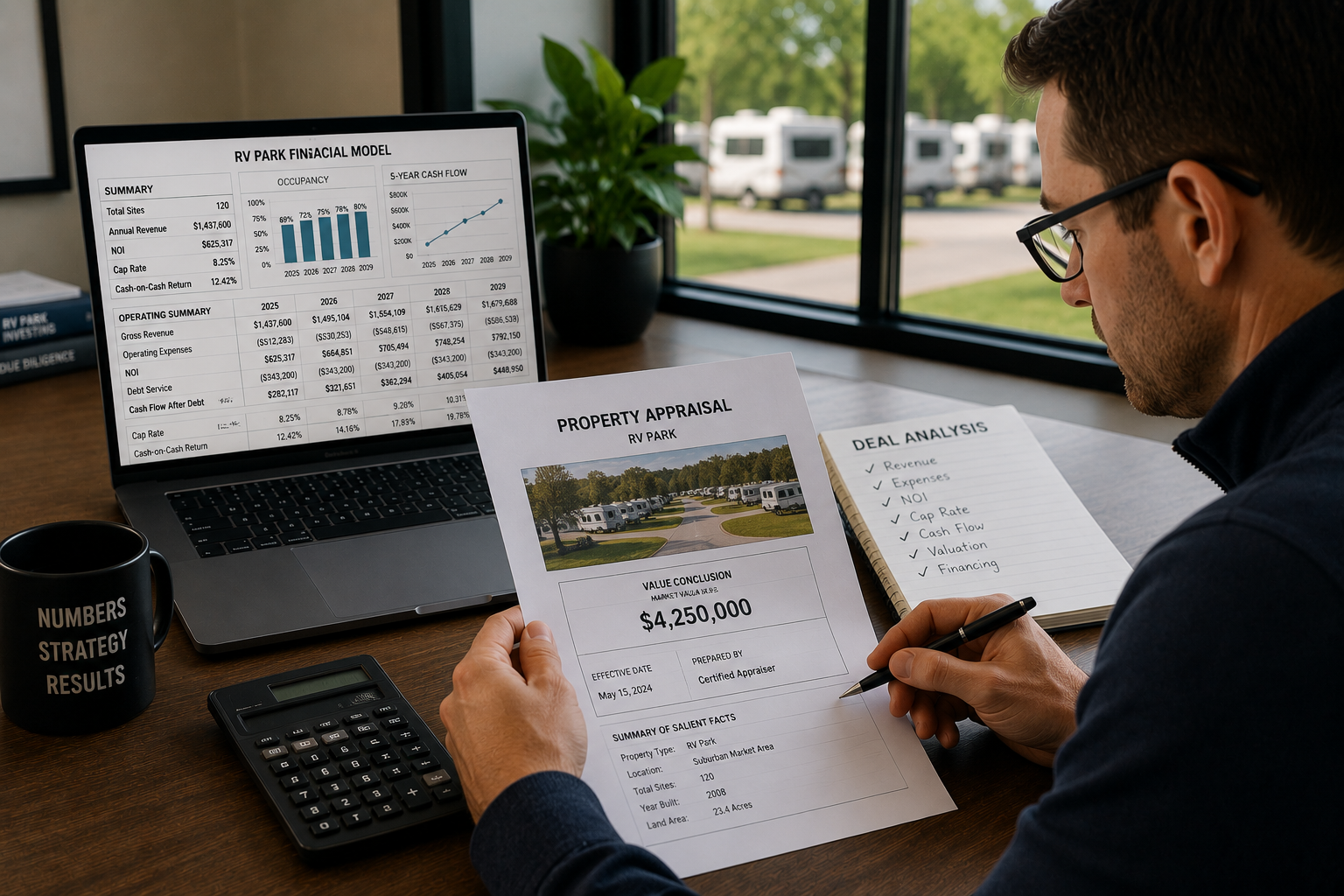
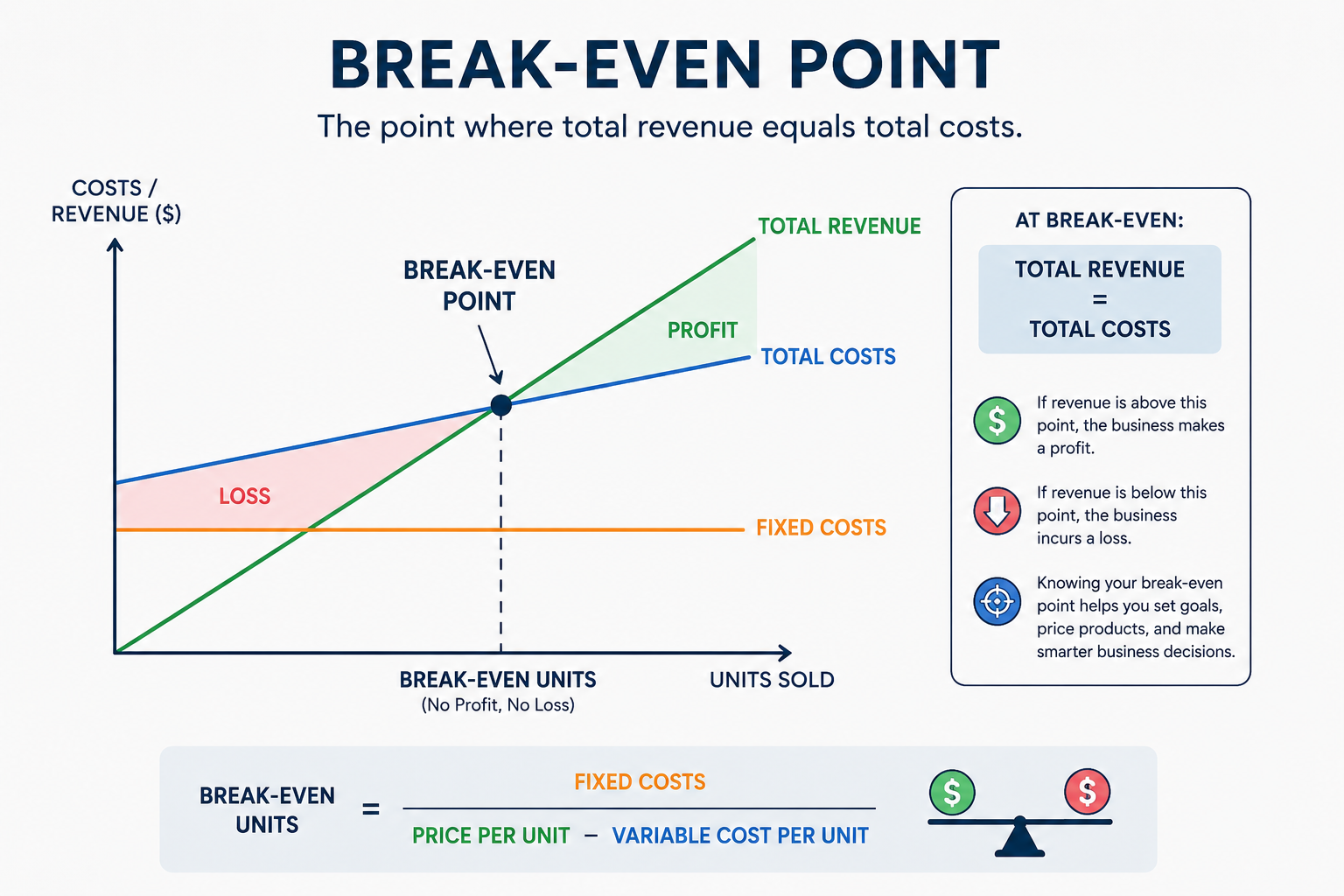
RV parks are valued on cap rates: NOI divided by purchase price. Rough 2026 ranges by park quality:
Destination resorts with premium amenities: 5 to 7 percent
Quality established parks: 7 to 9 percent
Standard parks: 8 to 10 percent
Value-add and heavily seasonal parks: 10 to 13 percent or higher
Lower cap rate means higher price for the same income. The higher cap rates on rougher parks are compensation for risk and work, not free yield.
Expense ratios are the other half of NOI. Well-run parks operate at 30 to 45 percent of revenue. When a broker package shows 25 percent on a full-amenity park, expenses are missing, usually a management fee, real maintenance, and reserves.
A quick worked example. A 90-site park: 70 full hookups averaging $55 a night at 58 percent occupancy is about $820,000. Twenty partial sites add roughly $72,000. Cabins, store, laundry, and fees add about $61,000. Gross revenue lands near $953,000.
At a realistic 42 percent expense ratio, NOI comes in around $553,000. At a 9 cap the park is worth about $6.1 million. At an 8 cap, $6.9 million. Small assumption changes move big money when buying an RV park.
That $800,000 spread between two defensible cap rates is why you never anchor on the broker’s number when buying an RV park.
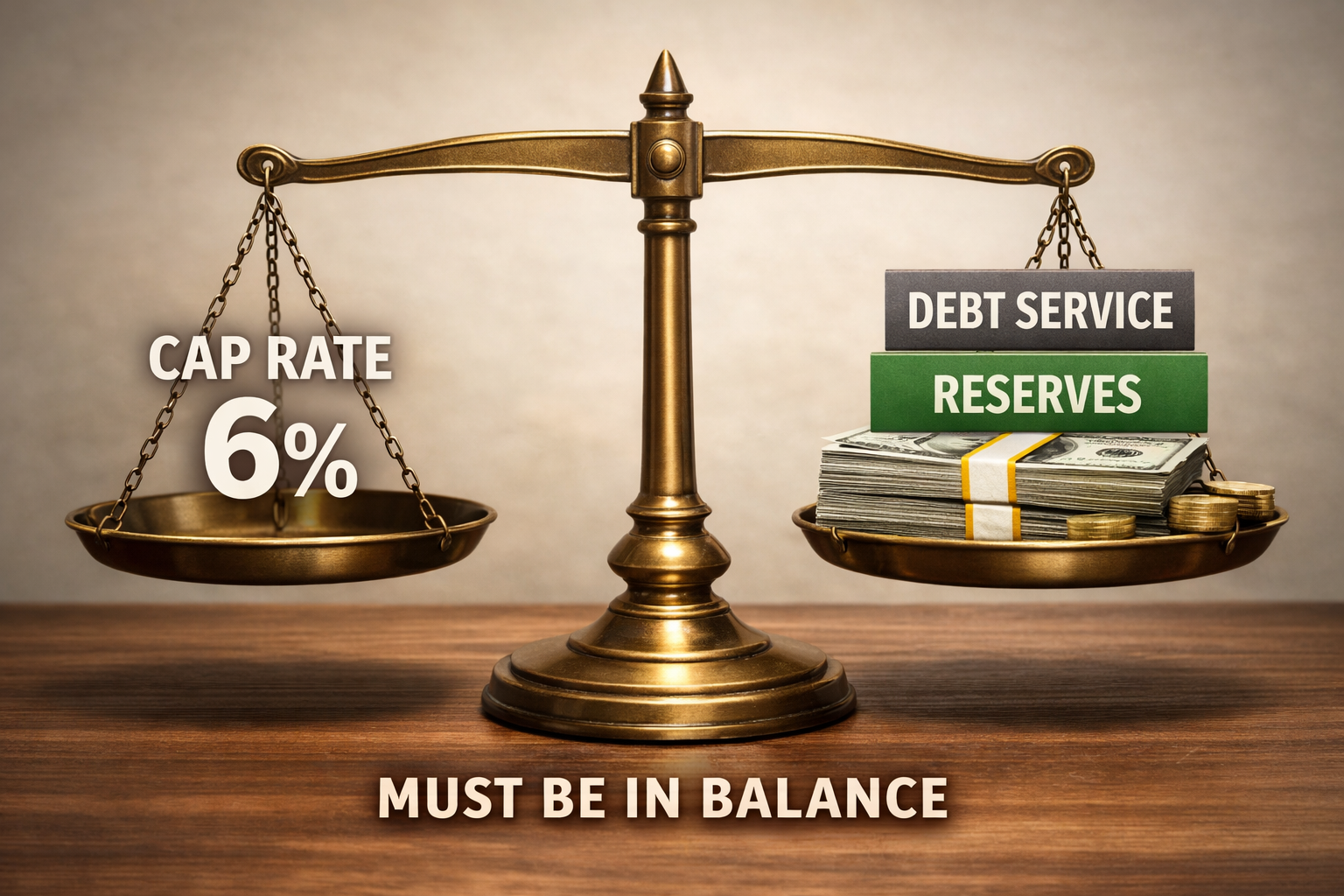
The trap: a package showing a 9 cap on pro forma NOI might be a 6 cap on real trailing numbers. Underwrite off verified trailing twelve month actuals, adjusted for a market-rate management fee even if you plan to self-manage. Every lender and every future buyer will apply that fee whether you did or not.
Due Diligence When Buying an RV Park: What to Inspect and Verify
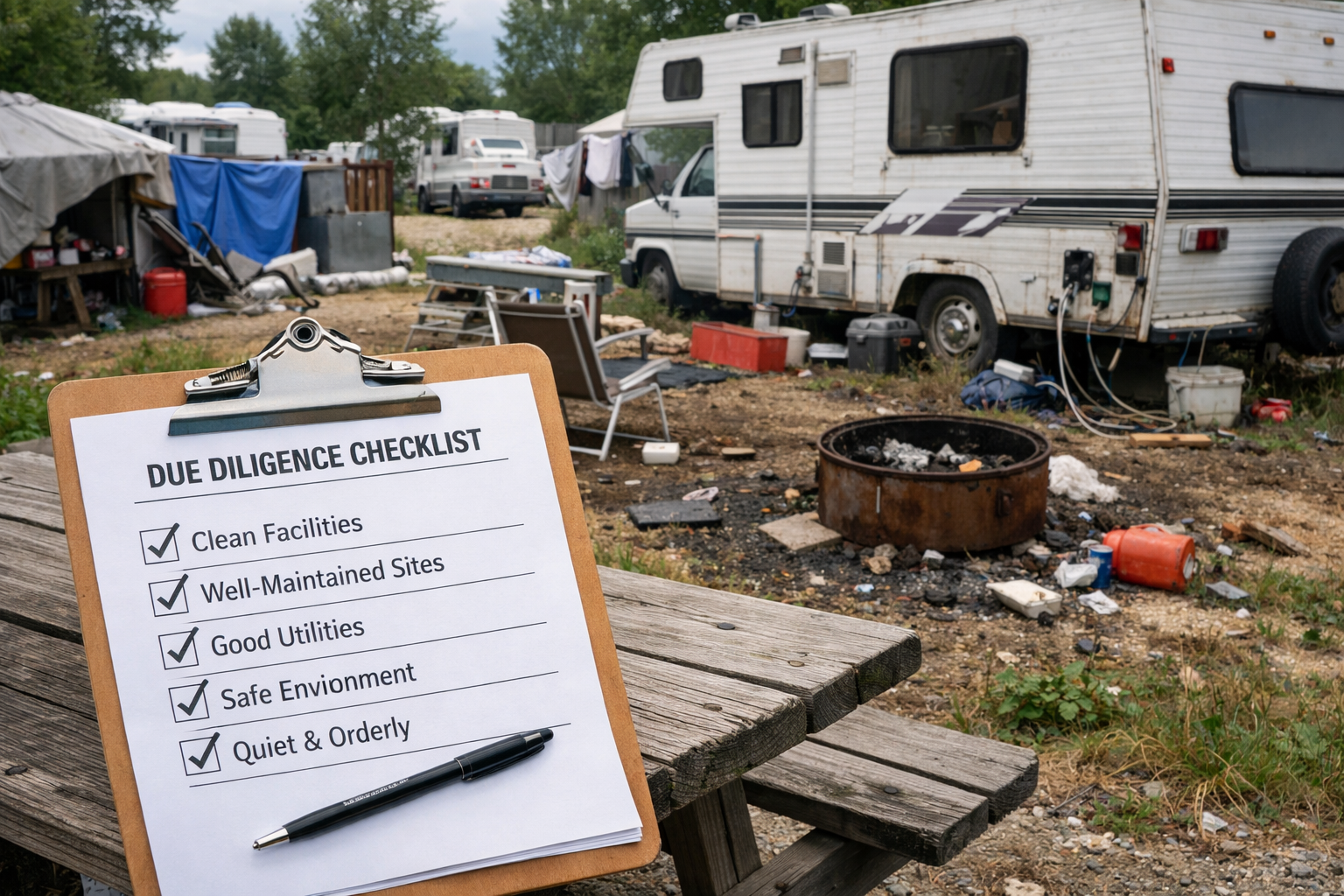
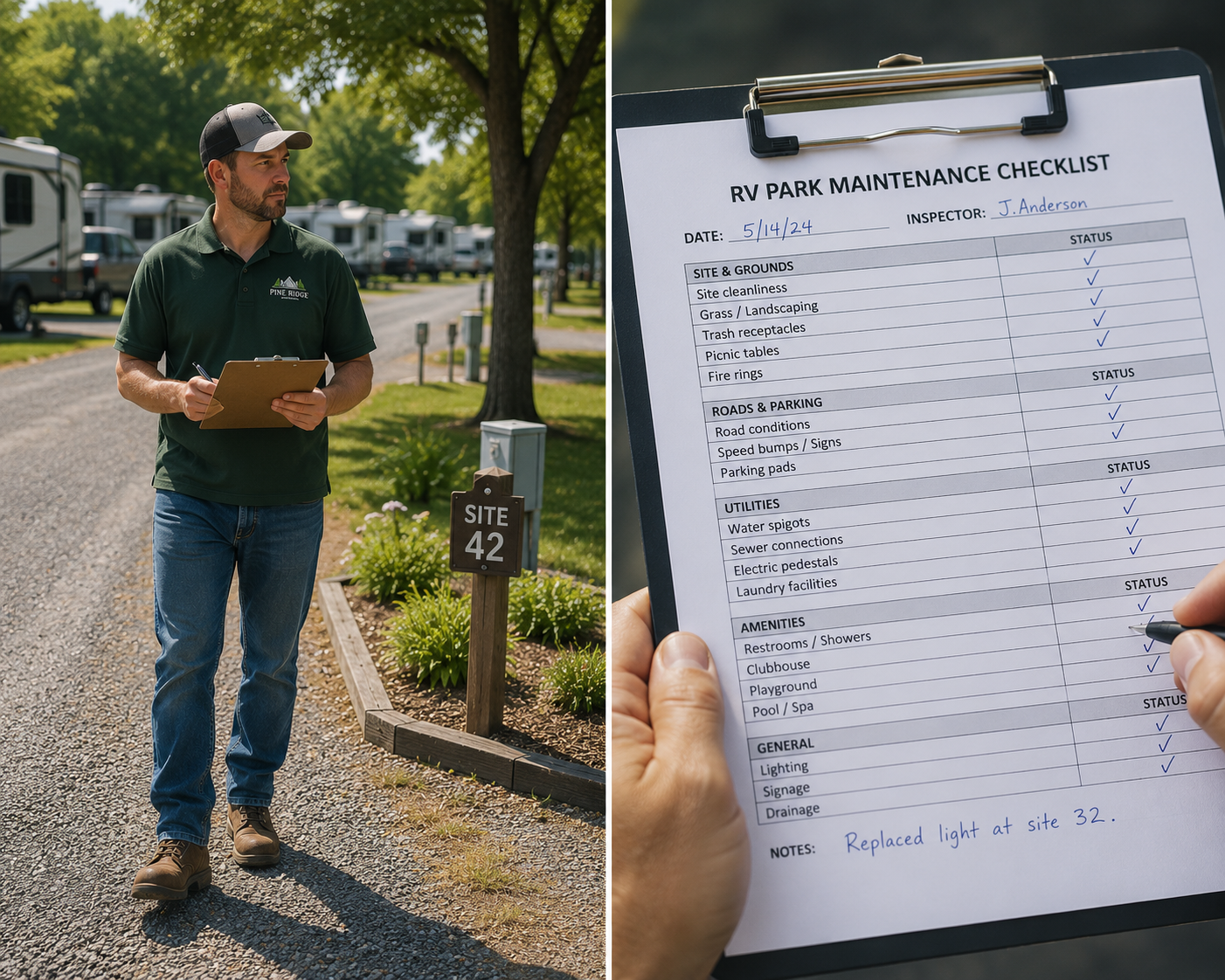
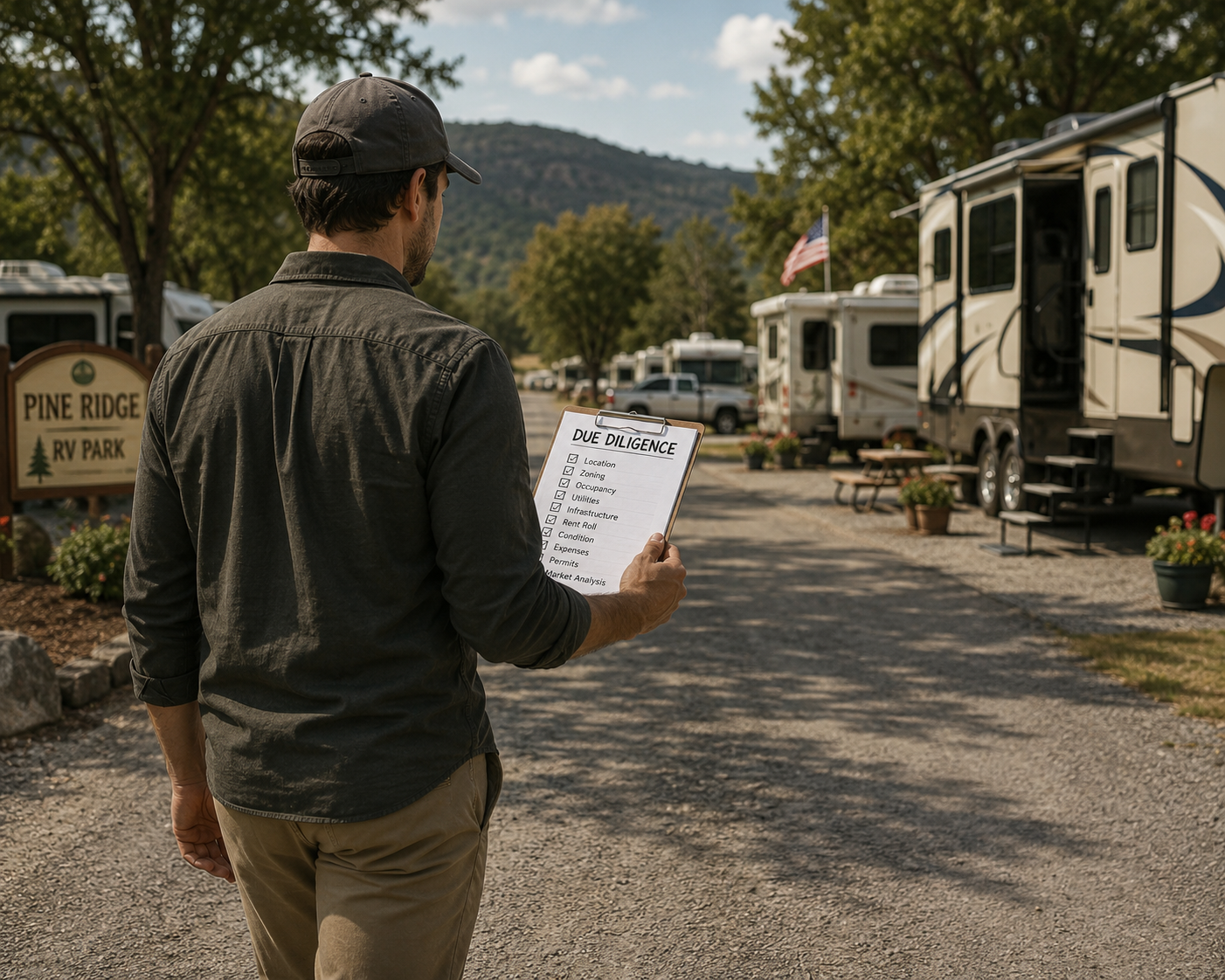
Infrastructure first. These are the systems that carry six-figure price tags when they fail.
Water: well or municipal, capacity at peak weekends, pipe age, testing history, compliance.
Sewer: municipal, septic, or hybrid, capacity at full occupancy, dump station condition. Septic surprises are expensive and slow to fix.
Electric: amps per site, pedestal condition, code compliance.
Roads and pads: drainage, pad length for modern rigs. Road repair commonly runs $1,000 to $3,000 per site when it comes due.
Amenities: pool code compliance, bathhouse condition, Wi-Fi infrastructure. Guests now treat Wi-Fi as a utility, not a perk.
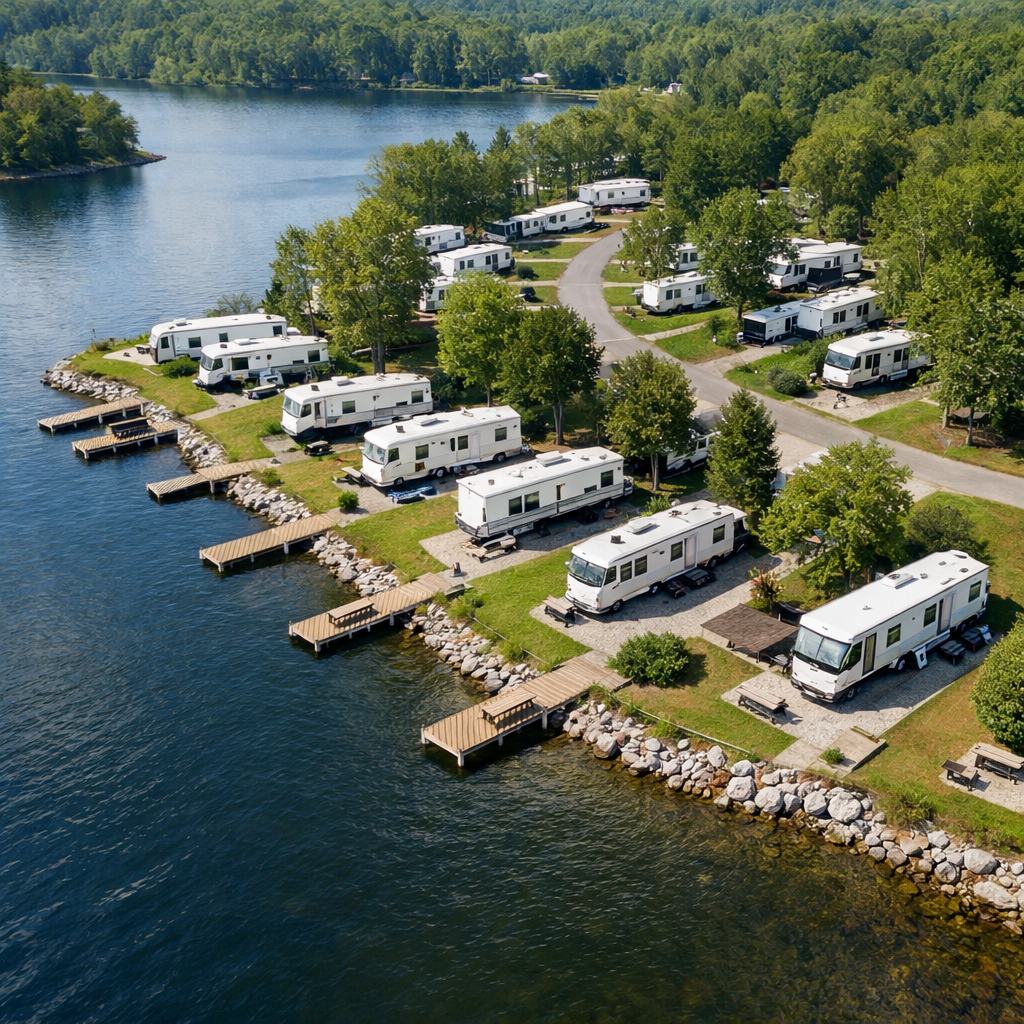
Environmental: a Phase 1 assessment is cheap insurance. Pull the FEMA flood maps, get flood insurance quotes, and ask directly about flooding history. Parks sit near water on purpose, and flood exposure changes your insurance cost, which changes your NOI.
Permits and zoning: confirm the use is legal, the permits transfer, and no moratorium blocks expansion.
Budget honestly for what you find. Most parks carry $50,000 to $500,000 in deferred capital needs at acquisition. A first 24-month capex budget of 5 to 15 percent of purchase price is a reasonable planning range when buying an RV park.
Then the financial diligence, which is what actually kills deals:
Verify the occupancy claim. Pull the reservation system export and reconcile it against bank deposits and tax returns. When the sources disagree, the claim is unverified, and unverified occupancy gets underwritten down, not taken on faith.
Question flat rate history. A park that has not raised rates in five years is not automatically upside. Sometimes the market will not bear more. Sometimes the monthly guests leave the moment you try.
Check the customer base. Repeat guest percentage, geographic origin, and reviews across Google, Campendium, and Good Sam tell you whether the revenue is durable. A park living off one annual event or one aging group of monthlies has concentration risk the P&L never shows.
Financing: What to Expect in 2026
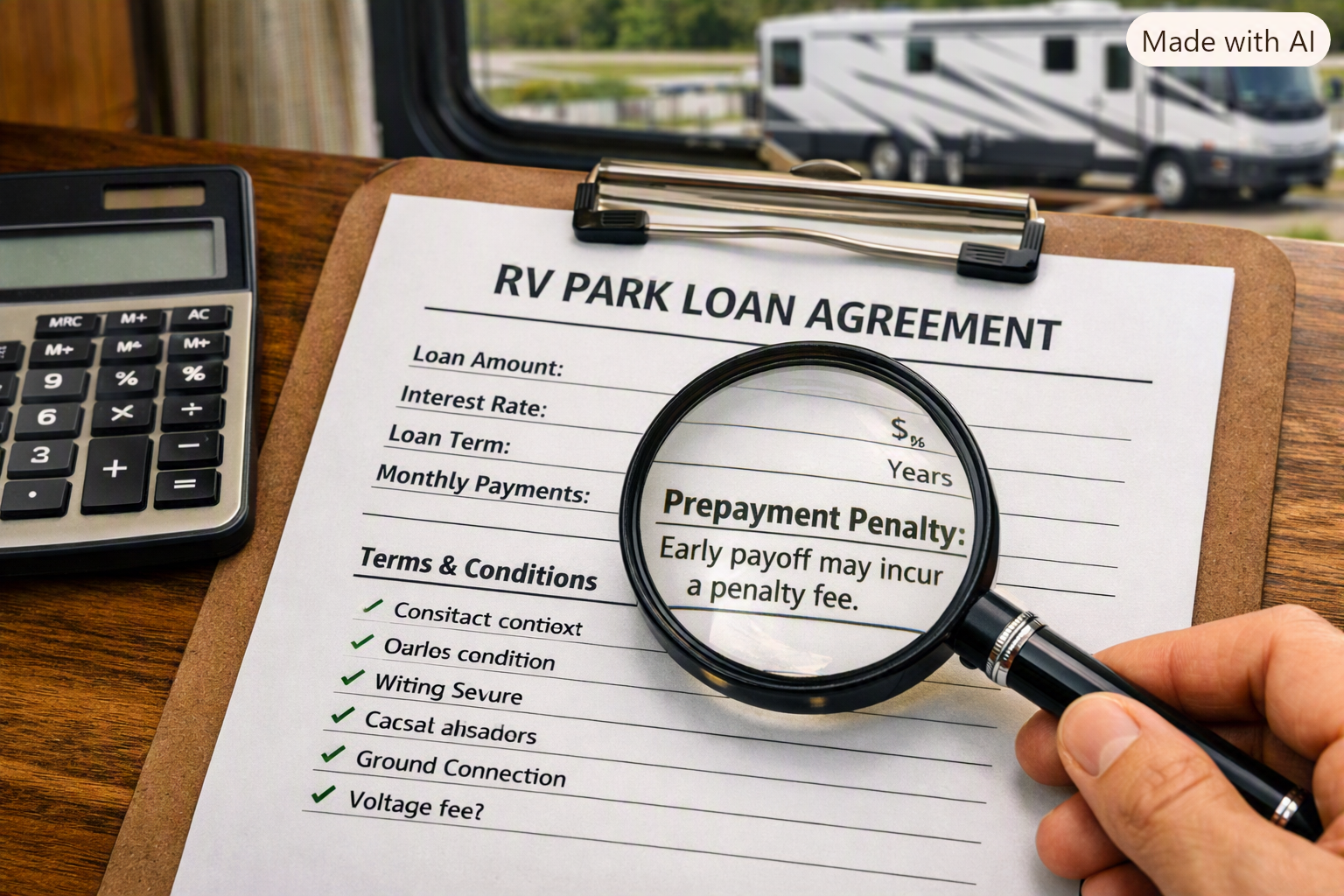
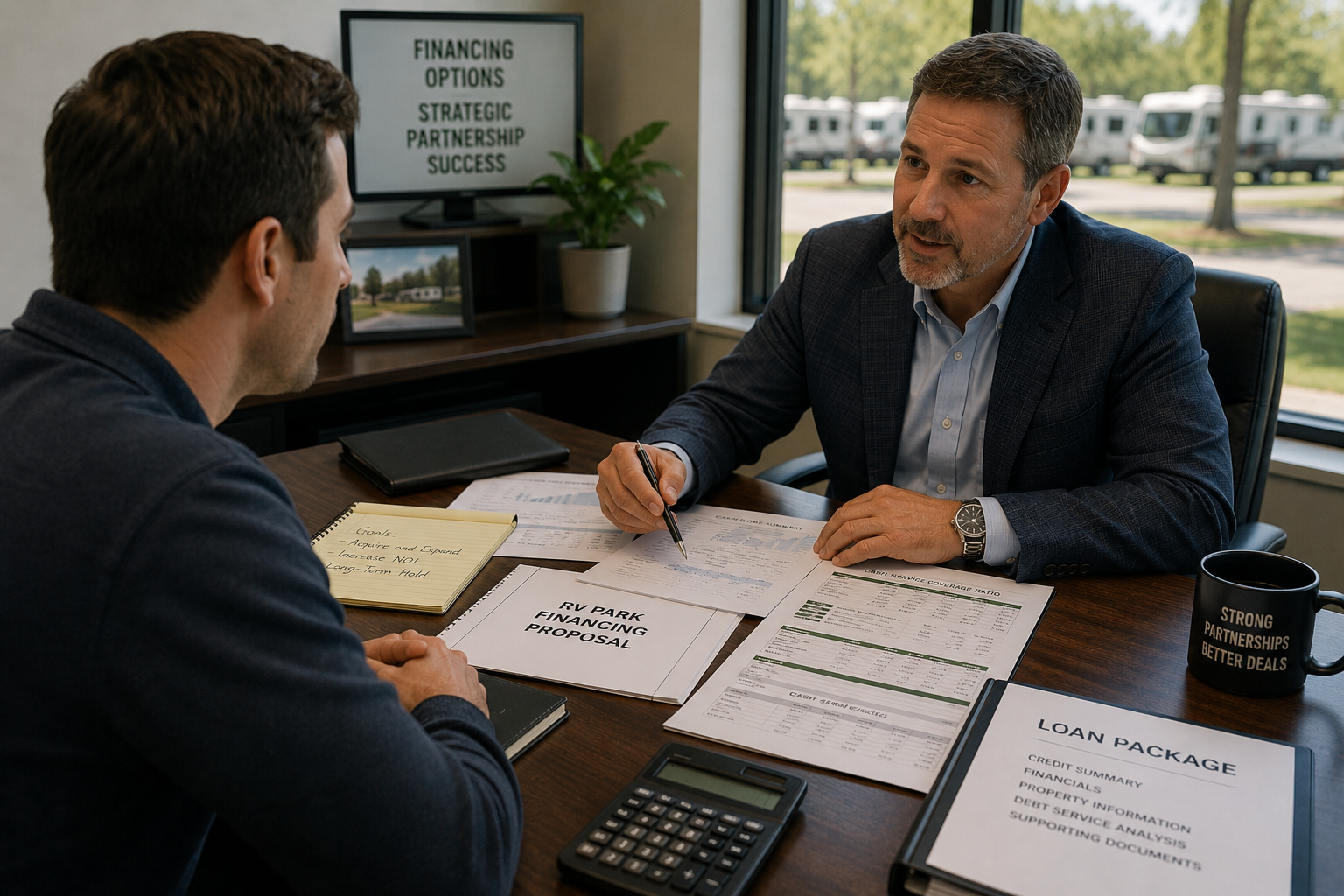
SBA 7(a) does the heavy lifting for owner-operator deals up to $5 million. Down payments start around 15 percent for a first-time buyer, repayment stretches as long as 25 years when real estate is involved, and rates adjust with the market rather than staying fixed. Details are at the SBA 7(a) loan page.
Specialty lenders in outdoor hospitality understand seasonal revenue instead of panicking at it. A generalist lender who has never seen a seasonal curve will slow your deal down at best. If you want a referral to lenders who know this asset class, contact me at PVIFinancial.com.
Conventional commercial lending takes over on larger deals, roughly $5 million and up, at 25 to 35 percent down.
Seller financing deserves real attention when buying an RV park. It can cover up to 50 percent of the purchase price, and a seller note on standby can help complete an SBA capital stack. After eight years as a private money lender with over $4 million deployed in first trust deeds, I can tell you a seller willing to carry paper is signaling confidence in their own park, and the note terms are as negotiable as the price.
Here is what you should internalize about financing: the lender underwrites the deal independently. If your numbers came from the broker’s pro forma, the appraisal will find the gap 60 days into escrow, after your diligence money is spent.
Buyers who show up with clean, accrual-based, verified financials close faster and negotiate better.
Where the Real Upside Lives
Every listing promises upside. Here is where it actually exists, in rough order of reliability:
Below-market rates. If comparable parks genuinely charge more, raising rates to market is real upside. It takes two or three seasons of gradual increases, not one jump, and only after you have verified the comps.
Hookup conversions. Partial to full hookup raises per-site revenue substantially when the water and sewer systems can support it.
Modern operations. Online booking and a real website capture occupancy a phone-and-paper operation loses.
Amenity additions. Cabins, a proper camp store, expanded laundry. Each adds its own revenue and supports higher site rates across the board.
Guest mix optimization. Shifting the monthly-versus-transient balance toward what the market rewards moves revenue without touching a single rate.
The discipline is simple: model each play before you pay for it. Upside you pay the seller for is not upside, it is just price. Buying an RV park at a basis where the value-add belongs to you is the entire game.
Run It Like an Underwriter, Not a Fan
Before I finish underwriting any park, the model has to answer five questions:
What is the verified NOI today? What does real debt service look like? What is the year-one cash-on-cash return? What capital does the park need in the first 24 months? And what has to be true for this deal to beat what the same money earns elsewhere?
That last question matters most. Buying an RV park is not the goal. Buying the right park at the right basis is the goal, and the discipline to walk away is the most valuable skill in the process.
Your First 90 Days as an Owner
Weeks 1 and 2: move the reservation system and bank accounts, update insurance, honor every existing reservation, meet the staff one on one before changing anything.
Weeks 3 and 4: walk the infrastructure yourself, compare the site mix to what you underwrote, read every review from the past two years.
Month 2: build your capex priority list from what you now see up close. Review rates with real data. Hold rate changes until at least day 90.
Month 3: start the strategy work. Marketing improvements, first capital projects, relationships with the county and local businesses.
And from day one, set up real books. Clean accrual accounting from your first day means you never inherit the mess you just untangled from the seller, and your numbers become the rare set a future buyer’s underwriter does not have to rebuild.
If buying an RV park is the offense, the financial systems behind it are the defense. Championships get won on defense.
Common Questions About Buying an RV Park
How much money do I need?
Plan on roughly 15 to 20 percent down for an SBA deal as a first-time buyer, plus closing costs, off-season working capital, and a real capex reserve. On a $2 million park, total liquidity of $450,000 to $600,000 is a realistic target.
What is a good cap rate?
There is no single number. Destination resorts trade at 5 to 7 percent, established parks at 7 to 9, standard parks at 8 to 10, value-add parks at 10 or above. What matters is that the cap rate sits on verified NOI, not the broker’s pro forma.
Can I do this with no experience?
Yes, people do it every year. The ones who succeed try to keep the existing staff through the transition and get professional help on the numbers before they buy, not after something goes wrong. Experience helps, but discipline matters more in buying an RV park.”
How long does buying an RV park take?
My lender says they can close in 45-60 days, but it can be up to 90 to 150 days from signed letter of intent to close on an SBA deal if the financial information is not well organized. The search before that can take months, because most listed parks are priced for a buyer who does not check the math.
Is an RV park passive income?
No. It is an operating hospitality business. You can hire management, but a market-rate management fee belongs in your underwriting either way.
What kills most deals?
Financials that do not survive verification. Occupancy claims the records do not support, pro forma expenses missing a management fee and reserves, and rebuilt NOI coming in far enough below asking that the deal no longer pencils.
Go Deeper
I wrote From Offer to Operation: The Complete RV Park Investor’s Guide to walk through the entire acquisition process in detail, from the first broker call through your first season of ownership. It is also on Amazon if you search the title.
The Resource Library has dozens of posts organized by topic, including deeper dives on valuation, operating expenses, and financing.
And if you are looking at a specific park right now and want the numbers verified before you commit real money, that is exactly the kind of work I do. Reach out at PVIFinancial.com.