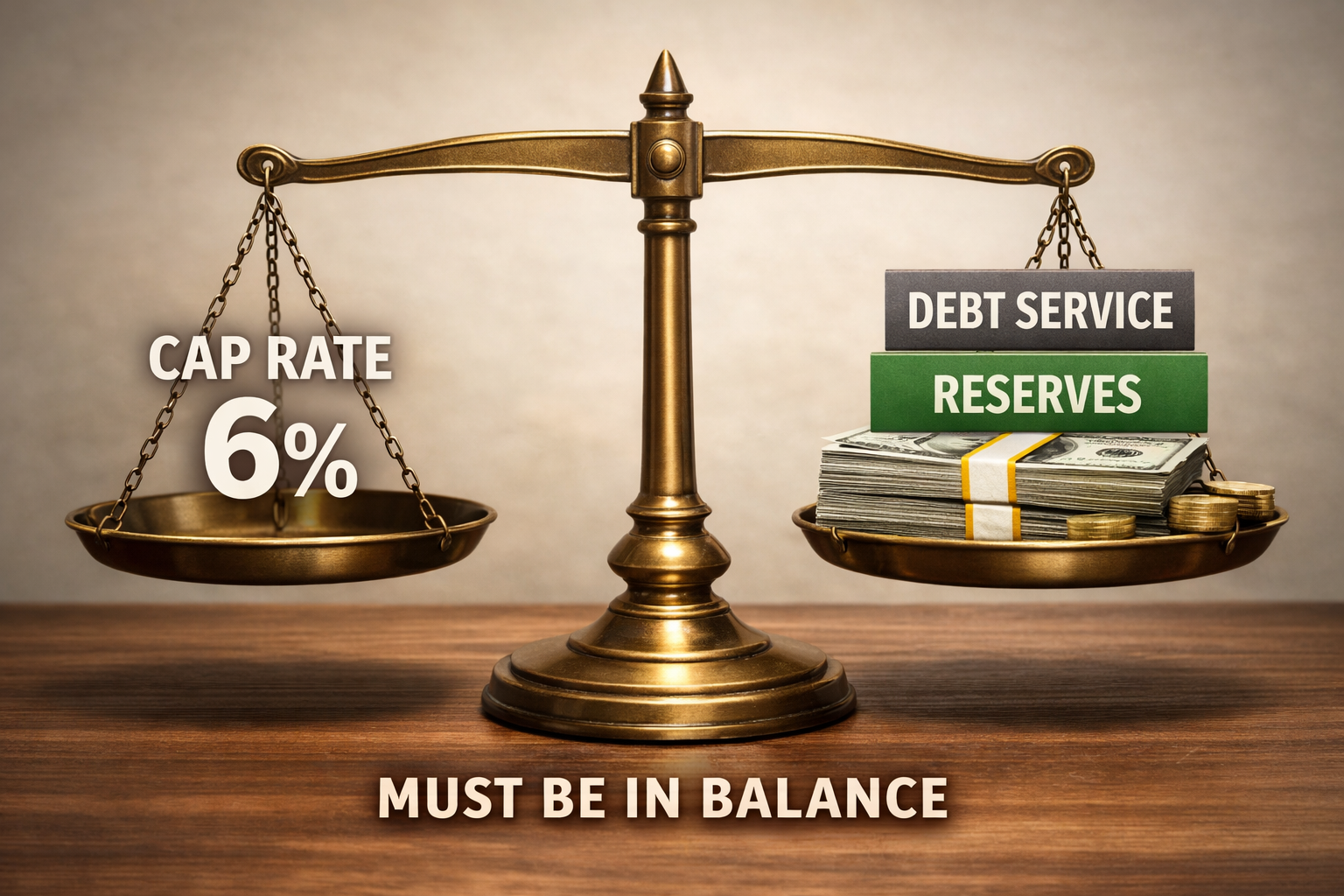
Ask most acquisition content what makes an RV park deal worth buying, and you will get the same answer over and over. Look at the cap rate. Some of the more well known voices in this space go as far as saying RV parks are bought and sold on one attribute alone, current income, full stop. That is a simple story, and simple stories sell well, but it leaves out almost everything that actually determines whether a specific deal is right for a specific buyer.
Here is the problem with stopping at cap rate. Two parks can carry the identical cap rate and be completely different investments once you look at how each one is financed, how each seller structured their terms, and how much cushion each buyer actually has if a season goes sideways. An RV park deal worth buying on paper for one buyer can be a genuine mistake for another buyer looking at the exact same number.
Why Cap Rate Alone Does Not Tell You If a Deal Is Worth Buying
Most of the well known voices in this industry treat the deal evaluation question as a pure income exercise. Find the NOI, apply a cap rate, compare it to what similar parks have sold for, and you have your answer. I actually walked through a full six step version of this kind of evaluation in my post on how to evaluate an RV park deal, and the income side absolutely matters. But an RV park deal worth buying is never just about the income number in isolation.
The piece almost nobody talks about is what happens to that same cap rate once you layer in the actual debt structure behind the deal. A park priced at an 8 percent cap rate financed with 50 percent seller carry at a low fixed rate behaves completely differently than the same park financed entirely through a variable rate SBA loan. The income number stays the same. The risk profile does not. This is exactly the gap I dug into in my post on how to analyze a seller carry deal, because the terms behind the number change everything about whether that number is actually safe.
There is also a persistent habit in RV park content of treating the seller’s NOI as gospel. I have written before about the mistake of accepting a seller’s NOI without rebuilding it yourself, and that mistake alone can make an otherwise reasonable cap rate look far better than the deal actually is. An RV park deal worth buying starts with a number you trust, not a number the seller handed you.
What Actually Separates a Good Deal From a Deal That Sinks You
It has debt service your rebuilt NOI can actually cover with room to spare. Lenders look at debt service coverage ratio for exactly this reason, and it is worth borrowing that discipline even if you are financing part of the deal with seller carry. A healthy debt service coverage ratio gives you a buffer, not just a break even number, and that buffer is a huge part of what makes an RV park deal worth buying instead of one that barely survives a normal season.
It has terms that match your actual risk tolerance, not just a low headline rate. A low interest rate on a seller note does not matter much if the balloon comes due in three years and you have no clear plan to refinance by then. The terms behind the number matter just as much as the number itself when you are deciding whether this is an RV park deal worth buying.
It has a reserve plan built in before you sign, not figured out after closing. I covered the specific mistakes that show up here in my post on RV park reserve fund mistakes, and this is one of the clearest places where a technically good cap rate deal turns into a genuine problem, because the buyer never planned for a slow season on top of debt service. No deal is an RV park deal worth buying if the reserve plan only exists on paper.
It has a seller’s numbers you have personally rebuilt, not just accepted. The real NOI, once you strip out one time addbacks, owner perks, and optimistic assumptions, is the number that actually determines whether the deal works. An RV park deal worth buying is built on a number you can defend to a lender, not a number that looked good in a broker package. That single distinction is often what separates an RV park deal worth buying from one that quietly falls apart six months in.
It fits your specific financial position, not a generic buyer profile. A deal that makes sense for a buyer with six months of reserves and low personal overhead can be a stretch for a buyer without that cushion, even at the exact same price and cap rate. What makes it an RV park deal worth buying depends on who is buying it, not just what the numbers say in isolation.
How to Actually Test Whether a Deal Is Worth Buying
Rebuild the NOI yourself before you compare cap rates. Do not use the seller’s number as your starting point. Strip out addbacks and one time items and build your own trailing twelve months from the real bank statements. This step alone is often what separates an RV park deal worth buying from one that only looks good on the surface.
Model your actual debt service, piece by piece. If seller carry is part of the structure, map out the rate, the amortization, and any balloon separately from a bank loan, rather than treating debt as one flat number. An RV park deal worth buying holds up under this level of detail, not just at the headline rate.
Run a downside scenario before you get emotionally attached. Take your rebuilt numbers and test what happens if occupancy comes in 15 to 20 percent below your forecast during your slowest months, and check whether debt service and reserves both survive that scenario. A deal that only pencils out in the best case is not an RV park deal worth buying, it is a bet on nothing going wrong.
Compare the deal to your own risk tolerance, not a generic buyer profile. The number that tells you if you are overpaying is not universal. It depends on your own reserves, your other obligations, and how much room you actually have if the deal goes sideways.
Get a second set of eyes on the underwriting before you commit. A deal that looks solid on a broker’s one page summary can look very different once someone rebuilds the numbers independently, and that gap is often the whole difference between an RV park deal worth buying and one you will regret. This is exactly the kind of review my work as a fractional CFO is built around, catching the gap between what a deal looks like on paper and what it actually means for your specific financial position.
An RV park deal worth buying is not defined by a single cap rate number floating in isolation. It is defined by rebuilt numbers you trust, debt structured in a way that leaves you room to breathe, and a downside scenario you have already tested before you sign anything. The Debt Service Coverage Ratio overview from Chase is a solid outside primer if you want a general framework for how lenders think about this before you layer in the RV park specific numbers.
If you are working through a deal right now and want a second set of eyes on whether it actually holds up once the real numbers are rebuilt, that is exactly the kind of work I do. Reach out at PVIFinancial.com.
For more on running a profitable, well managed park, check out my Resource Library, and grab a copy of my book From Offer to Operation: The Complete RV Park Investor’s Guide, also available on Amazon.
~Wendi | Fractional CFO | PVIFinancial.com
Want to be notified when Claude responds?
Leave a Reply