Tag: financial-management

  • What Good Bookkeeping Actually Looks Like and Why Most Small Businesses Don’t Have It

    What Good Bookkeeping Actually Looks Like and Why Most Small Businesses Don’t Have It

    Clean books are not just nice to have. They are the foundation everything else is built on.

    If you asked most small business owners whether their bookkeeping is in good shape they would probably say yes. And then if you asked them when their books were last reconciled, what their accounts receivable aging looks like, or whether their chart of accounts actually reflects how their business operates, you would get a very different answer.

    Good bookkeeping is one of those things everyone assumes they have until they actually need it. And by the time they need it, it is usually because something has gone wrong.

    Here is what good bookkeeping actually looks like, why most small businesses fall short, and what it means for your business when you get it right.

    What good bookkeeping is not

    Let me start here because there is a lot of confusion about what bookkeeping actually is and what it is supposed to do.

    Good bookkeeping is not just recording transactions. Anyone can categorize expenses and import a bank feed. That is data entry, not bookkeeping.

    Good bookkeeping is not just having a QuickBooks file. A lot of businesses have QuickBooks. Very few have QuickBooks that is actually clean, accurate, and up to date.

    Good bookkeeping is not something you catch up on once a year before tax time. If your bookkeeper is doing a big cleanup every spring that is not bookkeeping, that is archaeology. And by the time you are filing taxes it is too late to use that information to make better decisions.

    Good bookkeeping is also not the same as accounting or tax preparation. Your bookkeeper keeps your records clean and current. Your CPA uses those records to file your taxes and advise on tax strategy. They are two different roles and confusing them is one of the most common and costly mistakes small business owners make.

    What good bookkeeping actually looks like

    Good bookkeeping is a system that runs consistently every month and produces financial information you can actually use to run your business. Here is what that looks like in practice.

    Transactions are coded correctly and consistently

    Every transaction in your books should be categorized to the right account every time. Not approximately right, actually right. Income goes to the right revenue account. Expenses go to the right expense category. Owner draws are not mixed in with business expenses. Personal charges are not sitting in your business accounts.

    A well structured chart of accounts is the foundation of this. Your chart of accounts should reflect how your specific business operates, not a generic template that was set up when you first opened QuickBooks and never touched again.

    Bank and credit card accounts are reconciled every single month

    Reconciliation is the process of matching every transaction in your books to your actual bank and credit card statements. It is how you catch errors, identify fraud, and make sure your books actually reflect reality.

    If your accounts are not being reconciled every month your financial statements are not reliable. Full stop. You might have duplicate transactions, missing entries, or outright errors sitting in your books that are distorting every report you look at.

    Good bookkeeping means every account is reconciled every month without exception.

    Financial statements are produced on a consistent schedule

    Your P&L, balance sheet, and cash flow statement should be produced and reviewed every single month, not just at year end. Monthly financial statements are how you catch problems early, spot trends, and make informed decisions throughout the year.

    If you are only seeing your financials once a year at tax time you are making every business decision with a blindfold on for eleven months of the year.

    The books are current

    Good bookkeeping means your books are never more than thirty days behind. Ideally they are closed within ten to fifteen days after the end of each month. If your bookkeeper is consistently behind, constantly catching up, or doing quarterly instead of monthly closes that is a problem.

    Current books mean current information. Current information means better decisions. It really is that simple.

    Accounts receivable and payable are tracked

    If your business invoices customers you should know at any given moment exactly who owes you money, how much, and how long they have owed it. That is your accounts receivable aging report and it is a critical piece of your cash flow picture.

    Similarly if you have outstanding bills or obligations your accounts payable should be tracked and current so you always know what is coming due.

    A lot of small business bookkeeping focuses entirely on what has already happened and ignores what is outstanding. That is an incomplete picture and it creates cash flow surprises.

    Why most small businesses don’t have this

    If good bookkeeping is this straightforward why do so many small businesses fall short? Here are the most common reasons.

    The owner is doing it themselves. I have enormous respect for business owners who handle their own books in the early days. But as a business grows the complexity grows with it and the time required to do bookkeeping well competes directly with the time required to run and grow the business. Something always gives, and it is usually the books.

    They hired the cheapest option. Bookkeeping is one of those services where you often get exactly what you pay for. A bookkeeper who charges very low rates is either very new, working very fast, or both. Fast and cheap bookkeeping is almost always incomplete bookkeeping.

    Nobody is actually reviewing the output. Even businesses with a dedicated bookkeeper often have nobody reviewing the financial statements to make sure they make sense. Errors sit in the books for months or years because nobody is looking critically at the numbers.

    The setup was never done correctly. A lot of bookkeeping problems start on day one when the chart of accounts is set up incorrectly, the opening balances are wrong, or the software is configured for a generic business instead of the specific one. Bad setup creates compounding problems that get harder to fix the longer they sit.

    They think their CPA handles it. A CPA who sees your books once a year at tax time is not your bookkeeper. They are working with whatever they are given, cleaning up what they have to, and filing your return. That is not the same as maintaining clean, current, accurate books throughout the year.

    What it costs you when your books are a mess

    This is the part most people do not think about until it is too late.

    Bad bookkeeping costs you time. Every hour you spend hunting for receipts, explaining transactions to your CPA, or trying to figure out why your numbers do not add up is an hour you are not spending on your business.

    Bad bookkeeping costs you money. Your CPA charges more when your books are a mess because cleanup takes time. You may miss deductions because expenses were not categorized correctly. You may overpay taxes because your income was recorded incorrectly.

    Bad bookkeeping costs you opportunities. If you ever want to get a business loan, bring in a partner, sell your business, or acquire another one you will need clean accurate financial records. Messy books kill deals and delay timelines at exactly the wrong moment.

    Bad bookkeeping costs you clarity. When your books are a mess you cannot trust your financial statements. And when you cannot trust your financial statements you are making every decision in the dark. That anxiety, that uncertainty, that feeling of not really knowing where your business stands, that is the real cost of bad bookkeeping. And it is completely avoidable.

    What changes when you get it right

    When your books are clean, current, and accurate something shifts. You stop guessing and start knowing. You stop reacting and start planning. You stop dreading the conversation with your CPA and start having real strategic conversations about where your business is going.

    One of my clients came to me with five years of incomplete books, unfiled taxes, and no idea what her business actually made. We cleaned everything up, built the right systems, and got everything current. In the ten months since she has more than doubled her revenue, paid off all her business debt, and knows exactly where her business stands at any given moment.

    That is not a coincidence. That is what happens when the financial foundation is right.

    The bottom line

    Good bookkeeping is not glamorous. It is not the most exciting part of running a business. But it is the foundation that everything else is built on, your cash flow visibility, your tax strategy, your ability to get financing, your ability to make confident decisions, and ultimately your ability to grow.

    If you are not sure whether your books are actually in good shape I would love to take a look. A free Financial Health Check is a great place to start.

    Visit me at https://www.pvifinancial.com and let’s make sure your foundation is solid.

    ~Wendi | PVI Financial | Fractional CFO & Bookkeeping Services for Small Business & Outdoor Hospitality

    Click here to read “Why Profitable Businesses Run Out of Cash, and How To Make Sure Yours Doesn’t”

  • Why Profitable Businesses Run Out of Cash and How to Make Sure Yours Doesn’t

    Why Profitable Businesses Run Out of Cash and How to Make Sure Yours Doesn’t

    The most dangerous financial surprise in business isn’t losing money. It’s running out of cash while making it.

    If I told you a business could be profitable on paper and still run out of cash and fail, you might think I was exaggerating.

    I’m not.

    It happens more often than you think and it happens to good businesses run by smart people who are working hard and growing. In fact, growth is one of the most common triggers for a cash crisis. The faster a business grows the more cash it consumes, and if the financial infrastructure isn’t in place to manage that consumption things can unravel surprisingly fast.

    Understanding why profitable businesses run out of cash is one of the most important things you can do as a business owner. So, let’s talk about it.

    First, what’s the difference between profit and cash flow?

    This is where a lot of business owners get tripped up and it’s not your fault because the language of business finance can be genuinely confusing.

    Profit is an accounting concept. It’s the difference between your revenue and your expenses as recorded in your profit and loss statement. It’s real in the sense that it reflects actual economic activity, but it doesn’t always reflect actual cash in your bank account.

    Cash flow is exactly what it sounds like. It’s the actual movement of money in and out of your business. Cash in when customers pay you. Cash out when you pay your bills, your employees, your vendors, and your lender.

    The gap between profit and cash flow is where the danger lives.

    Here’s how a profitable business runs out of cash

    Let me give you a few real world scenarios that play out every day in small businesses.

    Scenario 1, the slow paying customer

    Your business invoices $50,000 in a month. That revenue shows up on your P&L and makes the month look profitable. But your customers take 60-90 days to pay. Meanwhile your expenses, payroll, rent, supplies, are due right now. You’re profitable on paper but cash poor in reality. This is called an accounts receivable gap and it’s one of the most common cash flow killers in service businesses.

    Scenario 2, the growth trap

    Your business is growing fast. You need to hire ahead of revenue, buy more inventory, invest in equipment, and take on more overhead to support the growth. All of that investment goes out before the revenue from that growth comes in. Your P&L looks great because revenue is climbing. Your bank account tells a very different story. This is called growing broke and it has taken down businesses that were genuinely thriving on paper.

    Scenario 3, the seasonal squeeze

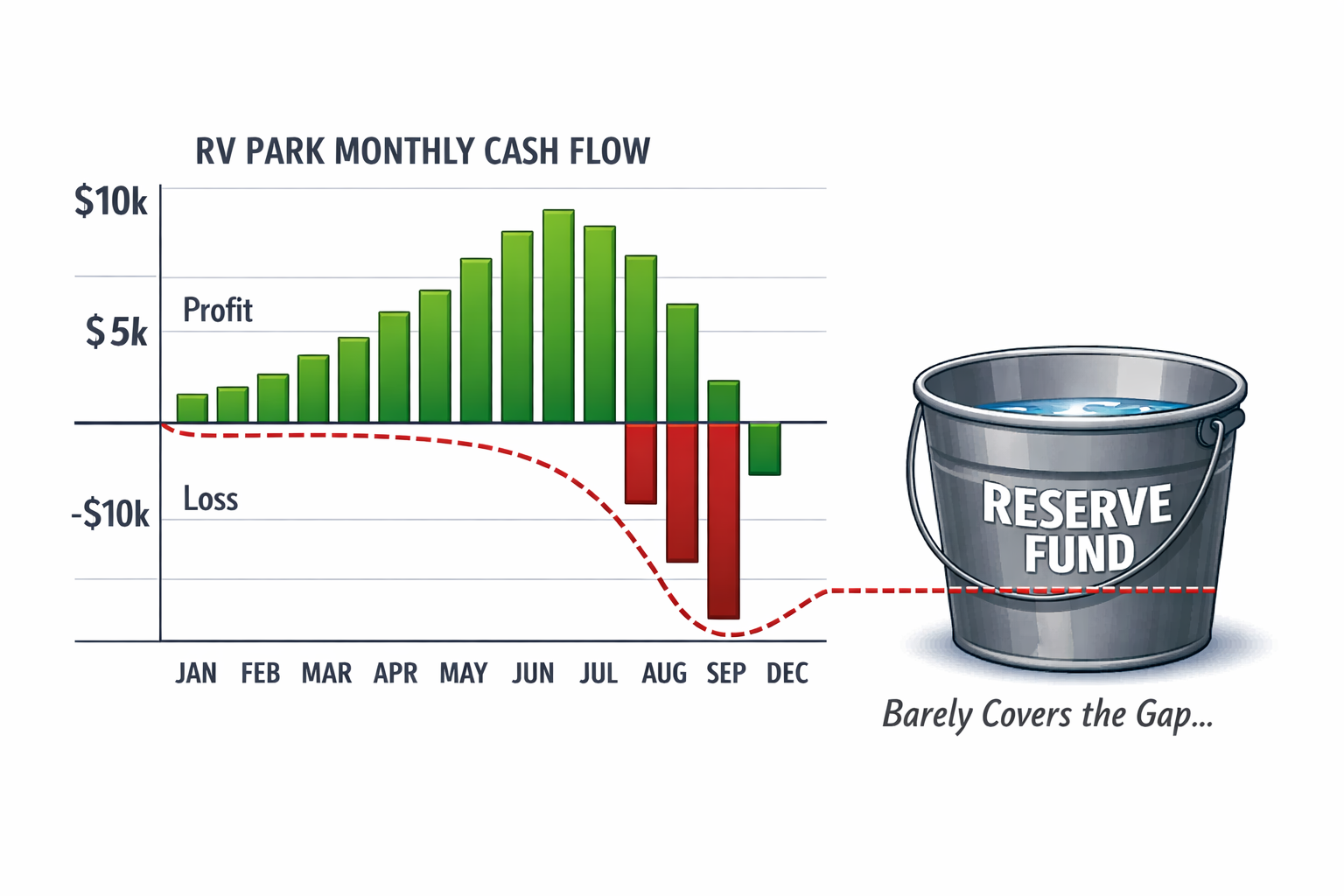
    Your business has a strong season and a slow season. You make most of your money in a few months and then have to stretch that cash across the rest of the year. If you spend too aggressively during your peak season you hit the slow season with insufficient cash reserves and suddenly profitable annual numbers don’t pay this month’s bills.

    Scenario 4, the tax surprise

    Your business has a great year. Revenue is up, profit is up, everything looks amazing. And then your CPA tells you that you owe $40,000 in taxes that you didn’t plan for. If you’ve been spending based on your bank balance without setting aside a tax reserve that $40,000 can create a genuine crisis even in a healthy business.

    How to make sure this doesn’t happen to you

    The good news is that cash flow problems are almost always preventable with the right systems in place. Here’s what those systems look like.

    Know your cash flow forecast, not just your P&L

    Your profit and loss statement tells you what happened. Your cash flow forecast tells you what’s coming. Every business owner should have a rolling 90-day cash flow forecast that shows projected cash in, projected cash out, and projected ending cash balance for each week or month.

    This one tool eliminates more financial surprises than anything else I know. When you can see a cash crunch coming 60 days out you have time to act. When you find out about it the day it happens you don’t.

    Separate your accounts

    Keep your operating cash, your tax reserve, and your CapEx or growth reserve in separate accounts. When everything sits in one account your bank balance is a misleading number that includes money that’s already spoken for. Separate accounts give you clarity about what you actually have available to spend.

    Invoice fast and collect faster

    The faster you get invoices out the faster cash comes in. If slow paying customers are creating a cash flow gap look at your invoicing terms and your collections process. Even shortening your payment terms from net 30 to net 15 can meaningfully improve your cash position.

    Build a cash reserve

    Every business should have a minimum of two to three months of operating expenses sitting in a dedicated reserve account that you don’t touch for day-to-day spending. This reserve is your buffer against seasonal slowdowns, unexpected expenses, slow paying customers, and any of the other scenarios I described above.

    Building this reserve takes time and discipline but it is one of the most important things you can do for the long term health of your business.

    Watch your receivables aging

    If customers owe you money that’s more than 30 days old that’s a cash flow risk. Review your accounts receivable aging report every month and follow up proactively on anything past due. Money that’s sitting in an invoice instead of your bank account is not working for your business.

    The bottom line

    Cash is oxygen for a business. You can survive a bad month on the P&L. You cannot survive running out of cash.

    The business owners who build real lasting financial health are the ones who understand the difference between profit and cash flow, who forecast their cash position consistently, and who build the systems that protect them from the surprises that take other businesses down.

    This is not complicated. But it does require intentionality and the right financial infrastructure.

    If you want help building a cash flow management system for your business, or if you want someone to forecast and track your cash position every month so you always know exactly where you stand, that’s exactly what I do.

    Visit me at https://www.pvifinancial.com and let’s make sure your business never runs out of cash.

    ~Wendi | PVI Financial | Fractional CFO & Bookkeeping Services for Small Business & Outdoor Hospitality

    Click here to read How To Structure Your First 90 Days as an RV Park Owner

  • Should You Raise Rates After Acquiring an RV Park? How to Know When the Numbers Support It

    Should You Raise Rates After Acquiring an RV Park? How to Know When the Numbers Support It

    Because raising rates too fast can hurt you just as badly as leaving money on the table

    One of the first questions new RV park owners ask after closing is some version of this: the previous owner was charging below market rates, can I just raise them right away?

    It’s a fair question and the instinct behind it is right. If you underwrote the deal partly based on a rate increase thesis you want to start capturing that upside as quickly as possible. Every month you’re charging below market is money you’re leaving on the table.

    But here’s the thing. Rate increases after an acquisition are one of the highest leverage moves you can make AND one of the easiest ways to damage a business you just paid a lot of money for. The difference between a rate increase that works and one that backfires almost always comes down to timing, magnitude, and how well you understand what you actually have.

    Here’s how I think through it.

    First, understand why the previous owner charged what they charged

    Before you change anything you need to understand the pricing strategy you inherited. Was the previous owner charging below market because they didn’t know better? Because they wanted to keep long term guests happy? Because the property has specific limitations that justify lower rates? Because they were afraid of losing occupancy?

    Each of those situations calls for a different approach.

    An owner who simply never raised rates because they were too comfortable is a very different situation from an owner who kept rates low intentionally to maintain 95% occupancy in a market where competitors sit at 70%. In the first case you have real upside. In the second case raising rates aggressively might just trade occupancy for revenue with no net benefit.

    Know why rates are where they are before you decide where they should go.

    The math behind a rate increase

    Let me show you why rate increases are so powerful when they work.

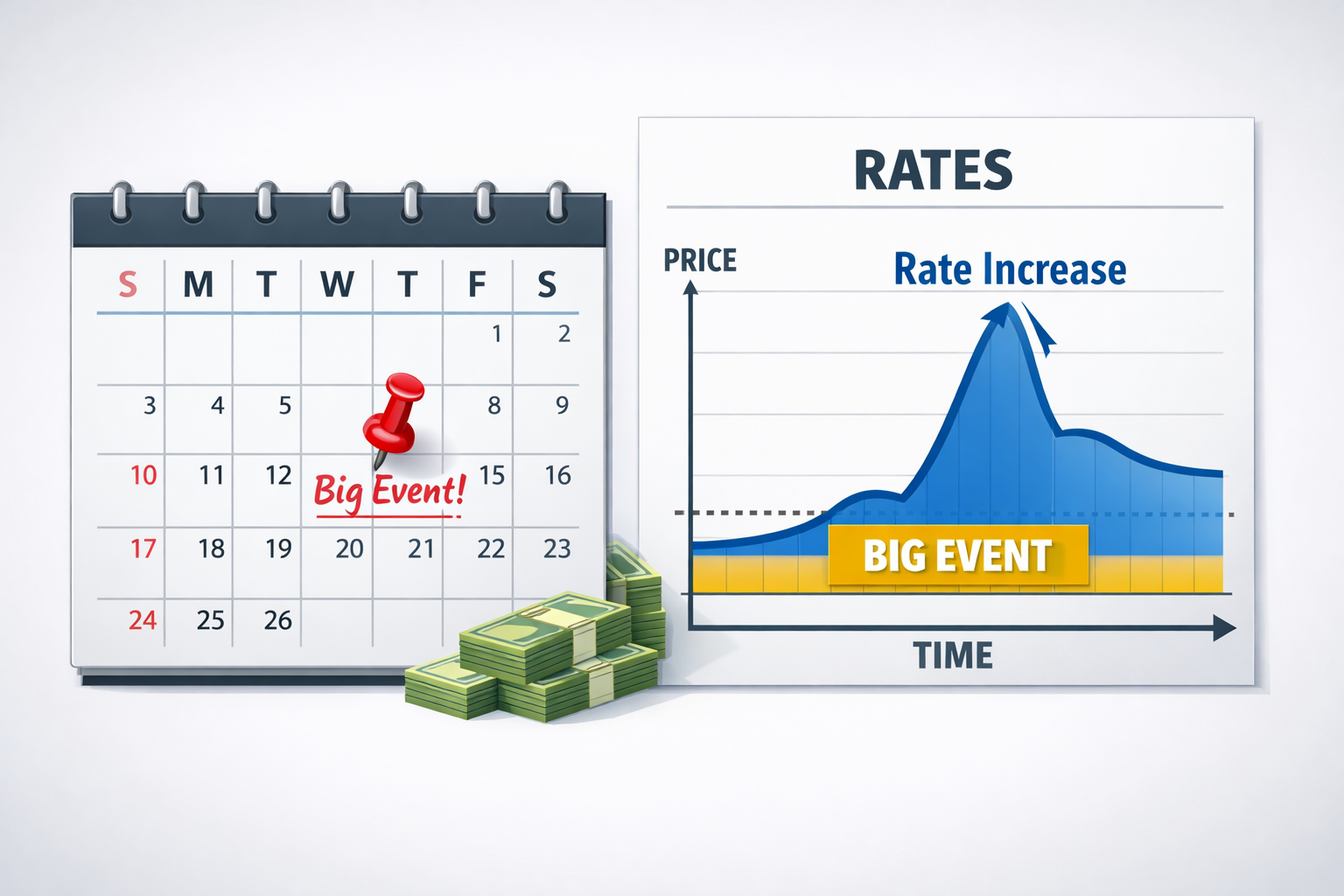
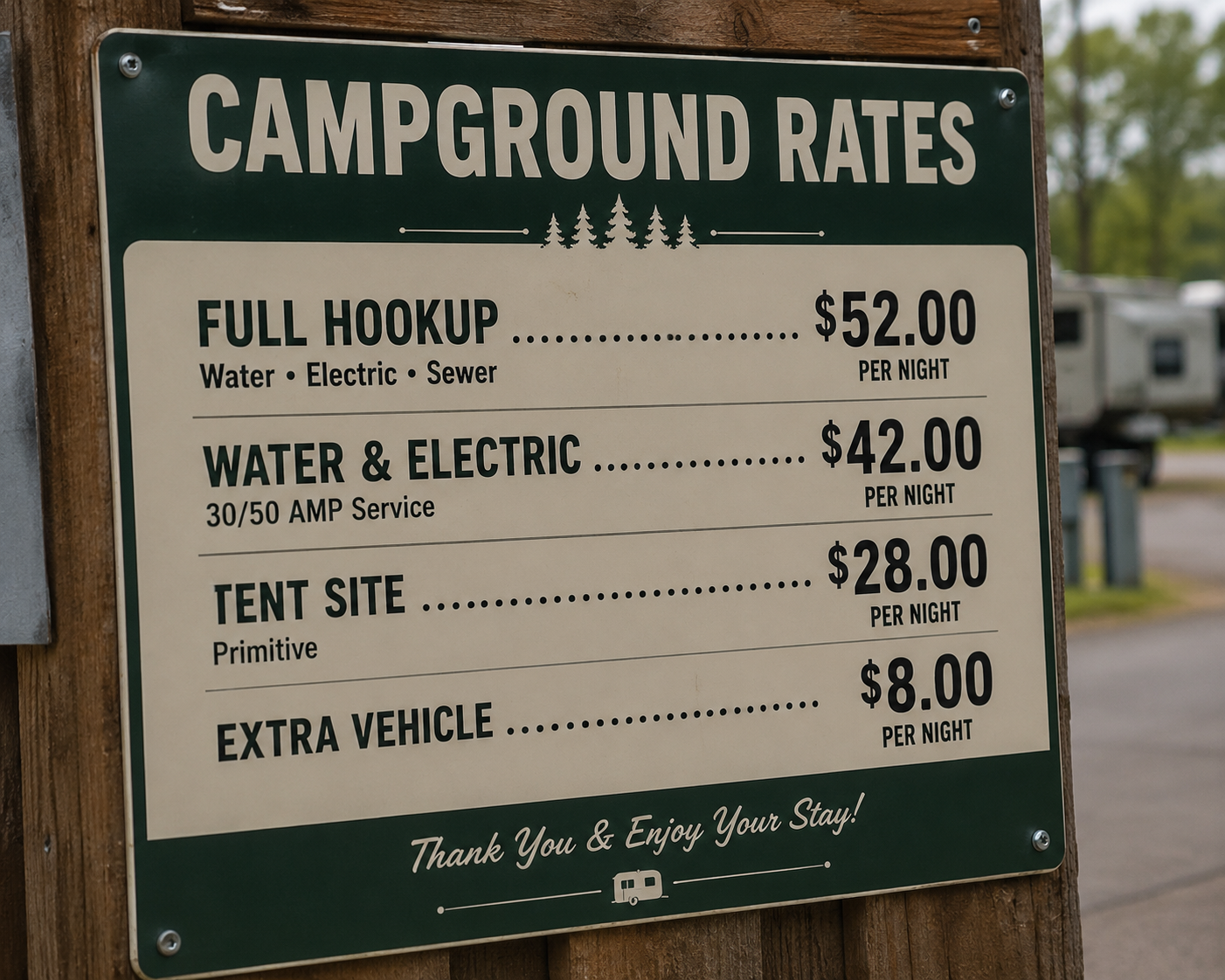
    A 100 site park averaging 75% occupancy at $65 per night generates $1,780,125 in annual revenue. That same park at $70 per night, just a $5 increase, generates $1,916,250. That’s $136,125 in additional annual revenue assuming occupancy holds.

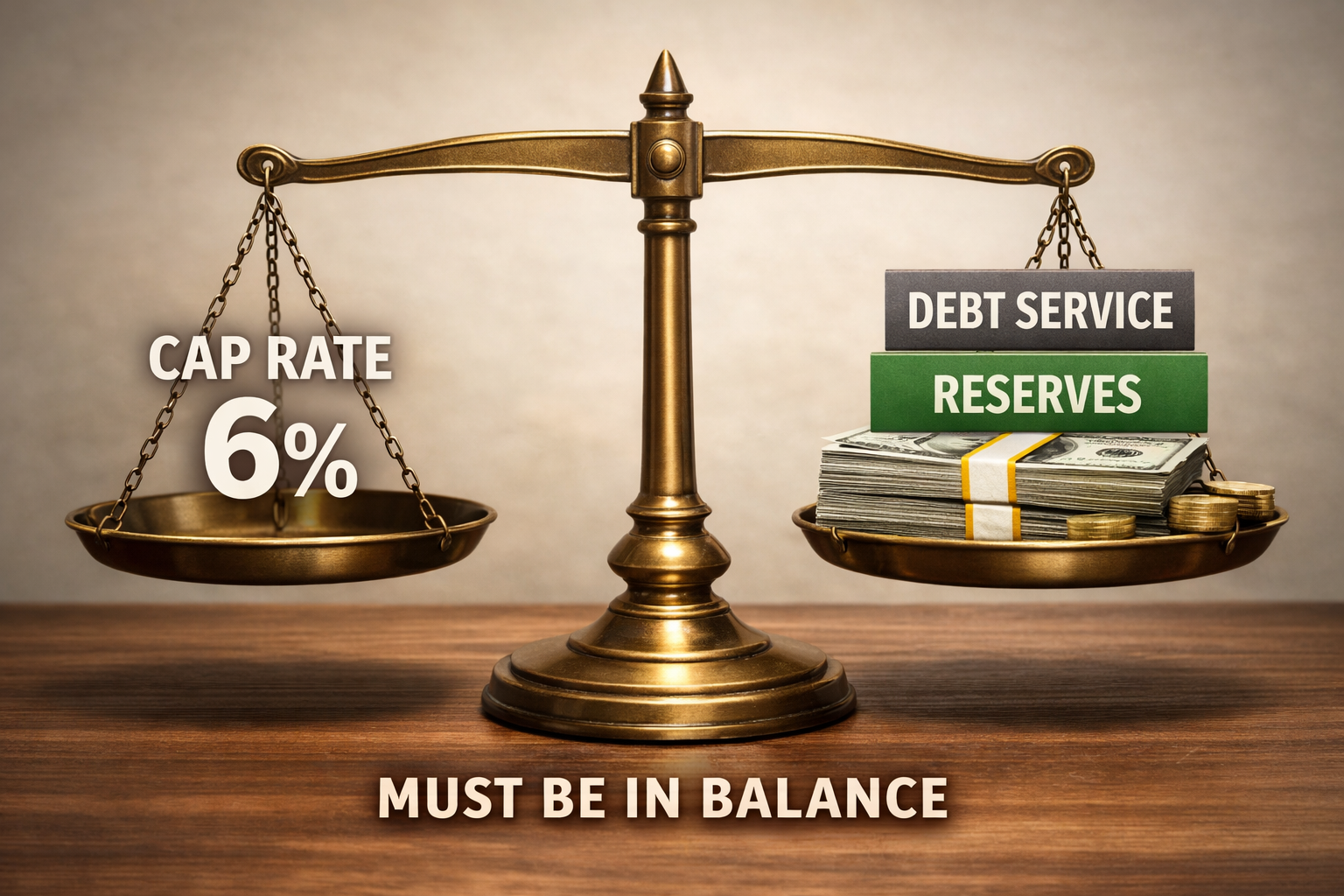
    At a 7% cap rate that incremental revenue adds nearly $2 million in property value. A $5 rate increase becomes a $2 million value creation event if you execute it correctly.

    That’s why rate optimization is one of the first things sophisticated operators look at after acquisition. The upside is enormous.

    But notice the assumption in that math. Occupancy holds. That’s the variable you have to manage.

    The occupancy trade off

    Every rate increase carries some risk of occupancy reduction. The question is how much and whether the math still works.

    Here’s a simple way to think about it. If you raise rates by 10% and occupancy drops by 5% are you better or worse off?

    At $65 per night and 75% occupancy on 100 sites your monthly revenue is approximately $148,750.

    At $71.50 per night and 70% occupancy your monthly revenue is approximately $150,150.

    You’re slightly ahead even with the occupancy drop. The rate increase worked.

    Now run the same math with a 15% occupancy drop and the picture changes. This is why you model before you move.

    When to raise rates and when to wait

    Here’s my general framework for rate increases after acquisition:

    Raise rates immediately if:

    Your rates are more than 20% below comparable properties in your market. You inherited a property with consistently full sites and a waiting list. Your due diligence showed rates haven’t been adjusted in several years. You’re heading into peak season and demand is strong.

    Wait and learn if:

    You just closed and you’re still in your first 30-60 days of ownership. You inherited a property with occupancy below 80% that needs to be stabilized first. You’re heading into shoulder season where demand is softer. You don’t yet have enough data to understand your guests’ price sensitivity.

    Never raise rates if:

    Your DSCR is already tight and any occupancy reduction would put your debt service at risk. You have a significant number of long term tenants whose contracts specify a rate and require notice. You haven’t yet reviewed your competitive set and don’t know where market rates actually are.

    How to raise rates without losing guests

    The how matters as much as the when. Here are the approaches that work best:

    Raise rates on new bookings first. Don’t change rates for guests who are already booked. Honor existing reservations at the old rate and apply new rates to future bookings. This is the least disruptive approach and gives you real data on how new bookings respond before you affect existing relationships.

    Start with your highest demand site types. Full hookup pull-throughs are typically your most in-demand sites. Start your rate increase there where demand is strongest and price sensitivity is lowest. Leave your lower demand site types alone until you have more data.

    Use dynamic pricing if your booking system supports it. Rather than a single flat rate increase consider implementing seasonal pricing, weekend versus weekday pricing, and advance booking discounts. Dynamic pricing lets you capture maximum revenue during peak demand without scaring away guests during slower periods.

    Communicate proactively with long term guests. If you have monthly or seasonal guests who are accustomed to a certain rate a rate increase requires advance notice, often 30-60 days depending on your lease terms. A personal conversation or a well-written letter explaining that you’re investing in improvements goes a long way toward preserving those relationships.

    The competitive set analysis you need to do first

    Before you change a single rate spend an afternoon doing a competitive set analysis. Identify the five to ten RV parks most comparable to yours within a reasonable drive, similar amenities, similar site types, similar market. Check their current rates on their website or on the booking platforms they use.

    Build a simple spreadsheet that shows your current rates versus market rates for each site type. Where are you at market? Where are you below? Where are you actually above market and potentially vulnerable to losing guests to competitors?

    That analysis tells you exactly where your rate increase opportunity is and where you need to be careful. It takes a few hours and it’s worth every minute.

    The bottom line

    Raising rates after an RV park acquisition is one of the most powerful value creation levers available to you. Done correctly it can add significant revenue and meaningful property value in a relatively short period of time.

    Done incorrectly it can damage guest relationships, hurt occupancy, and create the kind of revenue volatility that makes lenders nervous and makes your life stressful.

    The difference is doing the analysis first. Know your market. Know your occupancy. Know your guests. Model the math before you move. And when you do raise rates do it thoughtfully, communicating clearly and honoring existing commitments.

    The numbers will tell you when the time is right. Trust the numbers.

    If you want help analyzing your rate increase opportunity and modeling the revenue impact before you make any changes I would love to work through it with you.

    Visit me at https://www.pvifinancial.com and let’s look at your numbers together.

    ~Wendi | PVI Financial | Fractional CFO & Bookkeeping Services for Small Business & Outdoor Hospitality

    Click here to read “How To Structure Your First 90 Days as an RV Park Owner”

  • How to Structure Your First 90 Days as a New RV Park Owner

    How to Structure Your First 90 Days as a New RV Park Owner

    The decisions you make in the first three months set the trajectory for everything that follows

    Closing day is one of the best feelings in real estate. You’ve done the work, you’ve run the numbers, you’ve negotiated the terms, and now the keys are yours. It’s exciting and it should be.

    And then reality sets in.

    The first 90 days of owning an RV park are simultaneously the most important and the most overwhelming period of the entire ownership experience. You’re learning the operations, building relationships with staff and guests, figuring out the systems the previous owner had in place, and trying to protect the investment you just made, all at the same time.

    Most new owners wing it. They show up with good intentions and figure it out as they go. And while that works eventually it almost always means missed opportunities, preventable mistakes, and a slower start than necessary.

    Here’s a better way. A structured 90 day plan that gives you clarity, protects your investment, and sets you up for long term success.

    The mindset going in

    Before we get into the specifics I want to address the most common mistake new RV park owners make in their first 90 days, and it’s not a financial mistake or an operational mistake. It’s a mindset mistake.

    The mistake is trying to change too much too fast.

    You just bought a stabilized business. It was working before you arrived. The guests who come back year after year, the staff who know the property, the systems that keep things running, those are assets. Treat them that way.

    Your job in the first 90 days is not to reinvent the park. It’s to learn it, stabilize it, and build the foundation for intentional improvement. Change comes later, after you understand what you have.

    ๐——๐—ฎ๐˜†๐˜€ ๐Ÿญ-๐Ÿฏ๐Ÿฌ: ๐—Ÿ๐—ฒ๐—ฎ๐—ฟ๐—ป ๐—ฒ๐˜ƒ๐—ฒ๐—ฟ๐˜†๐˜๐—ต๐—ถ๐—ป๐—ด.

    Your first month has one primary goal. Learn the business as it actually operates, not as it looked in the financials.

    Here’s what that looks like in practice:

    Meet every staff member individually. Understand their role, their tenure, their relationship with the previous owner, and their concerns about the transition. Your staff knows things about this property that no due diligence package will ever tell you. Treat that knowledge as the asset it is.

    Walk every inch of the property with fresh eyes. Not the due diligence walk you did before closing, a slower more deliberate walk now that you own it. Look at what needs attention, what’s been deferred, what surprises the inspector might have missed. Start a running list.

    Talk to your long term guests and regulars if you have them. These are the people who love your park and come back year after year. Their loyalty is worth protecting. Introduce yourself, thank them for their business, and listen to what they have to say. You’ll learn more in those conversations than you will from any report.

    Review every vendor contract and service agreement. Know what you’re paying, who you’re paying, and when each contract expires or renews. Look for anything that seems overpriced or underperforming.

    Get your books connected and your bookkeeping system live. As we talked about in a recent post your first month of ownership is your most important baseline. Capture every transaction from day one.

    ๐——๐—ฎ๐˜†๐˜€ ๐Ÿฏ๐Ÿญ-๐Ÿฒ๐Ÿฌ: ๐—ฆ๐˜๐—ฎ๐—ฏ๐—ถ๐—น๐—ถ๐˜‡๐—ฒ ๐—ฒ๐˜ƒ๐—ฒ๐—ฟ๐˜†๐˜๐—ต๐—ถ๐—ป๐—ด.

    Your second month shifts from learning to stabilizing. You now have enough context to start making informed decisions. Here’s what to focus on:

    Build your first monthly financial report. Now that you have a full month of actual results compare them to your pro forma. Where are you ahead? Where are you behind? Why? This is your first real look at how the property is actually performing under your ownership and it sets your baseline for everything that follows.

    Address any urgent operational issues you identified in month one. Not the wish list items, the genuine problems that could affect guest experience, safety, or revenue if left unaddressed.

    Confirm your staffing model is right. Is the team you inherited the right team going forward? Are there gaps? Are there redundancies? Month two is when you start to have enough information to make thoughtful staffing decisions rather than reactive ones.

    Review your booking channels and pricing strategy. How are guests finding you? What percentage of bookings come through OTA platforms versus direct? What does your pricing look like relative to comparable parks in your market? You don’t need to change anything yet but you need to understand the current state before you can improve it.

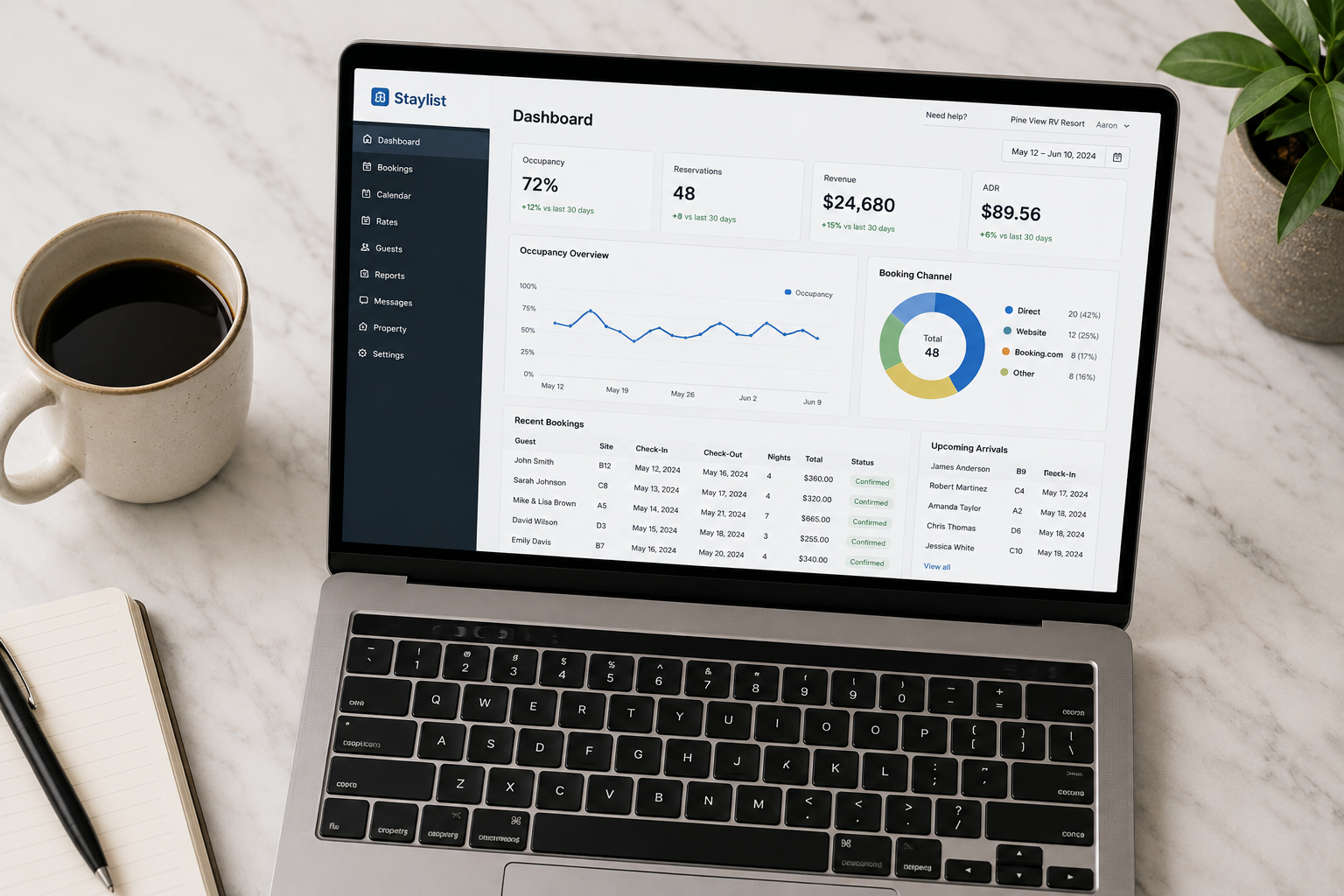
    Establish your monthly reporting rhythm. Pick your review date, set up your KPI dashboard, and commit to looking at your numbers on the same day every month going forward. The discipline of consistent financial review is one of the highest value habits you can build as an operator.

    ๐——๐—ฎ๐˜†๐˜€ ๐Ÿฒ๐Ÿญ-๐Ÿต๐Ÿฌ: ๐—ฃ๐—น๐—ฎ๐—ป ๐—ฒ๐˜ƒ๐—ฒ๐—ฟ๐˜†๐˜๐—ต๐—ถ๐—ป๐—ด

    Your third month is about looking forward. You’ve learned the business, you’ve stabilized the operations, and now it’s time to build the plan for the first full year of ownership.

    Build your annual operating budget. Using your pro forma as a starting point and your first two months of actual results as a reality check, build a month by month budget for the full year. Include revenue projections by site type, all operating expenses, debt service, CapEx reserve contributions, and tax reserve contributions. This budget becomes your financial roadmap for year one.

    Identify your top three value creation opportunities. After 90 days of learning the business you should have a clear picture of where the biggest opportunities are. Maybe it’s raising rates on a specific site type that’s consistently at 95% occupancy. Maybe it’s adding a direct booking capability to reduce OTA dependency. Maybe it’s a specific capital improvement that would meaningfully increase revenue or reduce costs. Pick your top three and build a simple plan for each one.

    Have your first formal review with your property manager if you have one. Set clear expectations, align on goals for the year, and establish the reporting and communication cadence that will govern your working relationship going forward.

    Review your insurance coverage. Now that you’ve owned the property for 90 days you have a much better understanding of what you actually have. Make sure your coverage is appropriate, not just what the previous owner had.

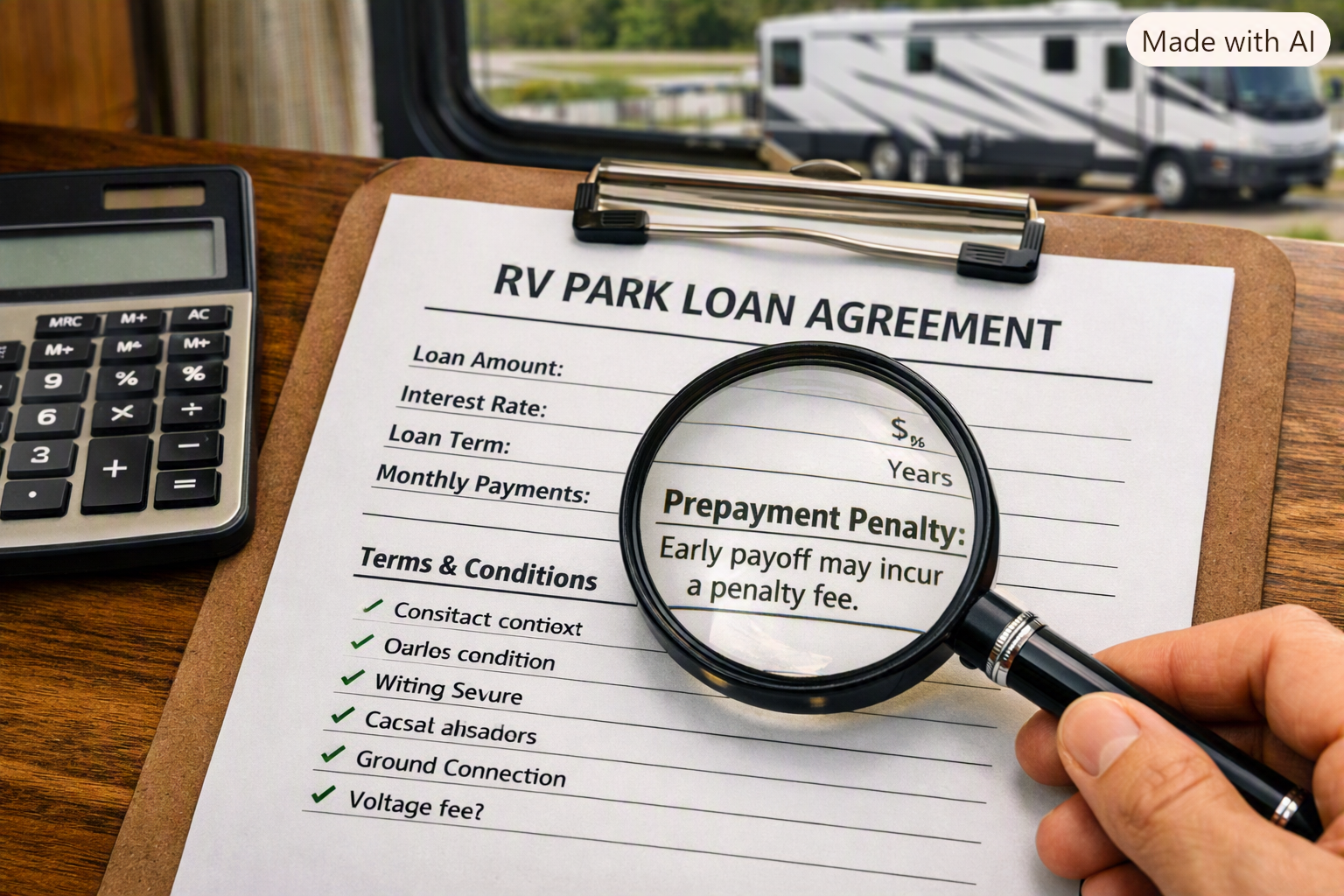
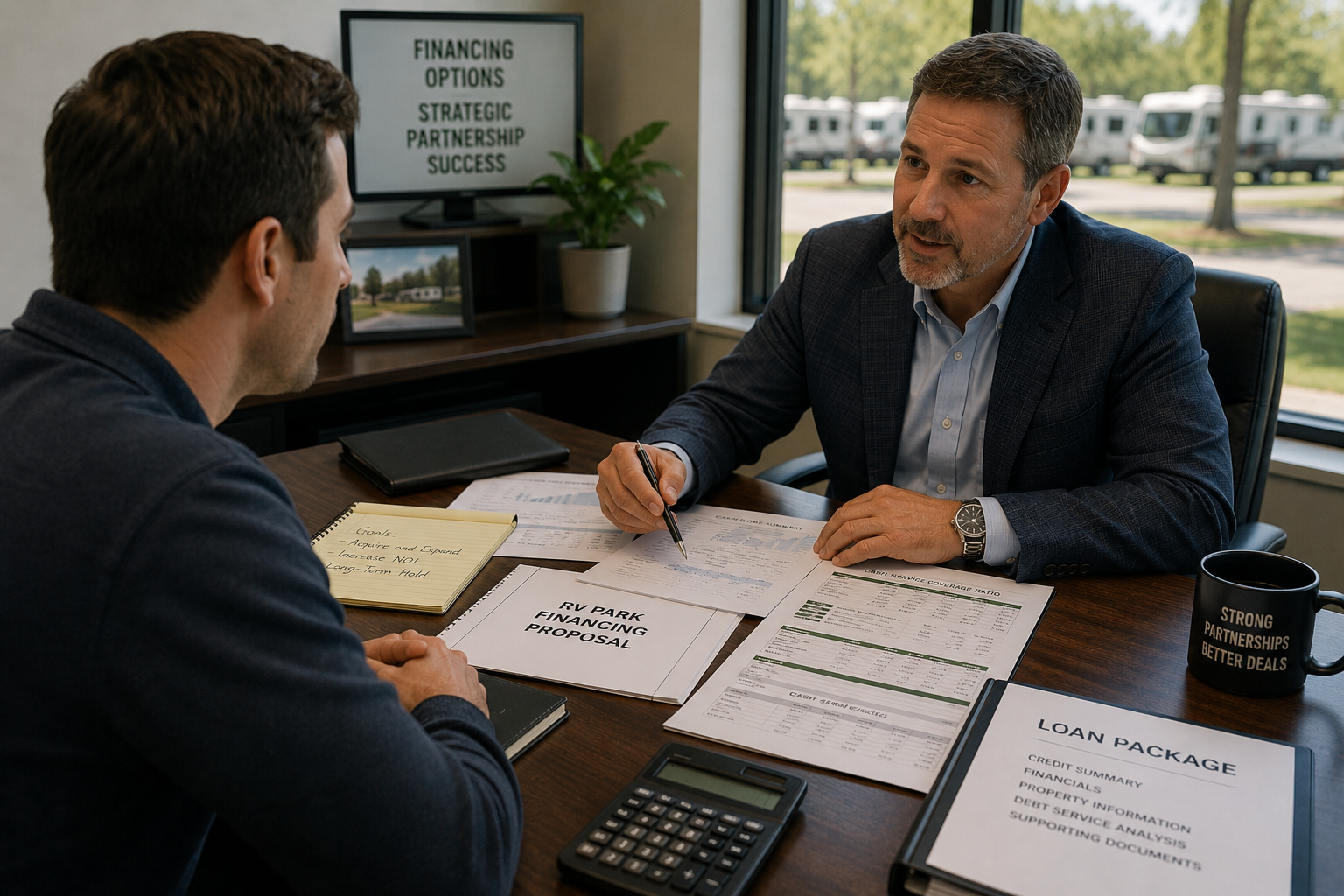
    Check in with your lender. If you have a seller carry or any other financing, a proactive check in at 90 days is a smart relationship move. Share your early results, highlight what’s going well, and flag anything you’re watching. Lenders who feel informed are lenders who give you flexibility when you need it.

    The financial foundation checklist at 90 days

    By the end of your first 90 days here’s what your financial infrastructure should look like:

    Three bank accounts are set up and funded, operating, CapEx reserve, and tax reserve. Your bookkeeping system is live and current with zero backlog. You have two full months of actual financial results in your books. Your first monthly CFO report has been produced and reviewed. Your pro forma tracking document is live with actual versus projected variance for months one and two. Your annual operating budget is built and approved. Your KPI dashboard is set up and you’ve reviewed it at least twice.

    If you have all of that in place at 90 days you are in genuinely great shape. You have the financial visibility to manage the asset intentionally, the baseline to measure performance against, and the systems to catch problems early before they become expensive.

    The bottom line

    The first 90 days of RV park ownership are not the time to swing for the fences. They’re the time to learn, stabilize, and build the foundation that makes everything else possible.

    The operators who build real lasting wealth in this asset class are almost always the ones who were patient and intentional in the beginning. They didn’t rush to change things. They took the time to understand what they had, built the right systems, and then made thoughtful improvements from a position of knowledge rather than assumption.

    You can absolutely do this. And if you want a financial partner to help you build your 90 day financial foundation, produce your monthly CFO reports, and make sure your numbers are telling you the full story from day one, I would love to work with you.

    Visit me at https://www.pvifinancial.com and let’s talk about getting your first 90 days right.

    ~Wendi | PVI Financial | Fractional CFO & Bookkeeping Services for Small Business & Outdoor Hospitality

    Click here to read “The 5 Financial Mistakes New RV Park Owners Make in Year One

  • 5 Financial Mistakes New RV Park Owners Make in Year One

    5 Financial Mistakes New RV Park Owners Make in Year One


    And how to avoid the ones that quietly kill your returns

    Buying an RV park or glamping property is one of the most exciting things you can do as a real estate investor. The cash flow potential is real, the asset class is growing, and if you buy right you can own a business that practically runs itself with the right systems in place.

    But year one is where a lot of new owners quietly get into trouble โ€” not because the deal was bad, but because they didn’t have the right financial infrastructure in place from day one. I’ve seen it happen, and I’ve cleaned up the aftermath. Here are the five mistakes I see most often and exactly how to avoid them.

    1. Assuming the seller’s numbers will just continue

    When you buy a stabilized RV park the trailing 12 months of financials look great. Occupancy is solid, revenue is consistent, NOI is healthy. And then you close and six months later you’re scratching your head wondering where the money went.

    Here’s what happens: ownership transitions are disruptive. Staff changes, booking patterns shift, returning guests who were loyal to the previous owner don’t come back, and small operational details that the seller handled intuitively don’t get transferred in a two-week handoff.

    The mistake is assuming the T12 numbers are a guarantee rather than a baseline. They’re a starting point. Your job in year one is to protect that baseline while you learn the business โ€” not to immediately start optimizing for growth.

    What to do instead: build a 12-month financial model before you close that stress-tests the numbers. What happens if occupancy drops 10% in year one? What happens if you lose your property manager? What’s your cash position in each scenario? Know your downside before you close, not after.

    2. Not separating operating cash from your personal cash fast enough

    This sounds obvious but it happens constantly โ€” especially to first time hospitality operators who are used to residential real estate where the cash flows are simpler.

    An RV park generates revenue daily. Weekends, holidays, and peak season dump cash into your account fast and it feels great. The problem is that cash has to carry you through the shoulder season, cover payroll, fund your CapEx reserve, and service your debt โ€” all at the same time. When it’s all sitting in one account it’s very easy to look at a healthy balance in July and make spending decisions that leave you scrambling in November.

    What to do instead: from day one set up separate accounts for operating cash, CapEx reserve, and tax reserve. Fund each one according to a monthly plan. Your operating account is the only one you spend from day to day. This one simple system eliminates more financial stress than almost anything else I recommend to new operators.

    3. Skipping the CapEx reserve

    RV parks are physical assets. Things break, wear out, and need replacing โ€” roofs, electrical hookups, water systems, roads, amenities. A well-run park budgets 5% of gross revenue annually into a dedicated CapEx reserve account.

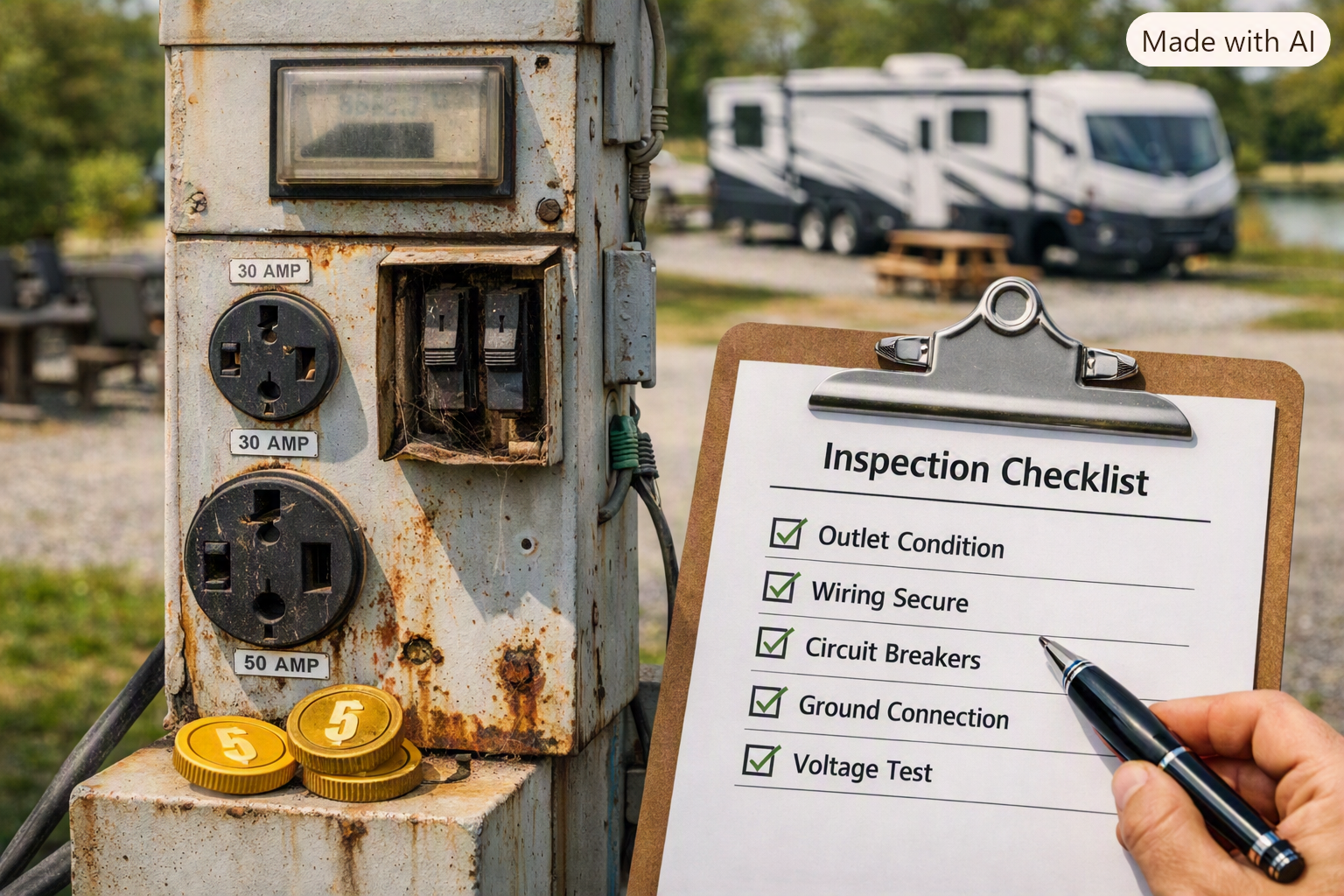
    New owners skip this because the cash feels tight in year one and the roof looks fine right now. Then year three arrives and they’re facing a $60,000 electrical infrastructure repair with no reserve and a cash flow that can’t absorb it.

    What to do instead: fund your CapEx reserve from month one even if it feels premature. Treat it like a non-negotiable expense, not an optional savings account. Your future self will thank you.

    4. Not tracking the right KPIs for your specific property type

    Most new RV park owners track revenue and expenses. That’s bookkeeping. What you actually need is a dashboard of KPIs that tell you whether your business is healthy, growing, or starting to slip โ€” before it shows up as a problem in your P&L.

    For an RV park or glamping property the KPIs that matter most are:

    • Occupancy rate by site type (glamping vs RV vs tent โ€” they tell very different stories)
    • Average nightly rate by site type
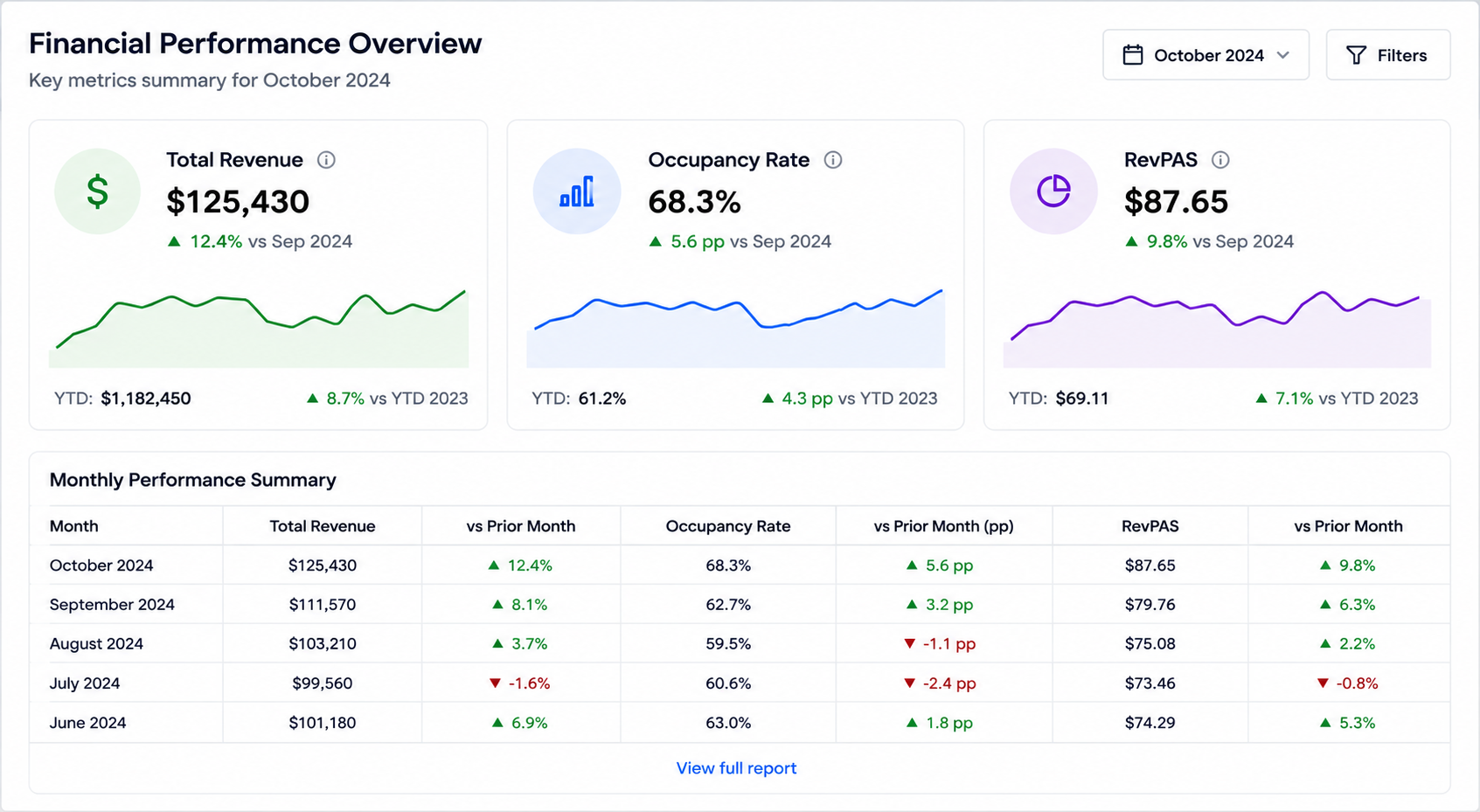
    • Revenue per available site (RevPAS)
    • Operating expense ratio (excluding debt service)
    • Cash runway โ€” how many months of expenses does your current cash cover?

    If you’re not tracking these monthly you’re flying blind. And flying blind in year one โ€” when you’re still learning the business โ€” is how small problems become expensive ones.

    What to do instead: set up a monthly KPI dashboard from day one that tracks these numbers consistently. This is exactly what I build for every client โ€” a clean, simple report that shows you what’s happening in your business at a glance so you can spot trends early and act before small problems become expensive ones. If you’re not sure where to start visit me at pvifinancial.com and let’s talk.

    5. Waiting too long to get financial help

    This is the big one and honestly the one I feel most strongly about.

    Most new RV park owners wait until something goes wrong to get financial help. They try to manage it themselves, they rely on their CPA for year-end guidance, and they don’t build real financial visibility into their operation until they’re already in trouble.

    The problem with that approach is that by the time the problem is visible in your financials it’s usually been building for months. Cash flow issues, occupancy slippage, expense creep โ€” these things don’t appear overnight. They show up slowly and then all at once.

    Year one is exactly when you need the most financial support โ€” not because you’re bad at business, but because you’re learning a new asset class while simultaneously trying to protect your investment and service your debt. That’s a lot to carry without a financial partner who knows the numbers as well as you do.

    What to do instead: get a fractional CFO or financial advisor in place before you close or in the first 30 days after. Someone who will build your reporting infrastructure, track your KPIs, flag problems early, and give you a clear picture of your financial position every single month. The cost of that support is a fraction of what one missed problem in year one can cost you.

    The bottom line

    Buying a great RV park or glamping property is the beginning, not the end. The operators who build real wealth in this asset class are the ones who treat the financial side of the business with the same seriousness as the operational side.

    Know your numbers. Track the right metrics. Build the right systems from day one. And don’t wait until something goes wrong to ask for help.

    If you’re buying or have recently bought an RV park or outdoor hospitality property and want to talk through your financial setup, I’d love to connect. The first conversation is always free.

    โ€” Wendi | PVI Financial | Fractional CFO & Bookkeeping Services for Small Business & Outdoor Hospitality https://pvifinancial.com

    Click here to read “How to Structure Your First 90 Days as a New RV Park Owner