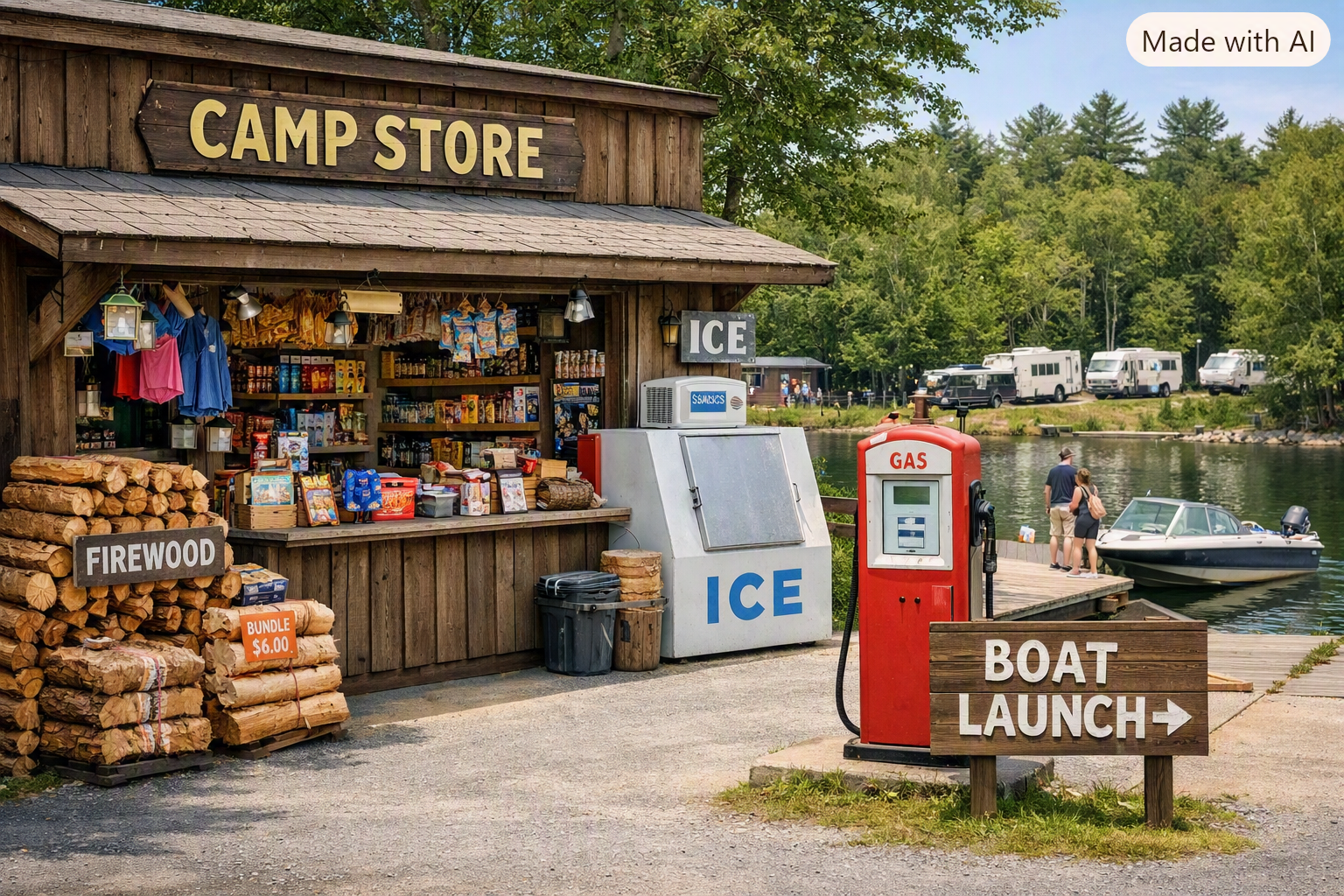
RV park ancillary revenue is one of the most underused levers in this business, and it is also one of the most overlooked during diligence. Buyers focus almost entirely on site rent, and while site rent is the core of the business, income from marinas, fuel sales, and commissary sales can meaningfully shift both your operating income and your eventual valuation.
Table of Contents
1. It Drops Nearly Straight to NOI
This is what makes RV park ancillary revenue so powerful. Once the infrastructure exists, marina slips, a fuel pump, a small store, the incremental cost of serving an additional guest is low, so the revenue flows through to your bottom line with far less drag than site rent does. Industry research on ancillary income confirms the scale of the opportunity: the amount ancillary income contributes to net operating income can vary widely from a few percent to upwards of 10 percent. For an RV park already generating strong site rent, that additional 10 percent is not a rounding error. Foxen Administration
2. It Compounds Through the Cap Rate Formula
A dollar of RV park ancillary revenue is worth more than a dollar in your pocket, because cap rate math multiplies every NOI improvement. At a 9 percent cap rate, an extra $10,000 in this income adds over $111,000 to your park’s implied value. This is exactly why sophisticated buyers dig into commissary, marina, and fuel numbers during diligence instead of treating them as a footnote.
3. RV Park Ancillary Revenue Needs to Be Verified, Not Assumed
Sellers sometimes bundle this revenue into a single “other income” line without breaking it out clearly, which makes it hard to know what is recurring versus what was a one-time boost. Rebuilding the real NOI number means separating RV park ancillary revenue into its actual components, marina slip fees, fuel margin, retail sales, so you know exactly what you are underwriting and what might not repeat under new ownership.
4. Not All RV Park Ancillary Revenue Carries the Same Risk
A marina generates fairly stable ancillary income tied to long-term slip rentals. Fuel margins can swing with commodity prices. Commissary and retail sales depend heavily on foot traffic and site occupancy. Treating all of these sources as equally reliable is a mistake, since a downturn in transient occupancy will hit your commissary sales far faster than it hits marina slip income.
5. Building RV Park Ancillary Revenue Deliberately Beats Letting It Happen by Accident
Owners who treat their store, fuel pump, or marina as an afterthought leave real money on the table. Deliberately growing this revenue, stocking what guests actually want, pricing fuel competitively, marketing marina slips to boaters beyond just RV guests, turns a passive amenity into an active profit center that shows up clearly in your revenue mix.
What This Means for Your Next Deal
If you are evaluating a park with a marina, fuel operation, or commissary already in place, do not skip past those line items to get to the site rent numbers. RV park ancillary revenue deserves the same diligence rigor as your primary rental income, because it can be the difference between an average deal and a genuinely strong one once you understand what it actually contributes to your return on investment.
If you want to go deeper on how RV park financials actually work, everything I have written on acquisitions, bookkeeping, and cash flow lives in the RV Park Resource Library. And if you want the full framework for evaluating a deal from first look through your first ninety days of ownership, that is exactly what I built into From Offer to Operation, available on Gumroad or by searching Amazon for the title.
Further reading on how ancillary income affects property valuation is available from Foxen.
Leave a Reply